Whether a Samoyed Can Still Herd Livestock
It’s a common misconception that our beautiful, fluffy Samoyeds are just pretty faces, perfect for cuddles and looking majestic in the snow. Many owners, especially those new to the breed, are often surprised to learn that beneath all that floof lies a dog with a strong, ancient working heritage, including a history as a herder. The question isn't if they have the instinct, but can they still put it to good use with actual livestock in our modern world? This guide dives deep into the Samoyed's often-overlooked herding abilities, exploring their historical roots, modern manifestations, and how you can tap into this incredible natural talent.
The Samoyed's Historical Role in Herding
When you look at a Samoyed's happy, smiling face, it’s easy to forget they hail from the harsh, unforgiving Arctic. These dogs weren't bred for show rings initially; they were survival partners, deeply integrated into the lives of the nomadic Nenets people of Siberia. Their roles were varied and crucial, from pulling sleds and guarding camps to, yes, herding reindeer. This isn't just a romantic notion; it’s a foundational aspect of their very being.
Ancestry with Reindeer
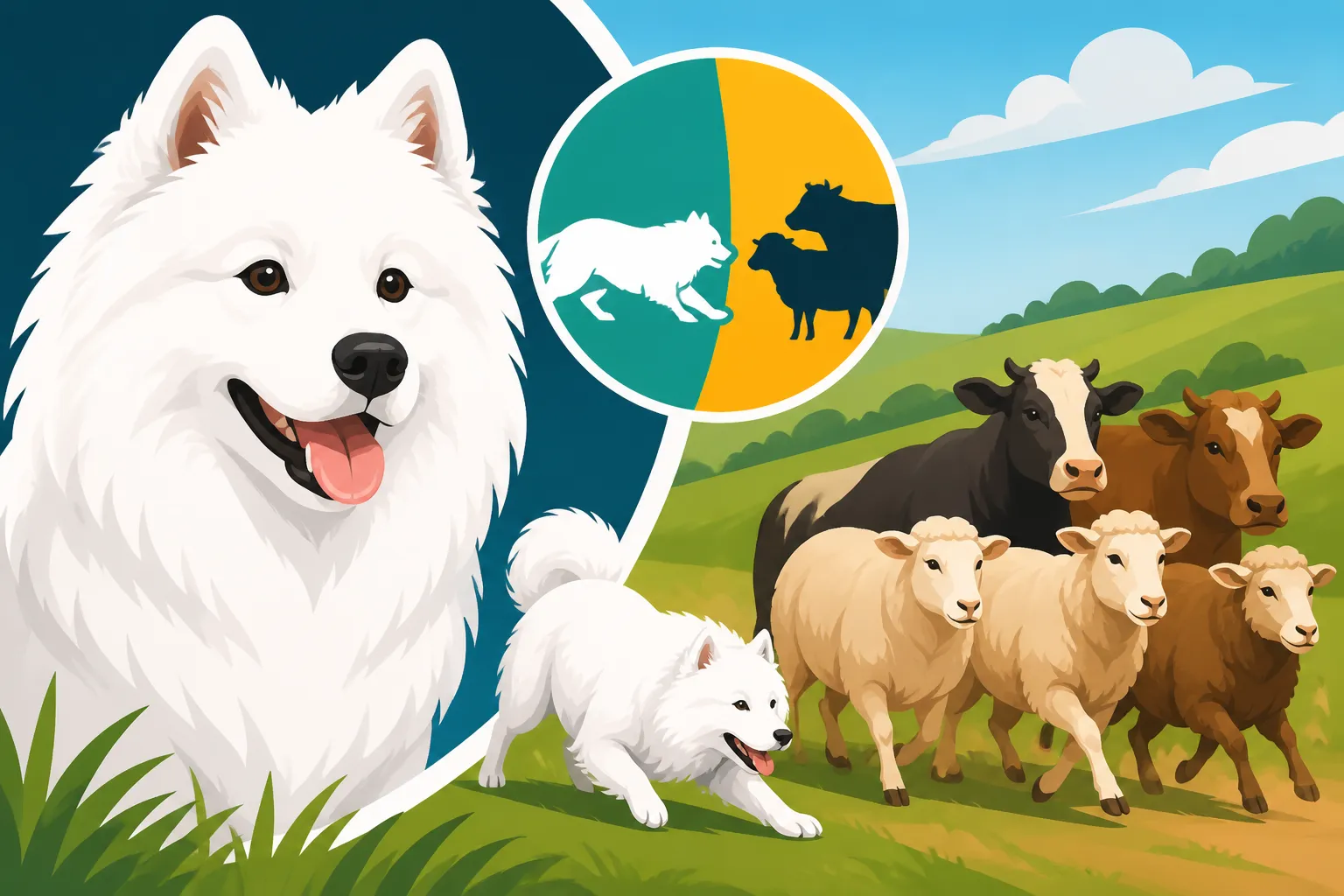
Imagine vast, frozen tundras, herds of thousands of reindeer, and a small, resilient group of people depending on those animals for their very existence. The Samoyed's ancestors were indispensable in managing these massive herds. Unlike some herding breeds that nip and drive livestock aggressively, the Samoyed's style was more about containment, gathering, and moving the herd gently from one grazing ground to another. Their thick coats, built for extreme cold, also allowed them to work tirelessly in conditions that would fell other dogs. This history isn't just a fun fact; it explains why some modern Samoyeds still exhibit certain behaviors around moving objects or groups of animals. They were literally bred to work alongside the Nenets, controlling the flow of a living, breathing food source without causing panic or scattering. This gentle herding style is unique and reflects their close bond with their human companions.
Beyond Reindeer: Versatile Nomadic Companions
The Samoyed's utility extended far beyond just reindeer herding. They were truly all-purpose dogs for the Nenets. This meant they had to be intelligent, adaptable, and willing to work in various capacities. While herding was a primary function, they also acted as guardians against predators like wolves and bears, pulled sleds laden with supplies, and even slept with their families for warmth, forging an incredibly close bond that we still see in the breed today. This versatility means their herding instinct is often intertwined with other strong drives – like the desire to stay close to their "pack" (you!), the tendency to vocalize, and a surprising independence when given a task. It's not a singular, laser-focused herding drive like you might find in a Border Collie, but rather a more nuanced, cooperative instinct. They weren't just tools; they were family members with vital jobs. The Nenets of the Yamal Peninsula Bred the Samoyed is an excellent read if you want to dive deeper into their origins.
Understanding the Samoyed Herding Instinct Today
For many Samoyed owners, the idea of their marshmallow-fluff dog herding sheep seems utterly alien. Yet, the instinct is undeniably there, albeit often dormant or redirected in our modern pet environments. It's about recognizing these subtle cues and understanding how their historical role translates into contemporary behavior.
Latent Instincts vs. Active Drive
Most pet Samoyeds will never see a reindeer, let alone an actual sheep. So, what happens to that ingrained herding instinct? It manifests in various ways. You might notice your Samoyed trying to "gather" family members in the living room, gently nudging you away from the kitchen, or attempting to block the path of a child or another pet. They might circle around a group of people at the dog park, not aggressively, but with a clear intent to keep everyone somewhat contained. This isn't usually a strong, active drive to herd in the competitive sense, but rather a latent, underlying set of behaviors that surfaces when conditions trigger it. It's a memory in their genes, a whisper from their ancestors that still informs their actions. It's these subtle signs that can give you a hint of their untapped potential.
Breed Standard and Working Tendencies
While modern breed standards for Samoyeds primarily focus on appearance and temperament suitable for companionship and show, the underlying working dog traits are still acknowledged. A truly well-bred Samoyed often possesses an inherent intelligence, a desire to please (to an extent!), and a physical prowess that makes them capable of various dog sports, including herding. It's not uncommon to find Samoyeds excelling in agility, obedience, and even carting – all activities that require focus, cooperation, and a strong bond with their handler. The herding instinct is one such working tendency that, with the right guidance, can be cultivated. It’s less about a specific herding breed type and more about the general aptitude for engaging in a task, which is a hallmark of the Northern breeds. If you're curious about your Samoyed's innate working desires, reading The Herding Instinct Nobody Expects From a Samoyed might shed some light.
The Difference Between Herding and Chasing
This is a crucial distinction, especially for Samoyed owners. Many Samoyeds have a high prey drive – that strong urge to chase squirrels, rabbits, or even cats. This is a very different impulse from herding. Herding involves controlling the movement of other animals in an organized way, usually without harming them, and often in cooperation with a human. Chasing, on the other hand, is driven by the desire to catch and often incapacitate prey. A Samoyed might naturally chase a flock of chickens, but that doesn't mean they're herding them; it might mean they're attempting to hunt them. A true herding instinct involves a degree of restraint, a circling pattern, and a focus on keeping the group together, rather than dispersing them or singling one out for capture. Learning to differentiate these behaviors is the first step in deciding if herding is a viable pursuit for your Samoyed.
Recognizing Herding Behaviors in a Pet Samoyed
For those of us living with Samoyeds in suburban or urban environments, observing actual herding behaviors can be subtle and often misunderstood. It's not always about grand gestures; sometimes, it's the quiet insistence or the way they position themselves.
Subtle Nudges and Circles
Have you ever noticed your Samoyed gently pushing you with their nose or body when you're moving too far from the group? Or perhaps they circle around your kids playing in the yard, not joining in, but seemingly keeping an eye on them and their boundaries? These are classic, albeit mild, expressions of a herding instinct. It’s their way of attempting to keep the "flock" (your family) together and under control. They aren't trying to be bossy; they're acting on an ancient drive to manage movement. This can also manifest as them cutting off paths or standing in doorways, creating a gentle barrier to influence direction. It’s a very Samoyed way of saying, "Hey, let's keep the group cohesive!"
Obsessive Staring and Grouping Behaviors
Another indicator can be a focused stare, sometimes called "the eye," which is common in many herding breeds. Your Samoyed might fixate on a group of children, other dogs, or even moving vehicles, watching their patterns intently. They might then try to move around the periphery of the group, attempting to bring them closer together or prevent them from scattering too widely. This isn't aggressive posturing, but rather a keen observation and an attempt to organize. If you see your Samoyed repeatedly trying to gather toys into a pile or pushing a group of puppies closer together, you’re likely witnessing their herding instinct at play. These are the dogs who, given the chance, might genuinely enjoy the challenge of managing livestock.
Redirecting Natural Instincts at Home
If your Samoyed shows these tendencies, it's wise to provide appropriate outlets. While actual livestock might not be an option, you can redirect these instincts positively. Engaging in games like fetch where you encourage them to gather multiple toys, or teaching them to "find" and bring back specific items can be helpful. Even simply training them to stay and wait while you walk around them, mimicking the act of controlling space, can engage their minds. For foundational obedience that helps with any type of advanced training, online platforms like BAXTER & Bella offer excellent resources that can teach you how to channel your Samoyed's energy into constructive activities, building that crucial communication bridge between you. Remember, a bored Samoyed is often a destructive Samoyed, and providing mental stimulation is just as important as physical exercise. Consider how their natural inclinations can be positively channeled. The Job a Samoyed Actually Needs covers this in more detail.
Channels for Exploring a Samoyed's Herding Potential
So, you've seen the subtle nudges, the circling, the focused gaze, and you suspect your Samoyed might have more than just a passing interest in herding. How do you actually explore this potential in a safe and productive way?
Herding Instinct Tests
This is often the first step for many owners. A herding instinct test typically involves introducing your dog to a small group of livestock (usually sheep or ducks) in a controlled environment, often with a trained herding instructor present. The goal isn't to train your dog to herd, but simply to observe if they exhibit natural herding behaviors. You're looking for signs like circling, "the eye," attempting to gather the animals, or responding to their movement. A dog with a strong, natural instinct will often "turn on" when exposed to livestock for the first time, demonstrating an innate understanding of how to move the animals. It’s quite magical to witness! These tests are low-pressure and designed to be a positive experience for your dog. They help determine if your Samoyed has the foundational drives necessary for further herding training. Whether a Samoyed Passes a Herding Instinct Test details what to expect.
Professional Herding Training Programs
If your Samoyed shows promise in an instinct test, the next step is often enrolling in a professional herding training program. These programs, run by experienced herding trainers, will guide both you and your dog through the nuances of working livestock. They teach your Samoyed how to respond to commands, control their movements, and work cooperatively with you to manage the flock. It's a journey, not a sprint, and requires patience and consistency. Training typically starts with small groups of docile livestock and gradually progresses as your dog gains confidence and skill. You'll learn the specific commands (often called "flank commands") and how to effectively communicate with your dog in the herding arena. This isn't just about the dog; it's very much about the handler learning to read the livestock and guide their dog.
Accessible Resources and Tools
Even if you don't have access to a full herding facility, there are resources that can help. Many online communities and forums are dedicated to herding with various breeds, offering advice and support. Books and DVDs on herding techniques can provide a theoretical foundation. Tools like long lines (available on Amazon) can help you practice directional control in an open field, mimicking some aspects of herding without livestock. Developing a strong foundation in basic obedience is paramount before embarking on herding. Good recall, reliable stays, and understanding directional cues are non-negotiable. Programs like BAXTER & Bella's online puppy and dog training are fantastic for building this strong foundation, setting your Samoyed up for success in any advanced endeavor. The clearer your communication with your Samoyed, the better they will understand what you're asking of them around livestock.
Challenges and Considerations for Samoyed Herding
While it's exciting to imagine your Samoyed gracefully moving a flock of sheep, it's also important to be realistic about the challenges involved. Samoyeds aren't Border Collies, and their approach to herding, along with their unique temperament, presents its own set of considerations.
Overcoming the "Fluffy White Dog" Stereotype
One of the biggest hurdles can be finding a herding instructor willing to work with a Samoyed. Many trainers are accustomed to traditional herding breeds and may initially dismiss a Samoyed as "just a pretty companion dog" with no real working drive. It can be frustrating when you know your dog has potential, but you face skepticism. You might need to actively seek out trainers who are open-minded, experienced with a variety of breeds, or perhaps even have a background with Nordic or Spitz-type dogs. Don't be discouraged by initial resistance. Your persistence can pay off in finding the right mentor who sees beyond the fluff to the working dog underneath. Be prepared to advocate for your Samoyed and educate others about their history.
Finding the Right Livestock and Environment
Not all livestock are created equal when it comes to herding training. Gentle, manageable animals like docile sheep or ducks are usually preferred for beginners. Large, aggressive, or flighty animals can be overwhelming or even dangerous for a dog (and handler!) new to herding. The environment also plays a huge role. You need a safe, fenced area that's specifically designed for herding, where animals can be contained without risk of escape. Access to such facilities can be limited, depending on your geographic location. Traveling to herding clinics or renting time at a dedicated farm might be necessary. It's not something you can typically do in your backyard, especially if you don't own livestock yourself.
Managing Predatory Drive vs. Herding Drive
As mentioned earlier, separating genuine herding instinct from prey drive is critical. Samoyeds, like many dogs, can have a strong chase instinct. The challenge in herding is to teach them to control that chase instinct, to channel it into gathering and containment rather than outright pursuit or, worse, aggression. This requires careful supervision and skilled training. If a Samoyed consistently attempts to grab or injure the livestock, herding might not be a safe or appropriate activity for them. A good trainer will be able to assess your dog's temperament and drives, ensuring that the herding experience remains positive and safe for both your dog and the livestock. This table summarizes some key differences:
| Feature | Herding Drive | Predatory Drive |
|---|---|---|
| Goal | Gather, contain, move livestock cooperatively | Chase, capture, kill prey |
| Behavior | Circling, "the eye," nudging, blocking | Direct pursuit, pouncing, biting |
| Motivation | Innate working instinct, cooperation | Hunger, instinctual hunt sequence |
| Outcome | Controlled movement of livestock | Injury or death of prey |
| Relationship | Partnership with handler, respect for animals | Dominance over prey, survival |
Evaluating if Herding Is Right for Your Samoyed
Deciding whether to pursue herding with your Samoyed is a significant decision. It’s not just about their potential; it’s about your commitment, their temperament, and the realistic expectations you set for the journey.
Assessing Your Dog's Temperament and Focus
While many Samoyeds possess the instinct, not all have the temperament for formal herding. Herding requires a dog that can focus, respond to commands, and work under pressure. A highly distractible Samoyed, or one that prefers to greet every new person rather than pay attention to sheep, might find it frustrating. Look for a dog that shows good engagement with you, can maintain focus in novel environments, and isn't overly sensitive to correction (Samoyeds are famously sensitive!). Their famous "stubborn" streak can be a challenge if not managed with positive reinforcement and clear communication. If your Samoyed is easily bored by repetition, or views every command as a suggestion rather than an order, herding might be an uphill battle. Training a Samoyed That Finds Obedience Negotiable delves into this temperament.
Time, Cost, and Commitment Involved
Let's be real – herding isn't a cheap or quick hobby. What a Herding Instinct Test Costs a Samoyed Owner gives you a glimpse into the initial financial outlay. Beyond that, expect ongoing expenses for lessons, facility rentals, travel, and potentially entry fees for trials if you decide to compete. More importantly, it demands a significant time commitment. Regular lessons, practice sessions, and continued reinforcement at home are essential. This is a journey that can last for years, with peaks and valleys of progress. Are you prepared for the dedication it requires? It's not just a weekend activity; it's a lifestyle commitment, much like preparing for a dog show or serious sledding competition. However, for those who embrace it, the bond and shared experience can be incredibly rewarding.
Benefits Beyond the Competition Ring
Even if your Samoyed never becomes a champion herding dog, the process of exploring their instincts offers immense benefits. It provides unparalleled mental and physical stimulation, helping to prevent boredom and destructive behaviors at home. The deep partnership you forge with your Samoyed through this focused work strengthens your bond exponentially. You learn to read each other's cues, understand their drives, and communicate on a much deeper level. Plus, it's incredibly fun and satisfying to watch your beloved companion tap into an ancient part of their heritage. Whether it's just a few introductory lessons or a full competitive career, engaging your Samoyed's herding instinct can enrich both your lives in unexpected ways. It's truly a unique way to bond and provide The Job a Samoyed Actually Needs.
Disclaimer
This article is for general informational purposes only and does not constitute professional advice. Laws, prices and regulations vary by location and change over time. Consult a qualified professional for guidance on your specific situation.