Whether a Samoyed Can Be Recalled Off a Squirrel
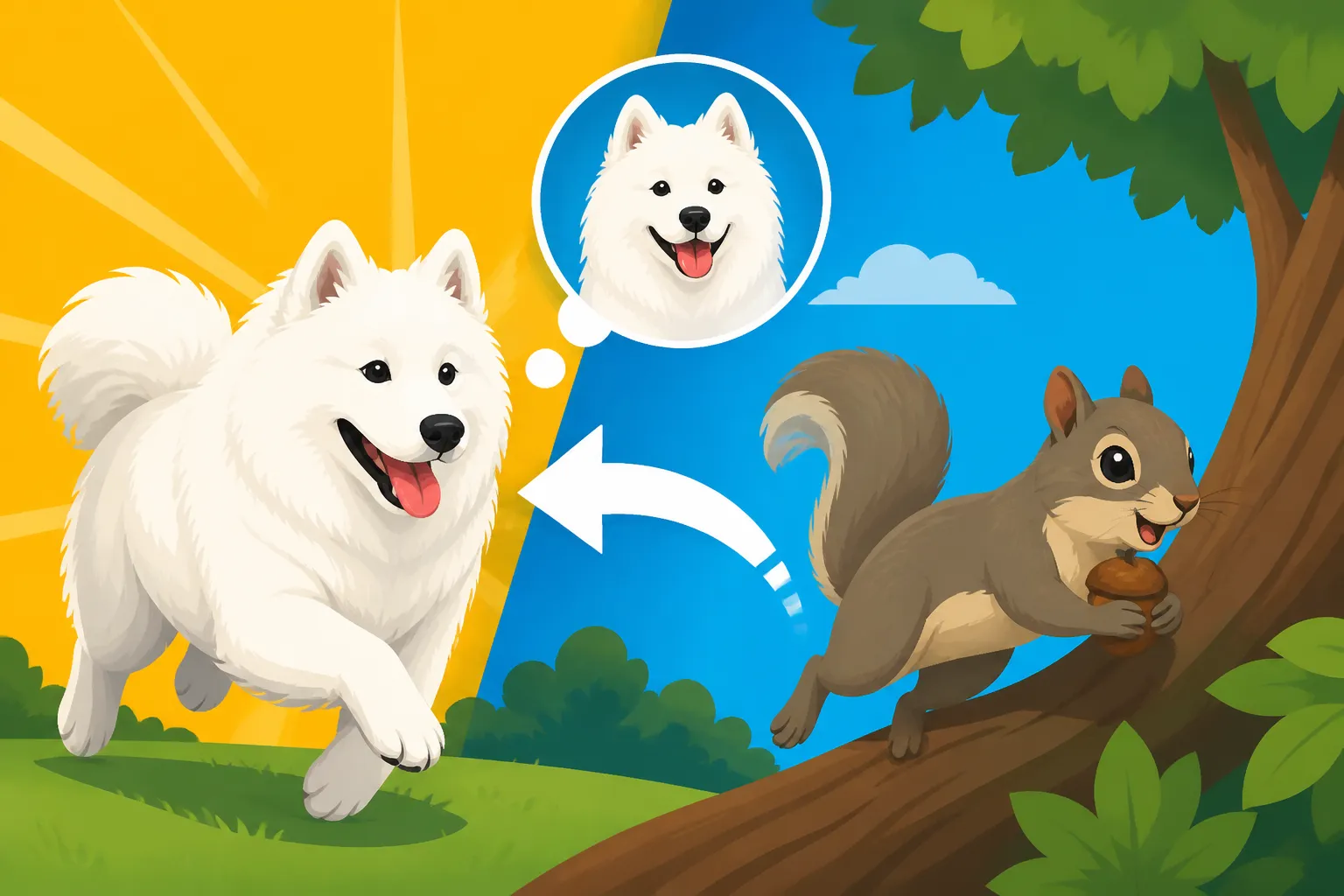
It’s a scenario every Samoyed owner knows all too well: you’re enjoying a beautiful walk, your fluffy companion trotting happily beside you, and then it happens. A flash of grey, a flick of a tail, and suddenly your smiling cloud is a deafening missile, straining at the leash or, worse, bolting across a busy street with a single-minded focus on that furry blur. The frustration is immense, and you’re left wondering if a truly reliable recall, especially off something as irresistible as a squirrel, is even possible with these magnificent, independent dogs. This guide dives deep into the Samoyed's inherent prey drive and offers realistic strategies for building the strongest recall possible, accepting that sometimes, management is the ultimate training tool.
Understanding the Samoyed's Prey Drive
To even begin to tackle the squirrel problem, we first need to understand the very core of what makes a Samoyed tick when it comes to chasing. These aren't just pretty faces; they are working dogs with centuries of instinct woven into their very DNA. That adorable fluffy exterior hides a hunter, even if that hunting was originally for herding reindeer.
Deep-Seated Instincts
Samoyeds come from a long line of working dogs, originally used by the Nenets people for herding reindeer, pulling sleds, and even guarding against predators. While guarding was less about aggression towards humans and more about alerting, their ability to react quickly to moving stimuli was absolutely critical for their survival and their job. This means they have an innate, deeply ingrained prey drive. They see a small, fast-moving creature, and something ancient in their brain screams, "Chase!" It’s not about being disobedient; it’s about responding to a primal call that’s much older and stronger than any command you might have taught in puppy class. It’s hard to override millennia of genetic programming with a few weeks of "come."
Think about it from their perspective. That squirrel isn't just a furry rodent; it's a dynamic, erratic, incredibly exciting, and novel object in their environment. It smells interesting, it moves quickly, and it offers the promise of a chase, which is one of the most natural and rewarding behaviors for a dog with a strong prey drive. When that instinct takes over, your carefully practiced recall command often gets lost in the excitement. It’s like trying to reason with someone who’s just won the lottery while they’re rushing to claim their prize. Their priorities are, shall we say, a bit different at that moment.
The Thrill of the Chase
For a Samoyed, the chase itself is the reward. They don't necessarily want to catch the squirrel – many Samoyeds, if they actually corner one, don't quite know what to do next. It's the pursuit, the thrill of the hunt, the sudden burst of energy and focus that is deeply satisfying. This internal reward system makes it incredibly challenging to compete with when you're trying to call them back. Your treat, no matter how high-value, often pales in comparison to the sheer exhilaration of a full-speed dash after a fleeting critter.
This innate drive is also Why a Samoyed's Recall Cannot Be Trusted in uncontrolled environments. They can have a perfectly reliable recall in your backyard, or even in a quiet park when nothing stimulating is happening, but introduce a squirrel, a rabbit, or even a blowing leaf, and suddenly you're invisible. It's not personal; it's instinct. They're not being stubborn or trying to upset you. They are simply responding to the powerful urges that have kept their ancestors alive for generations. A Samoyed’s brain is wired to detect movement, assess it, and react. That squirrel is just doing its job of triggering that system.
The Challenges of Recalling a Samoyed from Distraction
If you’ve ever felt like your Samoyed has selective hearing when a squirrel appears, you’re not imagining things. It’s not just a matter of "more training"; it’s about understanding the hierarchy of value in your dog’s mind and the sheer power of external stimuli.
What Makes a Squirrel "High Value"?
When we talk about "high-value" distractions, a squirrel is practically at the top of the list for many Samoyeds. Why? Because it encompasses so many stimulating factors:
- Movement: Erratic, quick, and unpredictable movements are intrinsically exciting to a predator.
- Scent: Squirrels leave a scent trail that dogs can easily pick up, even if you can't smell it.
- Sound: The rustle of leaves, the chatter, the distinct scramble of claws on bark – all auditory cues that heighten excitement.
- Visual novelty: They appear and disappear, adding to the thrill.
Imagine someone waving a huge stack of cash in front of you while a friend asks you to pick up a single dropped coin. Which are you going to focus on? For a Samoyed, the squirrel is the huge stack of cash. Your voice, even with a treat in hand, can be like that tiny dropped coin, easily overlooked when something far more interesting captures their attention. What Actually Motivates a Samoyed is crucial to understand here, and often, that motivation is not what we think it is in high-distraction scenarios.
The Sensory Overload
When a Samoyed's prey drive is activated by a squirrel, their entire sensory system goes into overdrive. Their focus narrows, their hearing might selectively tune out everything but the sound of the chase, and their adrenaline surges. In this state, your voice might simply not register, or it might be perceived as background noise. They are literally in a different mental space. Their impulse to chase is so strong that it bypasses the part of their brain that processes learned commands.
This is why consistency is so difficult in real-world scenarios. You might practice your recall command hundreds of times in a quiet setting, and your Samoyed might come zooming back every single time. But when that squirrel zips by, the context changes entirely. It’s no longer a training exercise; it’s a full-blown instinctual response. This is a common source of frustration for owners who feel their training isn't "sticking." It's not that your training is bad; it's that the distraction is incredibly powerful. This sensory overload is also why it's so important to have a solid foundation before attempting recall in high-distraction areas.
Strategies for Building a More Reliable Recall
While completely overriding a Samoyed's instinctual prey drive might be an unrealistic goal, we can certainly work towards building a much stronger, more reliable recall. It’s about careful management, consistent training, and setting your Samoyed up for success.
Starting with Low-Distraction Environments
You wouldn’t ask a child to solve calculus before they’ve mastered basic arithmetic, and the same applies to your Samoyed’s recall. Begin in the most controlled, lowest-distraction environment possible. Your living room, a securely fenced yard with no visible critters, or a quiet, empty park are ideal starting points. The goal is to build a rock-solid foundation where your Samoyed always comes when called, because there's absolutely nothing else competing for their attention.
Use ridiculously high-value rewards at this stage. We're talking cooked chicken, cheese, hot dogs – not just dry kibble. The moment your Samoyed even starts to turn towards you when called, reward them. Make coming to you the most exciting, rewarding thing in their world. Practice short, frequent sessions multiple times a day. Gradually introduce very minor distractions – a person walking by at a distance, a ball rolling slowly – but always ensure your dog succeeds. This builds positive associations and strengthens the neural pathway for "come = amazing things happen." Many online programs, like those from BAXTER & Bella, emphasize this step-by-step approach to building reliable responses in increasing levels of distraction.
High-Value Rewards and Consistent Practice
As you move to slightly more distracting environments, your rewards need to stay top-tier. Your Samoyed is making a choice – to ignore the potential distraction and come to you. That choice needs to be handsomely compensated. If you’re trying to call them off a fascinating sniff or a distant bird with a piece of dry biscuit, you’re setting yourself up for failure. Save the prime treats for recall. Also, vary your reward. Sometimes it's food, sometimes it's a quick game of tug with a favorite toy, sometimes it's enthusiastic praise and petting. Keep them guessing and excited.
Consistency is absolutely paramount. Every single time you call your Samoyed, you need to be prepared to enforce it and reward it. If you call them and they ignore you, and you don't follow through, you're teaching them that "come" is optional. This is where patience comes in. If you're out on a long line (more on that next) and they get distracted, gently reel them in while repeating your cue, then reward them when they reach you. Never punish them for coming, even if it took a while or you had to guide them. The act of returning to you must always be positive. Proofing a Samoyed's Recall requires these consistent, positive experiences across many different situations.
The Role of Long Lines and Safety Gear
For a Samoyed with a strong prey drive, especially around squirrels, the idea of an "off-leash" recall in an uncontrolled environment is often a fantasy, not a goal. This is where management tools become your best friends. A long line (15-30 feet or more) is absolutely indispensable for practicing recall in more open, stimulating areas safely. It allows your Samoyed to explore, feel some freedom, and encounter distractions while still giving you the ability to intervene. You can find excellent quality long lines made from durable biothane or nylon on Amazon.
Attach the long line to a well-fitting harness, not their collar, to prevent neck injury if they bolt. Practice calling them while they're on the long line, giving them a chance to be successful. If they get too engrossed in something, gently step on the line or give a slight, consistent tug to redirect their attention before you call them. This pre-empts the full chase sequence. Another crucial safety measure, especially if you ever consider letting them off-leash in designated, truly secure areas, is a reliable GPS collar. While it doesn't prevent them from running, it offers peace of mind if they do manage to get away, helping you track them down. A GPS collar can be a lifesaver, and you can find various models that integrate with smartphone apps. Consider a GPS collar (Whether a GPS Collar Is Worth It for a Samoyed) if you live in an area with a lot of tempting wildlife.
Realistic Expectations and Management
Ultimately, owning a Samoyed with a strong prey drive means adjusting your expectations. It’s about balancing training with smart management and accepting that some instincts are just too powerful to entirely extinguish.
When to Trust, When to Leash
The hard truth for many Samoyed owners is that a perfectly reliable off-leash recall, especially in an area known for squirrels or other small wildlife, might simply never happen. And that’s okay. It doesn't mean you've failed as an owner or trainer; it means you understand and respect your dog's breed-specific instincts. For most Samoyeds, particularly those who haven't been intensely trained for working disciplines like sledding or advanced obedience that demand supreme focus, safety dictates keeping them leashed in any area where a squirrel could appear and present a danger.
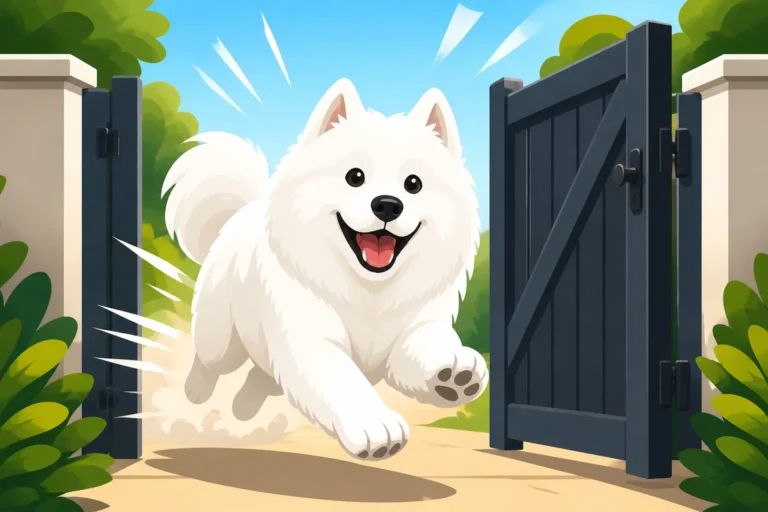
This isn't to say you can't have moments of off-leash freedom. Secure, truly fenced-in dog parks or private fields can offer opportunities for your Samoyed to run and play. However, even in these spaces, always remain vigilant. A new hole under the fence or a gate left ajar could be an invitation for trouble. It's often better to err on the side of caution. Remember, Whether a Samoyed Can Ever Be Off Leash is a question with a highly individual answer, and for many, the answer in an uncontrolled environment is "no."
Training Aids and Professional Help
Beyond the basic long line and high-value treats, there are other tools and methods that can support your recall training. A good quality front-clip harness or a head halter can give you better control on walks, helping to manage their initial lunge when a squirrel appears. While these are not training solutions in themselves, they prevent your Samoyed from practicing the rewarding behavior of pulling towards the distraction, making your training efforts more effective. Consider Whether a No Pull Harness Works on a Samoyed as a management tool.
If you're struggling, don't hesitate to seek professional help. A certified professional dog trainer (CPDT-KA) or a force-free trainer can offer personalized guidance, help you identify your Samoyed's specific motivations, and provide tailored strategies. They can observe your dog's behavior and help you work through challenges in a structured, safe way. They might introduce advanced techniques like "prey drive channeling" where you redirect that energy into appropriate activities, or impulse control games that teach your Samoyed to think before acting. Investing in professional guidance can make a world of difference, not just for recall, but for Training a Samoyed That Finds Obedience Negotiable in general.
Recall Training Progress Checklist
| Stage | Environment | Distraction Level | Reward Value | Equipment Recommended | Expected Success Rate |
|---|---|---|---|---|---|
| Foundation | Indoors, Quiet Backyard | None, Minor (still) | Very High | Flat collar, leash | 95-100% |
| Controlled Outdoor | Fenced Park (empty) | Low (distant people) | Very High | Harness, long line | 80-90% |
| Moderate Distraction | Public Park (quiet time) | Moderate (people, dogs) | High | Harness, long line, GPS | 60-75% |
| High Distraction | Trail with Wildlife | High (squirrels, birds) | High / Management | Harness, long line, GPS | 20-50% / Focus on management |
Remember, progress isn't always linear, and some days will be better than others. The goal is improvement and safety, not necessarily perfection.
Disclaimer
This article is for general informational purposes only and does not constitute professional advice. Laws, prices and regulations vary by location and change over time. Consult a qualified professional for guidance on your specific situation.