Whether a Long Line Is Enough for a Samoyed
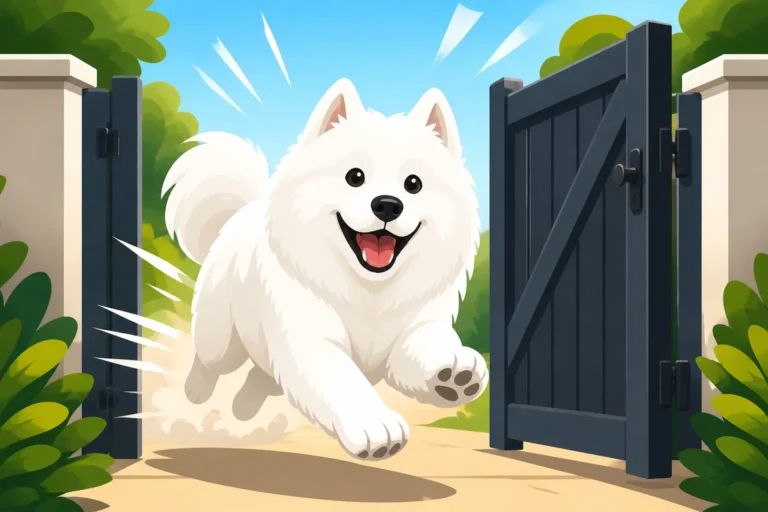
One of the biggest anxieties for a Samoyed owner is the dream of letting their fluffy companion romp freely, completely off-leash, in a wide-open space. Yet, the stark reality is that these beautiful dogs, bred for vast northern landscapes, often possess an independent streak and a powerful prey drive that makes a reliable off-leash recall feel like an impossible fantasy. This guide will delve into whether a long line truly offers enough freedom and security for your Samoyed, and when it simply isn't a sufficient substitute for solid training and secure boundaries.
The Samoyed's Instinct for Exploration and Independence
Let's be honest, we all see those videos of dogs bounding happily through fields, coming instantly when called. Then we look at our own Samoyed, who might pause mid-sniff, glance at us, and then decide that the fascinating scent of squirrel is far more compelling than our plea to "COME!" This isn't stubbornness, not exactly, but a deep-seated instinct. Samoyeds were originally bred to herd reindeer over vast, unfenced tundra and to pull sleds for long distances. Their survival depended on a certain level of independence and the ability to make decisions without constant human supervision.
This incredible heritage means that while your Samoyed loves you fiercely and wants to be near you, they also have a strong drive to explore, to follow their nose, and to chase. A scent trail can be an irresistible siren call, pulling them away from you faster than you can shout their name. This is why the question of off-leash freedom is so fraught for Samoyed owners. We want them to experience the joy of running, but we also live in a world filled with cars, other dogs, and temptations that can lead to disaster if their recall isn't absolute. Why a Samoyed's Recall Cannot Be Trusted is a topic many of us grapple with daily, and it's rooted in these ancient instincts.
Understanding the Long Line as a Training Tool
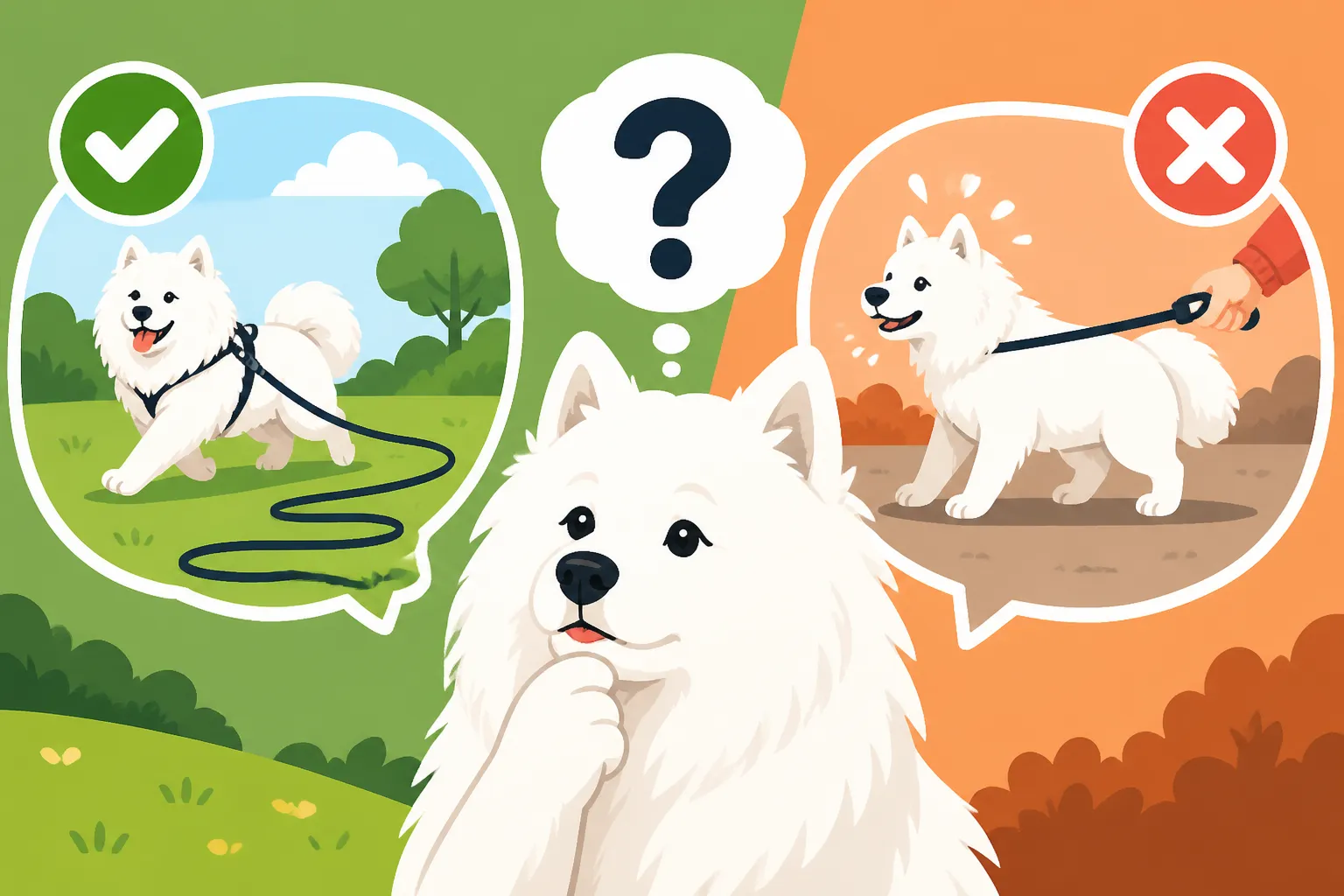
A long line, essentially a very long leash, typically ranging from 15 to 50 feet or more, is a fantastic bridge between on-leash walks and reliable off-leash freedom. It allows your Samoyed to explore a wider area, sniff to their heart's content, and practice coming back to you, all while remaining safely tethered. It gives you peace of mind that you can physically intervene if they ignore a command or bolt towards something dangerous. Think of it as a safety net for those crucial training moments.
Benefits of Using a Long Line for Samoyeds
Using a long line effectively means more than just clipping it on and letting your Samoyed drag it around. It's a strategic training tool. First and foremost, it grants your Samoyed a sense of freedom that a standard 6-foot leash simply can't. They can gallop, sniff, and investigate without you hovering right over them, which is incredibly enriching for a breed with such a strong desire for movement and sensory input.
Secondly, it's invaluable for practicing recall in a controlled environment. You can call your Samoyed, and if they hesitate, you have the ability to gently reel them in, reinforcing the "come" command. This consistent, low-pressure practice helps build a positive association with returning to you. Many owners find success by starting in a quiet, fenced area, then moving to more stimulating environments once the recall is solid. Proofing a Samoyed's Recall is an ongoing process, and the long line is a key player in that journey. You can find excellent quality long lines made of biothane or nylon on platforms like Amazon, choosing lengths appropriate for your training space and your dog's size.
Thirdly, it's an excellent way to safely introduce your Samoyed to new smells, sights, and sounds, helping them to generalize their training in different contexts. A Samoyed can become accustomed to distractions while still being secure. It allows you to anticipate and manage situations before your dog has the chance to make a bad decision, rather than reacting after the fact.
Choosing the Right Long Line
Not all long lines are created equal, and selecting the right one can make a huge difference in your training experience. Here’s a quick guide:
| Feature | Description | Why It Matters for a Samoyed |
|---|---|---|
| Material | Nylon: Lightweight, affordable, but can tangle and absorb water/dirt. Biothane: Durable, waterproof, easy to clean, less tangle-prone, but generally more expensive. |
Samoyeds love to roll and get dirty. Biothane is a dream for ease of cleaning and resisting matting in their coat. Nylon is fine for dry conditions but can become heavy and abrasive when wet, and it holds onto burrs and mud. |
| Length | 15-20 feet for beginners or smaller spaces. 30-50 feet for more advanced training and larger, open areas. |
You want enough length to allow exploration but not so much that it becomes unmanageable or a tripping hazard. Too short, and it defeats the purpose of "long." Too long, and it's a tangled mess. Consider your environment – a 50-foot line in a small park is impractical. |
| Width/Strength | Choose a width and clip strength appropriate for your Samoyed's size and pulling power. A slender line might snap or feel uncomfortable to hold if your Samoyed lunges. | Samoyeds are powerful dogs. A flimsy clip will break, and a thin line can cut into your hands if they decide to bolt. Opt for a robust line with a sturdy, reliable clip, especially since How Much a Samoyed Can Pull is considerable, even on a long line. |
| Handle | Some long lines come with a handle loop, others are handle-free to prevent snagging. | A handle can be a blessing for quick grabs but a curse if it snags on branches, especially if the dog is running unattended with it. For active training where you're holding the line, a comfortable, padded handle is great. If you plan to let it drag, a handle-free option is safer to prevent entanglement. |
Remember, when using a long line, never let it wrap around your dog’s legs or your own. Always wear gloves to protect your hands, as a sudden surge from a powerful Samoyed can cause rope burn.
Limitations of the Long Line: When It's Not Enough
While a long line is an indispensable tool, it's critical to understand its limitations. It is not a substitute for a truly reliable recall or secure physical containment. Relying solely on a long line without complementary training can give a false sense of security.
False Sense of Security
One of the biggest pitfalls of a long line is believing it means your Samoyed is "off-leash." They aren't. They are still tethered, and while it provides a safety net, it doesn't build the internal impulse control and responsiveness that a genuinely strong recall does. If your Samoyed is dragging a 30-foot line and suddenly spots a rabbit across a busy road, they will bolt. That line can get tangled, snagged, or simply pulled out of your hand if you're not prepared. How Far a Loose Samoyed Travels can be astonishingly quick, even with a line trailing.
The goal isn't just to physically restrain your Samoyed, but to teach them that coming to you is the absolute best thing in the world, no matter the distraction. This is where comprehensive training programs come in, such as those offered by BAXTER & Bella, which focus on positive reinforcement and building a strong relationship.
Environmental Hazards
Using a long line in the wrong environment can be dangerous. Think about areas with dense brush, low-hanging branches, or busy foot traffic. A long line can easily get tangled around trees, trip other people or dogs, or even wrap around your Samoyed's legs, causing injury. Public parks with strict leash laws might not permit the use of a 50-foot line, even if you are holding it.
Imagine your Samoyed happily romping, and the long line catches on a hidden stump, jerking them back violently. Or, consider if they get a burst of zoomies and tangle themselves, potentially causing a sprain or a nasty fall. These are real concerns that need to be carefully weighed when deciding where and when to use a long line.
Lack of Consistent Recall Training
The biggest limitation of a long line is if it's used as a crutch rather than a tool for consistent recall training. If you're always relying on the physical presence of the line to bring your Samoyed back, you're not teaching them why they should come back on their own. The physical act of reeling them in doesn't instill the same level of internal motivation as a rewarding, voluntary recall.
For a Samoyed, whose independence is so inherent, training needs to be engaging and highly motivating. What Actually Motivates a Samoyed often includes high-value treats, exciting toys, and enthusiastic praise. Without focusing on building that motivation, the long line just becomes a longer leash, not a stepping stone to freedom.
Beyond the Long Line: Building a Rock-Solid Recall
So, if a long line isn't a magical solution, what is? It's a multi-faceted approach that combines diligent training, management, and a deep understanding of your Samoyed's natural tendencies. The ultimate goal should be a recall so strong that your Samoyed chooses to return to you, even when faced with overwhelming distractions.
Foundation Training and Proofing
Building a reliable recall starts with a strong foundation in low-distraction environments. Begin in your home or a securely fenced yard, practicing "come" multiple times a day with high-value rewards. Once your Samoyed is consistently responding, you introduce the long line in a slightly more distracting, but still safe, area. This is where you gradually increase distractions, one at a time, until your Samoyed can reliably respond even in tempting situations. This process is called "proofing" and it's essential.
Consider joining an online puppy training course, such as those offered by BAXTER & Bella, which often provide structured modules for recall training that you can follow at your own pace. These courses guide you through the steps, from basic obedience to advanced proofing, using positive reinforcement methods that work well with intelligent, independent breeds like Samoyeds. Remember, the journey to a solid recall is a marathon, not a sprint. The First Year With a Samoyed Puppy is critical for establishing these habits.
High-Value Rewards and Enthusiasm
Samoyeds are intelligent but can be selective in their obedience. To make coming back to you irresistible, you need to be the most exciting thing in their world. This means using truly high-value treats – not just dry kibble, but bits of chicken, cheese, or hot dogs. Your voice should be enthusiastic, your body language inviting, and the reward a grand celebration.
Avoid using "come" when you know your Samoyed won't respond, or when you're about to do something they dislike, like leave the park or give them a bath. This can poison the cue. Instead, call them, reward them, and then let them go back to what they were doing. This builds a positive association with the word. Why a Samoyed Ignores a Cue It Knows often comes down to lack of motivation or negative associations.
The Reality of Off-Leash Freedom
For many Samoyed owners, true off-leash freedom in unfenced public areas remains a dream, and that's okay. Recognizing the inherent risks and your dog's strong instincts is responsible ownership. Instead of forcing an unsafe situation, consider alternatives:
- Secure Dog Parks: If your Samoyed is dog-social and you have a well-maintained, double-gated dog park nearby, these can offer opportunities for off-leash play. However, always assess the other dogs and owners present.
- Sniff Spot Rentals: Many private property owners rent out their securely fenced yards by the hour through services like Sniffspot. This is a fantastic way to give your Samoyed a truly safe, off-leash experience.
- Long Line for Life: For some Samoyeds, a long line might indeed be "enough" for their entire lives, providing that sense of freedom while maintaining safety. This is particularly true if you don't have access to secure off-leash areas or if your Samoyed's prey drive is exceptionally high.
- Training with a GPS Collar: While not a substitute for training, a GPS collar (readily available on Amazon) can offer an additional layer of security for the adventurous Samoyed, giving you peace of mind if they do manage to get away, even on a long line. Whether a GPS Collar Is Worth It for a Samoyed is a common question, and for Samoyeds, the answer is often yes, as a backup.
Ultimately, deciding "whether a long line is enough for a Samoyed" depends on your individual dog, your commitment to training, and the specific environments you frequent. It's a powerful tool, but like any tool, its effectiveness depends on how it's used and whether it's part of a larger, well-thought-out plan for your Samoyed's safety and well-being.
Disclaimer
This article is for general informational purposes only and does not constitute professional advice. Laws, prices and regulations vary by location and change over time. Consult a qualified professional for guidance on your specific situation.