Whether the Samoyed Kidney Disease Went by Another Name
It can be incredibly frustrating and confusing when you're researching a serious health condition in your beloved Samoyed, only to find multiple names thrown around for what seems like the same problem. This guide is here to untangle the historical naming conventions and clarify what we now definitively call the kidney disease that can tragically affect our beautiful Samoyeds, ensuring you have the most accurate information available to protect your furry family member.
The Historical Confusion: Early Understandings and Misnomers
For many years, before the incredible advancements in genetic research, the devastating kidney disease that afflicts Samoyed males was understood through its symptoms and general pathology, but not its underlying genetic cause. This led to a variety of names being used, often interchangeably, which created a lot of confusion for dedicated owners and even veterinarians who weren't deeply immersed in Samoyed-specific health issues. You might have heard terms like "Samoyed Nephropathy," "Samoyed Glomerulopathy," or even more vaguely, "juvenile kidney disease" or "hereditary nephritis."
Why the Older Names Lacked Specificity
The challenge with these older names was their lack of specificity. "Nephropathy" simply means kidney disease, a broad term that could apply to any number of conditions affecting the kidneys. "Glomerulopathy" narrows it down slightly, indicating a disease primarily affecting the glomeruli, the tiny filtering units within the kidneys. While accurate in describing the location of the damage, it didn't explain why it was happening or that it was an inherited condition unique to the Samoyed breed. Imagine trying to explain to your vet that your dog has "kidney disease" when you suspect it's the breed-specific, inherited form – without a precise name, it’s like trying to find a specific book in a library when all the sections are just labeled "fiction" or "non-fiction."
Many of these early terms were observational. Veterinarians would see young Samoyed males declining rapidly from kidney failure and, knowing it was prevalent in the breed, might refer to it generically. There wasn't a consensus, or the scientific tools, to pinpoint the exact genetic mutation causing the disease. This meant that while people knew of the problem, truly understanding its nature and developing targeted breeding strategies to avoid it was a much harder task. This era of less specific naming truly highlights the difficulties owners faced in getting clear answers and proactive advice for their dogs.
The Problem with "Hereditary Nephritis"
"Hereditary nephritis" was another common term, and it was certainly a step closer to accuracy, acknowledging the inherited nature of the disease and its impact on the kidneys. However, even this term could be misleading. "Nephritis" implies inflammation of the kidneys, which isn't the primary issue in the Samoyed's specific condition. While inflammation can certainly be a secondary complication as the kidneys fail, the root cause is a structural defect in the collagen of the glomerular basement membrane, not an inflammatory process.
This distinction is crucial because it changes the focus of research, potential treatments, and ultimately, breeding efforts. If one believes it's purely an inflammatory condition, the approach might be to suppress inflammation, which would not address the fundamental structural problem. It’s like trying to fix a leaky pipe with a bandage when the real issue is a crack in the pipe itself. The more precise the name, the clearer the understanding, and the better the chance of effective management and prevention.
Unpacking the Current Name: Samoyed Hereditary Glomerulopathy (SHG)
Thanks to dedicated research and the tireless work of geneticists, we now have a precise and universally accepted name that accurately describes the inherited kidney disease in Samoyeds: Samoyed Hereditary Glomerulopathy (SHG). This name encapsulates everything we've come to understand about the condition, providing clarity and a common language for owners, breeders, and veterinary professionals alike.
Why "Samoyed Hereditary Glomerulopathy" Is Accurate
Let's break down why this name is so spot-on:
- Samoyed: This immediately tells us it's a breed-specific condition. While other breeds have their own inherited kidney issues, SHG is unique to our beloved fluffy white dogs. This helps focus diagnostic efforts and alerts veterinarians to a specific possibility when examining a Samoyed puppy or young adult with kidney concerns. It means that when you mention this term, anyone familiar with breed health issues knows exactly which disease you’re referring to.
- Hereditary: This crucial word confirms that the disease is passed down through genes from parents to offspring. It emphasizes the genetic basis, which is key to understanding prevention strategies, like responsible breeding. It moves us away from vague ideas of environmental factors or spontaneous development and firmly places the cause in the dog’s genetic makeup. Understanding the hereditary nature is the first step in breaking the cycle. As detailed in posts like Whether a Samoyed Male Inherits the Gene From His Mother, this inheritance pattern is specific and important.
- Glomerulopathy: As mentioned before, this term points directly to the primary site of damage: the glomeruli. These tiny blood vessel tufts in the kidneys are responsible for filtering waste from the blood and retaining essential proteins. In SHG, the collagen structure supporting these filters is defective, leading to their progressive breakdown. This accurate localization helps explain the symptoms, particularly the early protein loss in urine, a hallmark sign. To understand the specifics, you might find What Samoyed Hereditary Glomerulopathy Does to the Kidneys an incredibly helpful read.
This comprehensive name ensures that when you're discussing your Samoyed's health, everyone is on the same page. It’s no longer a vague "kidney problem" but a specific, inherited glomerular disease with a known genetic basis.
The Role of COL4A5 Gene Mutation
The scientific breakthrough that solidified the name and understanding of SHG was the identification of the specific genetic mutation responsible for the disease. Researchers discovered that SHG is caused by a mutation in the COL4A5 gene. This gene provides instructions for making a particular type of collagen, specifically alpha-5 type IV collagen, which is a vital component of the glomerular basement membrane in the kidneys.
When this gene is mutated, the collagen isn't formed correctly, leading to a weak, leaky, and eventually dysfunctional filter. This is why the condition is also known as X-linked hereditary nephritis or Alport Syndrome-like nephropathy in some scientific circles, mirroring a similar condition in humans. The X-linked nature explains Why Samoyed Hereditary Glomerulopathy Only Devastates the Boys and why females are typically carriers but rarely affected as severely. This discovery led directly to the development of a DNA test, which is a game-changer for breeders and owners. If you're looking to purchase a Samoyed puppy, asking for The COL4A5 Test Every Samoyed Buyer Should Ask About results is paramount.
Why the Name Matters: Impact on Diagnosis and Breeding
Understanding the correct name for this condition isn't just about semantics; it has profound practical implications for both the individual Samoyed and the future of the breed. Clear, accurate terminology empowers owners, guides veterinary diagnostics, and underpins responsible breeding practices.
Guiding Accurate Diagnosis
When a veterinarian hears "Samoyed Hereditary Glomerulopathy," they immediately know to consider a specific set of diagnostic pathways and potential treatments. Instead of a broad investigation into all possible kidney diseases, the focus can be narrowed to tests relevant to SHG. This includes:
- Urine Protein:Creatinine Ratio (UPC): This is a critical early screening test, as protein loss in the urine is one of the first detectable signs of glomerular damage. Knowing what to look for, and when to look for it, is vital. You can learn more about Signs a Samoyed Is Losing Protein in Its Urine.
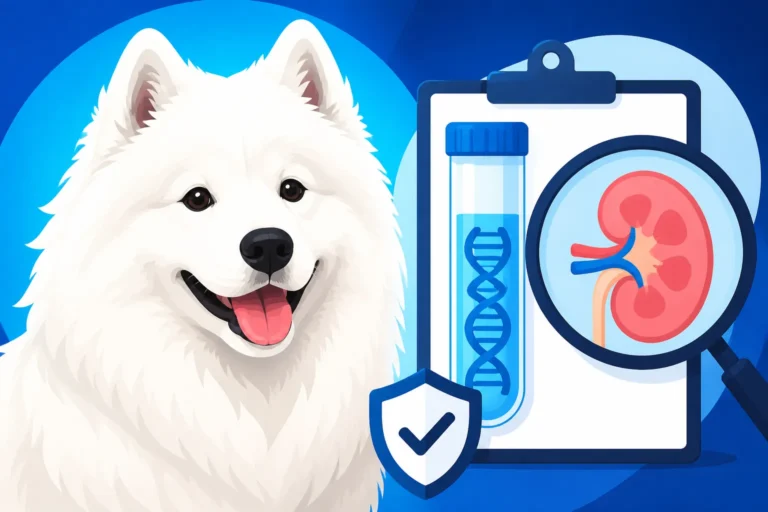
- Genetic Testing: The availability of a DNA test for the COL4A5 mutation is a direct result of understanding the genetic basis of SHG. This test can identify affected males and carrier females, even before symptoms appear. This proactive testing is invaluable.
- Kidney Biopsy: While invasive, a biopsy can confirm the characteristic lesions in the glomerular basement membrane. Knowing the specific condition helps pathologists interpret these findings correctly.
Without the specific name, a vet might pursue a less targeted approach, potentially delaying diagnosis or leading to less effective management. Early and accurate diagnosis, while not a cure, can sometimes allow for supportive care that might slightly improve quality of life. Even pet insurance providers like Healthy Paws benefit from clear diagnoses, as it allows for proper claim processing for chronic conditions.
Foundation for Responsible Breeding Practices
The shift to "Samoyed Hereditary Glomerulopathy" has transformed breeding practices. Once the COL4A5 mutation was identified and linked to this specific disease, breeders could take proactive steps to avoid producing affected puppies.
This is how breeders leverage the knowledge:
- Carrier Identification: Female Samoyeds can be carriers of the SHG gene without showing severe symptoms themselves, or only very mild ones later in life. Knowing that Why a Carrier Female Samoyed Stays Mild, breeders can test all breeding females to identify carriers.
- Strategic Mating: By ensuring that a carrier female is only bred to a clear (non-carrier) male, breeders can prevent the birth of affected male puppies. All male offspring of such a mating would be clear, and female offspring would have a 50% chance of being carriers, but none would be affected. This drastically reduces the incidence of the disease. A deep dive into How a Samoyed Breeder Avoids Producing Affected Males shows the true dedication required.
- Reducing Gene Prevalence: Over time, through careful breeding choices, the goal is to reduce the prevalence of the COL4A5 mutation in the Samoyed gene pool, leading to a healthier breed overall.
Here's a simplified breakdown of genetic outcomes:
| Female Status | Male Status | Male Offspring | Female Offspring |
|---|---|---|---|
| Clear (XX) | Clear (XY) | 100% Clear (XY) | 100% Clear (XX) |
| Carrier (X*X) | Clear (XY) | 50% Clear (XY), 50% Affected (X*Y) | 50% Clear (XX), 50% Carrier (X*X) |
| Affected (XX) | Clear (XY) | 100% Affected (X*Y) | 100% Carrier (X*X) |
Note: Females need two copies of the mutated gene to be affected, which is extremely rare. Males only need one copy from their mother because they only have one X chromosome, making them far more susceptible.
This table makes it starkly clear why testing, especially for females, is so important. Without the precise name and understanding of the X-linked inheritance, these targeted breeding programs would not be possible, and the disease would continue to decimate young male Samoyeds.
Navigating the Information Landscape: What Owners Need to Know
For current or prospective Samoyed owners, navigating the vast sea of information about breed health can be overwhelming. Understanding the correct terminology and where to find reliable information is paramount to ensuring your Samoyed lives the fullest, healthiest life possible.
Asking the Right Questions
When talking to breeders or veterinarians, using the correct terminology can make a huge difference. Instead of asking about "Samoyed kidney disease," specifically ask about Samoyed Hereditary Glomerulopathy (SHG) and the COL4A5 genetic test.
Here are some questions to ask a breeder:
- "Have the parents of this puppy been tested for the COL4A5 mutation causing Samoyed Hereditary Glomerulopathy?"
- "Can I see the health test results for both parents, specifically the genetic clearance for SHG?"
- "What is your breeding philosophy regarding genetic diseases like SHG?"
For an existing Samoyed, especially if you see any signs like increased thirst, changes in urination, or lethargy, ask your vet about a urine protein:creatinine ratio test and discuss the possibility of SHG. Early intervention, even for symptomatic treatment, can make a difference in conditions like these. While there's no cure, understanding Whether an Affected Samoyed Can Be Treated and managing symptoms is crucial.
Reliable Resources for Samoyed Health
The internet is a wonderful tool, but also a source of misinformation. When researching Samoyed health, always prioritize reputable sources. Breed club websites, university veterinary medicine sites, and established genetic testing laboratories are excellent starting points.
Consider these resources:
- Samoyed Club of America (SCA) or your country's national Samoyed club: These organizations often have extensive health sections, lists of recommended tests, and even position statements on genetic diseases. They are usually at the forefront of breed-specific health research and education.
- OFA (Orthopedic Foundation for Animals) or PennHIP: While primarily known for orthopedic clearances, OFA also tracks and certifies other health tests, including some genetic tests, and can be a good resource for understanding health screening protocols.
- University Veterinary Teaching Hospitals: Many universities conduct research into breed-specific diseases and have specialists who can provide up-to-date information and advanced diagnostics.
Being an informed owner means being a proactive advocate for your Samoyed's health. The more you know, the better equipped you are to make sound decisions and work effectively with your veterinary team. Even something as seemingly simple as understanding the proper name for a disease can cut through confusion and lead to better outcomes. And when you are contemplating the financial aspect of unexpected illness, remember that pet insurance can offer a safety net, with companies like Healthy Paws helping owners cover significant veterinary costs, particularly with chronic conditions. Planning for a lifetime of care, which for a Samoyed can be The Twelve to Fourteen Years a Samoyed Lives, means anticipating potential health challenges.
The Importance of Ongoing Education
The field of canine genetics and veterinary medicine is constantly evolving. What we know about Samoyed Hereditary Glomerulopathy today is far more advanced than even a decade ago. As an owner, committing to ongoing education is vital. Stay in touch with your breed club, read updates from veterinary researchers, and continue to engage with your veterinarian about the latest recommendations for Samoyed health.
This commitment not only benefits your current Samoyed but also contributes to the collective knowledge that helps improve the health and lifespan of the breed for generations to come. Even if your Samoyed is healthy, understanding the potential challenges helps you appreciate their resilience and gives you the knowledge to support those who might be facing these tough diagnoses. Early detection, for example, of Signs a Samoyed Is Getting Old and other age-related conditions can make a significant difference in their comfort and longevity.
Disclaimer
This article is for general informational purposes only and does not constitute professional advice. Laws, prices and regulations vary by location and change over time. Consult a qualified professional for guidance on your specific situation.