Why a Samoyed Nips a Running Child
It can be incredibly alarming and even heartbreaking to see your fluffy, smiling Samoyed gently nip at a running child, especially if that child is your own or a guest. You bought this breed for their reputation as wonderful family dogs, right? So when you witness that sudden lunge and a little nip, even if it's not truly aggressive, it shakes your confidence and leaves you wondering what on earth is going on. This guide is here to shed light on why your Samoyed might be exhibiting this specific behavior and, more importantly, what you can do to manage and prevent it, ensuring a harmonious and safe home for everyone.
Understanding the Samoyed's Herding Instinct
Many Samoyed owners, especially those new to the breed, are often surprised to learn that these beautiful dogs, originally from Siberia, have a strong herding background. While they're famous for pulling sleds and being tent companions, their ancestral job also involved gathering reindeer. This isn't the same as a Border Collie's intense stare and crouch, but it manifests in different, sometimes subtle, ways.
A History of Working with Reindeer
Imagine vast, open tundras where nomadic tribes, the Nenets, depended on their reindeer for survival. These aren't fenced herds; they roam freely. The Samoyeds were indispensable in keeping these animals together, moving them from one grazing ground to another, and protecting them from predators. Their role wasn't to "fetch" a single stray, but to group them, often using their bodies and mouths to direct movement. This instinct is deeply ingrained, a genetic blueprint passed down through generations. When you see your Samoyed's intelligent eyes tracking something that moves quickly, you're glimpsing centuries of instinct at play. The Herding Instinct Nobody Expects From a Samoyed delves deeper into this fascinating history.
The 'Nip and Gather' Technique
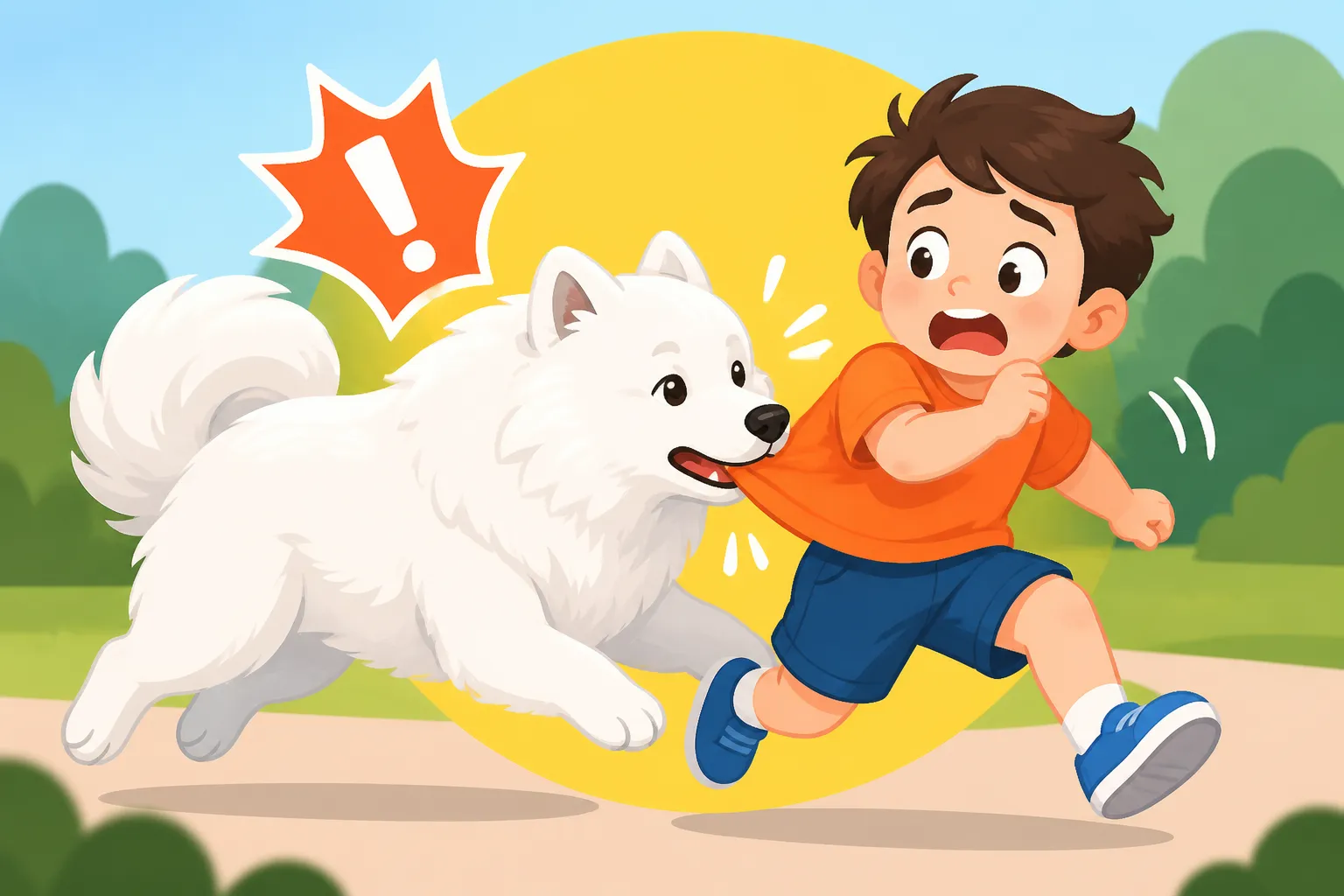
Because of their reindeer herding lineage, Samoyeds can have a predisposition to "nip and gather." This means they might instinctively try to control the movement of anything that runs away from them, whether it's a recalcitrant reindeer or, in our modern homes, a fast-moving child. It's usually not an aggressive bite intended to cause harm, but rather a quick, sharp grab with the front teeth, often directed at the legs or clothing, designed to stop or redirect movement. Think of it as their natural way of saying, "Hey, stay with the group!" It's less about hurting and more about controlling.
This isn't to say it's acceptable or harmless. A nip, even a gentle one, can still startle, scratch, or bruise a child, and it can certainly instill fear. It's a behavior that needs to be understood and addressed, not dismissed. What feels like a "play nip" to a dog can be terrifying to a small human.
Prey Drive vs. Herding
It’s important to distinguish between a herding instinct and a pure prey drive, although they can sometimes overlap. A pure prey drive often involves chasing, catching, and sometimes killing. While Samoyeds can have a moderate prey drive (think squirrels!), their herding instinct is more about control and containment rather than outright capture and destruction. When a child runs, the Samoyed's instinct isn't necessarily to "hunt" them, but to bring them back into the "herd" or stop their flight.
Understanding this nuance helps you tailor your approach. If it were purely prey drive, the strategies might focus more on desensitization to movement. With herding, it's about teaching the dog that humans get to decide who goes where, and that nipping is never an acceptable form of direction.
Why Children Trigger This Behavior
So, why do running children often become the target of this ancient instinct? It boils down to a few key factors that inadvertently mimic the very things a Samoyed was bred to manage.
Running and High-Pitched Sounds
Children, bless their energetic hearts, are often a flurry of activity. They run, they skip, they wave their arms, and they make excited, high-pitched noises. To a Samoyed with a strong herding background, these actions can be strikingly similar to the erratic movements and sounds of young reindeer or other livestock. The dog's brain, hardwired for centuries, interprets this as something that needs to be gathered or controlled. It's not malice; it's instinct.
Think of it from the dog's perspective: a small, fast-moving object emitting interesting sounds. It's a perfect storm for triggering that "gotta herd that!" response. This is why a calm, walking child is often ignored, while the moment they break into a run, the Samoyed might spring into action. It's an automatic, reflexive response that bypasses conscious thought.
Lack of Understanding Canine Body Language
Another significant factor is the communication gap between children and dogs. Children, especially young ones, don't inherently understand canine body language. They might inadvertently invite play that escalates or miss subtle cues from the dog that it's becoming overstimulated or uncomfortable. A child might lean over a dog, pull its tail (accidentally or otherwise), or get too close to its face, all behaviors that can stress a dog. When a dog is stressed or overly excited, its inhibitions can lower, making it more likely to act on instinct.
Moreover, if a child squeals or runs away after a dog's initial lunge, it can inadvertently reinforce the behavior. To the dog, the running away is further proof that the "reindeer" is escaping, and the chase/nip instinct kicks in harder. It becomes a self-fuluating cycle that can be incredibly difficult to break without intervention. A Samoyed With Children and Other Animals offers more insights into managing multi-species households.
Strategies to Prevent Nipping
Preventing this behavior requires a multi-faceted approach involving management, training, and education for both your Samoyed and your children. It’s about being proactive and consistent.
Supervision and Management
The very first and most crucial step is strict supervision. Never leave a Samoyed unsupervised with children, especially if the nipping behavior has already occurred. This isn't about blaming the dog or the child; it's about preventing incidents. Use baby gates, crates, or leashes to create physical barriers when you can't give your undivided attention. A large playpen can also serve as a safe space for your Samoyed, allowing them to be in the same room but separated from the children's unpredictable movements.
- Create Safe Spaces: Designate a quiet, comfortable "den" for your Samoyed, like a crate or a bed in a separate room, where they can retreat and be undisturbed. Teach your children that this is the dog's private space and they are not allowed to bother the dog there.
- Leash Management: When children are actively playing or running indoors or in a fenced yard, consider keeping your Samoyed on a leash with you. This allows you to immediately redirect any budding herding attempts. A sturdy leash and harness (available on platforms like Amazon) are essential tools for this.
- Controlled Introductions: When children visit, manage the environment. Have your Samoyed on a leash, or behind a gate, initially. Allow the dog to observe the children calmly before any direct interaction. Reward calm behavior.
Training and Redirection
Training is paramount to shaping your Samoyed's behavior. This isn't just about stopping the nipping; it's about teaching them alternative, acceptable behaviors.
- Reinforce Calmness: Lavishly praise and reward your Samoyed for calm behavior around children. If they lie down quietly while children are playing, toss them a treat or offer gentle praise. The goal is to make calmness more rewarding than chasing.
- "Leave It" and "Stay" Commands: These are invaluable. Practice "leave it" with moving objects or toys, gradually introducing children (at a distance) as the "distraction." The "stay" command can keep your Samoyed in place while a child moves by. Remember, Samoyeds can find obedience "negotiable," so consistency is key. Training a Samoyed That Finds Obedience Negotiable emphasizes this.
- Redirection with Toys: If you see your Samoyed's gaze fixed on a running child, immediately redirect their attention to a more appropriate outlet. A sturdy tug toy, a squeaky ball, or a puzzle toy can be a great distraction. Engage them in a game of fetch away from the children. This teaches them that their energy can be channeled into acceptable play.
- Tire Them Out (Appropriately): A tired Samoyed is generally a well-behaved Samoyed. Ensure your dog gets plenty of appropriate exercise before children come over or before high-energy play times. Long walks, controlled play sessions, or mental enrichment activities can help burn off that excess energy. How Much Exercise a Samoyed Needs offers excellent guidance.
- Teach Bite Inhibition: If you have a puppy, teaching bite inhibition is crucial. Puppies naturally nip during play. When they nip too hard, yelp loudly (like another puppy would), and withdraw attention for a few moments. This teaches them to control the pressure of their bite. Even older dogs can learn this, though it takes more consistent effort.
Teaching Children Safe Interactions
It's not just about training the dog; it's about educating the children too.
- "Be a Tree" or "Be a Rock": Teach children that if a dog is getting too excited or nipping, they should immediately stop moving, stand still like a tree, or crouch down like a rock, avoiding eye contact. This often makes the dog lose interest, as the "prey" has stopped moving.
- Gentle Hands and Voices: Instruct children to use gentle hands when petting the dog and to keep their voices calm. Loud shouts or sudden movements can overstimulate a Samoyed.
- No Running Games Indoors: For a while, enforce a strict "no running indoors" rule, especially when the dog is present. If children need to run, take the dog to a separate area or take the children outside to a safe, dog-free zone.
- Ask Before Petting: Teach children to always ask an adult before approaching or petting any dog, including their own. They should approach calmly and let the dog sniff their hand before petting.
- Respect the Dog's Space: Show children the Samoyed's safe space (crate, bed) and explain that when the dog is there, they are not to disturb it. This is a fundamental lesson in respecting animal boundaries.
By combining these strategies, you create a safer environment and teach your Samoyed appropriate ways to interact with the bustling energy of children.
| Child's Action | Samoyed's Instinctive Interpretation | Recommended Owner Action |
|---|---|---|
| Running, darting movements | Escaping "reindeer" needing gathering | Leash dog, redirect with toy, enforce "no running" |
| High-pitched squeals | Excited animal, part of the "herd" | Interrupt with "quiet" cue, reward calm interactions |
| Waving arms, sudden gestures | Erratic movement, a challenge or chase | Separate dog and child, supervise closely, gentle movements only |
| Tripping or falling | Vulnerable "prey" | Immediate intervention, separate, reassure child, check dog's arousal |
| Approaching dog's personal space | Potential threat or invitation to herd | Supervise, teach child dog's boundaries, reward dog for tolerance |
When to Seek Professional Help
Even with the best intentions and consistent effort, sometimes the nipping behavior persists or escalates. This is not a sign of failure on your part, but rather an indication that you need specialized assistance.
Identifying Red Flags
It's crucial to recognize when the nipping is more than just an overzealous herding attempt. Here are some red flags that warrant immediate professional intervention:
- Increased Intensity: If the nips become harder, break the skin, or show an intent to injure rather than just "grab."
- Growling or Snapping: Any growling, baring of teeth, or air snapping alongside the nipping is a serious warning sign that the dog is communicating a stronger aversion or aggression.
- Stiff Body Language: If your Samoyed's body stiffens, their ears flatten, or their tail tucks before nipping, these are signs of fear or potential aggression.
- Persistent Behavior: Despite consistent management and training, if the behavior isn't improving or is getting worse.
- Fear in Children: If children are becoming genuinely fearful of the dog and avoiding interaction, their safety and emotional well-being must be prioritized.
Do not try to handle these situations alone. A dog behavior specialist can help unravel the complex layers of motivation behind the nipping.
Finding the Right Expert
When you're dealing with behavior concerns involving children, you need a professional who understands both canine behavior and human-animal dynamics. Look for:
- Certified Professional Dog Trainers (CPDT-KA or CPDT-KSA): These individuals have demonstrated knowledge and experience in dog training. Many specialize in family dog dynamics.
- Certified Dog Behavior Consultants (CDBC) or Veterinary Behaviorists (Dip ACVB): These are the highest levels of certification and medical specialization in dog behavior. Veterinary behaviorists are veterinarians who have gone on to specialize in behavior, meaning they can diagnose and treat underlying medical causes that might contribute to behavioral issues.
- Positive Reinforcement Focus: Always choose a trainer or behaviorist who uses positive, force-free methods. Punitive methods can often exacerbate fear-based behaviors or cause a dog to shut down, making the problem worse and potentially damaging your bond with your Samoyed.
- Experience with Nordic Breeds: Ideally, find someone with experience working with Samoyeds or other intelligent, sometimes "stubborn" Nordic breeds. They'll understand the nuances of their temperament and motivations.
A good online resource like BAXTER & Bella offers comprehensive puppy and dog training programs that can guide you through the basics of obedience and positive reinforcement, which can be an excellent foundation before bringing in an in-person behaviorist for specific issues. They often have resources that can help you understand your dog better and apply consistent training techniques that can help curb unwanted behaviors. Whether a Samoyed Needs a Professional Trainer offers further insights into when and how to seek professional help.
Nipping is a natural, albeit unwanted, behavior rooted deeply in the Samoyed's history. By understanding why your Samoyed nips a running child and implementing consistent management, training, and education for your entire family, you can redirect this instinct and ensure your lovely Samoyed remains the joyful, gentle companion they are meant to be. It takes patience, consistency, and sometimes, a little help from the pros, but your furry family member is worth every effort.
Disclaimer
This article is for general informational purposes only and does not constitute professional advice. Laws, prices and regulations vary by location and change over time. Consult a qualified professional for guidance on your specific situation.