Where to Socialize a Samoyed Puppy Before Full Vaccination
Bringing home a fluffy Samoyed puppy is an absolute dream, isn't it? Those bright eyes and that famous smile just melt your heart instantly. But then, reality hits: you've got this tiny, vulnerable creature who needs to see the world, meet new people, and experience all sorts of sounds and sights during a crucial developmental period, all while your vet is telling you to keep them essentially locked away until their vaccinations are complete. It's a truly stressful tightrope walk for any new puppy parent, fearing both physical illness and behavioral problems down the road. This guide will walk you through safe, responsible ways to socialize your Samoyed puppy before they've had all their shots, ensuring they grow into a confident, happy companion without compromising their health.
Understanding the Socialization Window and Vaccine Schedule
The dilemma of early puppyhood—balancing socialization needs with health risks—is one that every responsible Samoyed owner faces. It feels like you're being pulled in two different directions, and it's completely valid to feel overwhelmed by the conflicting advice and fears.
The Critical Period for Puppy Development
Think of your Samoyed puppy's brain like a sponge during its early weeks; it's soaking up every experience, every sound, every smell, and every interaction, forming the foundation of their personality and how they'll perceive the world as an adult. This critical socialization window typically runs from about three weeks of age until about sixteen weeks. During this time, puppies are most open to new experiences and least likely to develop lasting fears. It's when they learn what is "normal" and safe.
For a Samoyed, a breed known for its friendly, outgoing, and sometimes boisterous nature, positive early experiences are paramount. A well-socialized Samoyed is a joy to be around, greeting new faces with enthusiasm and taking novel situations in stride. However, a Samoyed that misses out on this crucial window might become shy, fearful, or even reactive to things later in life that it wasn't exposed to positively as a pup. Imagine your typically gregarious Samoyed hiding behind your legs at the sight of a new person, or barking hysterically at a skateboarder – these are common outcomes of insufficient early socialization. It's heartbreaking to see a dog that could have been a confident adventurer shrink from the world. The First Year With a Samoyed Puppy is a huge learning curve, and this period sets the stage.
Navigating the Vaccine Timeline
Now, here's where the conundrum truly sets in. While that critical socialization window is wide open, your Samoyed puppy is still developing their immune system. Most veterinarians follow a standard vaccination schedule for core diseases like parvovirus, distemper, adenovirus, and parainfluenza. Typically, this means a series of shots given every three to four weeks, starting around six to eight weeks of age, with the final booster usually administered around 14 to 16 weeks. Your puppy isn't considered "fully vaccinated" and safely immune until about two weeks after that final puppy shot.
This means that a significant portion, or even all, of that critical socialization window, falls before your Samoyed puppy has full immunity. This is why vets often advise keeping puppies away from public places where unvaccinated dogs might have been, like dog parks, pet stores with open access, or even busy sidewalks. They're trying to protect your precious pup from potentially deadly diseases. However, this advice can feel like a direct contradiction to everything you've read about raising a well-adjusted dog. It's a genuine struggle to prioritize one vital need over another, and it can leave you feeling like there's no right answer. The key is to find that careful balance, understanding that "safe socialization" doesn't mean "no socialization."
Safe Spaces for Early Samoyed Puppy Socialization
Given the vaccination timeline, traditional public spaces are often off-limits. So, where can your Samoyed puppy safely meet the world? The answer lies in carefully controlled environments where you can be reasonably sure of the health status of other animals.
Controlled Environments and Trusted Friends
When your vet advises caution, they aren't suggesting you keep your Samoyed puppy in a sterile bubble away from all living things. What they mean is to choose environments where the risk of exposure to serious contagions is extremely low. This usually points to private homes or designated puppy-friendly facilities.
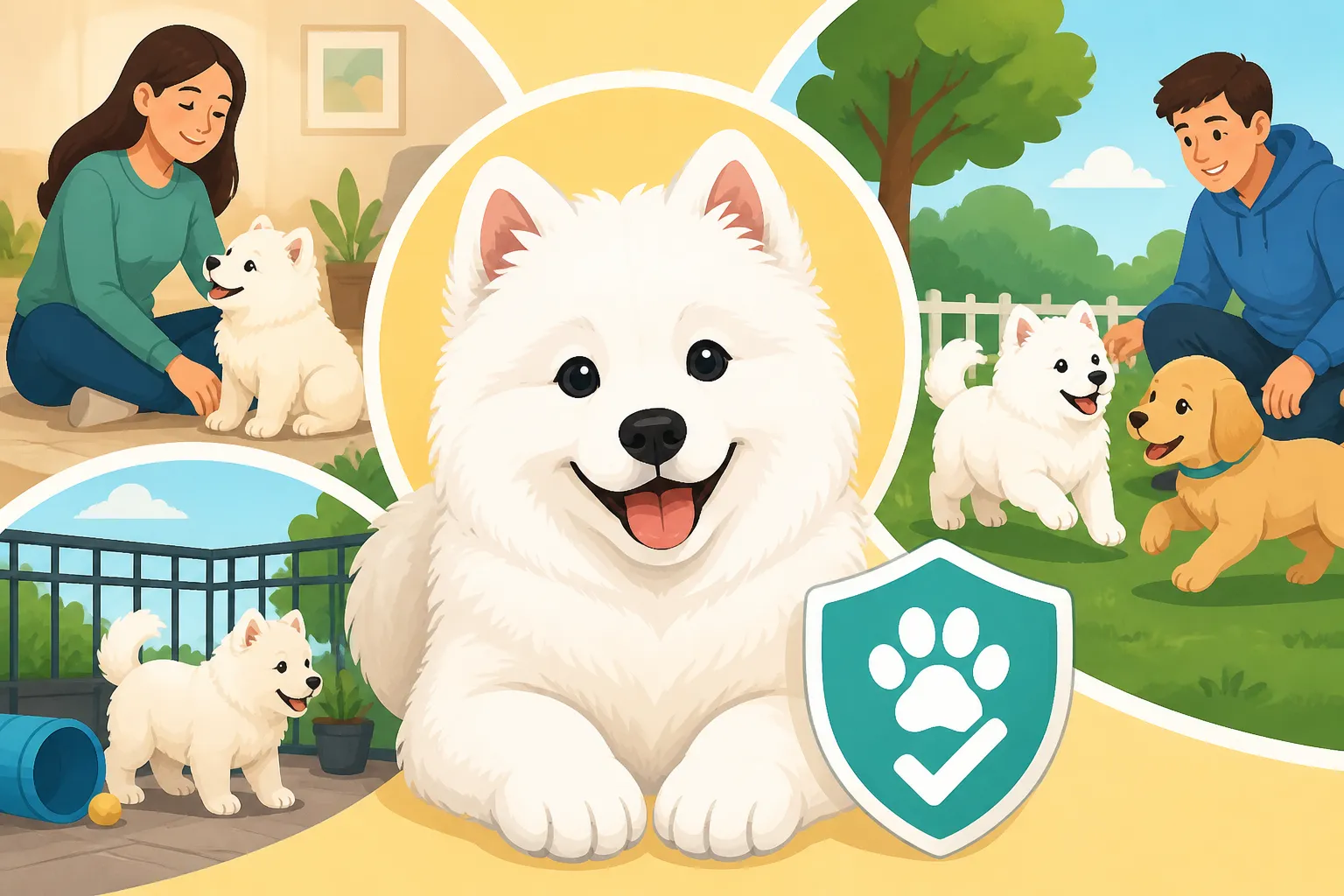
One of the best ways to provide early, safe socialization is through carefully managed playdates. Do you have friends or family members with fully vaccinated, healthy adult dogs? Wonderful! Invite them over to your house, or visit theirs, making sure their home is clean and free of unknown dog visitors. It's crucial that these adult dogs are not only vaccinated but also have proven calm and gentle temperaments. A bad experience with an overly boisterous or aggressive dog at a young age can be far more detrimental to your Samoyed's confidence than missing out on one playdate. Observe interactions closely, making sure both dogs are enjoying themselves and your puppy isn't being overwhelmed. These interactions teach your puppy appropriate dog-dog communication, bite inhibition, and how to read canine body language—skills that are indispensable later in life.
Similarly, consider inviting trusted friends and family members, without their dogs, to your home. This allows your Samoyed puppy to meet a variety of people (different ages, genders, appearances, and voices) in a safe, familiar environment. This helps your Samoyed understand that not all humans are "mom" or "dad," and that new people are generally fun and bring treats!
Puppy Classes with Strict Protocols
This might sound counterintuitive given the advice to avoid public places, but well-run puppy socialization classes are often the exception to the rule. Reputable puppy schools understand the critical nature of the socialization window and design their programs with health and safety as top priorities.
When looking for a puppy class for your Samoyed, don't be afraid to ask a lot of questions. Here’s what to look for:
- Vaccination Requirements: A good class will require proof of at least the first set of puppy vaccinations (often the second) for all attendees. This significantly reduces the risk.
- Cleaning Protocols: Ask about their cleaning regimen. Are the floors, toys, and equipment disinfected between classes? Do they use veterinary-grade cleaners?
- Class Size and Structure: Smaller class sizes (typically no more than 6-8 puppies) allow for better supervision and prevent puppies from becoming overwhelmed. A good instructor will ensure positive, well-managed play sessions, interrupting if play gets too rough or one puppy is being bullied.
- Trainer Experience: Look for trainers certified by recognized organizations. They should understand puppy development and positive reinforcement methods. Training a Samoyed That Finds Obedience Negotiable might sound daunting, but positive reinforcement starts early!
- Designated Puppy Space: Is the training area exclusively used for puppies, or do adult dogs also frequent it without strict cleaning protocols in between?
These classes offer a goldmine of socialization opportunities: controlled exposure to other puppies of various breeds, sizes, and energy levels, different people (the trainers and other owners), and new sounds and smells. It's a fantastic way for your Samoyed to build confidence and learn appropriate social skills in a safe bubble. It’s important to remember that Whether Puppy Class Is Enough for a Samoyed depends on the individual pup and the quality of the class.
Creative Ways to Introduce Experiences at Home
Beyond direct interaction with other dogs and people, socialization also means exposing your Samoyed puppy to the vast, varied world of sights, sounds, and textures. Much of this can be done safely within the confines of your own home and yard.
Exposure to Sounds, Sights, and Textures
Your home, while familiar, can also be a fantastic training ground for new experiences. Every day, your puppy encounters a myriad of sensory inputs without ever leaving the front door. Capitalize on these!
- Sounds: Introduce your Samoyed to a variety of household sounds. Run the vacuum cleaner (starting from a distance and gradually moving closer), turn on the blender, listen to the washing machine, play different types of music, and let the TV or radio be on at varying volumes. Don't forget the doorbell, phone rings, or even recordings of thunder or fireworks at very low volumes to build resilience. The goal isn't to scare them, but to normalize these sounds so they don't become startling later.
- Sights: Show your puppy different objects. Open and close an umbrella indoors, wear different hats, put on sunglasses, or have visitors wear scarves. Let them see you in different outfits. If you have a BAXTER & Bella subscription, they often have creative ideas for household desensitization exercises.
- Textures: While keeping hygiene in mind, let your Samoyed puppy walk on different surfaces. Beyond carpet and tile, consider a small patch of artificial turf, a rubber mat, bubble wrap, a crinkly tarp, or even a shallow tray filled with pea gravel (ensure it's clean and your puppy doesn't try to eat it). This helps them develop proprioception and comfort with various groundings. For example, place an old piece of cardboard or a large towel on the floor for them to walk on. All these seemingly small exposures build a robust, confident dog that isn't easily spooked by new sensory input.
Meeting New People in a Controlled Setting
While a puppy class provides exposure to a few new people, your Samoyed needs to learn that all sorts of humans are generally friendly and non-threatening. Since public outings are limited, bring the public to your puppy!
Invite a steady stream of friends, family members, and even trusted neighbors over to your home. Encourage them to interact gently with your Samoyed puppy. This means:
- Varying Demographics: People of different ages, genders, heights, and appearances (someone with a beard, someone wearing a hat, someone using a cane).
- Appropriate Interaction: Instruct visitors to offer treats, speak in calm voices, and approach slowly. Avoid overwhelming your puppy with too many people at once. Let the puppy initiate contact and reward them for polite greetings, discouraging jumping. This is also a good time to teach your puppy not to mouth excessively. The Age a Samoyed Puppy Stops Mouthing is often tied to these early interactions.
- Gentle Handling: Encourage visitors to gently touch your puppy all over – ears, paws, tail – while praising and rewarding. This helps your Samoyed become comfortable with handling for vet visits, grooming, and general care later on. It’s also important when considering A Samoyed With Children and Other Animals, as early positive experiences with gentle hands are crucial.
Car Rides and Public Observation
Even before full vaccination, your Samoyed puppy can experience the world from the safety of your car. This is a fantastic way to introduce them to the sights and sounds of the outside world without direct risk of disease.
- Short, Positive Car Rides: Start with very short trips, just around the block, or even just sitting in the parked car with the engine running. Make it a positive experience with treats and praise. The goal is to associate the car with good things, not anxiety. As they get comfortable, extend the rides.
- Drive-By Socialization: Once your puppy is comfortable in the car, take them to places where they can observe the world from a safe distance, inside the vehicle. Drive to a busy park and park away from the main foot traffic, roll down the window a bit, and let your Samoyed watch people walking, kids playing, bikes going by, and even other dogs at a distance. Go to a strip mall parking lot and let them see cars, people getting in and out of stores, and different types of vehicles. The crucial rule here is: no direct contact. Keep your puppy securely in the car or a carrier, absorbing the stimuli without physical interaction. This helps them acclimate to the hustle and bustle of life without putting their health at risk. You might even want to ensure you have a comfortable dog bed from Amazon for these little excursions.
| Socialization Environment | Risk of Disease Exposure | Benefit for Puppy | Notes for Samoyed Owners |
|---|---|---|---|
| Home with Vaccinated Friends' Dogs | Low, if dogs are healthy and current on vaccines | High: Dog-dog social skills, bite inhibition | Screen dogs carefully for health and temperament. |
| Home with Trusted Human Visitors | Very Low | High: Exposure to diverse people, handling comfort | Encourage gentle interaction, vary visitors' appearance. |
| Reputable Puppy Classes | Low, with strict vaccine and cleaning protocols | High: Structured play, group learning, trainer guidance | Ask detailed questions about class rules and hygiene. |
| Car Rides (Observation Only) | Very Low (no direct contact) | Moderate: Exposure to sights, sounds of outside world | Keep puppy secure, make it a positive experience. |
| Public Parks (Direct Contact) | High (before full vaccination) | High, but only after full vaccination and vet clearance | Avoid completely until immune system is robust. |
| Pet Stores (on floor) | High (before full vaccination) | High, but only after full vaccination and vet clearance | Carry your puppy if you must enter for supplies. |
The Importance of Continued, Careful Exposure
Socialization isn't a task you complete and check off a list. It's an ongoing process that evolves as your Samoyed grows. The early weeks are foundational, but continued positive exposure ensures your Samoyed remains a confident, well-adjusted companion throughout their life.
Balancing Risk and Benefit
The constant worry about parvo or distemper is real, and it’s valid. However, it’s also important to weigh that against the very real and often lifelong behavioral issues that can arise from under-socialization. A puppy that spends its entire critical window in isolation, only to be thrown into the busy world at 16 weeks, can become profoundly fearful. Imagine suddenly being exposed to a cacophony of sounds, sights, and strange beings after months of quiet solitude – it would be overwhelming for anyone, let alone a sensitive Samoyed.
The goal isn't absolute zero risk, which is impossible in life, but rather calculated and managed risk. Prioritize quality interactions over quantity. One positive, well-managed play session with a friendly, vaccinated adult dog is infinitely more valuable than a dozen overwhelming or scary encounters in an unsafe environment. Think of it as building a strong, flexible emotional immune system alongside their physical one. A Samoyed, known for being a bit of a social butterfly, thrives on interaction, and withholding it entirely during these formative weeks can have lasting consequences.
Post-Vaccination Socialization and Ongoing Learning
Once your veterinarian gives the green light – typically about two weeks after your Samoyed puppy's final set of vaccinations around 16 weeks – you can begin to cautiously expand their horizons. This doesn't mean a free-for-all at the dog park immediately, but a gradual introduction to more public environments.
- Expanded Outings: Start with quieter public places, like a walk around a neighborhood park during off-peak hours, or a pet-friendly store (carrying your Samoyed if they're still very small, even if vaccinated, to prevent accidental trampling). Gradually move to slightly busier areas.
- Meet & Greet Etiquette: Continue to focus on positive experiences. Reward calm behavior when encountering new people or dogs. For a Samoyed, whose recall can be notoriously unreliable – Why a Samoyed's Recall Cannot Be Trusted – keeping them on leash in new environments is always a good idea. Consider a long line in a safe, fenced area for more freedom.
- Continued Training: Socialization also goes hand-in-hand with training. A confident dog knows what's expected of them. Continue with basic obedience, reinforcing good manners. Online resources like BAXTER & Bella can provide ongoing training modules and support for continued development. A well-mannered Samoyed is a joy to take places, which in turn leads to more socialization opportunities.
- Variety is Key: Keep exposing your Samoyed to new things throughout their adolescence and even into adulthood. Different types of people, animals, vehicles, sounds, and environments. This helps solidify their confidence and adaptability, ensuring they remain the happy, outgoing Samoyed you dreamed of. Remember, Samoyeds are incredibly adaptable, but that adaptability needs to be nurtured with consistent, positive experiences. The Age a Samoyed Finally Matures varies, but the foundations are laid early.
Ultimately, the goal is to raise a Samoyed who is not just physically healthy, but also mentally and emotionally robust, capable of navigating the world with confidence and joy. By being mindful and intentional about where and how you introduce your young puppy to new experiences, you're investing in a lifetime of happy companionship.
Disclaimer
This article is for general informational purposes only and does not constitute professional advice. Laws, prices and regulations vary by location and change over time. Consult a qualified professional for guidance on your specific situation.