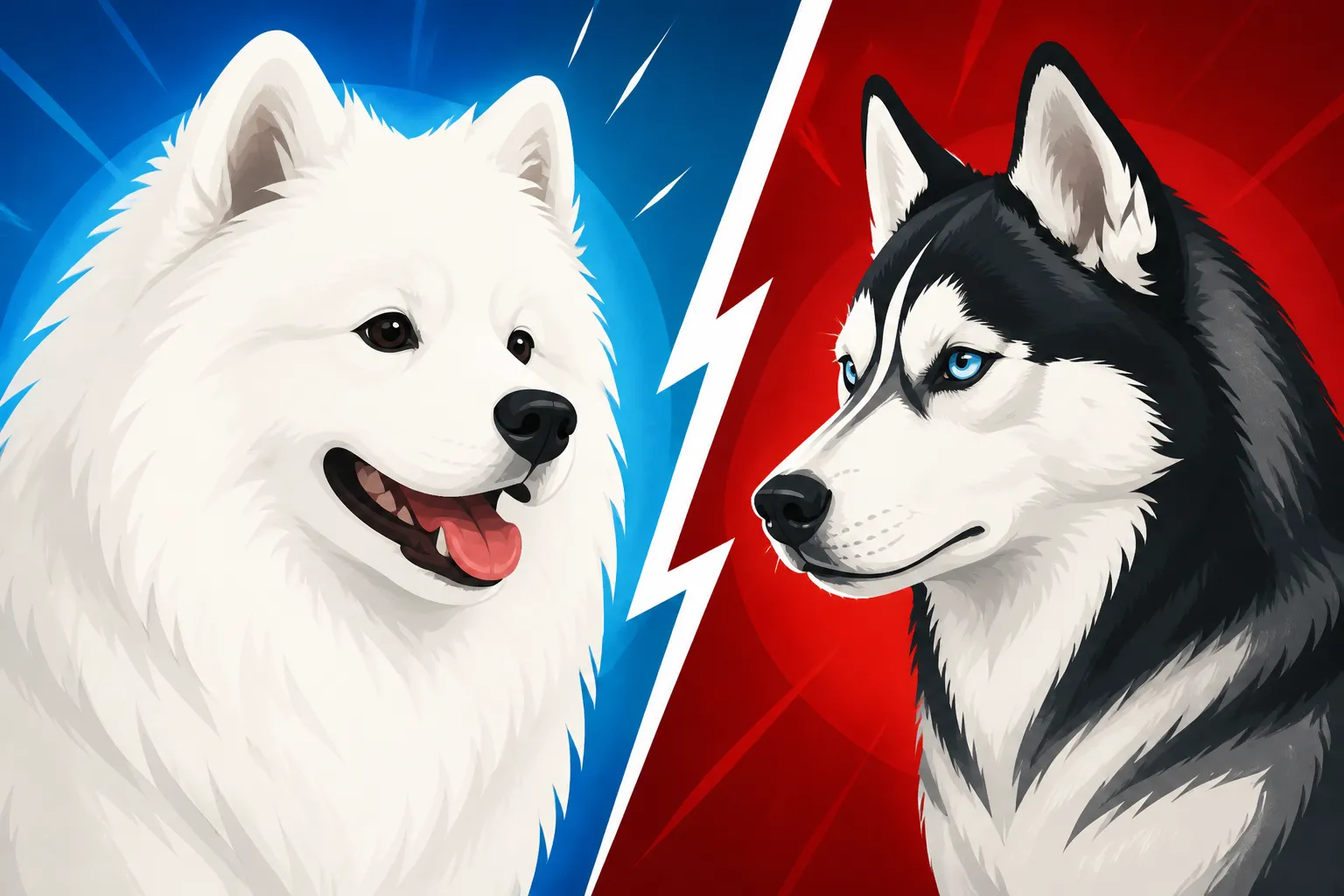
The Samoyed Against a Siberian Husky
Deciding between a Samoyed and a Siberian Husky can feel like navigating a beautiful, fluffy, yet incredibly energetic, minefield. Both breeds hail from the vast, icy expanses of the north, and both are undeniably gorgeous, leading many prospective owners to assume they're similar enough. But let me tell you, while they share some superficial similarities, their distinct temperaments, needs, and quirks mean that one might be a perfect fit for your household, while the other could lead to a lifetime of charming chaos you weren't quite prepared for. This guide will meticulously break down the differences and similarities between these two stunning northern breeds, helping you understand which one truly aligns with your lifestyle and expectations.
A Tale of Two Northern Breeds: Origins and What They Were Built For
It’s easy to look at a Samoyed and a Siberian Husky and group them together as "sled dogs." And while that's true to a degree, their histories, the specific jobs they performed, and the cultures that shaped them actually reveal quite a bit about their core personalities today. Understanding their origins isn't just a history lesson; it's a key to unlocking their modern-day behaviors and needs.
The Ancient Roots of the Samoyed
The Samoyed breed hails from Siberia, specifically from the nomadic Nenets people of the Yamal Peninsula. For thousands of years, these dogs weren't just working animals; they were integral members of the family, sharing tents and living in incredibly close proximity to humans. Their primary roles included herding reindeer, protecting them from predators, and, yes, pulling sleds when needed. However, the sledding was often for lighter loads and more personal transport rather than long-distance freight.
This deep integration into human family life is crucial to understanding the Samoyed's famously affectionate and people-oriented nature. They were bred to be companions as much as workers, relying on a strong bond with their human family for survival and cooperation. Imagine harsh Siberian winters where the warmth of a dog in your tent literally meant the difference between life and death – that fosters a bond unlike any other. This is why a Samoyed today thrives on being involved in every family activity, often following you from room to room just to be near.
The Siberian Husky's Nomadic History
The Siberian Husky, on the other hand, was developed by the Chukchi people, another indigenous group from northeastern Siberia. The Chukchi relied on their dogs for long-distance, rapid transport across vast, empty tundras. These dogs were bred for endurance, speed, and the ability to work tirelessly in extreme cold, often pulling light loads over hundreds of miles. Their lives, while still connected to humans, were more focused on their specific task: running.
While Chukchi Huskies were certainly cared for, their role emphasized efficiency and a certain level of independence to perform their demanding work. This history manifests in the modern Husky's incredible athleticism, strong prey drive, and often more independent, "what's in it for me?" attitude when it comes to training. They are partners in work, not necessarily constant shadow companions in the same way a Samoyed might be. They certainly love their families, but they often express that love through bursts of joyful energy and a desire for adventure rather than constant snuggles.
Similarities in Their Working Heritage
Despite their differing nuances in purpose, both breeds share a foundational heritage rooted in survival in unforgiving environments. Both possess the dense double coat necessary to withstand brutal Arctic temperatures, and both retain a powerful instinct to run and explore. This shared background means that neither breed is content to be a couch potato; they both require significant mental and physical exercise to be truly happy and well-behaved companions.
Their intelligence is undeniable, but it's a working intelligence rather than a "pleasing-you" intelligence. They learn quickly, but they also evaluate whether a command is worth their effort or if there's something more interesting to pursue. This independent streak is a hallmark of many northern breeds, making training a unique and often humorous challenge. If you're looking for a dog that lives to obey your every command, neither a Samoyed nor a Husky is likely to fit the bill perfectly, but they will certainly keep you on your toes. For an interesting comparison with another powerful northern breed, you might want to read The Samoyed Against an Alaskan Malamute.
Digging Into Differences: Physical Appearance and Coat
At a glance, both Samoyeds and Siberian Huskies are stunning, medium-to-large northern spitz-type dogs with upright ears and tails that curl over their backs. But look closer, and you'll find distinct differences in their physical presentation, especially their coats, which tell a lot about their care requirements.
The Samoyed's Signature White Fluff and Smile
The Samoyed is famous for its glorious, pure white (though sometimes "biscuit" or cream-colored) double coat. This coat isn't just beautiful; it's an engineering marvel, designed to insulate them in sub-zero temperatures. The outer coat consists of long, coarse guard hairs that are surprisingly self-cleaning and repel dirt, while the dense, woolly undercoat provides exceptional warmth. This coat gives them a robust, fluffy, almost teddy-bear like appearance.
Perhaps their most iconic feature, however, is the "Samoyed smile." This isn't just an expression; it's a functional adaptation where the corners of their mouths turn upwards, preventing icicles from forming around their lips and drool from freezing. It’s this perpetual happy expression that melts hearts everywhere. Why the Samoyed Smiles delves deeper into this charming trait. Their eyes are typically dark brown, and their nose is black, though it can fade to "winter nose" or "snow nose" in colder months.
Siberian Husky's Diverse Colors and Striking Eyes
Siberian Huskies, while equally striking, present a much wider range of colors and patterns. You’ll find them in black and white, grey and white, red and white, sable and white, all white, and even agouti. Their markings can be incredibly diverse, from classic masks to piebald patterns, making each Husky unique. Their coat, while also a dense double coat, often appears slightly less voluminous and "fluffy" than a Samoyed's, with a more sleek, athletic look.
One of the most captivating features of a Husky is their eyes. While Samoyeds almost exclusively have dark eyes, Huskies frequently sport blue eyes, bi-colored eyes (one blue, one brown), or parti-colored eyes (marbled blue and brown in one eye). This genetic trait adds to their exotic appeal and is a hallmark of the breed. Their facial masks and markings often give them a wilder, more wolf-like appearance, which is a significant part of their allure for many people.
Understanding Their Double Coats
Both breeds possess magnificent double coats, which means they have a soft, dense undercoat for insulation and a longer, coarser outer coat for protection. This is fantastic for keeping them warm in winter and, surprisingly, helps them regulate heat in summer by trapping cool air close to their skin. However, these coats come with a serious commitment: shedding, especially during their "coat blow" seasons.
During a coat blow, typically twice a year in spring and fall (though it can be year-round in milder climates or with indoor living), these dogs will shed an astonishing amount of undercoat. We’re talking about tumbleweeds of fur rolling across your floors, enough to stuff a small pillow, or even spin into yarn! The sheer volume of fur can be overwhelming if you're not prepared. While both shed, many owners report that the Samoyed's fur, due to its texture, can sometimes feel more ubiquitous and prone to matting if not brushed regularly. For a detailed comparison of their shedding habits, check out How a Samoyed's Shedding Compares With a Husky's. You'll need good grooming tools, perhaps even a powerful force dryer, and a dedicated brushing routine. Many pet owners find a convenient online store like Chewy offers a fantastic selection of brushes, de-shedding tools, and high-velocity dryers to help manage the onslaught of fur.
Temperament & Personality: More Than Just "Sled Dog" Traits
Beyond their stunning looks, the real differences between a Samoyed and a Siberian Husky often lie in their core personalities and how they approach life, their families, and the world around them. This is where your lifestyle truly comes into play.
The Samoyed's Affectionate, People-Oriented Nature
If you're looking for a dog that wants to be your constant companion, a Samoyed might just steal your heart. Bred to live and work closely with humans, Samoyeds are incredibly people-oriented. They crave attention and thrive on being part of every family activity. They are often described as "velcro dogs," following their owners from room to room, eager for a pet, a cuddle, or just to be in the same space.
This affectionate nature extends to strangers, too. A Samoyed is more likely to greet a new person with a wagging tail and a happy grin than with suspicion. This makes them terrible guard dogs, but wonderful family pets and therapy dogs. They are generally gentle and tolerant with children, often enjoying playtime and being included in the fun. With other dogs, they tend to be quite sociable, often preferring canine company to being alone. If you're a homebody who wants a loving shadow, the Samoyed's temperament is truly unique. They want to be with you, not just around you. For a deeper look into their personality, read How a Samoyed's Temperament Compares With a Husky's.
The Independent, Energetic Husky Spirit
Siberian Huskies, while certainly loving and devoted to their families, express their affection differently. Their history of running long distances in teams fostered a more independent spirit. They bond strongly with their human "pack," but they often aren't as demanding of constant physical closeness as a Samoyed. A Husky might prefer to zoom around the yard, play a game of fetch, or simply observe from a distance before coming in for a quick snuggle.
Huskies possess an incredible amount of energy and a mischievous, often clownish, personality. They are notorious for their cleverness and ability to get into trouble if bored or under-exercised. This independence also means they can be more challenging to train, as their motivation often stems from their own desires rather than an innate drive to please. They are social with people and other dogs, often enjoying playdates and dog parks, but their high prey drive means careful introductions and constant supervision around smaller animals are critical. A Husky truly thrives when its mind and body are challenged regularly.
How They Interact with Families and Other Pets
Both breeds can be excellent family dogs, but their approaches differ. A Samoyed often integrates seamlessly, becoming a fluffy member of the human pack, gently nudging for attention and patiently enduring the antics of children. They tend to be less prone to chasing small, furry things (though they still have a natural prey drive that needs management) and are generally good with cats and other pets if raised with them. Their desire to be included means they rarely tolerate being left out or alone for long periods.
Huskies, with their higher energy and strong prey drive, require more careful management around children and smaller pets. While generally good-natured, their exuberance can accidentally knock over a small child, and their instinct to chase can be a serious issue for cats, rabbits, or chickens. Proper socialization from a young age is paramount, and even then, a Husky's recall around distractions might never be 100% reliable. They require a confident owner who can provide consistent boundaries and plenty of appropriate outlets for their energy. Both dogs are deeply social, but the Samoyed’s sociability leans towards intimacy, while the Husky’s leans towards playful interaction and adventure.
Exercise, Training, and Mental Stimulation: Keeping Them Happy
This is arguably the most critical section for prospective owners, as the daily commitment required for a Samoyed or a Siberian Husky can be a shock for the unprepared. Both are high-energy working breeds, but their specific needs for exercise and training diverge in important ways.
Matching Energy Levels: Who Needs More?
Let's be clear: both of these breeds are built for action. Neither is suited for a sedentary lifestyle. However, there's a subtle difference in the type of energy they possess. Samoyeds are often described as having an endless cheerful energy, happy to participate in any activity, whether it's a long walk, a hike, or a game of fetch in the yard. They love structured exercise and are generally quite biddable when it comes to engaging in activities with their people. Think of a Samoyed as a diligent, enthusiastic worker who loves to be part of the team.
Siberian Huskies, on the other hand, are endurance athletes. They are bred to run, and run, and run some more. Their energy isn't just high; it's persistent and requires significant outlets. A short walk around the block simply won't cut it. They need intense, sustained exercise, like running, biking (canicross or bikejoring), or sledding. Without sufficient physical exertion, a Husky can become destructive, anxious, and prone to escape. Their drive to run is deeply ingrained, and it's a need that must be met. They'll demand it, one way or another.
Trainability and That Famous Northern Stubbornness
This is where many first-time owners find themselves in a bit of a pickle. Both Samoyeds and Huskies are intelligent, but neither is a Golden Retriever when it comes to eagerness to please. They possess a famous "northern breed independence" or "stubbornness." They understand commands perfectly well, but they often choose whether or not to obey based on what's most interesting to them in that moment.
Samoyeds, due to their people-centric history, are generally more amenable to training. They respond well to positive reinforcement, praise, and especially food rewards. They can excel in obedience, agility, and even herding, as long as the training is kept fun and engaging. Consistency is key, and you need to be more clever than they are. They thrive on the bond formed during training sessions. However, they can still be easily distracted by exciting smells or sights, and their recall is never guaranteed in an open, unfenced area.
Huskies are incredibly intelligent and learn commands quickly, but applying those commands consistently is another story. They are highly independent thinkers. "Come" often means "come when I feel like it, or if you have something better than what I'm currently sniffing." Their strong prey drive and desire to explore can easily override any command. Training a Husky requires immense patience, consistency, and a sense of humor. They excel at problem-solving (which often means figuring out how to open gates or get to forbidden snacks). Their independence makes off-leash reliability a constant uphill battle for many owners.
The Importance of a Secure Yard and Leash Reliability
Given the exercise needs and potential for independent exploration, securing your home environment is non-negotiable for both breeds, but especially for the Siberian Husky. A six-foot solid fence is typically recommended for both, and even then, many Huskies (and determined Samoyeds) can become escape artists, digging under, climbing over, or even figuring out how to open latches. Read How a Samoyed Gets Out of Anything You Build for a deep dive into their escape artistry.
Neither breed should ever be trusted off-leash in an unsecured area. Their desire to run, combined with a strong prey drive, means they will likely ignore your calls if something interesting catches their eye. A quality harness and a strong leash are essential for every walk. Many owners opt for GPS collars as a backup, particularly for Huskies, because once they're gone, they can cover an astonishing amount of ground quickly. When shopping for these essentials, it's worth checking out retailers like Chewy for durable, escape-proof harnesses and sturdy leashes designed for strong pullers.
Living with a Northern Breed: Grooming, Climate, and Care
Owning a Samoyed or a Siberian Husky is a commitment to a specific type of daily care, dictated largely by their luxurious double coats and origins in cold climates. Understanding these needs before bringing one home is crucial.
Battling the Blowout: Grooming Demands
Both breeds are notorious for shedding, especially during their seasonal "coat blows." During these times, you will literally brush out bags of fur. Regular brushing, at least 2-3 times a week for a Samoyed and a bit less for a Husky outside of coat blow, becomes a daily ritual during shedding season. This isn't just about keeping your house clean; it's vital for their skin health and to prevent painful mats, especially in the Samoyed's denser coat.
Samoyeds, with their thicker, longer, and slightly softer fur, tend to mat more easily if not regularly brushed. Their pristine white coats also show dirt more readily, though they have a remarkable self-cleaning quality once mud dries. Huskies, while shedding profusely, often have a slightly coarser outer coat that may be less prone to tangling than a Samoyed's, but still requires significant attention. Neither breed should ever be shaved, as their double coat provides essential insulation against both heat and cold. Shaving can permanently damage the coat, lead to skin issues, and actually make them less comfortable in warm weather. For more on this critical grooming point, see Why Shaving a Samoyed Makes the Heat Worse.
Grooming Comparison Table
| Feature | Samoyed | Siberian Husky |
|---|---|---|
| Coat Type | Thick, dense double coat; soft undercoat, long guard hairs | Dense double coat; slightly coarser guard hairs |
| Primary Color(s) | White, biscuit, cream | Wide range: black, grey, red, sable, all white, agouti |
| Shedding | Heavy, especially during twice-yearly coat blows; can be intense | Heavy, especially during twice-yearly coat blows; can be intense |
| Matting Risk | Higher due to coat density and length | Moderate, less prone than Samoyed if regularly brushed |
| Brushing Freq. | 3-4 times/week, daily during coat blow | 2-3 times/week, daily during coat blow |
| Bathing Freq. | Infrequent (every few months), as needed | Infrequent (every few months), as needed |
| Self-Cleaning | High; dirt often falls off when dry | Moderate; not quite as effective as Samoyed's |
Handling the Heat: Which Breed Copes Better?
Both Samoyeds and Siberian Huskies were bred for freezing environments, and neither fares particularly well in hot, humid climates. Their dense double coats are designed to insulate, meaning they trap air to keep them warm in winter and, counter-intuitively, help keep them cool in summer by preventing the sun's rays from reaching their skin and trapping cooler air against the body. However, this system has its limits.
In warmer weather, both breeds are highly susceptible to overheating. They require air conditioning, constant access to fresh, cool water, and limited exercise during the hottest parts of the day. Early morning or late evening walks are essential. A Samoyed might be slightly more prone to seeking out cool spots like tile floors or digging shallow holes in the shade (see The Digging a Samoyed Does Because It Is Hot) due to its even denser coat. Huskies, with their slightly less voluminous coats, might seem to handle heat marginally better, but they still have very low tolerance for it. Leaving either breed outdoors in hot weather or in a car, even for a short time, is extremely dangerous and can be fatal. If you live in a warm climate, you must be prepared to make significant adjustments to your lifestyle and home environment to accommodate these dogs. A cool mat or a kiddie pool can offer some relief, but a climate-controlled home is non-negotiable.
Vocalization: The Samoyed Scream vs. Husky Howls
Prepare for noise, regardless of which breed you choose. Both Samoyeds and Huskies are vocal dogs, but their forms of communication are distinct and often quite loud.
Samoyeds are famous for their wide range of vocalizations, often referred to as the "Samoyed scream" or "Samoyed talk." They don't bark incessantly like some breeds, but they are masters of a complex vocabulary of howls, yips, grunts, whimpers, and the distinct, ear-splitting "scream" when excited, frustrated, or simply trying to get your attention. This scream is not aggression; it’s pure, unadulterated Samoyed expression. It can be startlingly loud and is not easily ignored. They love to "talk back" when you try to tell them something, engaging in a conversational series of yaps and grumbles. For an in-depth understanding of their unique vocalizations, definitely read The Samoyed Scream and Why It Is Not Barking. If you live in an apartment or have close neighbors, this might be a deal-breaker. You can find excellent durable, engaging enrichment toys for vocal breeds on Chewy that help occupy their minds and reduce boredom-related vocalizations.
Siberian Huskies are legendary for their wolf-like howls. They rarely bark but will serenade you (and your neighbors) with beautiful, mournful, or often comical howls. These howls can carry long distances and are a direct link to their ancestral communication methods. Huskies also "talk" with a series of grumbles, groans, and yips, often in response to their owners or other dogs. They tend to be more prone to howling in response to sirens, other dogs howling, or when left alone for extended periods (separation anxiety can manifest as constant howling). How a Samoyed's Noise Compares With a Husky's offers a direct comparison of their noise levels and types. While charming at first, sustained howling can be just as disruptive as the Samoyed's scream, if not more so, for some living situations.
Making the Right Choice: Which Northern Breed is For You?
Choosing between a Samoyed and a Siberian Husky is a significant decision that should be based on a realistic assessment of your lifestyle, living situation, and commitment level. Both are wonderful dogs, but they thrive in different environments and with different types of owners.
Considering Your Lifestyle and Expectations
If you're looking for a dog that is deeply affectionate, constantly wants to be with you, and showers everyone with love, the Samoyed might be your ideal companion. They are generally more amenable to training and can integrate well into a family that values companionship and includes their dog in most activities. They still need significant exercise, but perhaps a bit less intense than a Husky, and their primary drive is to be with their people. They can be a bit goofy and clownish, but always with a gentle, loving heart.
If you're an active, adventurous person or family who spends a lot of time outdoors, enjoys intense physical activity like running or hiking, and appreciates a dog with a more independent, mischievous, and sometimes challenging spirit, the Siberian Husky could be your perfect partner. They thrive on activity and mental stimulation, and their independence means they won't always be in your lap, but they'll be loyal and engaging companions on adventures. They need an owner who can be firm, consistent, and patient, and who understands that "no" isn't always their first answer.
Long-Term Commitment: Health, Cost, and Lifespan
Both breeds generally enjoy good health, but like all purebreds, they are prone to certain genetic conditions. Reputable breeders will perform health clearances for conditions like hip dysplasia, eye diseases (like progressive retinal atrophy), and, for Samoyeds, hereditary glomerulopathy. Always ask for these clearances.
Financially, owning either breed is a significant commitment. Their grooming needs can lead to substantial professional grooming bills if you don't do it yourself, and their dietary needs require quality food. For example, keeping a Samoyed white with appropriate shampoo and grooming supplies might mean regular trips to a store like Chewy or a professional groomer. Due to their active nature, they can be prone to injuries, and vet bills can add up. Their long lifespans (typically 12-14 years for Samoyeds, similar for Huskies) mean you're committing for over a decade.
Ultimately, the best way to decide is to spend time with both breeds if possible, talk to owners, and be brutally honest about what you can realistically provide. If you're a first-time northern breed owner, Samoyed or Husky for a First Northern Breed offers excellent insights to help you make this crucial decision.
Disclaimer
This article is for general informational purposes only and does not constitute professional advice. Laws, prices and regulations vary by location and change over time. Consult a qualified professional for guidance on your specific situation.