How a Samoyed’s Temperament Compares With a Husky’s
A Samoyed and a Siberian Husky can both be energetic, vocal northern dogs, but living with them often feels different. A Samoyed is usually more openly people-focused, while a Husky may be more independent and driven to explore. This guide compares their typical temperaments, exercise needs, training styles, and household fit so you can look beyond appearance and choose with clearer expectations.
The everyday temperament of a Samoyed and a Husky
People focus and affection
Samoyeds are often happiest when they can stay close to their people. That might mean following you from the kitchen to the living room, settling near your desk, or nudging you to join whatever they think should happen next. Many are outgoing with visitors, too, though an individual dog’s confidence and social behavior depend on its experiences and personality. A Samoyed’s friendliness is not a guarantee that it will calmly greet every stranger, but the breed is not generally known for being reserved or protective.
Huskies are affectionate as well, but many show it in a less constantly attached way. A Husky may enjoy a cuddle, then wander off to investigate a sound or watch activity outdoors. Some are deeply people-oriented; others are more self-directed. If you want a dog that tends to make itself part of your daily routine, a Samoyed may feel like the more obvious companion. For a closer look at the Samoyed’s tendency to stick nearby, read Why a Samoyed Wants to Be in the Room With You.
Neither breed should be expected to thrive with long stretches of isolation simply because one seems more independent. A Husky left alone without enough exercise and engagement may find its own entertainment, which can include digging, chewing, or trying to get out. A Samoyed may become distressed or noisy when separated from its family. If your schedule keeps you away for much of the day, consider how you will provide company, breaks, and enrichment before choosing either breed. Whether a Samoyed Can Be Left Alone explores that issue in more detail.
Sociability and their approach to strangers
Both breeds are commonly sociable, but their enthusiasm can come out in different ways. A Samoyed may greet a guest with a wagging tail, a bright expression, and plenty of vocal commentary. A Husky may also be friendly, but its attention can switch quickly if it notices a scent, movement, or something more interesting nearby. These are tendencies, not personality guarantees: early socialization, past experiences, and individual temperament all matter.
Friendly does not mean automatically easy to manage. A large, excited Samoyed can bowl into a visitor, while a Husky that spots something fascinating may pull hard toward it. Teach both dogs calm greetings and reliable leash manners from puppyhood, and use a leash or secure barrier when you are not confident about the situation. A cheerful disposition is lovely, but it does not replace supervision or training.
Families should also think about how a dog responds to busy environments. A calm household with predictable routines may suit either breed, but a home with frequent visitors, children running through the room, or several pets calls for consistent guidance. Samoyeds can be boisterous and eager to join in; Huskies can be playful, excitable, and intensely interested in movement. Learn more about the Samoyed’s family fit in A Samoyed With Children and Other Animals.
Energy, play, and the need for a job
Both breeds need more than a quick walk
A Samoyed and a Husky are not usually content with a short stroll and a quiet afternoon every day. Both were developed as working dogs, and their needs often include a mix of physical activity, human interaction, and chances to use their minds. The exact amount varies with age, health, fitness, and the individual dog. A young dog with energy to spare may need more engagement than an older dog, while heat, injury, or illness can change what is safe.
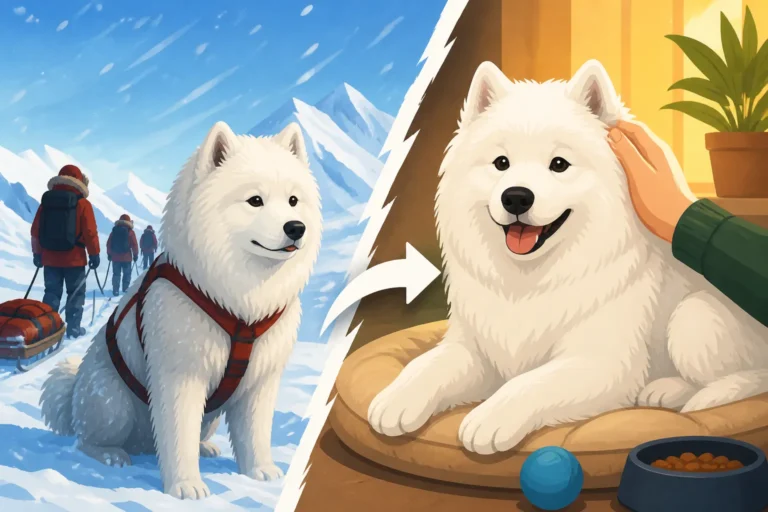
For a Samoyed, daily activity might include brisk walks, hikes in suitable weather, training games, or pulling activities introduced safely and appropriately. Huskies often have a strong desire to run and explore, which can make a simple neighborhood walk feel insufficient unless it includes sniffing, training, and varied routes. A fenced yard can offer room to move, but it does not replace time with you or structured exercise. See How Much Exercise a Samoyed Needs for more on building an activity routine.
Exercise should be matched to conditions, not just enthusiasm. Both breeds have thick coats, so warm weather calls for extra care: choose cooler times of day, provide water and shade, and watch for signs of overheating. A dog that eagerly charges out the door may not know when to stop. In cold weather, either breed may be more comfortable outdoors than its human companions, but supervision and access to shelter still matter.
Play styles and working instincts
Samoyeds and Huskies can both enjoy games, but their instincts may shape what captures their attention. A Samoyed may be keen to participate with its family and may show herding-related behaviors, such as circling or trying to direct movement. A Husky may be particularly drawn to running, exploring, and following scents. These differences are not absolute, but they help explain why the same game can hold one dog’s interest and leave another looking for something more exciting.
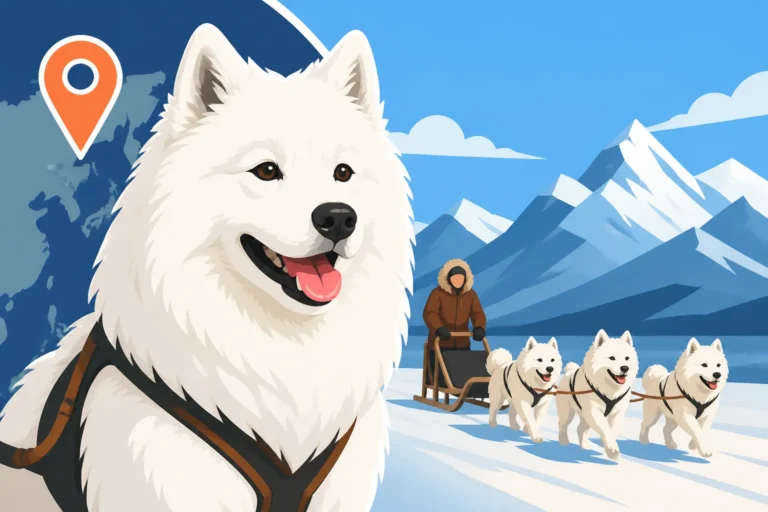
Pulling sports can be rewarding for either breed when the dog is physically mature enough, properly conditioned, and taught to work in suitable equipment. The activity needs to be managed carefully, especially in warm conditions, and should never be treated as a way to exhaust a dog at any cost. Samoyeds were bred for work that included pulling, and the topic is explored in Pulling: What a Samoyed Was Actually Bred to Do. A Samoyed may also show unexpected interest in herding-style movement, as described in The Herding Instinct Nobody Expects From a Samoyed.
For either breed, a little structured thinking can make ordinary days more satisfying. Short training sessions, food-search games, and puzzle feeders add variety without requiring a marathon outing. If you are comparing puzzle toys or treat-dispensing options, Chewy is one retailer where owners can browse different styles; choose something suited to the dog’s size, chewing habits, and supervision needs. Rotating a few activities can help keep them interesting, but no toy is a substitute for interaction and exercise.
Training, independence, and vocal behavior
Training motivation is not the same as obedience
Samoyeds are intelligent, but that does not mean they will repeat a cue simply because they understand it. Many respond best to training that feels rewarding and lively: brief sessions, clear expectations, and a payoff they genuinely value. A Samoyed may pause as if weighing whether “come” is worth doing right now. That can be frustrating, especially when you know the dog understands the cue, but repeating commands louder usually does not solve the problem. Keep practice short and reward the response you want.
Huskies are also clever, but their independence and interest in the environment can make them seem particularly difficult to keep focused. A squirrel, scent trail, or open path may be more compelling than a familiar cue. That is why recall should be practiced in controlled, low-distraction settings before you rely on it in more exciting places. For both breeds, use a leash or long line where needed and avoid assuming a dog is safe off leash just because it has done well in the yard.
The practical difference is often the type of challenge rather than a simple ranking of which breed is easier to train. A Samoyed may seek interaction but get bored with repetitive drills. A Husky may understand the exercise and still choose to investigate something else. Food rewards, toys, praise, and play can all help, but the most useful reward depends on the individual dog. If you are considering a Samoyed as your first dog, Whether a Samoyed Suits a First Time Owner can help you assess the commitment.
Noise and communication
Both breeds can be vocal, but the form and frequency vary from dog to dog. Samoyeds may bark, whine, howl, or make a range of expressive sounds when excited, frustrated, or trying to get attention. Their people-focused nature can mean that they have plenty to say about household activity. Huskies are also famous for howling and “talking,” and some are especially theatrical when they want attention or object to a decision.
A quiet cue can be useful, but it works best when paired with a plan for the reason behind the noise. If a dog is vocal because it is bored, simply correcting the sound may leave the boredom intact. If it is reacting to a doorbell, practice calm behavior around that trigger. If it is distressed when alone, it may need gradual, supported training rather than being left to “get used to it.” Why a Samoyed Vocalizes Instead of Barking offers more context on Samoyed communication.
Think about your surroundings before bringing either breed home. In a detached house with tolerant neighbors, occasional howling may be manageable. In an apartment with thin walls, frequent vocalizing can become a real source of stress. If enrichment is part of your plan, you might compare food puzzles and chew options at Chewy, but introduce new items thoughtfully and supervise chewing. A toy may occupy a dog for a while; it will not necessarily prevent noise rooted in anxiety or unmet needs.
Choosing the breed that fits your household
A practical comparison
Breed descriptions can make these dogs sound like fixed personality types. Real dogs are more individual than that. A breeder’s priorities, early experiences, training, health, and the dog’s own temperament all affect what life together looks like. Still, the broad tendencies below can help you decide what questions to ask and what challenges to prepare for.
| Temperament factor | Samoyed tendencies | Husky tendencies |
|---|---|---|
| Attention to people | Often strongly interested in being near family | Affectionate, but often more self-directed |
| Typical social impression | Frequently outgoing and eager to join household activity | Often friendly, with attention that may shift quickly |
| Activity needs | Regular exercise and engagement; may enjoy cooperative activities | High exercise and exploration needs; running instincts can be strong |
| Training challenge | Can lose interest in repetitive practice | May prioritize scents, movement, or independent exploration |
| Vocal behavior | May bark, whine, howl, or make expressive sounds | Often vocal, including howling and “talking” |
| Secure containment | Needs thoughtful supervision and secure boundaries | Especially important because many have a strong urge to roam |
| Possible household fit | Often suits people who want an involved, social companion | Often suits active owners prepared for independence and containment |
A Samoyed may be a better fit if you like an affectionate dog that wants to participate in household life and you can provide daily activity, coat care, and training. A Husky may suit someone prepared for a highly active companion with a strong inclination to explore and a need for secure management. Those are starting points, not promises. Meet adult dogs when possible, talk with responsible breeders or rescues, and ask what the specific dog is like at home.
Questions to ask before deciding
Ask yourself what “active” means in your actual routine. It is easy to picture weekend hikes, but the dog will also need attention on ordinary workdays, in bad weather, and during busy seasons. Consider whether you can provide consistent exercise, safe containment, and training even when you are tired or short on time. For an overview of the breed comparison itself, see The Samoyed Against a Siberian Husky.
Think about grooming, noise, and space alongside temperament. Neither dog should be chosen solely because it looks like a friendly, fluffy companion. A Samoyed’s coat needs regular care, and both breeds can be loud or energetic. Consider whether your neighbors, household schedule, and other pets are compatible with those possibilities. If cats or smaller animals live with you, do not rely on breed reputation alone; plan slow introductions and supervision. Whether a Samoyed Is Safe With Cats discusses why individual temperament and careful management matter.
Finally, speak with people who live with the breed, not just those who admire it from a distance. Ask what happens when the dog is bored, left alone briefly, or asked to stop an exciting activity. Ask what training has been hardest and what daily routines actually help. You can also look for suitable grooming supplies or enrichment items at Chewy as part of planning, but make sure the choices fit your particular dog rather than buying a pile of gear in advance. For a broader view of the realities owners encounter, read What Samoyed Owners Wish They Had Known.
Disclaimer
This article is for general informational purposes only and does not constitute professional advice. Laws, prices and regulations vary by location and change over time. Consult a qualified professional for guidance on your specific situation.