Whether a Samoyed Poodle Cross Sheds Less
A Samoyed Poodle cross may leave less fur on your sofa than a purebred Samoyed, but there is no dependable guarantee. Coat type varies from dog to dog, and a low-shedding coat still needs regular brushing and professional grooming. This guide explains what affects shedding, what to expect from different coat types, and how to choose a routine that fits your home.
Do Samoyed Poodle Crosses Shed Less
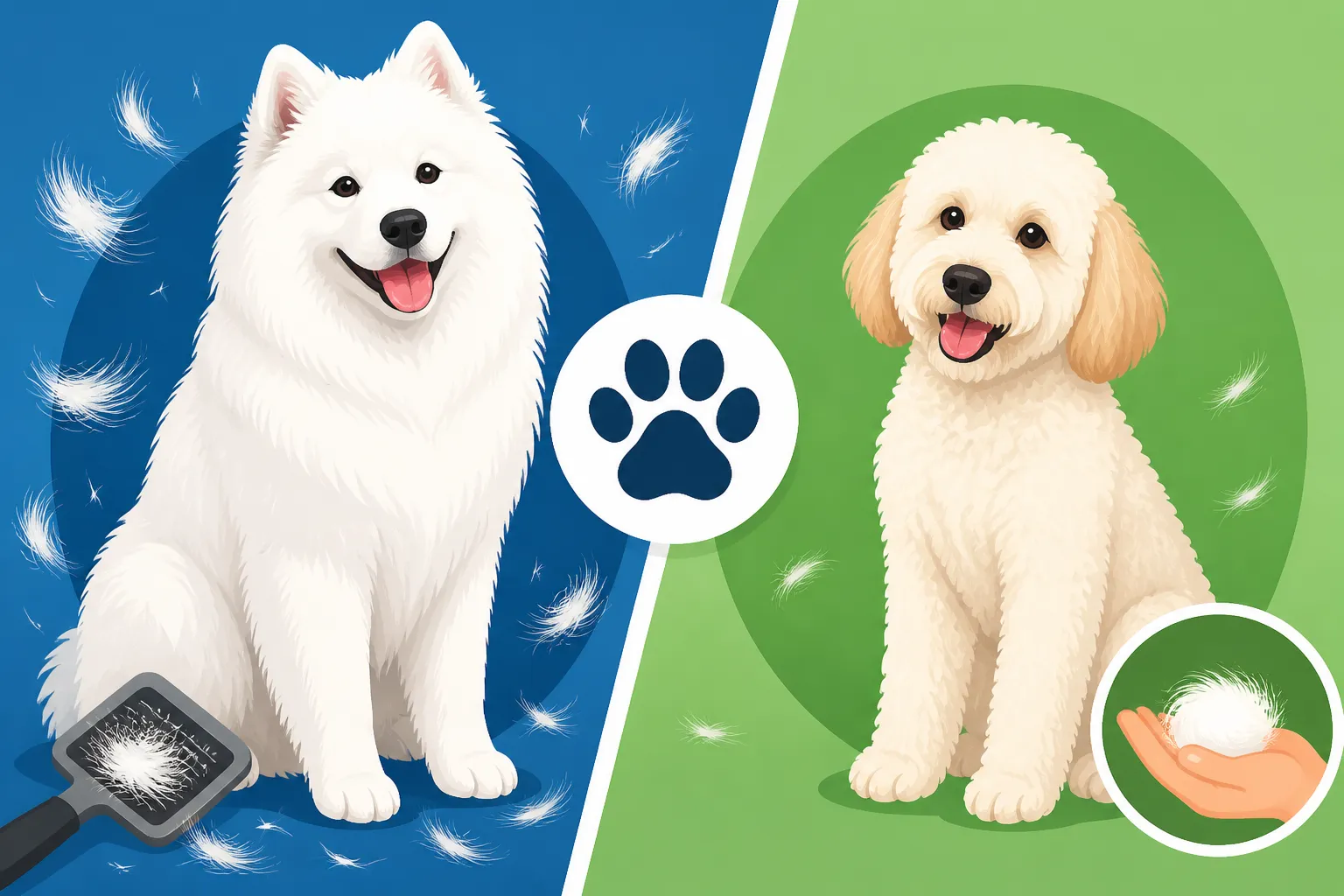
Often, yes—but not always. Poodles are known for coats that shed relatively little, while Samoyeds have a dense double coat that sheds throughout the year and can release a large amount of undercoat seasonally. A cross can inherit a coat closer to either parent’s, or land somewhere in between.
Why a cross can inherit very different coats
A Samoyed Poodle cross does not come with one standard coat. Even puppies in the same litter can differ in texture, curl, density, and how much loose hair they leave behind. A curly or wavy coat may trap loose hairs instead of dropping them around the house. That can make shedding less noticeable, but the hair still needs to be brushed out before it tangles.
A puppy’s coat can also change as it matures. The coat you see in the first few months may not predict exactly what it will look or feel like as an adult. Some dogs develop a denser, more Samoyed-like coat; others have a curlier coat that resembles a Poodle’s. Even a coat that looks promising when a puppy is small can become more demanding as it grows.
The mix’s generation or appearance may offer clues, but neither provides a guarantee about shedding. A breeder can describe the coats of the parents and previous litters, which is useful context, but it cannot promise that a particular puppy will be non-shedding. For a closer look at the parent breed’s coat, see What a Samoyed's Double Coat Is Made Of and How Often a Samoyed Needs Brushing.
What “low-shedding” actually means
Low-shedding does not mean no hair, no mess, or no grooming. A dog may drop fewer loose hairs around the home while still growing a coat that mats easily. Loose hairs caught in curls can form tangles close to the skin, especially behind the ears, under the collar, in the armpits, and around the legs.
A lower-shedding dog may also need more frequent brushing and clipping than a dog whose coat releases hair freely. That can feel like an unfair trade: less fur on the floor, but more time spent maintaining the coat. If grooming is skipped, small tangles can tighten into mats that are uncomfortable and difficult to remove safely.
If you are comparing the cross with a purebred Samoyed, remember that the Samoyed’s dense double coat is part of its characteristic shedding pattern. A Samoyed's Coat Is Insulation, Not Decoration explains why that coat needs to be maintained rather than treated like a simple, short-haired coat.
What Coat Types to Expect
There is no single coat type that defines a Samoyed Poodle cross. The mix might have loose waves, tight curls, straighter hair, or a dense coat that combines traits from both parents. Appearance can help you estimate the kind of care a dog may need, but it cannot precisely predict how much hair it will shed.
Wavy or curly coats
A wavy or curly coat may hold onto loose hairs instead of letting them fall directly onto clothing or furniture. This can make the home seem cleaner, especially compared with living through a Samoyed’s seasonal coat blow. But the loose hair does not simply disappear; it can stay caught in the coat and contribute to tangles.
The more curl or density a coat has, the more important it is to brush down to the skin rather than only smoothing the surface. A quick pass over the back can make a dog look tidy while leaving knots underneath. Parting the coat in sections and working carefully through it helps reveal hidden tangles.
Owners often underestimate the time this takes because a dog’s coat may look soft and manageable from a distance. Then a groomer discovers mats beneath the outer layer, where brushing has not reached. Regular handling also helps a dog get comfortable with having its legs, ears, tail, and belly examined.
Straighter or denser coats
A straighter coat may release more visible hair around the home, particularly if it retains the Samoyed’s dense undercoat. Seasonal shedding can be substantial. During a coat blow, you may notice loose clumps after brushing, on bedding, or around the places where your dog likes to nap.
A dense coat also takes longer to dry after a bath. If moisture remains close to the skin, the coat can become uncomfortable and may develop odor or skin irritation. For dogs with a thick Samoyed-like coat, thorough drying and checking the skin are as important as washing.
A Samoyed’s coat is built differently from a Poodle’s, and a cross can combine traits in ways that make routine care less straightforward than expected. When a Samoyed Blows Its Coat describes the seasonal shedding pattern that a Samoyed-like coat may inherit. For a mixed coat, expect to adapt your routine as you learn how the dog’s adult coat behaves.
| Coat appearance | What you may notice at home | Main grooming concern |
|---|---|---|
| Loose waves | Often less obvious loose fur than a Samoyed coat, but shedding can still occur | Tangles in areas where the coat rubs |
| Tight curls | Loose hair may stay caught in the coat | Mats near the skin if brushing is incomplete |
| Straighter hair | More loose hairs may be visible on furniture and clothing | Shedding and undercoat buildup |
| Dense or fluffy coat | May resemble the Samoyed parent more closely | Longer drying time and hidden tangles |
How to Manage Shedding and Prevent Mats
The right routine depends on the individual dog’s coat. Rather than relying on a label like “doodle” or “low-shedding,” check the coat regularly and adjust brushing, bathing, and trimming based on what you find. A few minutes of maintenance done consistently can be easier on both you and your dog than trying to work out large tangles in one long session.
Brush for the coat you have
Use your fingers to part the coat in small sections and check whether you can see down to the skin. Brush one section at a time, paying extra attention to the places that mat first: behind the ears, under the collar, in the armpits, around the hindquarters, and between the legs. Follow up with a comb to check that the hair is clear all the way through.
If the comb catches, stop and gently work through the tangle rather than pulling. Pulling can hurt, and repeated uncomfortable grooming can make a dog reluctant to be brushed. For a sensitive or easily distracted dog, short sessions with praise and breaks may be more successful than trying to finish the entire coat at once.
A slicker brush, comb, and coat-appropriate detangling product may be useful, but the best tools depend on the dog’s texture and skin. If you are shopping for grooming supplies, Chewy is one place to compare brushes and combs; choose tools based on how they work through your dog’s coat, not just the breed mix named on the packaging. If a mat is tight against the skin, ask a groomer for help instead of cutting it out with scissors.
Bathe and dry carefully
Bathing can help remove dirt and loose hair, but it does not replace brushing. Water can tighten existing tangles, so work through the coat before a bath and check it again afterward. Use a dog-safe shampoo and rinse thoroughly, since leftover product can irritate the skin or make the coat feel coated.
Drying matters especially for a dense or curly coat. Gently towel-dry, then make sure the coat is fully dry close to the skin. If you use a dryer, keep it at a comfortable setting and stop if your dog seems distressed. Do not assume that the outer layer being dry means the undercoat is dry too.
For routine upkeep, ask a groomer to show you how to check the coat at home. That conversation can help you learn whether the dog needs a trim, a different brush, or more frequent maintenance. Grooming needs vary substantially among individual dogs, so a schedule that works for one Samoyed Poodle cross may not suit another.
Keep the home manageable
Even a dog that sheds less can leave hair on blankets, in car upholstery, or around favorite resting spots. Washable throws can make cleanup easier, and regular vacuuming prevents loose hair from gathering in corners. If you have a shedding-heavy dog, a vacuum with attachments suited to upholstery may be more useful than a tool designed only for hard floors. Chewy may also carry pet-hair cleanup products, but choose based on your surfaces and the amount of hair you actually need to manage.
Track shedding over time rather than judging from one unusually messy week. A change in season, a coat transition, or a shift in grooming habits can affect how much loose hair you see. If shedding changes suddenly or comes with itching, bald patches, redness, or irritated skin, contact your veterinarian rather than assuming it is simply part of the mix.
Is a Samoyed Poodle Cross a Better Choice for Allergy Sufferers
A Samoyed Poodle cross should not be considered a guaranteed allergy-friendly dog. People with dog allergies can react to proteins found in dander and other sources, not just loose hair. A coat that sheds less may reduce the amount of visible fur around the home, but it does not eliminate the possibility of an allergic reaction.
Why shedding and allergies are not the same thing
It is understandable to hope that a lower-shedding coat will solve sneezing, itchy eyes, or congestion. But hair is only one part of the picture. Allergens can be carried on shed hair, but they can also be present in skin flakes and saliva. A dog that sheds very little can still trigger symptoms in someone who is sensitive.
People also respond differently. One person may spend time around a particular dog without a problem, while another may react strongly to a dog with a similar-looking coat. A breed label or coat description is not a reliable way to predict an individual person’s response.
If allergies are a significant concern, spend time around the specific dog before making a commitment, and discuss the situation with a medical professional. A short visit may not reveal how someone will react after living with the dog, but it can provide more useful information than relying on a claim that a particular cross is hypoallergenic.
Questions to ask before bringing one home
Ask the breeder or rescue what the dog’s coat is like now, how it has changed with age, and what grooming has been needed. If you are considering a puppy, ask about the coats of adult relatives and earlier litters. Those details cannot guarantee the puppy’s adult coat, but they can help set realistic expectations.
It is also worth discussing what happens if the coat turns out to be more demanding than you expected. Consider whether you can keep up with regular brushing and arrange professional grooming when needed. A Samoyed Poodle cross that leaves less hair on your furniture may still require a dependable grooming budget, time for coat care, and patience during brushing.
Before choosing the mix specifically to avoid shedding, compare it with the Samoyed’s usual coat needs and the grooming responsibilities that come with a Poodle-like coat. Why a Samoyed's Coat Insulates Against Heat as Well as Cold can also help clarify why shaving or treating the coat as a simple fashion choice is not a good substitute for understanding its structure. For wider background on what life with the breed involves, see What Samoyed Owners Wish They Had Known.
Disclaimer
This article is for general informational purposes only and does not constitute professional advice. Laws, prices and regulations vary by location and change over time. Consult a qualified professional for guidance on your specific situation.