Why a Samoyed’s Coat Insulates Against Heat as Well as Cold
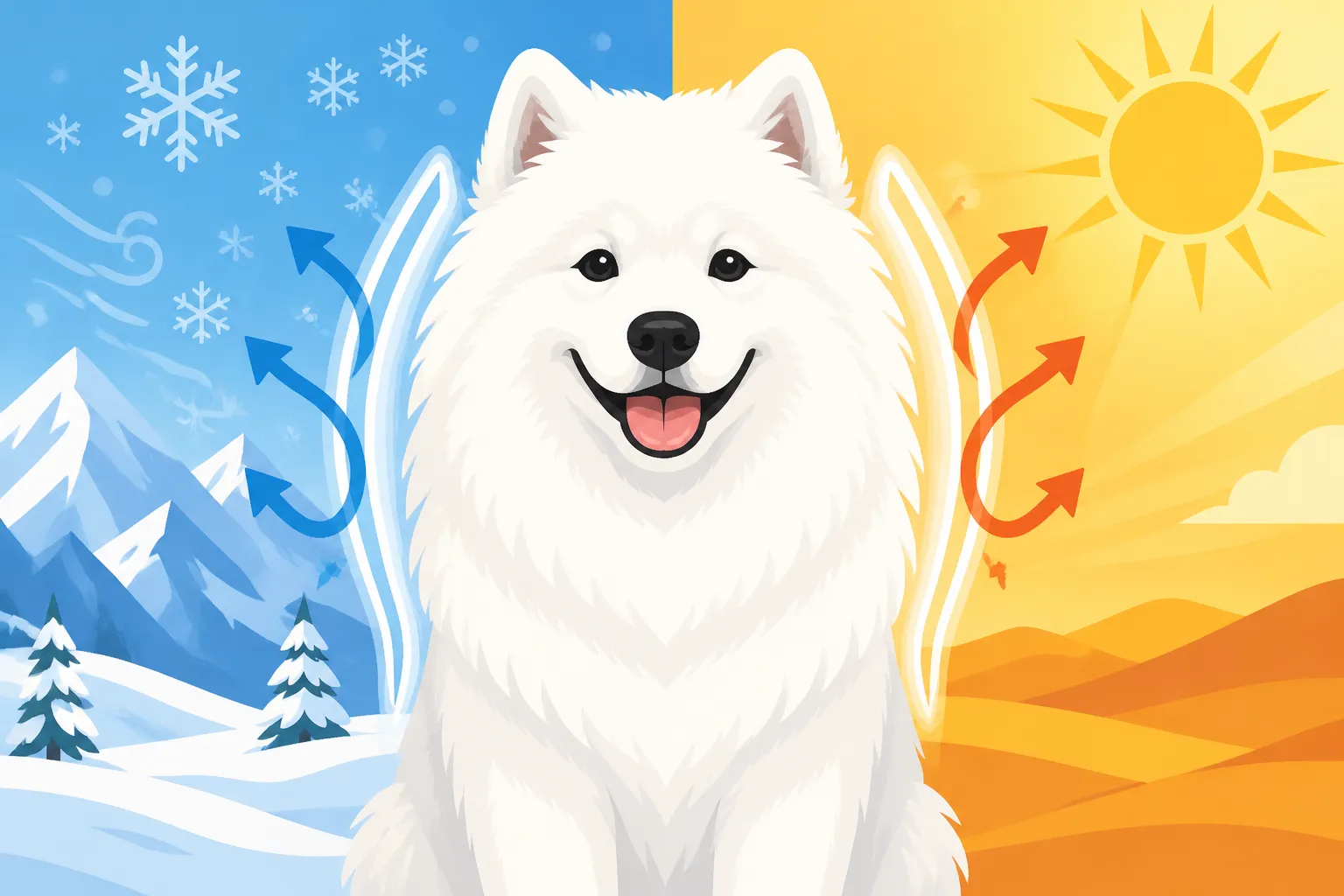
One of the most common head-scratchers for new Samoyed parents, and even some seasoned ones, is understanding how that glorious, thick double coat actually functions. It seems counterintuitive that a dog built for arctic winters could possibly be comfortable in warmer climates, leading many to mistakenly believe shaving is the answer. This guide will dive deep into the remarkable engineering of the Samoyed's coat, explaining precisely how it insulates against both bitter cold and surprising heat, and what you can do to support its natural capabilities.
The Marvel of the Samoyed's Double Coat
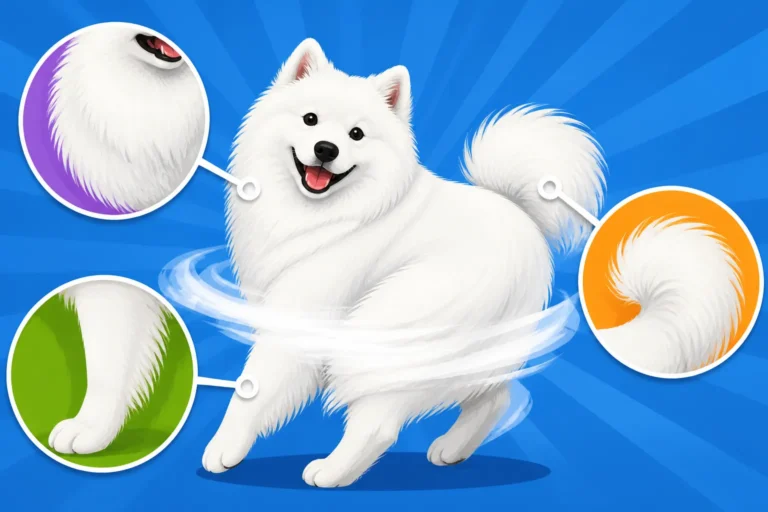
When you first lay eyes on a Samoyed, their voluminous, bright white coat is often the first thing that captures your heart. It looks like a cloud, a magnificent fluffy blanket, and it absolutely is. But this isn't just for aesthetics; it's a finely tuned, multi-layered system designed by millennia of natural selection in the frozen plains of Siberia. It's truly a wonder of evolution, built to keep them thriving in conditions that would send most other creatures scrambling for shelter. Understanding its components is key to appreciating its dual-purpose insulation. What a Samoyed's Double Coat Is Made Of is a great resource if you want to understand the physical makeup of this incredible fur.
The Guard Hairs: First Line of Defense
The outer layer of the Samoyed's coat consists of longer, coarser hairs known as guard hairs. These aren't soft and fluffy like the undercoat; instead, they're quite stiff and straight. Their primary job is not warmth, but protection. Think of them as the roof shingles on a house. They are designed to shed water, ice, and snow, preventing moisture from ever reaching the softer, warmth-retaining undercoat and, more importantly, the dog's skin. This water-repellent quality is truly amazing; you can often see mud and dirt simply fall off a dry Samoyed's coat, leaving them pristine.
These guard hairs also play a vital role in protecting against the sun's harsh UV rays. Just like how a wide-brimmed hat protects your face, these longer, stiffer hairs act as a natural sun shield, preventing sunburn on the skin beneath. They're typically a pure white or cream color, which further helps in reflecting sunlight rather than absorbing it. This reflective quality is a huge part of how the Samoyed manages to stay cool even when the sun is blazing down. Whether a Samoyed's Guard Hairs Reflect Sunlight delves into this in more detail.
The Undercoat: The Insulating Secret
Beneath that protective layer of guard hairs lies the true insulating powerhouse: the dense, woolly undercoat. This is the soft, incredibly thick, and downy fur that makes cuddling a Samoyed so irresistible. It's often described as being like cotton or lamb's wool, and it's certainly voluminous. The primary function of this undercoat is to trap air. Millions of tiny air pockets are formed within this dense layer, and it's these pockets of still air that do the heavy lifting when it comes to insulation.
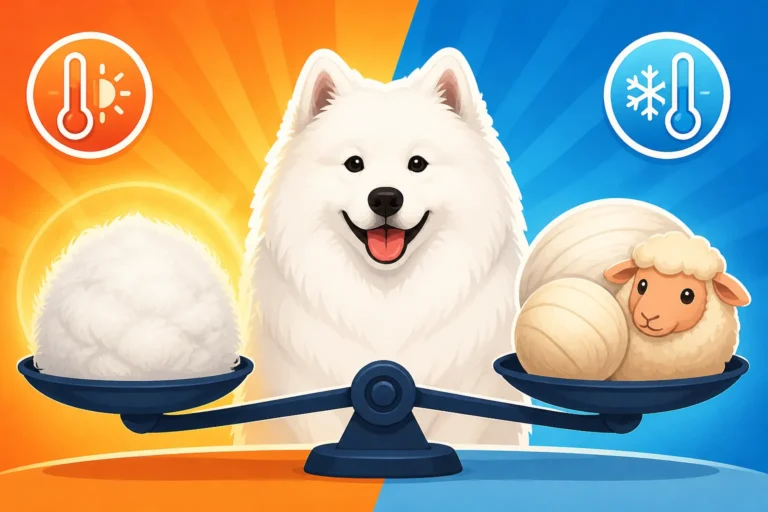
In cold weather, this trapped air is warmed by the dog's body heat, creating a thermal barrier that prevents heat from escaping. It's like wearing a high-quality down jacket; the loft of the down traps air and keeps you warm. For a Samoyed, this undercoat creates a cozy microclimate right next to their skin, keeping them snug even in sub-zero temperatures. It’s absolutely crucial for their survival in their native environment, allowing them to sleep comfortably in snowdrifts. Whether a Samoyed's Undercoat Traps Air explains this mechanism further.
When it comes to warm weather, these same trapped air pockets work in reverse, in a way. The air within the undercoat acts as a buffer, preventing external heat from easily reaching the dog's skin. It slows down the transfer of heat, both from the cold outside getting in, and from the heat outside getting to the dog. This creates a natural barrier that helps regulate their body temperature, working similarly to how insulation keeps a house cool in summer. This is often the hardest concept for people to grasp, but it’s a cornerstone of their heat management.
How the Samoyed Coat Manages Cold
The Samoyed's coat is a masterclass in natural engineering, specifically designed to withstand the brutal cold of Siberian winters. The entire structure, from the texture of individual hairs to the density of the layers, works in concert to maintain a stable core body temperature. This isn't just about feeling warm; it's about active thermoregulation, preventing hypothermia in extreme conditions.
Trapping Warm Air Against the Skin
As we touched upon, the dense undercoat is the primary mechanism for retaining warmth. When a Samoyed is in a cold environment, their body naturally generates heat. This heat then warms the air trapped within the millions of tiny pockets in the undercoat. Because air is a poor conductor of heat, these warmed air pockets act as an incredibly effective thermal barrier, slowing the rate at which body heat escapes into the colder surrounding environment. It's the same principle behind double-paned windows or insulated walls in our homes.
The more loft and density the undercoat has, the more air it can trap, and thus, the more effective its insulation. This is why proper grooming is so vital; a matted undercoat loses its ability to loft and trap air efficiently, significantly reducing its insulating capabilities. Imagine trying to stay warm in a flattened sleeping bag – it just doesn't work as well. A healthy, well-maintained undercoat ensures that the Samoyed carries its own personal, self-heating blanket wherever it goes.
Protection from Wind and Moisture
Beyond just trapping warm air, the Samoyed's coat offers crucial protection against the elements themselves. The long, coarse guard hairs form a tough, impenetrable outer shell. This outer layer effectively breaks up the wind, preventing it from penetrating to the skin and stripping away the warmed air trapped in the undercoat. Wind chill is a significant factor in cold weather, and without this robust outer defense, even the densest undercoat would be compromised.
Furthermore, these guard hairs are naturally water-repellent, a characteristic that is vital in snowy and icy conditions. When snow or ice accumulates on the coat, it doesn't melt and soak through to the skin. Instead, it tends to sit on the surface, where it can be shaken off or brushed away. This prevents the dog from getting wet and chilled, which is a major concern for any animal in freezing temperatures. A wet coat loses much of its insulating properties, so the water-resistant nature of the guard hairs is a non-negotiable feature for a true cold-weather breed.
The Surprising Science of Warm Weather Insulation
This is where the magic really happens and where many misconceptions arise. It seems utterly illogical that a thick coat could keep a dog cool, but the Samoyed's coat is designed to do exactly that. It's not about cooling the dog actively like an air conditioner; it's about preventing them from getting too hot in the first place, and regulating heat exchange with their surroundings.
Reflecting Solar Radiation
The pure white or cream color of a Samoyed's coat isn't just beautiful; it's a critical component of their heat management strategy. Light-colored surfaces reflect sunlight, while dark surfaces absorb it. Imagine wearing a black t-shirt versus a white one on a sunny day – the difference is palpable. The Samoyed's white guard hairs act like millions of tiny mirrors, bouncing the sun's powerful rays away from their body. This dramatically reduces the amount of solar radiation that reaches the skin, preventing internal heat buildup from external sources.
This reflective quality is particularly important in open, sunny environments where their ancestors lived. It minimizes the thermal load on their body, allowing their internal cooling mechanisms (like panting) to focus on dissipating metabolic heat, rather than fighting external heat absorption. So, next time you see a Samoyed basking in the sun, remember that their coat is actually deflecting much of that heat away. Why a Samoyed's Coat Really Keeps It Cool goes into depth on this fascinating aspect.
Creating an Air-Cooled Barrier
Here's the often-misunderstood part: the same trapped air in the undercoat that keeps them warm in winter also helps keep them cool in summer. When the ambient temperature is higher than the dog's body temperature, this layer of trapped air acts as a barrier, slowing the transfer of heat from the outside into the dog's core. It works like the insulation in your house that keeps the heat out in the summer. It's not generating cold, but it's preventing the external heat from easily reaching their skin.
Furthermore, the natural movement of the dog, combined with even a slight breeze, can create a subtle airflow through this airy layer. This can aid in convection, gently carrying away some of the heat radiating from the dog's body, and allowing cooler air (relative to the dog's internal temperature) to circulate. This is why a properly brushed and un-matted coat is crucial; it allows this natural airflow to occur. If the coat is matted, this circulation is stifled, and the coat can indeed become a burden.
Preventing Overheating from External Sources
The dual-layer system isn't just reflecting sun and creating an air barrier; it's also acting as a shield against direct heat sources. Think of walking barefoot on hot asphalt versus wearing shoes. The guard hairs and undercoat provide a physical buffer between the hot ground, hot air, or even radiating heat from objects, and the dog's delicate skin. This helps prevent superficial burns or excessive heat absorption from direct contact with warmer surfaces.
This is especially critical in urban environments where pavements can reach extreme temperatures. While a Samoyed should never be walked on scorching surfaces, their coat provides a layer of defense against ambient heat radiating upwards. It's a passive but highly effective form of temperature regulation, a testament to how perfectly adapted this breed is to a wide range of thermal challenges.
The Critical Role of Grooming for Dual Insulation
All of this incredible natural engineering relies heavily on one crucial factor: proper coat maintenance. A neglected Samoyed coat loses its insulating superpowers, becoming a burden rather than a blessing. Many of the frustrations owners face with their Samoyed in warmer weather can be traced back to incorrect grooming practices. It's not just about keeping them looking good; it's absolutely vital for their health and comfort.
Regular Brushing: Maintaining Airflow
Regular, thorough brushing is the cornerstone of Samoyed coat care. This isn't a quick once-over; it's a deep-dive brushing session that aims to reach the skin. The goal is to remove dead undercoat, prevent mats, and ensure the coat can breathe. When dead undercoat builds up, it compacts, creating dense areas that trap heat against the skin in summer and inhibit the essential airflow needed for cooling. In winter, this compacted undercoat loses its loft and therefore its ability to trap insulating air effectively.
Brushing helps to untangle the undercoat, allowing it to "fluff up" and maximize those air-trapping pockets. It also distributes natural oils, keeping both layers healthy and resilient. During seasonal "coat blows," when Samoyeds shed massive amounts of undercoat, brushing becomes an almost daily necessity. Products like a good quality slicker brush and an undercoat rake are indispensable tools. You can find excellent options on Chewy or Amazon, often with reviews from other Samoyed owners highlighting their effectiveness for such a thick coat. How Often a Samoyed Needs Brushing is an important read for any Samoyed owner.
The Dangers of Shaving the Samoyed Coat
This is perhaps the most common and damaging misconception: that shaving a Samoyed will keep them cooler. In almost all cases, this is absolutely false and can cause more harm than good. When you shave a Samoyed, you remove both the protective guard hairs and the insulating undercoat. This immediately exposes their delicate pink skin to direct sunlight, making them highly susceptible to sunburn and increasing their risk of skin cancer. You're removing their natural sunblock!
Furthermore, by removing the insulating undercoat, you eliminate the air barrier that helps keep external heat from reaching their body. It's like removing the insulation from your house in summer; the interior will heat up much faster. Shaving also often damages the coat follicles, leading to "clipper alopecia," where the guard hairs may not grow back correctly, or the coat grows back patchy, coarser, and unevenly. The coat may never return to its original glory or insulating effectiveness. Why a Samoyed Must Never Be Shaved is a crucial topic for owners to understand deeply.
Avoiding Matting and Its Impact
Matting is the enemy of a healthy Samoyed coat and directly undermines its insulating properties. Mats are tangled clumps of fur, usually undercoat, that become tightly woven together. Once a mat forms, it pulls on the skin, causing discomfort and pain, and can lead to skin infections due to trapped moisture and lack of air circulation. More importantly for our discussion, mats completely destroy the coat's ability to regulate temperature.
In winter, a matted coat cannot trap air effectively, leading to cold spots and reduced warmth. In summer, mats become dense, impenetrable layers that trap heat against the dog's body, preventing any airflow or heat dissipation. They essentially become an unwanted, suffocating blanket. Avoiding mats requires consistent, thorough line brushing, working in sections down to the skin. If your Samoyed does get a mat, it's often best to gently work it out with a detangling spray or, if severe, consult a professional groomer who understands double coats.
Factors Affecting Coat Performance
While the Samoyed's coat is a marvel, it's not a magical force field that makes them immune to environmental conditions. Other factors play a significant role in their overall comfort and how well their coat can do its job. It’s a holistic system, and understanding these additional elements can help you provide the best care for your furry friend.
Hydration and Internal Cooling
No matter how perfectly their coat is insulating, a Samoyed still generates internal metabolic heat and needs to cool itself down. Their primary methods for heat dissipation are panting and, to a lesser extent, sweating through their paw pads. For these mechanisms to be effective, proper hydration is absolutely critical. A dog that is dehydrated cannot pant efficiently, and their body's ability to regulate temperature internally is severely compromised.
Always ensure your Samoyed has access to fresh, cool water, especially in warmer weather or after exercise. Keep multiple water bowls around the house and bring a portable water bottle and bowl on walks. Even on seemingly mild days, their thick coat means they can still overheat if they're not drinking enough. Consider adding a little ice to their water bowl on particularly hot days or ensuring they have a kiddie pool outside where they can splash and cool their paws. How a Samoyed Should Be Cooled Down offers more tips for summer comfort.
Environmental Management
While the coat provides incredible natural insulation, it doesn't mean a Samoyed can just be left to their own devices in extreme conditions. Owners must still provide an appropriate environment. In very hot weather, this means ensuring they have access to cool, shaded areas, ideally indoors with air conditioning. Their coat is amazing, but it can only do so much against triple-digit heat and humidity. The Temperature at Which a Samoyed Should Stay Indoors provides guidelines for safe temperatures.
Conversely, in extremely cold conditions, especially wet cold, while their coat is fantastic, an outdoor shelter that is dry and out of the wind is still essential. Even breeds adapted to cold need protection from prolonged exposure to biting winds and dampness. Think of their coat as their primary defense, but supplemental protection and common sense environmental management are always necessary to ensure their well-being.
The Science Behind the Samoyed's Thermoregulation
Let's break down the mechanics even further to truly appreciate the genius of the Samoyed's coat. It’s a beautiful dance between physics, physiology, and evolutionary adaptation, all working to keep them at their optimal temperature range, whether it’s below freezing or a sunny spring day. Understanding the 'why' behind the 'how' can make all the difference in appreciating and caring for your companion.
Convection, Conduction, Radiation, and Evaporation
These are the four ways heat is exchanged between a dog's body and its environment, and the Samoyed's coat influences all of them:
- Convection: Heat transfer via moving air or fluid. The undercoat traps air, preventing heat loss by convection in cold weather and slowing heat gain by convection in warm weather. A gentle breeze can facilitate cooling convection through an un-matted coat.
- Conduction: Heat transfer through direct contact. The thick coat provides a barrier, reducing conductive heat loss to cold ground and conductive heat gain from hot surfaces. This means lying on cold snow doesn't rapidly drain their body heat, and lying on warm pavement doesn't rapidly transfer heat to them.
- Radiation: Heat transfer through electromagnetic waves. The white guard hairs excel at reflecting solar radiation, minimizing heat gain from the sun. In cold, their coat helps trap the radiant heat coming off their body.
- Evaporation: Heat loss through the conversion of liquid (sweat/saliva) to gas. This is primarily achieved through panting for Samoyeds. The coat doesn't directly aid evaporation but by minimizing heat gain from other sources, it allows panting to be more efficient at cooling the body without being overwhelmed.
This multi-faceted approach shows just how comprehensive their natural protective system truly is. It's not a single trick, but a symphony of natural processes.
The Myth of Hair Follicle "Breathing"
You might hear people talk about a dog's skin needing to "breathe," and therefore needing to shave the coat. This is a misunderstanding of canine physiology. Dogs don't "sweat" through their skin like humans do; their sweat glands are primarily in their paw pads. Their skin is covered by fur, and the hair follicles themselves don't participate in a significant way in cooling beyond the structural role of the coat described above.
In fact, shaving can actually impair the skin's health by removing the natural protection against UV radiation and physical irritants. The coat provides a barrier against insects, allergens, and minor abrasions. When you remove that protection, the skin can become more vulnerable to issues like sunburn, dryness, and infections. Whether a Samoyed's Coat Grows Back After a Shave also addresses the potential damage to follicles.
How to Support Your Samoyed's Natural Insulation
Knowing all of this incredible science is one thing, but putting it into practice for your Samoyed’s daily care is where it truly matters. It’s about working with their natural design, not against it.
| Season | Coat Challenge | How the Coat Helps | How You Can Help |
|---|---|---|---|
| Winter | Extreme cold, snow, ice, wind | Undercoat traps warm air; guard hairs shed moisture & block wind | Regular brushing to prevent matting & maintain loft; ensure dry shelter outdoors |
| Summer | Direct sun, high ambient heat, humidity | White guard hairs reflect sun; trapped air slows heat transfer | Regular brushing to remove dead undercoat & allow airflow; provide shade & water; limit exercise to cool times |
| Spring/Fall | Seasonal coat blow | Natural shedding cycle prepares coat for new season's needs | Intensive brushing to remove shedding undercoat; check for mats frequently |
Choosing the Right Tools and Techniques
Investing in the right grooming tools is non-negotiable for a Samoyed owner. A good quality undercoat rake, a sturdy slicker brush, and a wide-toothed comb are essential. A high-velocity force dryer, while an investment, can be a game-changer, especially during coat blows or after baths, to thoroughly dry the undercoat and remove loose hair. You can often find these professional-grade tools on Chewy or Amazon, and they’re well worth the cost for the time and effort they save.
When brushing, always work in small sections, parting the hair and brushing from the skin outwards. This is called "line brushing" and ensures you're reaching deep into the undercoat. Don't just brush the top layer! Neglecting the undercoat is how mats form, especially in areas prone to friction like behind the ears, armpits, and groin. Consistency is key; short, regular brushing sessions are far more effective than infrequent, marathon sessions.
Monitoring and Adapting to Conditions
Pay close attention to your Samoyed's behavior and the environmental conditions. On hot days, even if their coat is doing its job, they might still be uncomfortable. Look for signs of overheating like excessive panting, lethargy, drooling, or seeking out cool spots to lie on. Adjust your exercise schedule to early mornings or late evenings when temperatures are cooler. Avoid strenuous activity during the hottest parts of the day.
Similarly, in winter, while they love the snow, be mindful of icy conditions or prolonged exposure to freezing rain. Just because they're built for cold doesn't mean they're impervious to frostbite or hypothermia in extreme, unchecked scenarios. Your Samoyed's coat is a magnificent tool, but it's part of a partnership where you provide the thoughtful care and vigilance they need to thrive.
Disclaimer
This article is for general informational purposes only and does not constitute professional advice. Laws, prices and regulations vary by location and change over time. Consult a qualified professional for guidance on your specific situation.