Samoyed or Malamute for a Cold Climate
Choosing between a Samoyed and an Alaskan Malamute for a cold climate usually comes down to more than which dog has the thicker-looking coat. Both are northern working breeds, but their size, exercise needs, pulling style, and family habits differ. This guide explains what winter living is actually like with each, including outdoor safety, grooming, and the kind of owner each breed suits best.
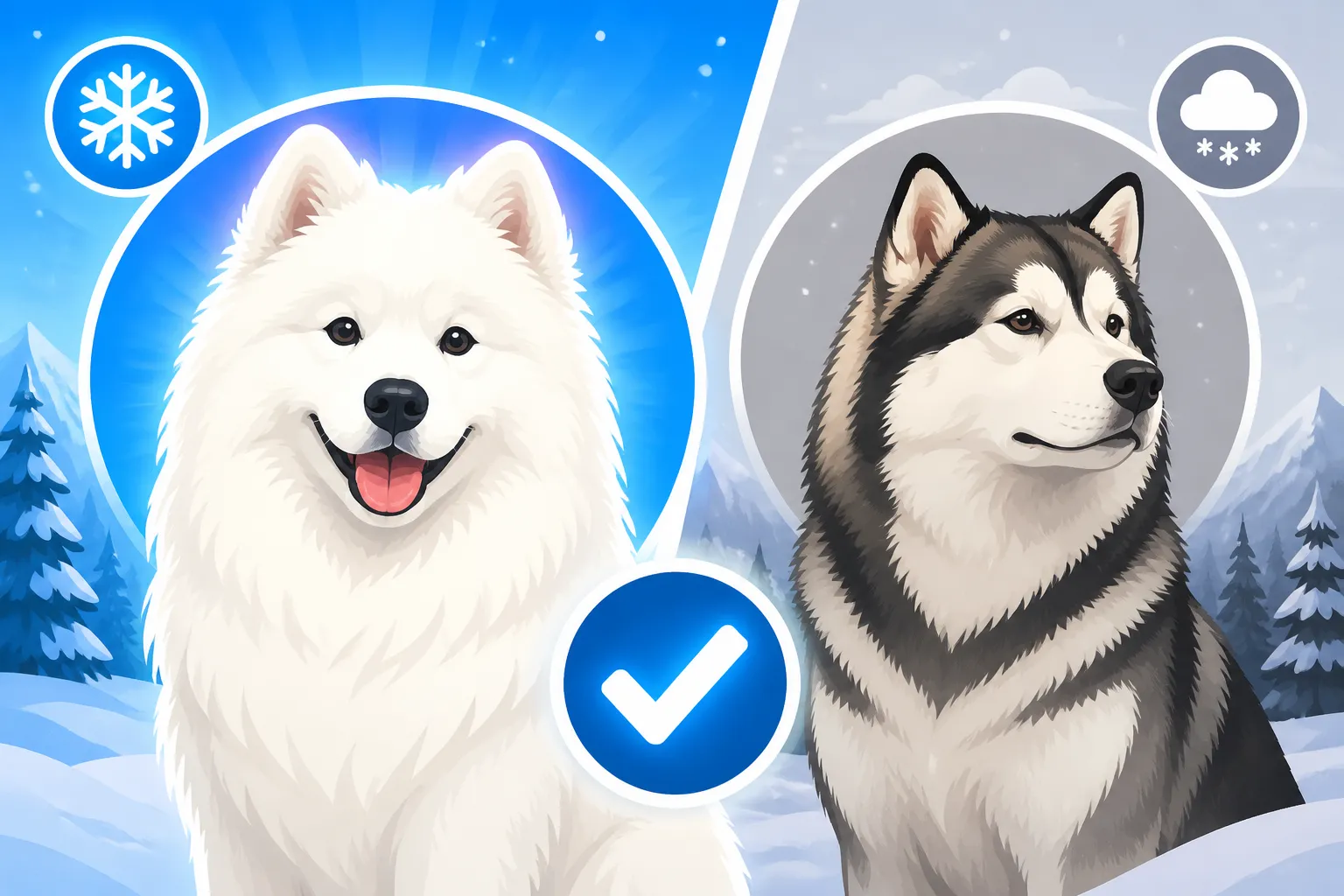
Samoyed vs Malamute for Cold Weather
Both breeds have dense double coats that help them cope with cold, but neither is a dog to leave outside indefinitely just because snow is falling. Wind, dampness, age, health, activity level, and whether the dog is accustomed to the weather all matter. A dog that has spent years in a warm home may not be ready for a long, still day outdoors when temperatures drop.
How their working histories shaped them
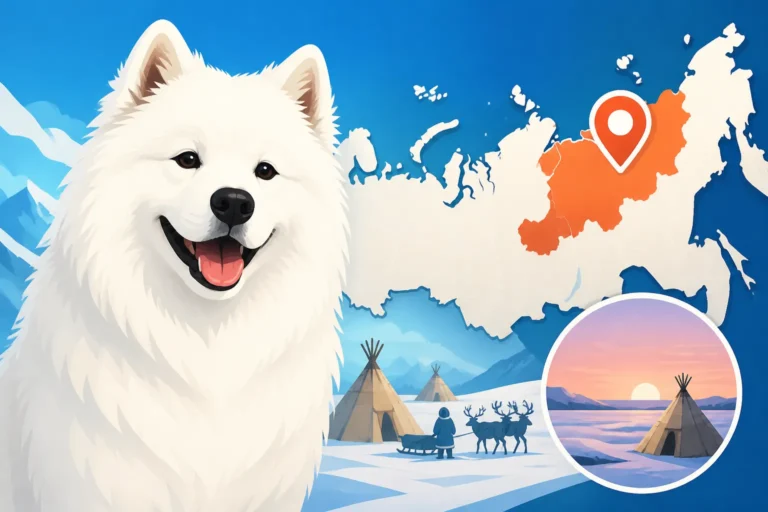
Samoyeds were developed by the Nenets people of northern Siberia for work that included herding reindeer and pulling sleds. Their history also includes close family life: they were valued as working companions, not simply left apart from the household. That background helps explain why many Samoyeds enjoy being involved in daily routines as much as they enjoy snow. For more on their original jobs, see What the Nenets Bred the Samoyed to Do and How a Samoyed Pulled a Sled.
Alaskan Malamutes were bred as powerful freight-hauling dogs. Their build reflects that work: they are generally larger and more muscular than Samoyeds, with the strength to move heavy loads over distance. A Malamute may be a natural fit for an owner interested in serious pulling sports, but a larger, stronger dog also demands confident handling and suitable equipment.
A Samoyed can be an enthusiastic sled dog, too, but its traditional work and build are not identical to the Malamute’s. Neither breed should be chosen on the assumption that every individual will automatically want to pull a sled or thrive in a working role. Temperament, conditioning, training, and the dog’s health all shape what activities are appropriate. The breed comparison The Samoyed Against an Alaskan Malamute offers more background on the differences.
Coat protection is not a license to ignore the weather
The thick undercoat and longer guard hairs on both breeds provide insulation, but coat alone does not protect a dog from every winter hazard. Wet fur, wind exposure, frozen ground, and long periods without movement can make an outing uncomfortable or unsafe. Puppies, senior dogs, dogs with medical conditions, and dogs that are not acclimated to cold may need shorter outdoor periods and closer supervision.
Watch the dog rather than relying on a thermometer or breed reputation. Shivering, repeatedly lifting paws, slowing down, seeking shelter, or seeming unusually reluctant to move are reasons to bring the dog indoors and warm it gradually. If a dog seems weak, confused, unusually lethargic, or persistently distressed, contact a veterinarian promptly.
For either breed, winter care includes checking paws after walks for ice, snow, salt, and irritation. Dry the coat thoroughly if it becomes wet, and look for mats that can hold moisture close to the skin. A Samoyed’s coat-care needs are covered in What a Samoyed's Double Coat Is Made Of, while The Outdoor Shelter a Samoyed Needs explains why shelter design matters if a dog spends time outside.
Which Breed Fits Your Cold-Climate Lifestyle
Cold weather may suit both breeds, but the best match depends on the life you can offer beyond winter. A Malamute’s size and strength can be challenging in a small home or for someone who is not prepared to manage pulling. A Samoyed can also be lively, vocal, and demanding of attention, so a smaller frame does not mean a low-effort dog.
| Consideration | Samoyed | Alaskan Malamute |
|---|---|---|
| General build | Medium-to-large, athletic | Larger, heavier, strongly built |
| Traditional work | Herding and sled work, with close human companionship | Freight hauling and heavy pulling |
| Winter coat | Dense double coat suited to cold conditions | Dense double coat suited to cold conditions |
| Pulling style | Capable, but individual drive and training vary | Often a strong fit for substantial pulling work |
| Handling needs | Active and energetic; can pull and be vocal | Greater size and strength can make leash handling more demanding |
| Grooming | Regular brushing, with substantial shedding | Regular brushing, with substantial shedding |
| Household fit | Often seeks interaction and involvement | Needs space, exercise, and capable management |
| Outdoor living | Needs shelter, supervision, and human contact | Needs shelter, supervision, and human contact |
Think about size, strength, and daily exercise
If you want a dog to join winter hikes, outdoor chores, or recreational pulling, either breed may be worth researching. The important question is not simply whether the dog can handle snow, but whether you can provide safe conditioning, training, and recovery. Pulling work should be introduced gradually and matched to the individual dog’s maturity and physical condition.
A Malamute’s greater size can make equipment fit, transport, and everyday handling more involved. A Samoyed is not a small or effortless alternative, however. Both can pull hard on leash if the habit is allowed to develop, and both need regular activity and mental engagement. Read Whether a Samoyed Pulls as Hard as a Malamute before assuming one breed will be easy to walk.
Consider your actual routine in January, not just the winter adventures you imagine. Who will exercise the dog on a dark weekday morning? Can you safely manage a strong dog on icy sidewalks? Is there a secure place for activity, and do you have a plan for days when weather makes outdoor exercise impractical? Those practical details often matter more than a breed’s reputation as a snow dog.
Consider how much indoor companionship you can provide
Both breeds are social working dogs, and both generally need meaningful interaction with their people. A cold climate does not make either breed suitable for being isolated outdoors all day. Outdoor access can be part of a good life, but the dog also needs companionship, training, exercise, and a comfortable place inside.
This is especially important if you are picturing a dog that lives in a kennel or yard through the winter. A weather-resistant coat cannot meet a dog’s social needs. If you are considering outdoor time, plan for a secure, dry, sheltered space and frequent opportunities to check the dog’s comfort. Whether a Samoyed Sleeps Outside in Winter explores this question in more detail.
Home setup matters, too. A fenced yard can be useful, but it does not replace walks, training, or supervision. Some northern breeds are clever escape artists, and snow can make fences easier to climb over or dig beneath. For more on the Samoyed’s space needs, see Whether a Samoyed Needs a Yard.
Winter Care for Either Breed
Prepare for paws, snow, and changing conditions
Snow can pack between toes or cling to leg furnishings, while road salt and de-icing products may irritate paws. After walks, check between the toes and around the pads. Wipe paws with a damp cloth if they have contacted treated pavement, then dry them so moisture does not sit against the skin. If your dog is bothered by snow or salt, ask a veterinarian about appropriate paw protection and practice using it at home before a long walk.
Pay attention to the route as well as the weather. A familiar park can become risky when visibility is poor, ice covers a path, or snow conceals holes and debris. Keep a secure leash in areas where footing is unpredictable. A dog that is excited by fresh snow may not notice discomfort until it has been outside longer than is sensible.
For basic winter supplies, make a checklist before the first major snowfall: a well-fitted harness or collar, leash, towels, paw-cleaning supplies, and a warm, dry resting area indoors. If comparing food, grooming tools, or other routine supplies, a retailer such as Chewy can be one place to review product options; check labels and ask your veterinarian when a product is intended to address a health concern.
Grooming matters even when the weather is cold
A thick coat needs regular brushing in winter, not less. Snow and dampness can encourage tangles, especially behind the ears, around the hindquarters, and where a harness rubs. Mats can trap moisture and make it harder to keep the skin comfortable. Brush gently and thoroughly rather than rushing over the visible top layer.
Do not shave either breed to make winter care easier or to change how the dog handles temperature. The coat is part of the dog’s natural insulation, and clipping it very short can interfere with its protective function. If you are unsure how to manage a dense coat, find a groomer familiar with double-coated northern breeds and discuss the dog’s specific needs.
A grooming routine also gives you a chance to notice problems early. Check for irritated skin, broken nails, sore areas, or lumps hidden beneath the coat. Keep grooming tools and paw-care items together so winter maintenance does not become a last-minute scramble. Chewy may be useful for comparing everyday brushes or towels, but the right tool depends on the dog’s coat condition and what you can use comfortably and safely.
Choosing the Better Match
Choose a Samoyed if companionship is central to your plans
A Samoyed may suit you if you want an active dog who is likely to seek involvement in household life and you are prepared for regular brushing, training, and exercise. Its northern heritage makes snowy outings appealing for many individuals, but the breed is not simply a low-maintenance winter companion. Samoyeds can be energetic and vocal, and they need more than a yard and cold weather to stay content.
Think about the full year, too. Cold-climate owners still need a plan for warm spells and indoor cooling. A heavy coat does not make summer management irrelevant, especially if the dog exercises outdoors. Whether a Samoyed Needs Air Conditioning and Whether a Samoyed Suits a Hot Climate can help you assess seasonal comfort.
Choose a Malamute if you can manage a larger, powerful working dog
A Malamute may make more sense if you are drawn to a larger, sturdy dog and can meet the demands of its strength, exercise needs, and training. If pulling sports are a serious interest, learn about the equipment, conditioning, and supervision involved before bringing a dog home. The breed’s hauling heritage is meaningful, but it does not mean that every Malamute should be asked to pull heavy loads or work in all conditions.
Be realistic about ordinary tasks: getting the dog into a vehicle, managing a leash near other dogs, and providing secure exercise space. The strongest match is not necessarily the breed that looks most impressive in a snowy photograph; it is the dog whose needs fit your time, experience, home, and plans.
Use the same careful selection process for either breed
Talk with knowledgeable breeders or rescue organizations about the individual dog’s temperament, health history, energy level, and experience with cold weather. Ask what routine care the dog needs and how it behaves indoors, around other animals, and on leash. With a puppy, ask about both parents and the conditions in which the litter has been raised. With an adult dog, ask what the rescue or previous caregiver has observed in daily life.
The best cold-climate choice is the breed you can care for through every season, not just the one that appears most at home in snow. Both Samoyeds and Malamutes can enjoy cold-weather activities, but safe shelter, human companionship, exercise, grooming, and attentive supervision matter just as much as a winter-ready coat.
Disclaimer
This article is for general informational purposes only and does not constitute professional advice. Laws, prices and regulations vary by location and change over time. Consult a qualified professional for guidance on your specific situation.