Whether a Samoyed Suits a Family With Young Children
A Samoyed can be a loving, playful family dog, but a fluffy appearance does not make one automatically suited to young children. Their size, energy, enthusiasm, and need for company can be a lot to manage around toddlers. This guide explains what family life with a Samoyed may look like, how to keep children and dogs safer together, and what to consider before bringing one home.
Is a Samoyed a good dog for a family with young children
The traits that can make Samoyeds lovely family companions
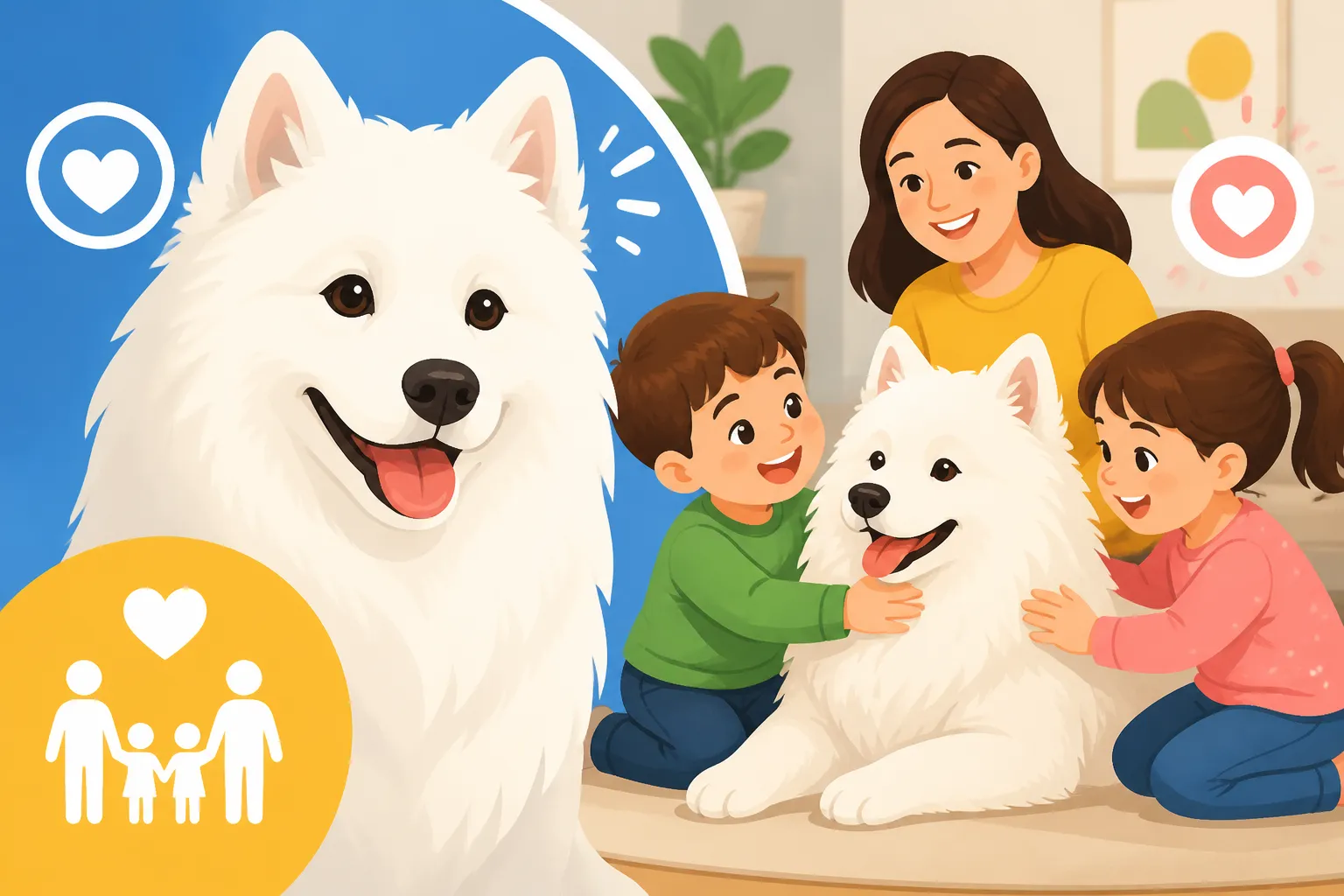
Samoyeds are often sociable and people-oriented. Many enjoy being near their families, joining in household activity, and playing games. That can make them a warm presence for children who are learning to interact thoughtfully with a dog. A Samoyed may happily accompany the family on walks, play in the yard, or settle nearby during a quiet afternoon.
But breed tendencies are not guarantees. Individual dogs vary, and early experiences, health, training, and daily routine all affect behavior. A calm adult with a known history around children may be a very different match from an exuberant adolescent Samoyed who is still learning how to greet people without jumping.
Their friendliness also does not mean they will automatically understand a child’s behavior. Children can move suddenly, squeal, hug tightly, or grab at fur. Even a patient dog may feel overwhelmed if it cannot retreat. Adults need to manage interactions rather than expecting the dog to tolerate every kind of attention.
The challenges families should be ready for
A Samoyed is a sturdy, active dog, and enthusiastic greetings can knock over a small child even when the dog has no intention of hurting anyone. A happy dog rushing across a room, turning quickly during play, or jumping up to greet a parent can collide with a toddler. Families often underestimate this risk because the dog seems friendly.
Young Samoyeds can also be mouthy and excitable. Puppy teeth, playful nipping, and grabbing at sleeves may be normal parts of development, but they can frighten or hurt a child. Children running, squealing, or waving toys may make the game more exciting for the dog. For more detail, see Why a Samoyed Nips a Running Child and Whether a Samoyed Knocks Children Over.
There is also the everyday workload. Samoyeds need regular exercise, training, grooming, and companionship. If a household is already stretched by childcare, work, and sleep disruption, it is worth asking who will handle the dog’s needs when the family is tired or busy. Whether a Samoyed Suits a Busy Household can help you think through that practical side.
A realistic suitability check
| Family situation | What it may mean for a Samoyed |
|---|---|
| Adults can supervise every child-dog interaction | Safer opportunities to build calm, positive habits |
| A toddler is often left to play near the dog without close supervision | High risk of accidental injury or a frightening interaction |
| The family has time for training, exercise, and grooming | A better chance of meeting the dog’s needs consistently |
| Adults expect the dog to entertain the children | Likely disappointment; the dog is not a substitute for supervision or childcare |
| There is a quiet room, gate, or pen where the dog can rest undisturbed | Gives the dog a reliable way to take a break |
| Children are taught to respect the dog’s space | Makes gentle, predictable interaction more achievable |
A Samoyed may suit a family with young children when adults are prepared to supervise closely, teach both the children and dog, and provide enough daily care. If those conditions are hard to maintain, waiting until children are older—or considering a mature dog whose temperament is known—may be the more comfortable choice.
How to help children and Samoyeds live together safely
Supervision is a daily responsibility
Young children and dogs should not be left alone together, even if they have lived together for years and the dog has always seemed gentle. An adult should be close enough to intervene immediately, not watching from another room or relying on a camera. A gate or playpen can help divide space when an adult needs to cook, answer the door, or focus on another child.
Supervision matters during ordinary moments, not only obvious playtime. A child might reach for the dog’s food, disturb it while sleeping, or try to climb onto it. A dog may become uncomfortable when cornered between a sofa and a wall. Adults can prevent these situations by arranging the room and guiding interactions before either child or dog becomes upset.
Make sure the Samoyed has a child-free resting place. A crate, gated room, or quiet bed area can work if the dog is comfortable using it. Children should learn that this space is off-limits. The dog must be able to leave interactions rather than being followed or pulled back into play.
Teach children simple, concrete rules
“Be gentle” can be too vague for a young child. Use clear directions they can practice: pet the dog on the shoulder or back with an open hand; do not pull fur, ears, tail, or paws; do not climb on the dog; and leave the dog alone when it is eating, chewing, or sleeping. Keep early interactions brief and calm, with an adult guiding the child’s hand and attention.
Children should also learn to invite the dog rather than chase it. Calling the dog over and letting it choose whether to approach is safer than running after it for a hug. If the dog walks away, that is a useful signal—not an invitation for the child to follow. Adults can praise the child for giving the dog space, just as they reward the dog for calm behavior.
It helps to teach children to notice when the dog is asking for space. Turning away, moving off, hiding, becoming stiff, or repeatedly licking its lips may indicate discomfort or stress. These signs do not prove that a dog will bite, but they are good reasons to pause the interaction and give the dog room. For a related discussion of children and the breed’s herding tendencies, see Whether a Samoyed Herds Children.
Manage greetings and play before they become chaotic
A Samoyed that is excited to see a child may jump, paw, or rush forward. Practice calm greetings with an adult controlling the dog on leash or behind a gate. Reward the dog for keeping four paws on the floor and settling before the child approaches. If excitement rises, calmly separate them and try again later rather than asking the child to push the dog away.
Choose games that have clear boundaries. Fetch with an adult managing the toy, simple scent games, and short training sessions can be more predictable than wrestling or chasing. Avoid games that encourage the dog to grab clothing or body parts. The goal is not to stop children and dogs from enjoying each other; it is to create play that does not depend on the dog being able to tolerate rough handling.
Preparing a Samoyed for family life
Train the dog for the situations children create
Training should begin before the dog is expected to behave perfectly around a child. Practice cues such as “settle,” “leave it,” “come,” and going to a bed or mat. Reward calm behavior around everyday noises and movement, introducing each gradually. A dog that can disengage from activity and relax on cue is easier to manage than one that is always in the middle of the action.
Do not use a child as a training tool. An adult should handle the dog, control the distance, and keep sessions short enough that the dog remains comfortable. If the dog becomes overexcited, worried, or unable to respond, increase distance or end the session. For families starting with a puppy, The First Year With a Samoyed Puppy covers the broader adjustment and training demands of that stage.
Socialization should be careful and positive, not a parade of people touching the puppy. Let the dog observe children at a comfortable distance and reward relaxed behavior. The dog does not need to greet every child. Neutrality—being able to stay calm while children move or make noise—is often a more useful goal than intense friendliness.
Choose the right match for your household
A puppy gives a family the chance to build habits from the beginning, but puppies are especially demanding. They need frequent supervision, house-training, rest, and patient help learning not to jump or nip. A young child and a puppy can both need constant attention, which may leave adults feeling as though they are managing two toddlers at once.
An adult Samoyed may be a better option for some families, particularly if a responsible rescue or breeder can describe the dog’s behavior around children and how it handles busy environments. Ask specific questions: Has the dog lived with young children? How does it respond to running and loud play? Does it guard food or toys? Can it settle behind a gate? A general claim that the dog is “good with kids” is less useful than detailed examples.
If considering a Samoyed puppy, speak candidly with the breeder about the age and temperament of your children, your daily schedule, and your experience with dogs. A thoughtful match matters more than choosing the puppy that looks most appealing in a photo. Read A Samoyed With Children and Other Animals for broader context about introducing the breed to a family environment.
Make room for exercise, grooming, and quiet
A family-friendly dog still needs care that does not depend on the children. Plan for adult-led walks, training, and enrichment. A secure yard can be helpful, but it does not replace interaction or exercise. Samoyeds are vocal, too, and a busy, under-stimulated dog may bark or “talk” more than a family expects.
Grooming is another regular commitment. The thick coat needs brushing, and shedding can become especially noticeable during coat changes. In a home with small children, loose fur may collect on play mats, clothes, and furniture. Keep brushes and grooming tools stored safely, and teach children not to disturb the dog during grooming if it is uncomfortable.
Useful supplies can make routines easier, but they do not replace supervision or training. For instance, a sturdy baby gate, washable bed, long-lasting chew approved for the dog, or grooming brush may help organize the household. Families who shop at Chewy may find it convenient to compare basic pet-care supplies in one place, but choose equipment for the individual dog’s size and behavior. A gate should be secure, and any chew should be used with adult oversight.
Common questions about Samoyeds and young children
Is a Samoyed safe with a toddler
No breed can be called automatically safe with a toddler. The safer question is whether the adults can manage the environment consistently. A toddler cannot reliably understand a dog’s boundaries, and a Samoyed may be strong and energetic enough to knock the child over during ordinary movement. Keep them separated unless an attentive adult is right there, and do not allow the toddler to approach the dog’s food, bed, or resting spot.
The dog’s individual history matters. A mature dog that has calmly lived with toddlers may be a more predictable choice than a puppy, but even a proven family dog needs supervision. If the dog shows fear, stiffening, guarding, snapping, or repeated attempts to escape, separate them and ask a veterinarian or qualified behavior professional for help. Read Whether a Samoyed Is Safe With a Toddler for more on that specific concern.
Should a family wait until the children are older
Waiting can make life easier, especially if the family has a toddler and no adult has time for intensive training and supervision. Older children can follow safety rules more consistently, help with age-appropriate tasks, and understand that a dog needs rest. Still, the adults remain responsible for exercise, grooming, veterinary care, and behavior management.
The right timing depends on the particular family, not a single age cutoff. Consider your available time, childcare demands, housing setup, and experience with energetic dogs. Be honest about the hardest days: a Samoyed still needs care when a child is sick, a parent is working late, or the weather makes outdoor activity inconvenient.
What warning signs mean the interaction should stop
End an interaction if the dog tries to move away, hides, becomes tense, guards an item, growls, or reacts sharply to touch. Also intervene if the child is chasing, hugging tightly, climbing on the dog, or becoming too excited to follow instructions. Separate them calmly; do not scold a dog for growling, since that warning can be important information that the dog is uncomfortable.
If concerning behavior repeats, avoid putting the dog and child in the same situation while you seek qualified guidance. Do not wait for a bite to take the problem seriously. If there has been a bite or injury, attend to the child’s immediate needs and contact appropriate medical and veterinary professionals.
A Samoyed can become a cherished member of a family with young children, but success depends on adult preparation, close supervision, training, and a realistic view of the breed’s energy and care needs. The dog should have a safe place to rest, and children should be taught to respect its space. When those safeguards cannot be provided reliably, it is sensible to wait or choose a dog whose needs better fit the household.
Disclaimer
This article is for general informational purposes only and does not constitute professional advice. Laws, prices and regulations vary by location and change over time. Consult a qualified professional for guidance on your specific situation.