A Samoyed With Children and Other Animals
Bringing a Samoyed into a bustling household with children and other animals can feel like orchestrating a complex symphony, full of potentially joyful highs but also the very real possibility of discordant notes. Many families dream of that picture-perfect scene—the fluffy white dog gently playing with kids, peacefully coexisting with the cat, and happily trotting alongside other canine companions. However, the reality of managing a high-energy, intelligent, and sometimes stubborn breed alongside the unpredictable nature of children and the distinct personalities of other pets often leads to frustrations and misunderstandings. This comprehensive guide is here to walk you through the nuances of integrating your Samoyed into a multi-species, multi-person family, helping you build a safe, happy, and harmonious home for everyone.
The Samoyed's Heart: Why They Thrive in a Family Setting
Before we even think about introductions, it’s crucial to understand the very essence of a Samoyed. These aren't just pretty faces; they are dogs with a profound history and a deeply ingrained temperament that makes them uniquely suited—or sometimes, uniquely challenging—for family life. Their core nature is one of companionship and inclusion, which is both their greatest asset and something to manage carefully.
A History of Close Companionship
The Samoyed breed hails from the frigid northern reaches of Siberia, where they lived alongside the Nenets people for thousands of years. Their role wasn't just to pull sleds or herd reindeer; it was to be an integral part of the family unit, often sharing their masters' tents to provide warmth. Imagine sharing a small, enclosed space with a dog night after night – it breeds a level of tolerance, gentleness, and social reliance that few other breeds possess. This historical context is vital because it explains why your Samoyed wants to be in the thick of family life, why they often crave interaction, and why they can struggle if left alone for extended periods. They literally kept people alive with their warmth, so being close to their human family is hardwired into their being. This deeply rooted instinct for togetherness means that a Samoyed usually sees children as smaller members of their pack, worthy of protection and play, rather than a threat or an annoyance. This foundational trait is why so many Samoyed owners report such strong, loving bonds with their canine companions. The Samoyed Slept in the Tent to Keep People Alive isn't just a historical fact; it's a blueprint for their modern temperament.
The "Smiling" Temperament and Its Social Value
Ah, the famous Samoyed smile! That upturned mouth and bright, intelligent eyes give them an eternally cheerful expression. But it’s more than just a cute quirk; it’s a reflection of their generally gregarious and friendly nature. Samoyeds are, by and large, a welcoming breed. They tend to greet strangers with enthusiasm rather than suspicion, making them less inclined to be aggressive or territorial within the home. This "smile" often translates into an open, accepting demeanor toward new experiences and new individuals, which is a huge benefit when you’re talking about introducing them to children or other pets. They’re less likely to view a new family member as an intruder and more likely to see them as a potential friend or playmate. However, this same open friendliness means they aren't naturally guard dogs – don't expect them to deter a burglar with a ferocious bark! Their happy-go-lucky attitude usually wins out, making them prone to charming everyone they meet.
The Samoyed's Need for Inclusion
Because of their history, Samoyeds thrive on being part of the family action. They don’t want to be relegated to a backyard kennel or left alone for eight hours a day in an apartment. This need for inclusion is paramount when considering them for a busy household. If they're not involved, if they don't feel like a central part of the family, they can become bored, frustrated, and even destructive. This isn't out of malice, but out of a deep-seated instinct to be with their pack. For families with children, this often means your Samoyed will want to be wherever the kids are, whether it's during playtime, homework sessions, or even bedtime. This desire for proximity makes them wonderful family dogs, but it also means you need to be mindful of providing enough structured interaction and supervision, especially with younger children. They genuinely want to be near you and involved in whatever you're doing, cementing the bond. You'll find they often follow you from room to room. Why a Samoyed Wants to Be in the Room With You is a question many owners ask, and the answer lies in their very origins.
Integrating Samoyeds with Children: Nurturing Positive Relationships
Bringing a Samoyed into a home with children, or introducing a baby to an existing Samoyed, requires thoughtfulness, consistency, and above all, proactive management. It’s about teaching everyone—canine and human—how to coexist respectfully and safely.
Understanding Natural Instincts and Play Styles
Samoyeds are powerful, energetic dogs. While generally gentle, their play style can be boisterous. A full-grown Samoyed, even a female, can weigh a considerable amount, and a playful leap or an enthusiastic nudge could accidentally knock over a small child. Furthermore, some Samoyeds retain a degree of their ancestral herding instinct. This might manifest as nipping at heels, circling, or trying to gather fast-moving objects – which, unfortunately, often includes running children. This isn't aggression; it's an instinct to control movement, but it can be frightening or even painful for a child. Understanding that these are natural canine behaviors, not signs of a "bad" dog, is the first step. You need to redirect these instincts constructively. For example, instead of allowing them to chase and "herd" your kids, channel that energy into appropriate games like fetch with a frisbee or flirt pole, or even a structured "find it" game with treats. Why a Samoyed Nips a Running Child is a common concern that can be managed with proper training and understanding.
Setting Boundaries for Both Kids and Canine
The key to a harmonious household lies in clear, consistent boundaries. Both your Samoyed and your children need to understand what is acceptable behavior.
For your Samoyed:
- "Off" Command: Teach your dog to keep four paws on the floor when greeting people, especially children, to prevent accidental knocks.
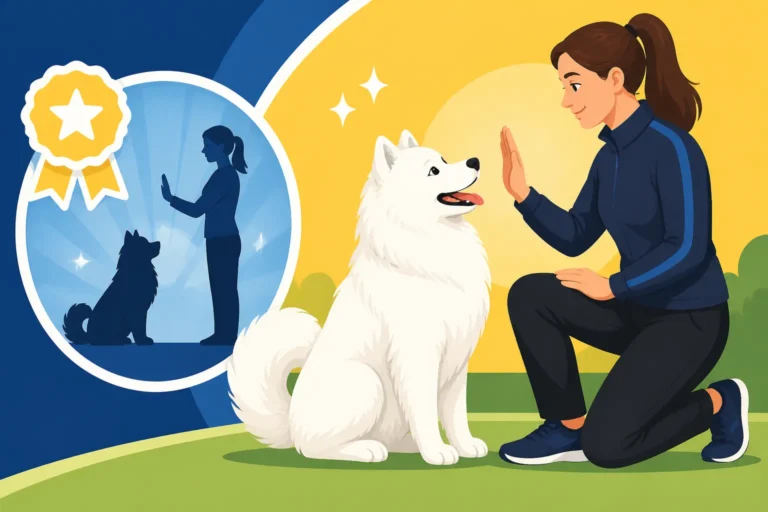
- "Place" or "Mat" Training: This is invaluable. A designated "place" gives your Samoyed a safe, calm spot to retreat to when things get too hectic, and it teaches them to settle on command, preventing them from overwhelming children during play.
- No Mouth on Humans: Enforce this strictly from puppyhood. Any mouthing, even playful, should be redirected to a toy.
For your children:
- Respectful Interaction: Teach kids to approach the dog gently, not to pull tails or ears, not to climb on them, and to give the dog space, especially when eating or sleeping.
- Reading Body Language: Educate children on basic dog body language – a yawn, lip lick, or turning away might indicate stress or discomfort, signaling that the dog needs space.
- No Teasing: Absolutely no teasing or taunting. Ever. This can build frustration in even the most tolerant dog.
- Involve Them in Care: Let children help with feeding (under supervision), brushing, or practicing commands. This fosters respect and responsibility.
Consider resources like BAXTER & Bella, which offers online puppy training programs. These can be particularly helpful for families to establish consistent commands and boundaries from the start, ensuring everyone in the household is on the same page regarding the Samoyed's training.
The Indispensable Role of Supervision
No matter how well-behaved your Samoyed or how well-taught your children, never leave young children unsupervised with a dog. This is not about mistrust; it’s about safety and common sense. Accidents can happen in an instant, even with the most gentle dog, simply due to a child's unpredictable movements or a dog's natural reaction. Supervision allows you to:
- Intervene Early: Redirect inappropriate behavior from either child or dog before it escalates.
- Reinforce Good Habits: Praise calm interactions and polite greetings.
- Teach and Guide: Use supervised interactions as learning opportunities for both.
Think of supervision as an invisible leash, always there to guide and protect. As children grow older and more mature, and as your Samoyed demonstrates consistent, calm behavior, the level of direct supervision might lessen, but vigilance should always remain. A solid rule of thumb is that if you can't actively supervise, separate them. This could mean using baby gates to create safe zones or crating your Samoyed with a favorite chew toy.
Navigating Multi-Dog Households with a Samoyed
Many Samoyed owners eventually consider getting a second dog, and often, another Samoyed! They are social creatures, and in many cases, thrive with canine companionship. However, bringing a new dog into an existing pack (or vice-versa) requires careful planning to ensure a smooth transition and lasting harmony.
Assessing Compatibility and Introducing New Pups
Before you even think about bringing a new furry friend home, assess the temperament of your current Samoyed. Are they generally friendly and tolerant of other dogs? Do they have any past issues with resource guarding or reactivity? A dog-friendly Samoyed is a great starting point. If you have a specific dog in mind for adoption or purchase, arrange for a neutral territory meeting. This is crucial. A local park or a friend's fenced yard where neither dog feels possessive is ideal. Keep both dogs on leash, but relaxed. Allow them to sniff each other, walk parallel, and observe their body language. Look for:
- Loose Body Language: Wiggling, wagging tails (not stiff), relaxed ears, soft eyes.
- Play Bows: An invitation to play.
- Mutual Curiosity: Sniffing, investigating, not shying away aggressively.
- Avoid: Stiff bodies, raised hackles, growling, lunging, excessive barking, or aggressive stares.
Avoid direct face-to-face greetings initially; a parallel walk can build comfort more effectively. If the initial meeting goes well, multiple short, supervised play sessions in neutral locations before bringing the new dog home can be beneficial. How a Samoyed Behaves With Other Dogs is generally quite good, as they tend to be social, but individual personalities vary.
Managing Resources and Preventing Rivalry
One of the most common causes of conflict in multi-dog households is resource guarding. This isn't just about food; it can extend to toys, beds, favorite resting spots, or even human attention. To prevent this:
- Separate Feeding Areas: Feed dogs in separate rooms or crates. Even if they seem fine, it eliminates any potential for tension around food.
- Designated Beds/Crates: Ensure each dog has their own comfortable, private space that isn’t encroached upon by the other. This prevents competition for resting spots.
- Manage High-Value Toys: If you have toys that one or both dogs are particularly possessive over, put them away when unsupervised. Only bring them out for individual play sessions or when you can actively monitor.
- Equal Attention: Make an effort to give both dogs individual attention, praise, and training time. This helps prevent jealousy and strengthens your bond with each.
- Walk Separately (Sometimes): While walking together can be great, individual walks can help reinforce your bond with each dog and prevent them from becoming overly codependent or competitive on leash.
This isn't about creating segregation, but about creating clear boundaries and routines that reduce the chances of misunderstandings or conflict over perceived resources.
Keeping the Peace: Ongoing Harmony in the Pack
Once the initial introductions are complete and everyone is settling in, maintaining harmony becomes an ongoing process.
- Consistent Leadership: You are the benevolent leader of the pack. Enforce rules consistently for both dogs. This prevents one dog from feeling entitled or the other from feeling unfairly treated.
- Adequate Exercise: A tired dog is a good dog, and this holds true for multiple dogs! Ensure both Samoyeds get plenty of physical and mental stimulation. Two Samoyeds often encourage each other to play, which can be a huge benefit for their energy levels. How Much Exercise a Samoyed Needs is substantial, and having a playmate can help meet that need.
- Regular Check-ins: Pay attention to their interactions. Are they still playing nicely? Is one dog consistently bullying the other, or is there a shift in dynamics? Address any issues promptly and calmly. Sometimes, a temporary separation or a few refresher training sessions might be needed.
- Professional Help: If you notice persistent tension, fighting, or aggressive behavior, don't hesitate to consult a professional dog trainer or behaviorist. They can observe the dynamics in your home and provide tailored strategies.
A well-managed multi-dog household can be incredibly rewarding, offering companionship and play for your Samoyed. With foresight and consistent management, your Samoyeds can become the best of friends.
Samoyeds and Feline Friends: Bridging the Species Gap
This is often the most challenging integration. Samoyeds, like many dogs, possess a natural prey drive. While they are not typically aggressive, the sight of a small, fast-moving furry creature can trigger that instinct to chase. This doesn't mean peaceful coexistence is impossible, but it does require extra effort, patience, and realistic expectations.
Addressing the Samoyed's Prey Drive
The prey drive in a Samoyed stems from their working history; they were capable hunters and herders. When a cat darts across the room, it can trigger this deeply ingrained instinct. For a Samoyed, the chase can be incredibly rewarding, making it difficult to interrupt. It's not about malice; it's about instinct. This is why a Samoyed's recall, while important, often cannot be entirely trusted when a cat or squirrel is involved outside. Inside the house, this means you need to proactively manage situations where the prey drive might be triggered.
- Leash Management Indoors: Initially, keeping your Samoyed on a leash in the presence of the cat, even indoors, gives you immediate control to prevent chasing.
- Redirection: If your Samoyed fixates on the cat, immediately redirect their attention with a high-value treat or a favorite toy that they can chase or chew on.
- "Leave It" Command: This command is paramount. Teach your Samoyed to disengage from something tempting. Practice it with progressively more distracting items until they can reliably "leave" the cat alone.
Understanding that this is a natural, powerful instinct, not naughtiness, helps you approach the challenge with management and training, rather than punishment.
Strategic Introductions for Kittens and Adult Cats
The age of both animals can significantly influence the success of introductions.
- Samoyed Puppy + Kitten: This is often the easiest scenario. A young Samoyed puppy, especially one under 16 weeks, is often more malleable and can learn to accept a kitten as part of its social group before its prey drive fully develops. Similarly, a brave kitten may learn to stand its ground with a playful pup. Still, supervision is non-negotiable.
- Samoyed Puppy + Adult Cat: An adult cat may find a bouncy, clumsy Samoyed puppy utterly annoying. Ensure the cat has safe escape routes and high perches. The puppy needs to learn to respect the cat’s boundaries.
- Adult Samoyed + Kitten/Adult Cat: This is often the hardest. If your adult Samoyed has a known high prey drive, introducing them to a cat requires immense patience.
Introduction Process:
- Scent Swapping: Before they even see each other, swap blankets or toys between the cat and dog. This allows them to get used to each other's scent in a non-threatening way.
- Visual but Safe: Use a baby gate or crate your Samoyed while the cat is loose in the room. This allows them to see each other without direct contact, preventing chasing and giving the cat confidence. Reward calm behavior in the Samoyed.
- Leashed Meetings: Once they are calm with visual access, proceed to leashed, supervised meetings. Keep sessions short and positive. End before either animal gets stressed.
- Gradual Freedom: Only once you observe consistent calm and indifference (or gentle curiosity) from both animals during leashed interactions, can you consider short periods of supervised, off-leash time. Always have an escape route for the cat. How a Samoyed Treats a Cat can range from total indifference to playful (or overly intense) interest, making early, controlled introductions critical.
Creating Sanctuary Zones for Felines
No matter how well your Samoyed and cat get along, cats must have safe spaces where the dog cannot reach them. This is crucial for the cat's mental well-being and sense of security.
- High Perches: Cat trees, shelves, or the tops of bookcases offer vertical space where cats can observe the dog from a safe distance.
- Cat Doors: Install cat flaps in doors leading to "cat-only" rooms (e.g., a laundry room with their food/litter box) that are too small for your Samoyed to enter.
- Baby Gates: Use baby gates with a cat-sized opening, or install them high enough that a cat can easily jump over but a Samoyed cannot. This creates dog-free zones where the cat can eat, sleep, and relax without fear.
- Escape Routes: Ensure the cat always has multiple ways to leave a room if they feel threatened or overwhelmed. Don't corner them.
By providing these sanctuaries, you empower your cat, reduce their stress, and ultimately foster a more peaceful environment for both species. An Amazon search for "cat shelves" or "pet gates with cat door" will show you a wealth of options to create these vital safe spaces.
Beyond Dogs and Cats: Samoyeds with Smaller Animals and Livestock
The Samoyed's historical versatility meant they interacted with various creatures, from reindeer to smaller game. While they aren't often brought into homes with livestock today, many families have "pocket pets" or backyard chickens, which present their own set of challenges when mixed with a Samoyed's instincts.
Safeguarding Pocket Pets and Birds
Rabbits, guinea pigs, hamsters, and birds are all small, often fast-moving creatures that can easily trigger a Samoyed's prey drive. Even if your Samoyed has never shown aggression towards a cat, a tiny, squeaking hamster or a fluttering bird can be an entirely different stimulus.
- Absolute Separation: The golden rule here is absolute separation. Your Samoyed should never, ever have unsupervised access to these small animals. Their enclosures, whether cages or hutches, need to be completely dog-proof.
- Secure Cages: Cages must be sturdy, with secure locks and bar spacing small enough that a curious Samoyed nose or paw can’t force its way in. Place cages on high, stable surfaces that your Samoyed cannot reach by jumping or pushing furniture.
- Separate Rooms: Ideally, small pets should live in a room that the Samoyed is never allowed into. This provides an additional layer of security and peace of mind.
- Supervised "Visits": If you do wish to allow your Samoyed to be in the same room as a small caged pet, it must be under strict, direct supervision. Keep your Samoyed on a leash, practice "leave it" commands, and reward calm, indifferent behavior. Never allow direct contact or nose-to-cage sniffing, as even a playful nudge could be terrifying or harmful to a tiny animal.
The risk to these small pets is simply too high to take chances. It’s better to maintain a strict "never the twain shall meet" policy than to risk a tragic accident.
The Herding Instinct and Farm Animals
While Samoyeds are not commonly used for herding today, the instinct can still be present. The Herding Instinct Nobody Expects From a Samoyed can manifest in chasing, nipping at heels, or circling to gather animals. If you live on a property with chickens, ducks, goats, or other livestock, this instinct needs to be managed carefully.
- Secure Fencing: Your livestock enclosures need to be robust and escape-proof for the animals and Samoyed-proof to keep your dog out. This means high fences, buried wire to prevent digging, and secure latches.
- Supervised Introductions (if at all): If you intend for your Samoyed to be around livestock, it must be done with extreme caution and professional guidance. This is not a "DIY" project. A specialized trainer who works with herding breeds and livestock can help assess your Samoyed's drive and guide you through controlled exposures.
- Leash and Long Line Training: Even on a farm, your Samoyed should be on a leash or long line when around livestock until you have absolute confidence in their behavior, and even then, supervision is key.
- "Leave It" and Recall: These commands are vital. Your Samoyed needs to understand that livestock are off-limits for chasing or playing.
For most pet Samoyeds, it’s safer and simpler to maintain strict separation between your dog and any livestock, minimizing the risk of accidental injury or stress to your farm animals.
Secure Enclosures and Constant Vigilance
Regardless of the other animals in your home, secure enclosures and constant vigilance are your best tools. A Samoyed is smart, persistent, and surprisingly athletic. They can jump, dig, and figure out latches if motivated.
- Escape-Proofing: Think like a Samoyed. How would they try to get to the bunny? Reinforce all cages, gates, and fences accordingly.
- Regular Checks: Routinely check all enclosures for weaknesses, holes, or damage.
- Education for All: Ensure every member of the family, especially children, understands the rules and risks involved with having multiple species. They must know not to leave doors ajar or cages unsecured.
- Emergency Plan: What if the parakeet escapes its cage? What if the chicken coop gate is left open? Have a plan in place for quick, calm intervention.
The goal is to create an environment where every creature feels safe and secure, and where risks are minimized through proactive measures and unwavering attention.
Comprehensive Training and Enrichment for a Busy Household
Managing a Samoyed in a multi-species, multi-child environment isn't just about containment; it's fundamentally about proactive training and providing adequate enrichment. A well-trained, well-exercised, and mentally stimulated Samoyed is a far more relaxed and agreeable member of the family.
Foundational Obedience and Impulse Control
Solid obedience is the backbone of a peaceful household. Your Samoyed needs to understand and respond reliably to basic commands, not just for safety, but for clear communication within the family unit.
- Sit, Stay, Down, Come: These are non-negotiables. Practice them in various environments with distractions. A reliable "stay" can keep your Samoyed out of the kitchen while the kids are eating or prevent them from bolting when the front door opens.
- "Leave It": We've mentioned this before, but it's crucial for everything from not bothering the cat to not picking up dropped food from the kids. Practice with high-value items your Samoyed wants, gradually increasing the difficulty.
- "Go to Your Place/Mat": This command gives your Samoyed a designated spot to settle when things get chaotic, providing both them and other family members a break. Reward them heavily for staying on their mat calmly.
- Impulse Control Exercises: Samoyeds are intelligent and can be prone to impulsive behaviors. Games that teach impulse control, like waiting patiently for a toy or food, or walking calmly on a leash past distractions, are invaluable. Consistency is key here. Training a Samoyed That Finds Obedience Negotiable accurately describes the breed's nature, meaning you'll need patience and positive reinforcement to succeed.
Consider enrolling in obedience classes, either in-person or online. Online platforms like BAXTER & Bella provide structured curricula that can be worked through at your own pace, which is ideal for busy families. They often include methods for integrating training into daily life, making it easier for children to participate and reinforce commands.
The Power of Consistent Exercise and Mental Engagement
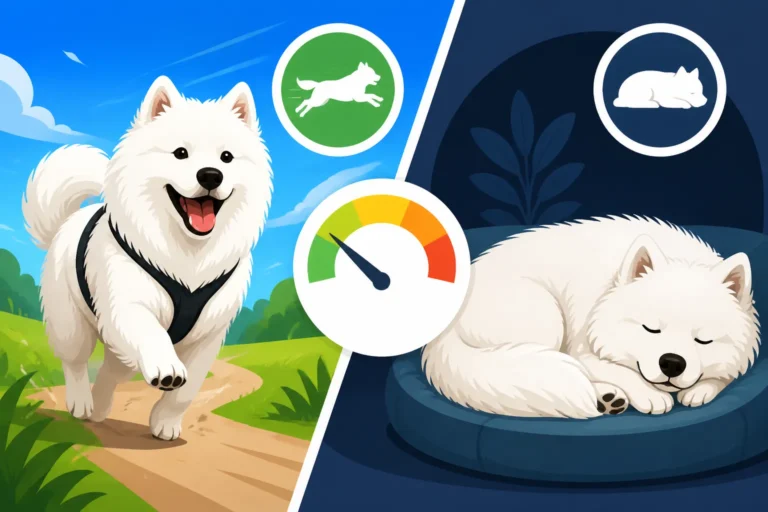
A bored Samoyed is often a "naughty" Samoyed. These dogs were bred for endurance and problem-solving. If their physical and mental needs aren't met, they will find their own outlets for that energy, which often involves digging, barking, or destructive chewing – none of which are compatible with a harmonious family life. What a Bored Samoyed Does to a House can be quite destructive, and it's easily avoidable with proper engagement.
| Activity Type | Description | Benefits for Multi-Animal/Child Home |
|---|---|---|
| Physical | Daily long walks, jogging, hiking, secure off-leash play. | Burns excess energy, promotes calmness, reduces destructive behavior. |
| Mental | Puzzle toys, scent work, obedience training, trick training, K9 Nosework. | Engages their mind, prevents boredom, builds confidence, can be done indoors. |
| Interactive | Fetch, flirt pole, tug (with rules), structured play with other dogs. | Fulfills social needs, provides appropriate outlets for chasing/playing. |
- Daily Exercise: Aim for at least 1-2 hours of vigorous exercise daily. This might be split into multiple sessions. A tired Samoyed is far less likely to chase the cat or nip at a child's heels. How Much Exercise a Samoyed Needs is often underestimated by new owners.
- Mental Stimulation: Don't forget their brains! Puzzle feeders make mealtime a game, snuffle mats encourage scent work, and short training sessions throughout the day keep their minds sharp. Even learning new tricks can be a fantastic way to bond and provide mental exercise.
- Appropriate Outlets: Provide plenty of appropriate chew toys to satisfy their natural urge to chew. An Amazon subscription for durable chew toys can be a lifesaver. Rotate toys to keep them novel and exciting.
- Structured Play: Teach your Samoyed appropriate ways to play with children (e.g., fetch, not tug-of-war with a small child), and redirect their energy if they get too rough.
Seeking Expert Support for Unique Challenges
Sometimes, despite your best efforts, challenges arise that feel overwhelming. This is where professional help can be invaluable.
- Certified Professional Dog Trainers (CPDT-KA): These trainers can help with foundational obedience, problem behaviors (like jumping or excessive barking), and integrating your Samoyed into your specific family dynamic. They often offer group classes or private consultations.
- Certified Dog Behaviorists (CDBC): For more complex issues like aggression, severe fear, or intense prey drive that training alone isn't addressing, a behaviorist has a deeper understanding of canine psychology and can help diagnose and develop a tailored modification plan.
- Breed-Specific Advice: Connecting with experienced Samoyed breeders or rescue organizations can also provide insights unique to the breed. They’ve often seen it all and can offer practical advice or recommend local resources.
Don't view seeking help as a failure. It’s a sign of a responsible pet owner committed to the well-being of all family members, two-legged and four-legged alike. A small investment in professional guidance early on can prevent much larger problems down the line.
When Things Go Wrong: Addressing Challenges and Seeking Help
Even with the best intentions and diligent efforts, life happens. Misunderstandings, accidents, or behavioral issues can arise in any multi-species household. Knowing how to recognize the signs of trouble and when to seek professional intervention is critical to maintaining a safe and happy home.
Recognizing Stress Signals in Your Samoyed (and Other Pets)
Animals communicate constantly through body language, but we often miss the subtle cues. Learning to read these signals can help you intervene before a situation escalates.
- In Samoyeds: Look for "calming signals" like yawning, lip licking, turning their head away, sniffing the ground, or a sudden shake-off. These indicate mild stress or an attempt to de-escalate. More overt signs include a stiff body, whale eye (showing the whites of their eyes), growling (a warning, not aggression per se), snarling, or tucked tail. Ear position (flat back, or stiffly forward), raised hackles, and piloerection (hair standing on end) are also clear indicators of arousal or fear.
- In Cats: Cats often show stress by flattening their ears, hunching their body, hissing, growling, swishing their tail agitatedly, or trying to hide/escape. Dilated pupils can also be a sign of fear or arousal.
- In Small Pets: Rabbits might thump their feet, freeze, or try to bolt. Birds might ruffle their feathers, vocalize distress, or try to hide.
Understanding these signals is about respecting your pet's communication. When you see these signs, it's time to create space, redirect, or remove the animal from the stressful situation. Never punish a growl; it's a warning shot that prevents a bite. Instead, address why the dog felt the need to growl.
When to Consult a Professional Trainer or Behaviorist
It can be hard to admit you need help, but knowing when to call in the experts is a sign of responsible pet ownership. Don't wait until the problem is severe or an injury has occurred.
- Aggression: Any instance of growling, snarling, snapping, or biting towards a child or another pet absolutely warrants immediate professional intervention from a certified dog behaviorist. This is not something to try and fix on your own.
- Persistent Resource Guarding: If your Samoyed consistently guards food, toys, sleeping spots, or even you from other pets or family members, a professional can provide structured counter-conditioning and management plans.
- Excessive Prey Drive: If the chase instinct towards cats or small pets is overwhelming and unmanageable, putting other animals at constant risk, a behaviorist can help develop strategies, though complete eradication of prey drive is rarely possible.
- Fear or Anxiety: If your Samoyed exhibits extreme fear around children or other animals, or develops separation anxiety that impacts the household, a behaviorist can offer solutions.
- Unexplained Changes in Behavior: Any sudden or significant change in your Samoyed's temperament or behavior, especially if accompanied by physical symptoms, should first be checked by a veterinarian to rule out underlying medical issues. Then, if medical causes are excluded, a behaviorist can step in.
Many professionals offer initial consultations that can help you understand the scope of the problem and the potential paths to resolution. Don't let pride or uncertainty prevent you from giving your Samoyed and your family the support they need.
Prioritizing Safety and Well-being for Everyone
Ultimately, your primary responsibility is the safety and well-being of every living creature in your home. This means being realistic about what you can manage and being prepared to make difficult decisions if necessary.
- Constant Vigilance: As mentioned, supervision is not just a suggestion; it's a requirement, especially with young children and new introductions.
- Physical Barriers: Baby gates, crates, and secure enclosures are your best friends in a multi-species home. They allow you to safely separate animals when you can’t supervise or when an animal needs a break.
- Enrichment and Exercise: A well-exercised and mentally stimulated Samoyed is a calmer Samoyed. Prioritize their needs to prevent boredom and frustration, which can often lead to behavioral issues.
- Love and Patience: Integrating a Samoyed into a complex family unit requires immense love, patience, and a willingness to learn. Celebrate the small victories and remember that building harmony is a journey, not a destination.
In some rare and unfortunate cases, if professional intervention fails to mitigate serious risks, you may need to consider rehoming one of the animals to ensure the safety of others. While heartbreaking, sometimes it's the most responsible decision for everyone involved. However, with the right approach, dedication, and sometimes a little expert help, your Samoyed can be a truly cherished and well-integrated member of your bustling family, adding boundless joy and a fluffy smile to your everyday life. The First Year With a Samoyed Puppy is crucial for setting these foundational habits.
Disclaimer
This article is for general informational purposes only and does not constitute professional advice. Laws, prices and regulations vary by location and change over time. Consult a qualified professional for guidance on your specific situation.