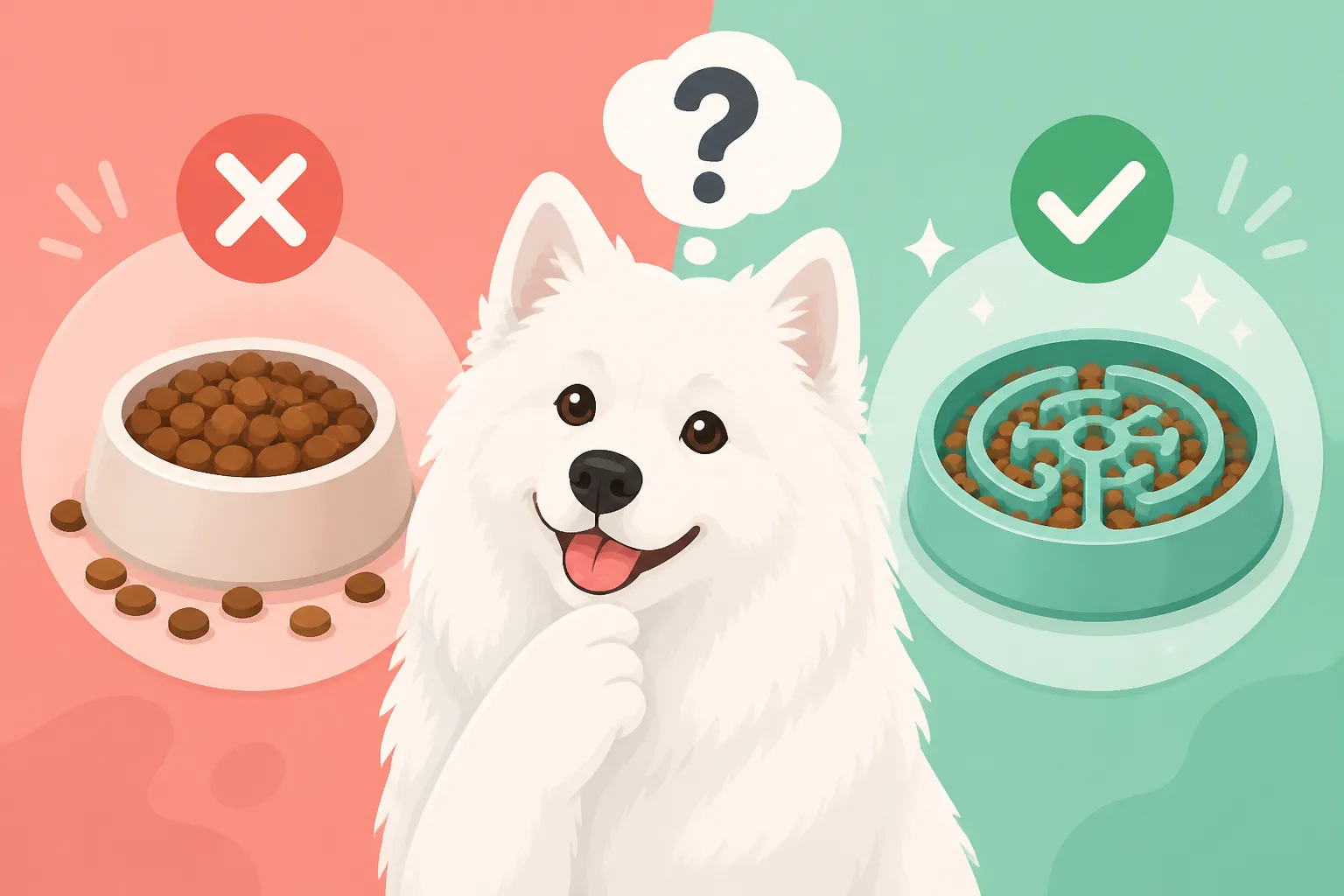
Whether a Slow Feeder Suits a Samoyed
Many Samoyed owners find themselves watching their beloved fluffy companion inhale their dinner in mere seconds, leaving a sparkling clean bowl and often a burp, or worse, a worrying cough. It's frustrating when you spend time choosing quality food, only for it to disappear so fast that you wonder if they even tasted it. This guide is here to explore whether a slow feeder is a good fit for your Samoyed, addressing common concerns about fast eating and how these ingenious bowls can transform mealtime into a calmer, healthier experience.
Why a Samoyed Might Be Eating Too Fast
It's a scene many of us know all too well: you put down the food bowl, and your Samoyed acts like they haven't seen food in a week, even if you fed them just hours ago. They dive in, gobbling down kibble or fresh food at an alarming rate. This isn't just a quirk; it's a common behavior in many dogs, including our Samoyeds, and it comes with a host of potential downsides that can genuinely impact their well-being.
The Immediate Risks of Rapid Eating
When a Samoyed eats at lightning speed, they're not just quickly satisfying their hunger; they're also taking in a lot of air. This air can lead to immediate discomfort, manifesting as burping, excessive gas, or even regurgitation right after a meal. Imagine trying to swallow your own food that fast – you'd likely get a bit choked up! For dogs, especially deep-chested breeds like Samoyeds, this rapid ingestion of air is more than just an inconvenience; it can be a serious health risk.
One of the most alarming dangers associated with fast eating is Gastric Dilatation-Volvulus, commonly known as bloat. This life-threatening condition occurs when the stomach fills with gas and twists, cutting off blood supply and trapping food and gas inside. While the exact causes are complex and not fully understood, rapid eating and gulping air are widely considered contributing factors. The thought of your happy, smiling Samoyed suddenly in agonizing pain from bloat is enough to make any owner anxious, which is why preventative measures are so important. We've talked about Bloat in a Samoyed before, and it's a truly terrifying prospect.
Long-Term Digestive and Weight Concerns
Beyond the immediate risks, eating too quickly can also have a detrimental impact on your Samoyed's long-term digestion. When food isn't properly chewed or allowed to mix with saliva, the digestive process in the stomach and intestines becomes less efficient. This can lead to indigestion, nutrient malabsorption, and a host of other gastrointestinal issues. Your Samoyed might not be getting all the goodness out of their carefully chosen diet if it's just passing through too fast.
Then there's the issue of weight management. When dogs eat quickly, their brain doesn't have enough time to register that they're full. This can lead to overeating, as they don't get the "I'm satisfied" signal until it's too late. If you've ever wondered Whether a Samoyed Gains Weight Easily, fast eating certainly doesn't help. This consistent overconsumption can contribute to obesity, which, as we know, opens the door to a cascade of other health problems, including joint issues and even increasing the risk of conditions like diabetes. It's really important for Why a Samoyed Owner Must Watch Its Weight Closely.
The Benefits of Incorporating a Slow Feeder into Your Samoyed's Routine
So, we know fast eating is a problem. The good news is, there's a simple, effective solution that many Samoyed owners find incredibly helpful: the slow feeder. These aren't just fancy bowls; they're tools designed to turn mealtime from a frantic race into a more measured, enjoyable activity.
Promoting Healthier Digestion and Reducing Bloat Risk
The primary benefit of a slow feeder is right there in the name: it forces your Samoyed to eat slower. By creating obstacles like ridges, mazes, or separate compartments, the feeder prevents your dog from taking large gulps of food. This immediately addresses the issue of excessive air intake, significantly reducing the risk of bloat, a condition we're all rightfully concerned about.
But it’s not just about bloat. When your Samoyed is forced to take smaller bites and work a little harder for each morsel, it encourages them to chew their food more thoroughly. This means more saliva production, which is crucial for starting the digestive process right in the mouth. Better chewing and slower ingestion lead to more efficient digestion overall, helping your Samoyed absorb nutrients more effectively and potentially reducing instances of gas, burping, and regurgitation. It truly turns a frantic devour into a mindful meal.
Aiding in Weight Management and Mental Stimulation
For Samoyeds who tend to overeat because they finish their food so quickly, a slow feeder can be a game-changer for weight management. By extending mealtime, the feeder allows your dog's brain more time to register fullness. This can help them feel more satisfied with a proper portion size, rather than still feeling hungry just because the food disappeared too fast. If you're struggling to keep your Samoyed at a healthy weight, especially if you're watching for Signs a Samoyed Is Overweight, this tool can be an invaluable part of their diet plan. We've certainly discussed Whether an Overweight Samoyed Is More Likely to Get Diabetes, making healthy eating habits even more critical.
Beyond the physical benefits, slow feeders also offer a wonderful source of mental enrichment. Instead of just mindlessly gobbling, your Samoyed has to engage their brain to figure out how to get the food out of the nooks and crannies. This problem-solving can be surprisingly stimulating, providing a small "job" that taps into their natural instincts. A mentally stimulated dog is often a happier, calmer dog, and incorporating this kind of engagement into their daily routine can reduce boredom-related behaviors. It's a win-win: better health and a happier mind!
Choosing the Right Slow Feeder for Your Snowy Pal
When it comes to selecting a slow feeder for your Samoyed, you'll quickly realize there's a wide world of options out there. It's not a one-size-fits-all situation, and what works best for one Samoyed might not be ideal for another. The key is to consider your dog's eating style, the type of food you offer, and durability.
Types of Slow Feeders and Their Features
Slow feeders come in a variety of designs, each with its own approach to slowing down mealtime.
- Bowls with Ridges or Mazes: These are perhaps the most common type. They feature raised ridges, patterns, or maze-like designs within a standard bowl shape. Your Samoyed has to navigate their snout around these obstacles to get to the food, making it impossible to take large mouthfuls. They range from simple, wavy patterns to more intricate designs. Many popular options from brands like Outward Hound are readily available on sites like Chewy and Amazon.
- Puzzle Feeders: These take mental stimulation up a notch. They might involve sliding components, flaps, or compartments that your Samoyed needs to manipulate to release food. While excellent for enrichment, some can be a bit tricky to clean, especially for wet food. They’re fantastic for very intelligent or bored Samoyeds.
- Snuffle Mats: These are fabric mats with many strands or pockets where you can hide kibble. Your Samoyed uses its nose to "snuffle" out the food, mimicking natural foraging behavior. They're great for dry kibble and provide immense mental satisfaction. However, they aren't usually ideal for wet food diets, and they require regular washing to stay hygienic.
- Wobble or Dispensing Toys: Some feeders are shaped like balls or odd objects that dispense a few pieces of kibble at a time as your Samoyed nudges or rolls them. These are fantastic for making mealtime into a game and can be very engaging.
Material Matters: Durability and Cleaning for Samoyeds
Once you've narrowed down the type, think about the material. Samoyeds can be enthusiastic chewers, even with their food bowls, so durability is important.
- Plastic: Often the most affordable and widely available, plastic slow feeders come in countless designs. Look for BPA-free, food-grade plastic. The main drawback is that some plastics can be scratched easily, harboring bacteria, and a determined Samoyed might eventually chew through it.
- Ceramic: These are heavier and more stable, making them harder for your Samoyed to push around. They're also often dishwasher safe and don't scratch easily. However, ceramic can break if dropped, so they might not be the best choice for a boisterous household or if your Samoyed likes to knock things around.
- Stainless Steel: The most durable and hygienic option. Stainless steel is resistant to chewing, easy to clean, and doesn't harbor bacteria. It's often a bit more expensive, but it's a long-lasting investment. Many stainless steel slow feeders have an insert that can be removed for easy cleaning.
No matter which type or material you choose, ensure it's easy to clean. Those intricate nooks and crannies that slow down eating can also trap food debris. Regular cleaning is essential to prevent bacterial growth. If your Samoyed is on a fresh food diet, like those offered by Ollie, you'll want something that can handle a bit more moisture and is particularly easy to sanitize. You'll find a wide variety of these options available through online retailers like Chewy and Amazon, so you can compare features and read reviews from other Samoyed owners.
Tips for Introducing a Slow Feeder and Overcoming Challenges
Introducing anything new to a Samoyed's routine can sometimes be met with that familiar intelligent, yet sometimes stubborn, gaze. A slow feeder is no exception. While most Samoyeds adapt quickly, some might need a little encouragement.
Making the Transition Smoothly
The key to a successful introduction is patience and positive reinforcement. Don't just swap their old bowl for a challenging new one overnight and expect seamless acceptance.
- Start Simple: If your Samoyed is a super fast eater, don't jump straight to the most complex puzzle feeder. Begin with a bowl that has shallower ridges or a less intricate maze. The goal is to gradually increase the challenge as they get used to the concept.
- Mix Old and New (Initially): For the first few meals, you might even consider putting a small amount of food in their old bowl and the rest in the new slow feeder. This ensures they still get enough to eat without too much frustration, while also introducing the new way of dining.
- Positive Association: Always make mealtime a positive experience. If your Samoyed seems confused or frustrated, gently guide them. Point to the food in the feeder, or even sprinkle a few high-value treats on top to encourage exploration. Lots of praise when they figure it out!
- Consider Food Type: If your Samoyed is used to dry kibble, most slow feeders work well. If you feed wet or fresh food, ensure the feeder is designed to handle it without making an unmanageable mess or becoming impossible to clean.
Remember, Samoyeds are smart. They'll figure it out, but a positive, gradual approach prevents them from associating the new bowl with stress or difficulty.
Addressing Common Samoyed Slow Feeder Hurdles
Even with the best intentions, you might run into a few bumps along the road.
- Frustration Chewing: Some Samoyeds, when frustrated by the inability to get food quickly, might resort to chewing on the feeder itself. If this happens, try a less challenging feeder, supervise meal times, and redirect any chewing to an appropriate chew toy. This is where durable materials like stainless steel really shine.
- Flipping the Bowl: A particularly clever or impatient Samoyed might try to flip the slow feeder to get at the food. For these creative problem-solvers, look for heavier ceramic or stainless steel options with non-slip bases. Some feeders even have suction cups or are designed to be quite heavy to prevent tipping.
- Still Eating Too Fast (Even with a Slow Feeder): If your Samoyed is still wolfing down their food even with a slow feeder, it might be a sign you need a more challenging design. There's a big difference in complexity between a basic ridged bowl and a multi-level puzzle feeder. Don't be afraid to upgrade the challenge as your Samoyed gets more adept.
- Cleaning: As mentioned, intricate designs can be a pain to clean. For wet food users, choose feeders with fewer small crevices or those made from materials that are easy to rinse and scrub. Dishwasher-safe options are always a bonus!
Ultimately, a slow feeder can be an excellent addition to almost any Samoyed's routine, promoting better health, reducing risks, and even providing a touch of mental enrichment. It's about finding the right tool and introducing it in a way that makes mealtime enjoyable for everyone. We know how important good eating habits are for The Twelve to Fourteen Years a Samoyed Lives, so taking these steps truly matters.
Here's a quick comparison of some popular slow feeder types:
| Slow Feeder Type | Best For | Key Benefits | Potential Drawbacks | Ease of Cleaning |
|---|---|---|---|---|
| Maze Bowl | Most Samoyeds | Reduces gulping, moderate mental stimulation | Some dogs might still eat relatively fast | Moderate |
| Puzzle Feeder | Intelligent, bored dogs | High mental stimulation, significant slowing | Can be frustrating for some, more expensive | Varies (often harder) |
| Snuffle Mat | Kibble-fed dogs | Mimics foraging, high mental stimulation | Not for wet food, needs frequent washing | Moderate (machine washable) |
| Wobble Toy | Playful dogs | Turns mealtime into a game, very engaging | Small portions only, can be noisy, not for all food types | Easy |
Remember, consistency is key when implementing new routines. Establishing a Whether a Samoyed Needs a Consistent Feeding Schedule alongside a slow feeder can further reinforce healthy eating habits. Also, if you’re concerned about how much your Samoyed should be eating in general, you might want to look at resources like How Much Food a Samoyed Eats Monthly.
Disclaimer
This article is for general informational purposes only and does not constitute professional advice. Laws, prices and regulations vary by location and change over time. Consult a qualified professional for guidance on your specific situation.