Why a Samoyed’s Tail Drops When Relaxed
A Samoyed’s tail may drop when they settle down, nap, or stop paying attention, and that change can look worrying when you’re used to seeing the familiar plume curl over their back. In many cases, a loose, lowered tail is ordinary relaxation. This guide explains how to read the rest of your dog’s body language, what changes deserve a closer look, and when to call your veterinarian.
Why a Samoyed’s Tail Drops When Relaxed
A lowered tail can be part of a comfortable resting posture
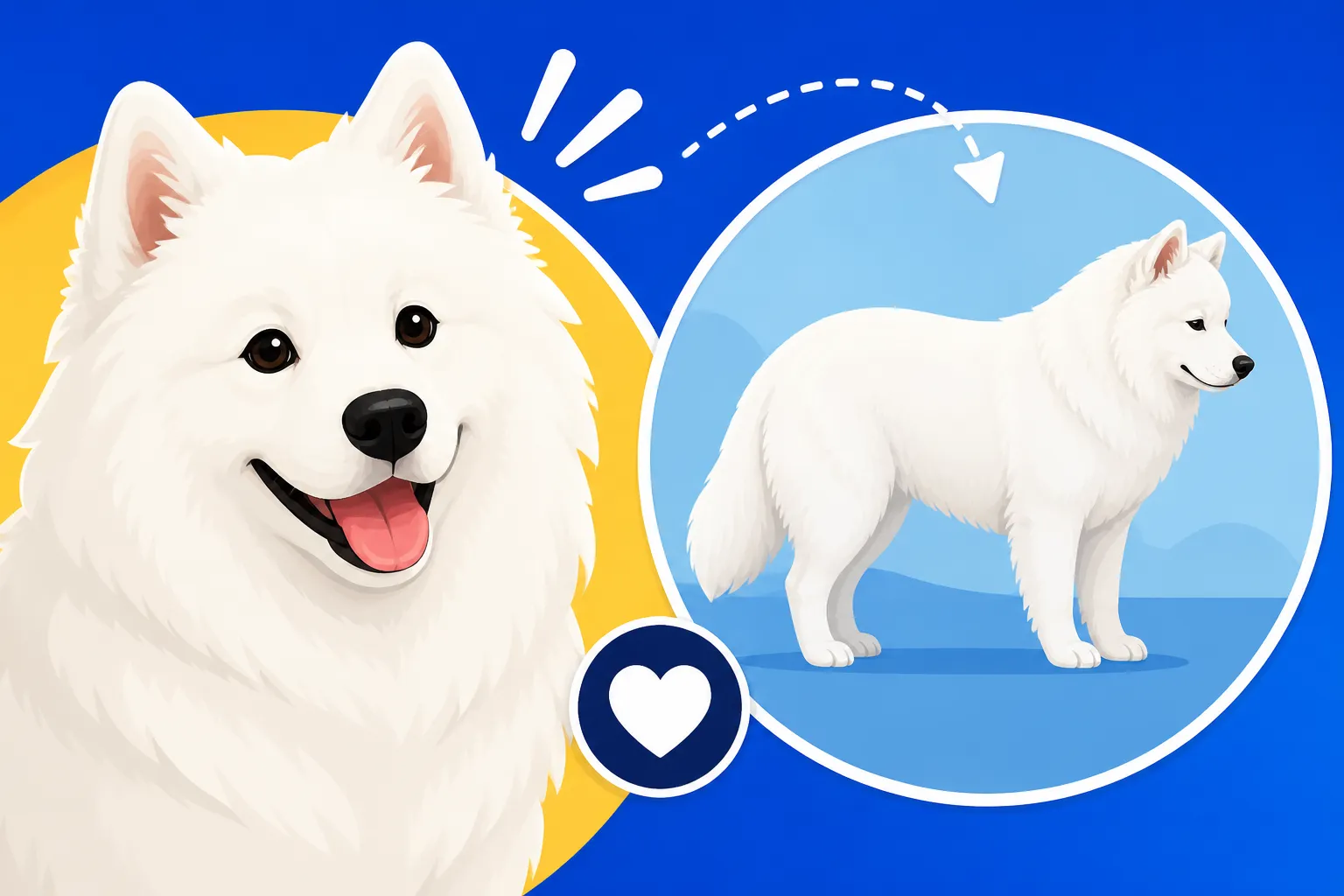
A Samoyed’s tail doesn’t have to stay curled over their back every minute of the day. When a dog is standing alert, watching something interesting, or greeting a person, the tail may be carried high and curved. When they lie down, stretch, or simply switch off, the muscles supporting that carriage can relax and the tail may hang lower.
Think about what your dog looks like after a walk: the ears soften, the jaw loosens, and the body settles onto the floor. The tail may follow suit. If your Samoyed seems comfortable, moves normally, and raises the tail again when something catches their attention, the change often fits the moment rather than signaling a problem.
Breed standards and everyday posture are not quite the same thing. A Samoyed is known for a tail that commonly arches over the back, but a standard describes characteristic appearance, not a pose a dog must hold continuously. For more about how the tail is carried, see How a Samoyed Carries Its Tail.
Look at the whole dog, not only the tail
One tail position rarely tells the whole story. A relaxed tail paired with a loose body, normal breathing, and easy movement is different from a low or tightly tucked tail paired with cowering, trembling, or attempts to hide. The same tail height can mean different things depending on the dog’s posture and what is happening around them.
For example, a Samoyed may lower their tail when they’re greeting a new dog cautiously, feeling unsure in a busy veterinary waiting room, or focusing on a sound outside. That can be a temporary emotional response. Give them space, notice what they’re reacting to, and see whether their posture returns to normal once the situation changes.
If you’re unsure, observe a few details together: Are the ears held naturally or pinned back? Is the body loose or stiff? Is your dog walking comfortably? Are they interested in food, play, or familiar people? Understanding the larger picture is useful because Samoyeds can seem cheerful even when something is bothering them. How a Samoyed Hides Illness Behind a Smile explores why small changes in behavior can be easy to overlook.
Normal Tail Posture Versus a Change Worth Watching
What a typical relaxed tail can look like
There isn’t one exact “relaxed Samoyed tail” position. Some dogs let the tail hang down when standing quietly; others keep a loose curve. A dog may also shift between positions as they change from resting to listening, playing, or greeting someone. Coat length and fluff can make those shifts harder to see, especially when the tail is tucked beside the body or resting against a leg.
It can help to learn your own dog’s usual pattern. Does the tail lower after a long nap? Does it rise when you pick up the leash? Does it relax again once they settle on their bed? These everyday observations give you a personal baseline, which is more helpful than comparing your dog’s posture with a photo of another Samoyed.
A brief drop without other changes is generally less concerning than a new posture that persists or comes with discomfort. Keep the distinction in mind: you’re looking for a change from your dog’s normal, not trying to make them hold their tail in a particular position.
| What you notice | What it may suggest | What to do |
|---|---|---|
| Tail lowers while resting, then rises when alert | Ordinary change in posture | Observe as part of your dog’s usual behavior |
| Tail lowers briefly in an unfamiliar situation | Uncertainty or cautious attention | Reduce pressure and give your dog room |
| Tail stays low and your dog seems uncomfortable | Possible pain, injury, or another health concern | Contact your veterinarian for advice |
| Tail suddenly hangs limp after exercise or play | Possible tail soreness or strain | Stop strenuous activity and seek veterinary guidance |
| Tail posture changes alongside weakness, trouble walking, or other major symptoms | A potentially urgent health issue | Contact a veterinarian promptly |
When the change is sudden or persistent
A tail that suddenly hangs lower than usual deserves attention, particularly if your Samoyed reacts when you approach or touch the area, avoids sitting, or seems reluctant to move. Tail discomfort can have more than one cause, and it isn’t possible to identify the reason by posture alone. A recent fall, rough play, a door or gate closing on the tail, or unusual exertion may be relevant details to share with your veterinarian.
Notice whether the tail changes over time. A short-lived lowered posture while your dog settles may be ordinary; a new limp-looking tail that remains that way or is paired with pain is different. Don’t repeatedly lift, pull, or bend the tail to “test” it. If an injury is possible, handling can make discomfort worse.
It’s also useful to check whether anything else has changed: appetite, energy, gait, willingness to climb stairs, or ability to urinate and pass stool normally. A dog’s tail can be one clue among many, but associated symptoms help your veterinary team understand how quickly your Samoyed should be assessed. For a broader perspective on recognizing discomfort, read Whether a Samoyed Complains When It Hurts.
How to Observe Your Samoyed Safely
Make a simple record of what you see
If the lowered tail is mild and your dog otherwise seems well, note when it happens rather than watching every movement anxiously. Record the time, what your dog was doing, how long the posture lasted, and whether it changed when they became alert or started moving. A short video taken from a comfortable distance can also help your veterinarian see the posture at home.
For instance, you might notice that the tail droops after your Samoyed has been lying on one side but returns to its usual curve after they stand and stretch. Or you may find that the change began after a particularly active day and hasn’t improved. Those details are more useful than a vague description such as “the tail looks different.”
Don’t delay getting help just to collect more observations if your dog appears painful or unwell. Your notes should support a veterinary conversation, not replace one. If you’re tracking other changes too, such as energy or weight, Signs a Samoyed Is Getting Old may help you think about how gradual changes differ from a sudden problem.
Avoid trying to correct a naturally lowered tail
A relaxed tail isn’t a behavior that needs training. Avoid repeatedly calling your dog, touching the tail, or encouraging them to hold it up simply because you’re worried about how it looks. If the posture is comfortable and your Samoyed is acting normally, let them rest.
If you need to handle your dog for grooming or a health check, keep the experience calm and stop if they show signs of discomfort. A dog who turns away, stiffens, vocalizes, or tries to move off is communicating that something feels unpleasant. Don’t force the tail into a position for brushing or inspection.
For regular coat care, focus on keeping the tail and surrounding coat free of tangles without pulling at the skin. Some dogs are sensitive about their hindquarters, so brief, gentle sessions can be easier than trying to finish all grooming at once. How Often a Samoyed Needs Brushing covers coat maintenance, while Whether a Samoyed Complains When It Hurts can help put changes in tolerance or handling into context.
When to Contact a Veterinarian
Signs that call for prompt advice
Contact your veterinarian if the tail becomes suddenly limp or stays unusually low, especially when your Samoyed seems sore, avoids moving, or reacts strongly to gentle everyday handling. You should also seek advice if the posture follows a fall, collision, rough play, or another event that could have caused an injury.
More urgent symptoms include difficulty walking, marked weakness, severe pain, or trouble urinating or passing stool. If your dog is distressed or rapidly getting worse, contact an emergency veterinary clinic rather than waiting to see whether the tail returns to its usual position. The clinic can help you decide how quickly your dog needs to be examined.
When you call, explain when the change started, whether there was recent exercise or an accident, and what other symptoms you’ve noticed. Mention any medication or health condition your dog has. Avoid giving human pain medicine unless a veterinarian specifically directs you to do so; some common medicines can be dangerous for dogs.
What a veterinary assessment may involve
A veterinarian will consider the full history and examine your dog, not just the tail. They may ask about recent activity, injuries, appetite, movement, and bathroom habits, then check for tenderness or other signs of discomfort. The next steps depend on what they find, so there isn’t one standard test or treatment for every lowered-tail posture.
Try to keep your Samoyed comfortable while you arrange advice. Let them rest in a familiar, quiet place and avoid strenuous activity until you know more. If getting into the car or moving around seems painful, call the clinic for instructions on handling and transport rather than forcing a routine that may hurt.
For a healthy Samoyed who simply lowers their tail when relaxed, the most reassuring pattern is a dog who otherwise behaves as usual and changes posture naturally as the situation changes. A persistent or painful change is different: it’s worth checking with a professional instead of assuming it’s just a quirk of the breed. If you’re considering the wider health picture as your dog ages, The Twelve to Fourteen Years a Samoyed Lives and Caring for a Samoyed Past Nine offer useful related reading.
Disclaimer
This article is for general informational purposes only and does not constitute professional advice. Laws, prices and regulations vary by location and change over time. Consult a qualified professional for guidance on your specific situation.