How Many Cups a Day an Adult Samoyed Eats
Trying to figure out exactly how many cups of food your adult Samoyed needs each day can feel like a real puzzle, especially when every bag of dog food seems to give a different recommendation, and your fluffy cloud of a dog always seems hungry! It's frustrating to wade through conflicting advice, worrying if you're feeding too much or too little, and wondering if that "Samoyed smile" is actually hiding an empty stomach or, worse, extra pounds. This guide is here to cut through the confusion and help you understand how to precisely tailor your adult Samoyed's daily food intake to keep them healthy, happy, and at their ideal weight.
Understanding Your Samoyed's Unique Nutritional Needs
It's tempting to look at a bag of dog food and simply scoop out the suggested amount, but that number is really just a starting point, a generic guideline that doesn't account for the wonderful individuality of your Samoyed. Think of it like trying to feed every human the exact same amount of calories each day – it just wouldn't work! Your Samoyed isn't just "a dog"; they're your Samoyed, with their own activity levels, metabolism, and even genetic predispositions that all play a role in their caloric needs.
It's Not a One-Size-Fits-All Answer
Many Samoyed owners, myself included, have stood in the pet food aisle, squinting at the feeding chart on the back of a bag, only to realize that the recommended "cups per day" can vary wildly depending on the brand, formula, and even the listed weight range. One brand might suggest 3 cups for a 50-pound dog, while another insists 2 cups is plenty. This discrepancy often stems from the calorie density of the food itself. Some premium kibbles pack a lot more nutrition and calories into a smaller volume, meaning you'd feed less of it than a lower-calorie, filler-heavy option.
The sheer variability is why you can't just pick a number and stick with it forever. What works for your neighbor's Samoyed might be completely off for yours. Our Samoyeds, with their thick coats, can be particularly deceptive when it comes to assessing their physical condition, making it even more crucial to understand how to properly gauge their needs beyond just a number on a bag.
Factors That Influence Food Intake
So, if it's not a single magical number, what does determine how much your adult Samoyed should eat? A whole host of things, actually! It's a delicate balance of internal and external factors that constantly shift throughout their lives.
Firstly, their age plays a significant role. A young, energetic adult Samoyed, perhaps around two or three years old, who is still full of boundless energy, will likely burn more calories than an older, more sedate senior Samoyed who is enjoying their golden years. While we hope our Samoyeds live long and happy lives, their energy levels will naturally decline as they get older. You can learn more about how their needs change as they age in The Twelve to Fourteen Years a Samoyed Lives.
Beyond age, activity level is perhaps the most significant factor. A Samoyed that's an avid hiker, regularly participating in cani-cross, skijoring, or even just having daily, long, vigorous runs in the park, will naturally require more fuel than a Samoyed whose daily routine consists of leisurely strolls around the block and plenty of couch cuddles. Imagine a Samoyed working on a sled team versus one who is primarily a companion animal; their energy expenditure is vastly different. Even within the "pet Samoyed" category, there's a wide range of activity. A Samoyed living on a sprawling rural property with lots of space to run will have different caloric needs than one in an urban apartment with shorter, leash-only walks.
Metabolism also comes into play. Just like people, some Samoyeds are "efficient eaters," meaning their bodies tend to hold onto calories more readily. You might have one Samoyed who seems to eat everything and stays lean, while another looks at a crumb and gains a pound. Whether a Samoyed Is an Efficient Eater can shed more light on this. Health status, too, is critical. Certain medical conditions, or even medications, can alter a dog's metabolism and appetite. For example, a dog recovering from surgery or managing a chronic illness might have different nutritional requirements.
Lastly, whether your Samoyed has been spayed or neutered can also impact their caloric needs. Whether a Neutered Samoyed Gains Weight is a common concern, and for good reason. After neutering, a dog's metabolism can slow down, and their hormonal balance shifts, often leading to a propensity for weight gain even if their activity level remains the same. This means you might need to slightly reduce their food intake to prevent them from becoming overweight.
Deciphering the Dog Food Bag: More Than Just a Number
The label on your dog food bag provides crucial information, but it requires a bit of interpretation. It's not just about the suggested "cups" but understanding what those cups contain in terms of energy and nutrients. Choosing the right food and understanding its composition is key to getting your Samoyed's diet just right.
The Importance of Calorie Density and Quality
Not all dog food is created equal, and this is where the "cups per day" really starts to make sense. High-quality kibbles, often referred to as "premium" or "performance" formulas, tend to be much more calorie-dense. This means that a smaller volume of food provides more energy and nutrients. Conversely, many economy brands use more fillers, leading to a lower calorie count per cup, and requiring you to feed larger quantities to meet your Samoyed's energy needs.
When you're comparing foods, don't just look at the serving size. Look for the "kcal/cup" or "calories per cup" information, which is usually found in the nutritional analysis section on the bag. This number tells you the actual energy content. A food with 400 kcal/cup will require fewer cups than a food with 300 kcal/cup to provide the same amount of energy. This is especially important if you're considering different brands, perhaps exploring options available on Chewy, or even looking into fresh food services like Ollie which can have very different caloric profiles than traditional kibble. It's not about how full the bowl looks, but how much nutritional punch is in each bite.
The quality of ingredients also matters. A food rich in digestible proteins and healthy fats will provide more sustained energy and better nutrient absorption than one filled with corn, wheat, or soy fillers. These fillers can contribute to feeling "full" but offer less bioavailable nutrition, potentially leading to your Samoyed needing to eat more to get the nutrients their body requires, or worse, feeling hungry soon after eating. Always aim for a food where real meat is the first ingredient, followed by wholesome vegetables and fruits.
Adjusting for Activity Levels and Lifestyle
Once you understand the calorie density of your chosen food, you can start to fine-tune the amount based on your Samoyed's specific activity level. Remember, the guidelines on the bag are for an average adult dog, not necessarily a Samoyed, and certainly not your Samoyed.
A highly active Samoyed, for instance, one that regularly engages in pulling sports or spends hours exercising outdoors, might need 20-40% more calories than a sedentary one. Whether a Working Samoyed Needs Extra Food highlights this point perfectly. Conversely, a less active Samoyed, perhaps an older dog who prefers short walks and naps, might need 10-20% less than the bag suggests to avoid weight gain.
It's helpful to observe your dog's energy levels. If they seem sluggish, or are losing weight, they might need a bit more. If they're gaining weight or seem overly energetic (and not just Samoyed-energetic!), they might be getting too many calories. It's a continuous process of observation and adjustment. This table offers a general starting point, but always factor in your dog's specific food's calorie content:
| Samoyed Weight (lbs) | Low Activity (cups/day) | Moderate Activity (cups/day) | High Activity (cups/day) |
|---|---|---|---|
| 35-40 | 1.5 – 2 | 2 – 2.5 | 2.5 – 3 |
| 45-55 | 2 – 2.5 | 2.5 – 3 | 3 – 3.5 |
| 60-70 | 2.5 – 3 | 3 – 3.5 | 3.5 – 4 |
Note: This table assumes a typical kibble with approximately 350-400 kcal per cup. Always check your specific dog food's calorie content and adjust accordingly.
Monitoring Your Samoyed's Weight and Body Condition
The most accurate way to determine if your Samoyed is eating the right amount of food isn't just by looking at the food bowl, but by regularly assessing their body condition. Because of their magnificent double coats, Samoyeds can be tricky to evaluate. They are masters at hiding both illness and weight gain, making your job as their caretaker even more important. How a Samoyed Hides Illness Behind a Smile really emphasizes this challenge, and the same principle applies to weight fluctuations.
The Rib Test and Body Condition Scoring
Forget the scale for a moment; the "rib test" is your best friend when it comes to a fluffy Samoyed. Gently run your hands along your Samoyed's sides. You should be able to feel their ribs without pressing hard, much like feeling the knuckles on the back of your hand. If you can see their ribs, they're likely too thin. If you have to press firmly to feel them, or can't feel them at all, they're probably carrying too much weight. Their waist should also be noticeable when viewed from above, a gentle curve between their ribs and hips, and there should be a slight tuck-up in their abdomen when viewed from the side.
Veterinarians often use a Body Condition Score (BCS) chart, typically on a 9-point scale, to standardize this assessment. A score of 4 or 5 out of 9 is generally considered ideal. This isn't just about aesthetics; it's about health. Regularly checking their body condition, perhaps weekly, allows you to make small, timely adjustments to their food intake before significant weight issues arise. It's a proactive measure that gives you real-time feedback.
Why Overfeeding is a Serious Concern for Samoyeds
It's easy to spoil our Samoyeds with extra treats or a few too many kibble scoops, especially when they give us that endearing "Samoyed smile." However, overfeeding, even slightly, over an extended period can lead to significant health problems. Why a Samoyed Owner Must Watch Its Weight Closely outlines many of these concerns.
Obesity in Samoyeds, as in any breed, can drastically increase the risk of several health issues. It puts extra strain on their joints, potentially exacerbating conditions like hip dysplasia or leading to arthritis earlier in life. Overweight dogs are also more prone to developing diabetes. While Samoyeds do get Diabetes in a Middle Aged Samoyed, maintaining a healthy weight is one of the best preventative measures you can take. Carrying extra pounds can also affect their cardiovascular system, respiratory function, and overall stamina, making them less able to enjoy the activities they love. You might notice your Samoyed panting more, moving slower, or showing less enthusiasm for walks. These could be subtle Signs a Samoyed Is Overweight.
It's also worth noting that excess weight can impact a Samoyed's ability to regulate their body temperature, which is already a concern for a breed designed for cold climates when living in warmer areas. Their dense coat, combined with extra body fat, can make them more susceptible to overheating. Therefore, being diligent about their food intake is not just about keeping them trim; it's about preserving their overall health and quality of life for as long as possible. If you find your Samoyed has put on a few extra pounds, don't despair! Getting Weight Off a Samoyed offers practical advice on how to safely manage their weight.
Practical Feeding Strategies for a Happy, Healthy Samoyed
Once you've determined the right amount of food for your Samoyed, how you deliver it can be just as important. Consistency, timing, and even the type of bowl can all play a role in optimizing their digestion, satisfaction, and overall health.
Consistency and Meal Timing
Establishing a consistent feeding schedule is incredibly beneficial for your Samoyed. Most adult Samoyeds do best with two meals a day, usually morning and evening. This helps to regulate their metabolism, manages hunger pangs, and can even reduce the risk of bloat (gastric dilatation-volvulus), a life-threatening condition for deep-chested breeds. How Many Meals a Day a Samoyed Needs goes into more detail on this. Feeding at the same times each day also creates a predictable routine, which many dogs thrive on and reduces anxiety around mealtime.
Whether a Samoyed Needs a Consistent Feeding Schedule isn't just about routine; it's about physiological benefits. Consistent meal times help the digestive system function optimally, leading to better nutrient absorption and more predictable bathroom breaks. If you find yourself in a situation where your schedule varies, try to keep their feeding times within a reasonable window.
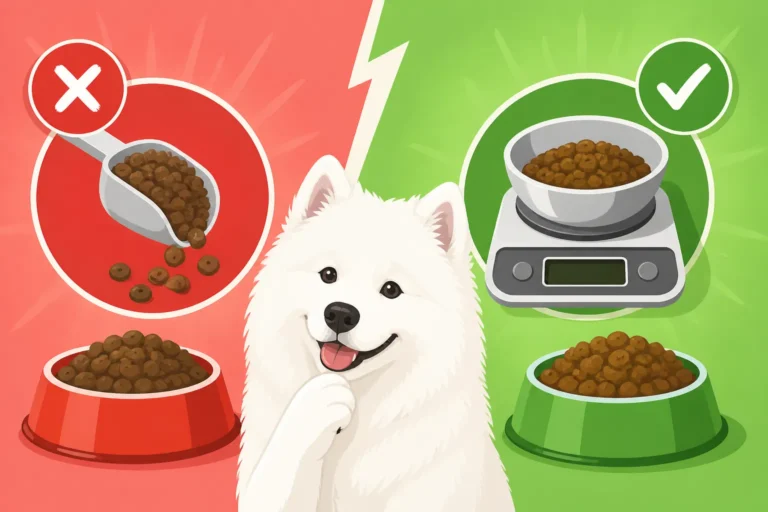
Consider your Samoyed's personality, too. Some Samoyeds will "graze" if food is left out all day, while others will devour it in minutes. Free-feeding (leaving food out all the time) makes it difficult to monitor intake and can contribute to overeating and weight gain. For most Samoyeds, measured meals at set times are the healthiest approach. If you’re looking for options, many modern dog food brands available through retailers like Amazon offer subscription services that help you keep a consistent supply of your chosen food on hand, reducing the chance of running out and disrupting your schedule.
Choosing the Right Food Format
While most Samoyeds thrive on high-quality kibble, there are other considerations for their bowls and general feeding environment. Some owners wonder Whether a Samoyed Should Eat From a Raised Bowl. For large, deep-chested breeds like Samoyeds, raised bowls were once thought to prevent bloat, but current research is mixed, and some studies even suggest they might slightly increase the risk. It's best to discuss this with your vet. However, raised bowls can be comfortable for older dogs with arthritis or neck issues.
Another common question revolves around dietary choices. Whether a Samoyed Needs a Low Fat Diet is usually only a concern if your Samoyed has specific health issues, such as a history of pancreatitis. For most healthy Samoyeds, a diet with a moderate, healthy fat content is appropriate, as fats provide concentrated energy and essential fatty acids for their skin and coat. Always consult with your veterinarian before making significant dietary changes, especially if you're considering a specialized diet. They can help you evaluate the best options for your Samoyed's individual needs and health profile.
Ultimately, finding the sweet spot for your adult Samoyed's daily food intake requires a holistic approach: understanding their individual needs, interpreting food labels correctly, and consistently monitoring their body condition. It's an ongoing conversation between you, your Samoyed, and sometimes your vet, to ensure they live their happiest, healthiest life.
Disclaimer
This article is for general informational purposes only and does not constitute professional advice. Laws, prices and regulations vary by location and change over time. Consult a qualified professional for guidance on your specific situation.