Whether a Samoyed Should Eat From a Raised Bowl
One of the most common questions I hear from fellow Samoyed parents is about how best to feed our furry clouds, especially when it comes to those fancy raised bowls. It feels like every time you turn around, there's new advice, and it can be incredibly frustrating trying to figure out if you're doing the right thing for your beloved companion. This guide is here to cut through the confusion and help you decide if an elevated feeding station is truly suitable for your Samoyed.
The Great Debate: Are Raised Bowls Good or Bad for Samoyeds?
It’s easy to get swept up in the latest trends or advice when it comes to our dogs, especially when we want nothing but the best for their health and comfort. Raised bowls are definitely one of those topics that stir up a lot of discussion, with passionate advocates on both sides. Let's really dig into the core arguments so you can understand the nuances for your Samoyed.
The Theory Behind Elevated Feeding
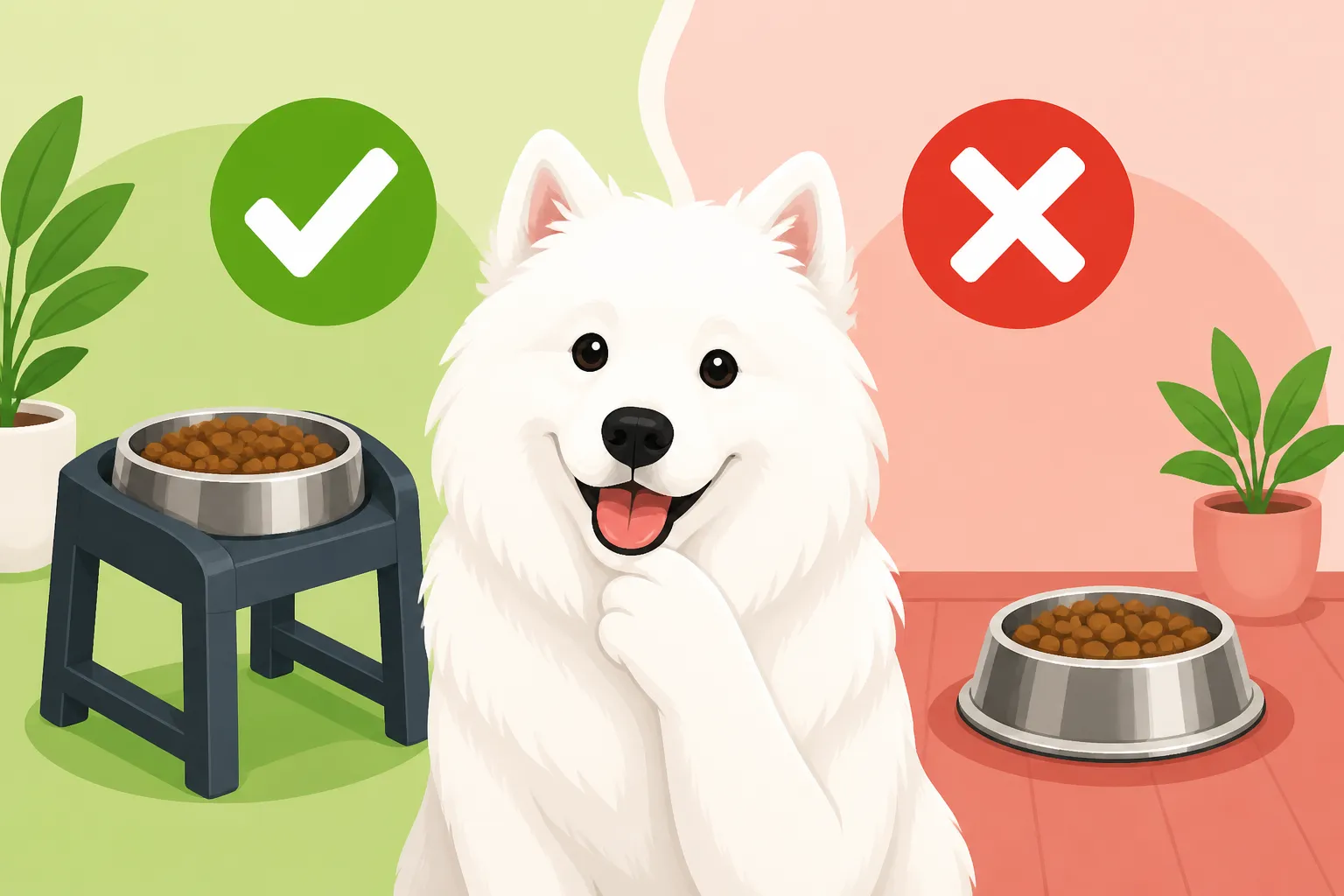
For years, many dog owners, myself included, thought that raised bowls were simply a no-brainer. The logic seemed sound: if your dog doesn't have to bend down as far, it must be better for their posture, right? The idea was that an elevated position could reduce strain on a dog's neck, back, and joints, making mealtime more comfortable, especially for taller breeds or those with existing mobility issues.
Think about it from a human perspective. When we eat, we typically sit at a table, bringing the food closer to us. We don't usually crouch on the floor to eat. So, it made sense to extend that same thinking to our canine companions. Owners often observed their dogs looking more "comfortable" or "natural" while eating from a raised stand. This was thought to improve digestion by allowing food to travel more smoothly down the esophagus, potentially preventing issues like regurgitation or choking. For our Samoyeds, with their glorious, thick ruffs, some thought it might prevent their chests and faces from getting as messy, or even just make it easier for them to reach the food without squishing their beautiful fur into the bowl. The intention was always positive – to enhance the mealtime experience and support our dog's physical well-being.
The Bloat Connection: What the Science Says
Now, here's where the conversation takes a significant turn, and it's something every large breed owner, including Samoyed parents, absolutely needs to be aware of. Gastric Dilatation-Volvulus, or GDV – commonly known as bloat – is a terrifying, life-threatening condition where a dog's stomach fills with gas, food, or fluid, and then twists. This twist cuts off blood supply and can be fatal very quickly without emergency veterinary intervention. Breeds with deep chests, like Great Danes, Weimaraners, and yes, sometimes Samoyeds, are considered at higher risk. If you've ever dealt with a dog prone to bloat, you know the sheer panic this can induce. For more on this serious condition, you might want to read Bloat in a Samoyed.
For a long time, it was widely believed that feeding from a raised bowl could help prevent bloat. The theory was that it would reduce the amount of air a dog swallowed while eating. However, several studies, most notably a large one conducted by Purdue University, have actually shown the opposite. This research indicated that feeding from raised bowls was associated with an increased risk of GDV in large and giant breeds. The exact reasons aren't fully understood, but it's hypothesized that the elevated position might encourage faster eating, or that the angle causes dogs to gulp more air. This finding turned conventional wisdom on its head and has left many dog owners understandably confused and worried. It’s a classic example of how something seemingly logical can sometimes have unforeseen consequences. So, while the thought was good, the evidence suggests caution, especially for our Samoyed friends who, despite not being giant, do possess a deep chest characteristic that places them in a higher risk group.
Specific Considerations for Your Samoyed
When it comes to feeding, it's never a one-size-fits-all approach, and our lovely Samoyeds have their own unique characteristics that factor into the decision about raised bowls. Understanding their anatomy and how they interact with their food can help us make more informed choices.
Samoyed Anatomy and Eating Habits
Samoyeds are majestic dogs, medium to large in size, known for their beautiful white coats and ever-present "Samoyed smile." While they aren't typically as massive as, say, a Newfoundland, they do have a robust build and a relatively deep chest for their size. This deep-chested anatomy is a key factor when considering bloat risk, as discussed earlier. Their natural stance and the way they move means their skeletal structure is well-suited to bending down to eat from the ground.
Observing your Samoyed's eating habits is crucial. Do they gobble their food down in seconds, barely chewing? Or are they a more dainty eater, taking their time? Fast eaters, regardless of bowl height, are generally at a higher risk of swallowing excessive air, which contributes to bloat. If your Samoyed is a vacuum cleaner when it comes to mealtime, the height of the bowl might be less critical than the speed at which they are consuming their meal. The Samoyed's unique facial structure, with that characteristic upturned mouth, is fantastic for preventing drool and icicles in harsh conditions, but it doesn't necessarily dictate a need for an elevated bowl for comfortable eating. Most Samoyeds will comfortably and naturally lower their head to eat from a bowl placed directly on the floor without any apparent strain. Understanding What a Samoyed Needs Every Day includes paying attention to these daily routines.
Joint Health and Older Samoyeds
While the bloat risk for young, healthy Samoyeds might push us away from raised bowls, there’s a genuine argument to be made for comfort in specific circumstances. As our Samoyeds age, just like us, they can develop conditions that make bending and stretching painful. Conditions like Hip Dysplasia in a Samoyed or general Arthritis in an Older Samoyed can make it genuinely difficult and uncomfortable for a senior Samoyed to lower their head to the floor for every meal and drink.
For these dogs, an elevated bowl isn't about preventing bloat (though monitoring is still vital), but about providing relief from chronic pain. Imagine having a stiff back or sore knees and having to bend over drastically multiple times a day. It would be miserable. For an older Samoyed showing signs of joint pain, stiffness, or difficulty getting up and down, a raised bowl can significantly improve their quality of life during meal times. It's a compassionate consideration that prioritizes their comfort. However, this decision should always be made in consultation with your veterinarian, who can assess your individual dog's health needs and help weigh the benefits of comfort against any potential risks, especially as they enter their senior years, which can be explored further in Caring for a Samoyed Past Nine.
Making the Best Feeding Choice for Your Samoyed
Navigating the world of dog nutrition and feeding accessories can be overwhelming. The good news is that you have options, and with a little thought and professional guidance, you can create a mealtime setup that is ideal for your Samoyed’s health and happiness.
Alternatives to Traditional Raised Bowls
Given the mixed research on raised bowls and bloat, many owners are looking for alternatives, especially if their Samoyed is a fast eater. One of the most effective tools for slowing down a speedy eater is a slow feeder bowl. These bowls have ridges, mazes, or pillars inside that force your dog to eat around obstacles, making them take more time to consume their meal. This significantly reduces the amount of air they gulp, which is a major factor in bloat risk. You can find a fantastic variety of slow feeder bowls from retailers like Chewy or Amazon, offering different designs to suit your Samoyed's eating style.
Another simple yet effective method is scatter feeding. Instead of putting all the food in a bowl, you can scatter it across a clean floor, a snuffle mat, or even outside in the grass (weather permitting and if your yard is safe). This turns mealtime into a foraging game, engaging their brains and slowing down their eating immensely. Lick mats, smeared with wet food or a healthy paste, can also extend meal duration and provide mental enrichment. These methods promote natural eating behaviors and can be a wonderful way to manage a Samoyed who tends to inhale their meals.
Consulting Your Veterinarian
This is perhaps the most crucial step in deciding on the best feeding setup for your Samoyed. While general advice and studies are helpful, your dog is an individual with a unique health history. Your veterinarian knows your Samoyed best and can provide tailored advice based on their age, breed predisposition, existing health conditions (like arthritis or a history of digestive upset), and even their eating personality.
Don't hesitate to bring up your concerns about bloat, joint pain, or any other feeding questions you have during your next vet visit. They can perform a thorough examination and discuss any specific conditions that might make a raised bowl advisable, such as megaesophagus (a rare condition where the esophagus is enlarged and doesn't push food down effectively, in which case elevated feeding can be critical). Conversely, if your Samoyed has a history or high risk for GDV, your vet might strongly advise against a raised bowl, recommending floor-level feeding with strategies to slow down eating. When your dog's health is at stake, a professional opinion is invaluable.
Practical Tips for Feeding Success
No matter what type of bowl you choose, there are some universal tips that can make mealtime safer and more enjoyable for your Samoyed. Firstly, always use a bowl made of safe, durable material like stainless steel or ceramic. Plastic bowls can harbor bacteria and can be easily chewed, creating rough edges.
- Cleanliness is Key: Wash your Samoyed's bowls daily with hot, soapy water. This prevents bacterial growth and keeps their eating environment hygienic.
- Monitor Eating Habits: Keep an eye on how your Samoyed eats. Are they gulping? Are they struggling to reach their food? Changes in eating behavior can sometimes be early indicators of health issues.
- Meal Schedule: For many Samoyeds, especially those prone to fast eating, feeding two or three smaller meals a day instead of one large one can reduce bloat risk and aid digestion. This is part of understanding How Much a Samoyed Should Eat and managing their overall intake.
- Post-Meal Activity: Avoid strenuous exercise or rough play immediately after your Samoyed eats, as this can be a trigger for bloat. Give them at least an hour to digest their meal quietly.
- Weight Management: Keeping your Samoyed at a healthy weight is vital for overall health and can reduce the risk of many conditions, including diabetes, as discussed in Whether an Overweight Samoyed Is More Likely to Get Diabetes. Always follow your vet's recommendations for portion control and discuss any weight concerns, as their fluffy coats can sometimes hide a few extra pounds, making it hard to see a gradual weight gain, something addressed in Why a Samoyed Owner Must Watch Its Weight Closely.
Remember, there's no single perfect answer for every Samoyed, but by considering all the factors, consulting your vet, and observing your dog, you can confidently make the best feeding choices for your cherished companion. Whether you choose a bowl from Chewy, a slow feeder from Amazon, or a fresh food delivery service like Ollie that encourages careful eating, the key is informed decision-making.
| Feature / Bowl Type | Traditional Floor Bowl | Raised Bowl | Slow Feeder Bowl |
|---|---|---|---|
| Pros | Generally lower bloat risk (per studies), natural posture for most dogs, simple, inexpensive. | Can offer comfort for arthritic/elderly dogs or those with specific esophageal issues. | Significantly reduces eating speed, lowers gulping of air, provides mental enrichment. |
| Cons | May require bending for older/arthritic dogs, potential for mess if dog "splashes" food/water. | May increase bloat risk in large/deep-chested breeds, can encourage faster eating for some. | Requires more effort from the dog (can be frustrating for some), can be harder to clean if intricate. |
| Best For | Most healthy, young to adult Samoyeds, especially fast eaters. | Samoyeds with confirmed joint pain or specific medical conditions where elevation is prescribed by a vet. | Any Samoyed that eats too quickly, regardless of age or joint health; can be used at floor level. |
| Considerations | Ensure non-slip mat underneath. | Consult vet first, especially if bloat is a concern; monitor eating speed. | Choose a design appropriate for your dog's patience level; available on Chewy, Amazon. |
Disclaimer
This article is for general informational purposes only and does not constitute professional advice. Laws, prices and regulations vary by location and change over time. Consult a qualified professional for guidance on your specific situation.