Road Salt on a Samoyed’s Pads
Winter can be a magical time with a Samoyed, their thick white coats looking absolutely stunning against a snowy backdrop, but beneath that picturesque scene lies a very real, painful threat to their sensitive paws: road salt. Many of us have felt that sudden, sharp sting when our beloved Samoyed pulls up short on a walk, lifting a paw as if burned, and it's almost always due to the harsh chemicals and abrasive crystals sprinkled generously on sidewalks and streets. This guide will walk you through understanding why road salt is such a menace, how to protect your Samoyed's precious paw pads, and what to do when irritation inevitably strikes.
The Hidden Dangers of Road Salt for Samoyed Paws
It's easy to think of road salt as just a convenience for our slippery winter roads, but for our Samoyeds, it's a minefield of potential injury and discomfort. Their paws, though seemingly robust from all their adventures, are surprisingly delicate when faced with these harsh substances.
What is Road Salt and Why is it Everywhere?
When we talk about "road salt," we're often lumping together a variety of de-icing agents used to keep roads and sidewalks clear of ice and snow. The most common type is sodium chloride, which is essentially table salt but coarser and often mixed with other additives. Then there are alternatives like calcium chloride, magnesium chloride, and potassium chloride, which work at different temperatures and have varying levels of toxicity. While these compounds are effective at melting ice, they are also highly corrosive, dehydrating, and irritating.
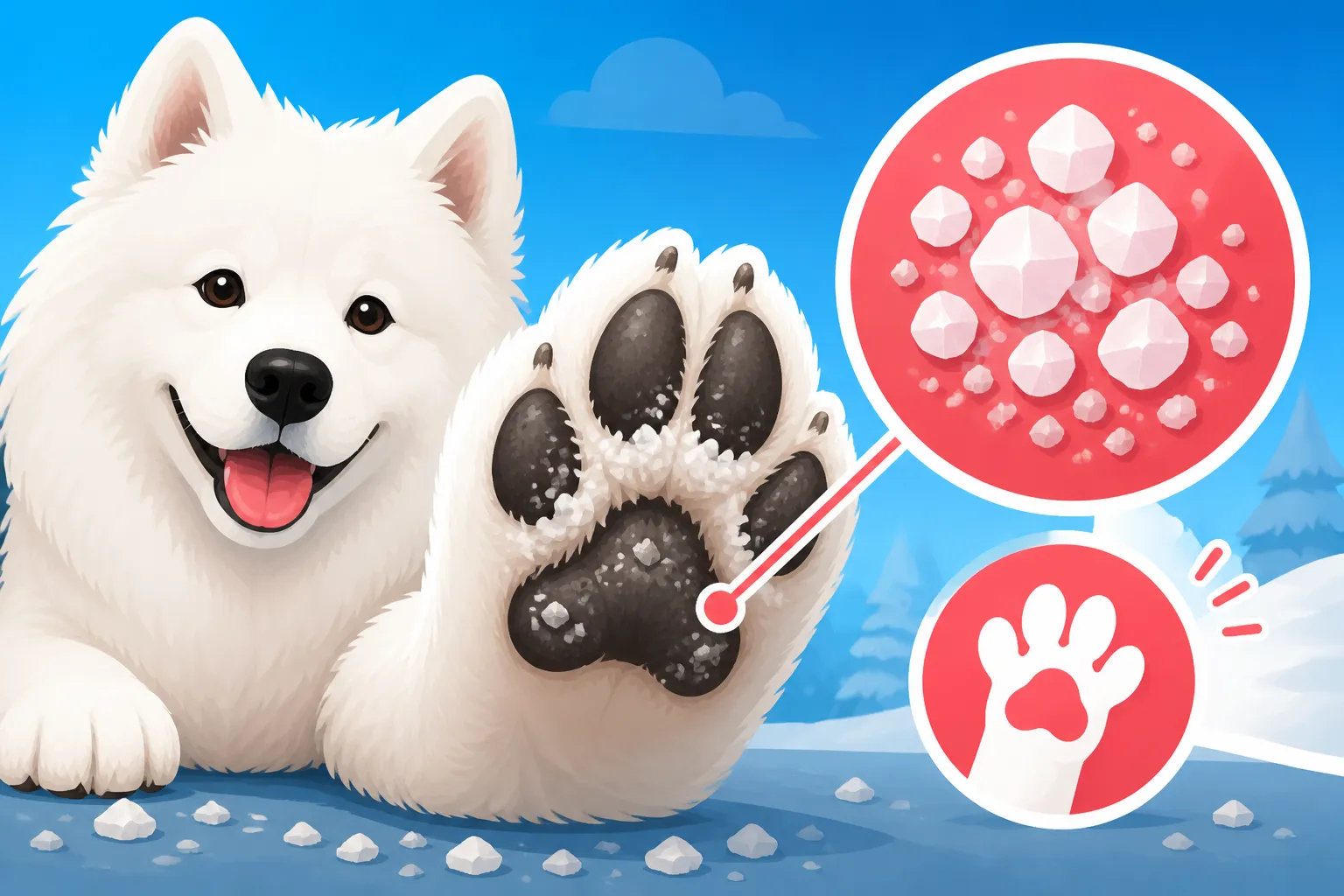
Imagine walking barefoot on a surface covered in tiny, sharp, drying crystals – that’s what your Samoyed’s paw pads are up against. These salts draw moisture out of the skin, leading to dryness, cracking, and even chemical burns. The sharp edges of the crystals can also cause cuts and abrasions, creating openings for infection. And let's not forget the residue: after walking on salted surfaces, dogs often lick their paws, inadvertently ingesting these harmful chemicals, which can lead to upset stomachs or more severe issues depending on the quantity and type of salt. The ubiquity of these products in urban and suburban areas during winter means it's almost impossible to avoid them entirely.
Why Samoyed Paws Are Particularly Vulnerable
While all dogs can suffer from road salt irritation, Samoyeds, with their glorious double coats and Nordic heritage, face some unique challenges. You might think a dog bred to thrive in freezing temperatures, a breed designed to survive in places where How Cold It Gets Where the Samoyed Came From, would have invincible paws. And while their dense fur protects much of their body, their paw pads are still exposed.
Firstly, their incredibly thick fur, especially the plush feathering between their paw pads, can act as a trap. Snow, ice, and inevitably, road salt, can easily get lodged in this fur, forming painful ice balls that compact and press into the sensitive skin. These icy clumps hold the corrosive salt against the skin for longer, intensifying the damage. This is a related issue to Snow Balling Up in a Samoyed's Coat, which can happen on legs and bellies too.
Secondly, Samoyeds are active dogs, often eager for their winter walks, regardless of the temperature. A good Samoyed loves to be out, fulfilling What a Samoyed Was Actually Bred to Do, whether it's pulling a sled or just exploring. This means they are often exposed to these harsh conditions for longer periods. Their zest for life can make them ignore initial discomfort, only for the irritation to worsen. Moreover, their naturally sensitive skin, even beneath that thick coat, can react quite strongly to chemical irritants, sometimes more so than breeds with coarser hair or tougher pads. This combination of trapping agents in their fur and prolonged exposure makes them particularly susceptible to the damaging effects of road salt.
Recognizing the Signs of Road Salt Irritation
Spotting the signs of road salt irritation early is key to preventing more serious problems for your Samoyed. Since our Samoyeds are often stoic, and sometimes very good at hiding discomfort – it's part of How a Samoyed Hides Illness Behind a Smile – you need to be observant.
Keep a close eye on your Samoyed during and after winter walks. The most obvious sign is often a sudden limp or refusal to put weight on a paw. They might lift one paw repeatedly, shaking it, or holding it up in the air. You might also notice them stopping frequently to lick or chew at their paws, sometimes quite frantically. Once you're back inside, take a moment to examine their paws closely. Look for redness, swelling, or small cuts on the paw pads and between the toes. The skin might appear dry, cracked, or even blistered in severe cases. In very bad instances, you might even see a chemical burn, which looks like discolored or raw skin. Sometimes, the issue isn't immediate lameness but a persistent irritation that leads to obsessive licking, which can then cause secondary skin infections. Recognizing these subtle cues means you can act quickly to alleviate their discomfort.
Proactive Protection: Shielding Your Samoyed's Paws
Prevention is always better than cure, especially when it comes to something as pervasive as road salt. There are several excellent ways to create a protective barrier between your Samoyed's delicate paw pads and the harsh winter environment.
Booties: The Ultimate Barrier
When it comes to comprehensive protection, paw booties are hard to beat. They create a physical barrier, completely isolating your Samoyed's paws from direct contact with snow, ice, and, crucially, road salt. For a breed that thrives in the cold, but whose paws can still be vulnerable, booties can be a game-changer for long walks or navigating heavily salted urban areas. Brands like Ruffwear and Muttluks are well-regarded for their durability and fit, offering various styles from heavy-duty winter boots to lighter, more flexible options.
However, getting your Samoyed used to booties can be a process. Many dogs initially walk like they're wearing invisible clown shoes, high-stepping and shaking their feet. Start with short indoor sessions, offering plenty of positive reinforcement and treats. Gradually increase the duration, and then introduce them on short walks. Ensure you get the correct size – too loose, and they'll fall off; too tight, and they'll be uncomfortable and restrict circulation. While some Samoyed owners find them cumbersome, for serious winter weather or prolonged exposure, they truly are the gold standard for paw protection.
Paw Waxes and Balms: A Protective Layer
If booties aren't your Samoyed's style, or if you're looking for an alternative for lighter exposure, paw waxes and balms are fantastic options. These products create a breathable, protective layer over the paw pads, acting like an invisible glove. They form a barrier against snow, ice, salt, and even hot pavement in summer. The wax also helps to moisturize the pads, preventing dryness and cracking.
Products like Musher's Secret or Pawz Balm are popular choices, readily available from online retailers like Chewy or Amazon. To apply, simply rub a generous amount directly onto your Samoyed's paw pads and between their toes before each walk. It creates a subtle, non-greasy coating that repels water and grit. Reapplication may be necessary for longer outings. While not as foolproof as booties for preventing all contact, they offer excellent protection and are much less intrusive for dogs who resist footwear. They are also great for overall paw health, keeping pads supple and less prone to injury.
Winter Grooming: Keeping Fur Trim
An often-overlooked aspect of winter paw protection for Samoyeds is grooming. That magnificent double coat, so perfect for How a Samoyed Survives Sixty Below, can become a liability on the paws. The long fur between your Samoyed's paw pads can collect snow, ice, and road salt, as mentioned earlier. These icy clumps can be incredibly painful and hold corrosive agents against the skin.
Regularly trimming the fur between the paw pads flush with the pads themselves can significantly reduce this problem. You can use blunt-nosed scissors or a small electric trimmer designed for pet grooming. Be very careful, as the skin between the pads is delicate. If you're unsure, your professional groomer can easily perform a "paw tidy" as part of their regular service. Keeping these areas neat not only prevents snow and salt accumulation but also helps with traction on slippery surfaces and makes it easier to clean their paws after walks. It's a simple step that makes a huge difference in your Samoyed's winter comfort and paw health.
Post-Walk Care: Essential Steps for Happy Paws
Even with preventative measures, some salt exposure is almost inevitable. Knowing how to properly clean and care for your Samoyed's paws after a winter walk is crucial for minimizing irritation and preventing more serious issues.
Immediate Cleaning: The Golden Rule
The moment you step back inside after a walk on salted surfaces, immediate paw cleaning should be your priority. Don't let your Samoyed track the salt through the house or, worse, lick it off their paws.
Here's a simple routine:
- Warm Water Rinse: Keep a small basin of warm water or a pet-specific paw washer near your entry point. Dip each paw into the water, ensuring you get between the toes and around the pads. A quick, thorough rinse is usually enough to wash away salt residue.
- Gentle Wipe: Follow the rinse with a soft towel to thoroughly dry each paw. Make sure to dry between the toes, as moisture left in these areas can lead to skin irritation or fungal growth.
- Specialized Wipes: For quick clean-ups or if you're out and about, keep some pet-safe paw wipes handy. Look for wipes formulated with soothing ingredients like aloe or vitamin E, available from pet retailers like Chewy. These can be particularly useful if your Samoyed is known for getting Snow Balling Up in a Samoyed's Coat.
The key is to remove all traces of salt before it has a chance to cause prolonged irritation or be ingested. This simple habit protects both their paws and their digestive system.
Soothing and Healing Irritated Pads
If, despite your best efforts, your Samoyed's paws show signs of irritation – redness, dryness, or minor cracking – it's time for some soothing relief. Just like with Caring for an Old Samoyed where special attention is paid to comfort, irritated paws need gentle care.
- Aloe Vera: A pure aloe vera gel (make sure it's canine-safe and free from alcohol or additives) can be wonderfully soothing for minor redness. It has natural anti-inflammatory and healing properties.
- Coconut Oil: Food-grade coconut oil is another excellent natural moisturizer. It's safe if ingested (in small amounts) and can help hydrate dry, cracked pads. Gently massage a small amount into the paw pads before bedtime.
- Veterinary Ointments: For more significant irritation, cracking, or suspected minor burns, your vet might recommend a specific topical ointment. These often contain ingredients to promote healing and prevent infection. Always consult your vet before applying anything to open wounds.
- Keep it Clean: If there are any open cuts or abrasions, keep the area clean with a mild antiseptic wash (again, vet-approved) to prevent infection. You might need to use a protective cone or a soft sock to prevent your Samoyed from licking the ointment off or further irritating the wound.
Consistency is vital here. A few days of diligent care can often resolve minor issues and restore comfort to your Samoyed's paws.
When to See the Vet
While many cases of road salt irritation are mild and can be managed at home, there are times when a veterinary visit is absolutely necessary. Never hesitate to seek professional help if you're concerned about your Samoyed's paw health.
You should contact your veterinarian if you observe any of the following:
| Symptom | Indication | Action |
|---|---|---|
| Severe Limping/Non-Weight Bearing | Significant pain or deep injury | Immediate vet visit |
| Deep Cracks or Open Wounds | Risk of infection, chemical burn, or puncture | Vet evaluation and wound care |
| Blistering or Raw Skin | Chemical burn or severe irritation | Vet intervention for pain and healing |
| Persistent Licking/Chewing | Unresolved pain, underlying infection | Vet exam to diagnose and treat |
| Swelling or Pus | Signs of infection | Vet prescribed antibiotics or anti-inflammatories |
| Fever or Lethargy | Systemic infection or severe reaction | Emergency vet visit |
| Vomiting/Diarrhea after walks | Ingestion of toxic amounts of road salt | Vet evaluation for salt poisoning |
Your vet can accurately diagnose the issue, provide pain relief, prescribe antibiotics if an infection is present, or recommend stronger topical treatments. They can also offer advice on preventing future occurrences tailored to your Samoyed's specific needs. For a breed that often pushes its limits, it's vital to address any health concerns quickly to ensure they remain active and happy, living up to their potential.
Living with Winter: Broader Considerations for Your Samoyed
Road salt is just one piece of the winter puzzle for Samoyed owners. Ensuring your snowy companion stays healthy and happy during the colder months involves a holistic approach to their care. Understanding A Samoyed Built for Sixty Below in an American Summer gives you insight into their cold tolerance, but it also highlights that certain environmental factors can still pose risks.
Rethinking Winter Walk Routes
While we can't always control where road salt is used, we can often choose our walking paths more wisely. If possible, seek out routes that are less heavily salted.
Consider these alternatives:
- Parks and Natural Trails: These areas are usually cleared with plows and sand, rather than chemical de-icers. They offer a much safer surface for your Samoyed's paws.
- Grassy Verges: If walking on sidewalks is unavoidable, encourage your Samoyed to walk on the grassy strips alongside the pavement, even if they are covered in snow. This keeps their paws off the salted concrete.
- Less Traveled Streets: Quieter residential streets or cul-de-sacs might receive less salt application than main thoroughfares.
- Indoor Exercise: On days when salt is particularly heavy, or temperatures are extreme, consider indoor enrichment. This could be playtime, puzzle toys, or even a trip to a dog-friendly indoor facility if available.
By consciously choosing your routes, you reduce your Samoyed's exposure and your stress levels about their paw health. Remember that What a Samoyed Needs Every Day includes mental and physical stimulation, so adapting your routine to winter conditions is essential.
Hydration and Nutrition for Healthy Paws
Healthy paws are a reflection of overall health, and good hydration and nutrition play a significant role. Just as they're important for general well-being and managing issues like Diabetes in a Middle Aged Samoyed, they contribute to skin and paw pad resilience.
- Hydration: In winter, indoor heating can dry out the air, leading to dehydration. Ensure your Samoyed always has access to fresh, clean water. Good hydration keeps skin and paw pads supple and less prone to cracking.
- Balanced Diet: A high-quality, balanced diet rich in essential fatty acids (like Omega-3s and Omega-6s) supports healthy skin and coat, which in turn benefits paw pad integrity. Many premium dog foods available from places like Chewy or Ollie include these beneficial fats. If your Samoyed is prone to dry, cracked paws, you might discuss a supplement with your vet.
A strong, healthy immune system and robust skin barrier are the first line of defense against environmental stressors, including road salt.
Keeping an Eye on the Bigger Picture
Beyond road salt, winter brings other considerations for your Samoyed. Their incredible fur allows them to withstand extremely cold temperatures, but their comfort can still be affected by persistent dampness or biting winds. Ensure they have appropriate outdoor shelter if they spend time outside, even if it's just a quick potty break, and dry them thoroughly when they come in, paying special attention to their chest, belly, and feet.
Regularly check their nails, as How Often a Samoyed's Nails Need Cutting becomes even more important when dealing with potential paw injuries, as overgrown nails can exacerbate discomfort or make injury worse. Ultimately, understanding your Samoyed's unique needs in winter, from their desire to enjoy the snow to their specific vulnerabilities, allows you to provide the best care possible. Comparing them with other breeds, like when considering The Samoyed Against the Husky and the Malamute, can highlight their specific traits. With a bit of proactive care and attention, you and your Samoyed can enjoy all the wonders of winter without the worry of painful paws.
Disclaimer
This article is for general informational purposes only and does not constitute professional advice. Laws, prices and regulations vary by location and change over time. Consult a qualified professional for guidance on your specific situation.