Whether a Samoyed Needs a Fan Pointed at It
The summer heat can be absolutely brutal, and for us Samoyed parents, it brings a whole new level of worry. It's so tempting to just point a fan at our fluffy white companions and hope for the best, thinking that a good breeze will magically make them comfortable. But a Samoyed's unique double coat and their arctic heritage mean that what works for us humans, or even other dog breeds, often falls short for them. This guide is here to unravel the truth about fans and Samoyeds, offering realistic expectations and practical, deep dives into keeping your beloved floof genuinely cool and safe.
The Samoyed's Arctic Design: Why Heat is Such a Challenge
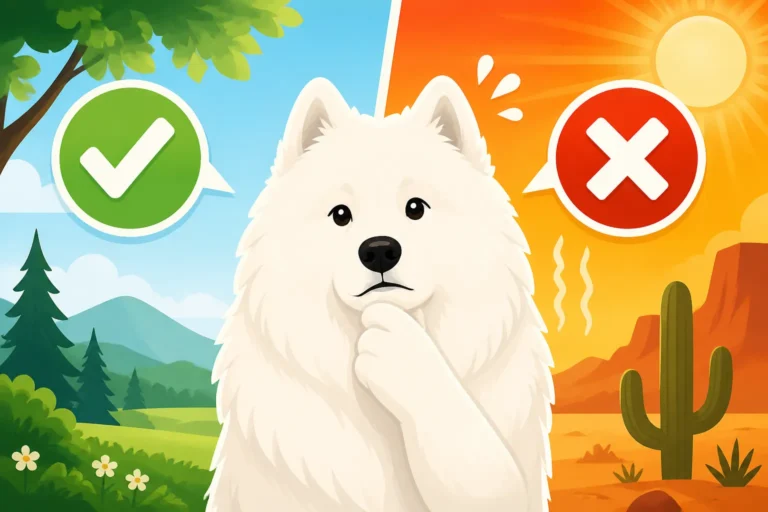
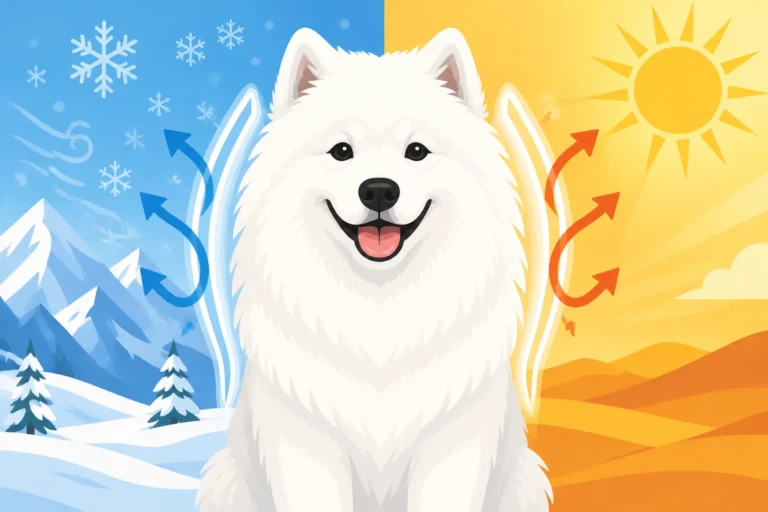
Let's face it, our Samoyeds are living, breathing snow angels. They were literally bred for the harshest, coldest environments on Earth by the Nenets people of Siberia. When you look at your beautiful Samoyed, you're not just seeing a fluffy dog; you're seeing centuries of natural selection geared towards survival in extreme cold. This incredible adaptation, however, becomes their biggest challenge when the mercury starts to rise.
The Double Coat: A Masterpiece of Insulation (and a Summer Conundrum)
The most distinctive feature of a Samoyed, and indeed their primary defense against the elements, is their magnificent double coat. It's not just hair; it's a meticulously engineered system. You have the harsh, straight outer guard hairs that are coarse and designed to shed snow and moisture. Underneath that, there's an incredibly dense, soft, woolly undercoat. This undercoat is what truly provides insulation.
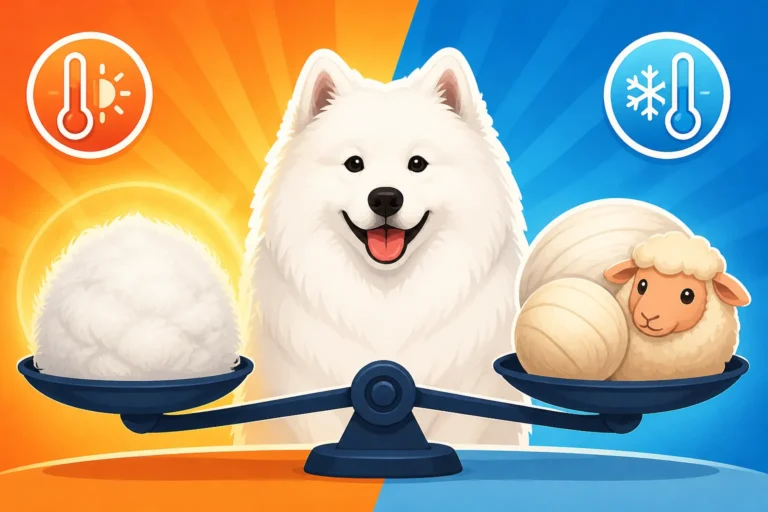
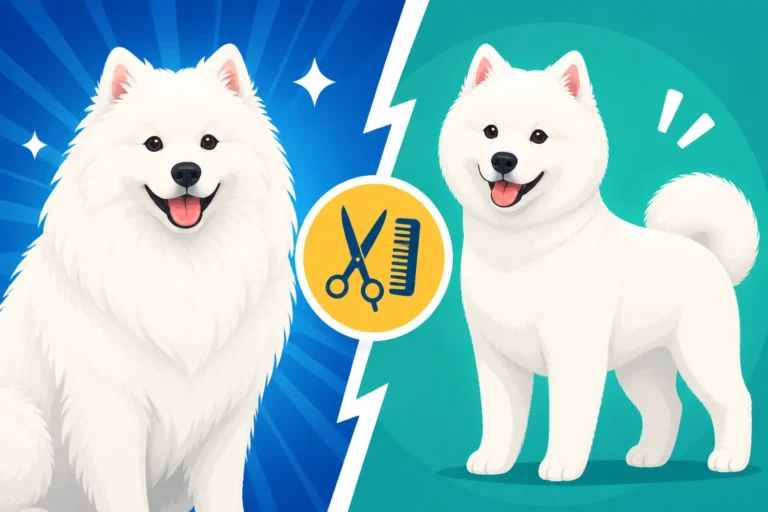
Now, here's the kicker: insulation works both ways. In winter, this dense undercoat traps warm air close to their body, protecting them from the biting cold, sometimes even temperatures of How Cold It Gets Where the Samoyed Came From. But in summer, if that undercoat isn't properly maintained and free of mats, it can trap heat close to their body. It's like wearing a heavy wool sweater in July. Many people mistakenly think shaving a Samoyed will solve this, but that's a huge myth, and it often Why Shaving a Samoyed Makes the Heat Worse. Their coat actually helps create a microclimate against their skin, and the guard hairs act as a barrier against direct sun, preventing sunburn and allowing some airflow. When that system is disrupted, they can actually overheat faster.
Physiological Adaptations for the Cold, Not the Heat
Beyond their fur, Samoyeds have other physiological traits suited for the cold that aren't ideal for heat. For instance, their body shape is often described as "cobby" or square-built, which minimizes surface area exposure, reducing heat loss in cold climates. While great for staying warm, it means less surface area to dissipate heat when it's hot. Their small, thick ears are also designed to reduce frostbite risk, not to act as radiators for excess heat like the large, thin ears of a desert dog.
They primarily cool themselves by panting. Unlike humans who sweat profusely across their skin, dogs only have sweat glands in their paw pads and nose, which isn't enough to regulate their entire body temperature. Panting allows for evaporative cooling from their mouth and respiratory tract. However, if the air around them is already hot and humid, this evaporative cooling becomes much less efficient. This is why a humid 80-degree day can be far more dangerous for a Samoyed than a dry 80-degree day, and why you must have a Water, Shade and the Summer Plan for a Samoyed.
Fans: A Breeze or a Bust for Your Furry Friend?
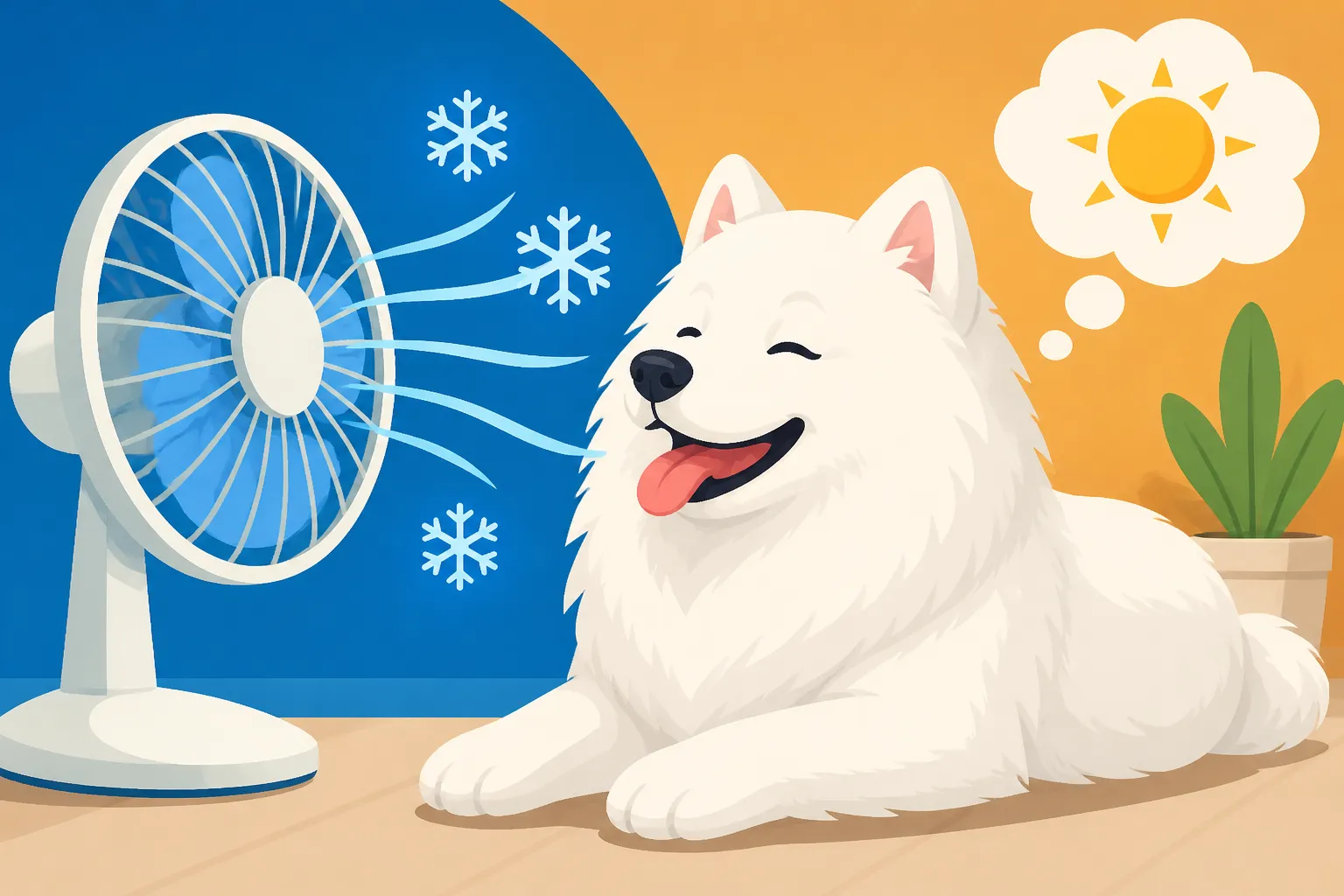
Given their unique physiology, it's natural to wonder if a simple fan can offer the relief your Samoyed desperately needs. The answer, unfortunately, is a bit nuanced, but generally, a fan alone is far less effective for a Samoyed than it is for a human.
How Fans Work for Humans vs. Dogs
For us, a fan creates a delightful breeze that helps evaporate sweat from our skin, cooling us down directly. We feel cooler because our body heat is carried away by the moving air, and the phase change from liquid sweat to vapor absorbs heat. It's science!
For a Samoyed, it's a different story. They don't have widespread sweat glands like us. While a fan does create air movement, its primary benefit is in dissipating existing heat from their coat and potentially aiding the evaporative cooling process from their panting. If the ambient air temperature is actually higher than their body temperature, blowing hot air on them can actually make things worse, not better, by transferring heat to them instead of away. Think about standing in front of a fan in a hot oven – it wouldn't cool you down.
The Limited Effectiveness on a Dense Coat
Imagine trying to blow cool air through a thick, down comforter. That's essentially what you're trying to do with a fan and a Samoyed's coat. The dense undercoat acts as a barrier, preventing much of the airflow from reaching their skin where it would be most beneficial for direct cooling. The fan might rustle the outer guard hairs, but it's not going to penetrate effectively enough to make a significant difference in their core body temperature, especially if they haven't been groomed properly to remove dead undercoat. Even with a perfectly maintained coat, the fundamental physics of how a fan interacts with a thick insulating layer limits its impact.
Where a fan can offer some marginal benefit is in creating general air circulation in a room, which can slightly lower the ambient temperature by preventing stagnant hot air from building up. If your Samoyed is lying on a cool tile floor, for example, a fan might help disperse some of the heat radiating off them, making the immediate area feel a tiny bit fresher. But relying on it as a primary cooling method, especially on a truly hot day, is a risky gamble.
Beyond the Fan: Holistic Strategies for Summer Safety
Since a fan isn't a silver bullet, we need to think bigger when it comes to keeping our Samoyeds comfortable and safe during warmer months. It requires a multi-faceted approach, often involving environmental control, careful management, and smart hydration.
Environmental Control: Creating a Cool Haven
The single most effective way to protect your Samoyed from heat is to control their environment. This means bringing them indoors into an air-conditioned space when temperatures climb. Air conditioning is a game-changer because it actually removes heat and humidity from the air, creating a truly cool and dry environment where your Samoyed's panting mechanism can work efficiently. If you don't have central AC, consider a portable unit for their main living area. Knowing What Air Conditioning Costs a Samoyed Owner in Summer is essential for budgeting.
Beyond air conditioning, strategically placed shade outdoors is non-negotiable. If your Samoyed absolutely must be outside for a short period, ensure there's deep, constant shade provided by trees, a large tarp, or an insulated dog house that doesn't trap heat. Concrete and asphalt absorb and radiate heat, so natural grass or cool paving materials are far better. You might find great shaded options or even car sun shades for windows when traveling with your Samoyed on Amazon.
Grooming: The Foundation of Thermal Regulation
Proper grooming is paramount for a Samoyed in any climate, but especially in warmer weather. A thick, matted undercoat is a heat trap. Regular, thorough brushing, ideally several times a week, is crucial to remove dead, shed undercoat. During their "coat blow" seasons, this becomes a daily ritual. Removing this dead fur allows for better air circulation closer to their skin. A high-velocity force dryer (often available on sites like Chewy or Amazon) after a bath is invaluable for ensuring the undercoat is completely dry and fluffed, which maintains its insulating properties against both heat and cold.
However, remember the golden rule: never shave your Samoyed. Their coat is their natural protection. Trimming stray hairs on their paws or around their sanitary areas can be helpful, but extensive shaving compromises their ability to regulate temperature and leaves them vulnerable to sunburn and even skin irritation.
Hydration and Cooling Aids: Tools for Relief
Access to fresh, cool water at all times is non-negotiable. Seriously, it's the simplest and most important thing you can do. Consider placing multiple water bowls around the house and yard, and adding ice cubes to their water. Some Samoyeds enjoy lapping at ice cubes directly.
Beyond plain water, there are several cooling aids that can supplement environmental control:
- Cooling Mats: These mats use gel or water to absorb heat from your dog's body, providing a cool surface to lie on. Many owners swear by them, and you can find a wide variety on Chewy. They can be a lifesaver for a Samoyed seeking relief from the floor heat. Whether a Cooling Mat Helps a Samoyed is a question many owners ask, and the answer is usually a resounding yes.
- Kiddie Pools: A shallow plastic kiddie pool filled with a few inches of cool water can be a wonderful outdoor relief for Samoyeds who enjoy splashing. It allows them to cool their paws and belly, which helps lower their core temperature. Just ensure they're supervised and the water is clean.
- Cooling Vests/Bandanas: These products are soaked in water and then worn by your dog. As the water evaporates, it provides a cooling effect. While they don't penetrate the dense coat entirely, they can offer some relief to the areas they cover, especially the chest and neck.
- Frozen Treats: Homemade pupsicles made from diluted broth, yogurt, or pureed fruit can be a fun way to help them hydrate and cool down from the inside out. You might even find special molds or healthy treat recipes on Ollie that are perfect for freezing.
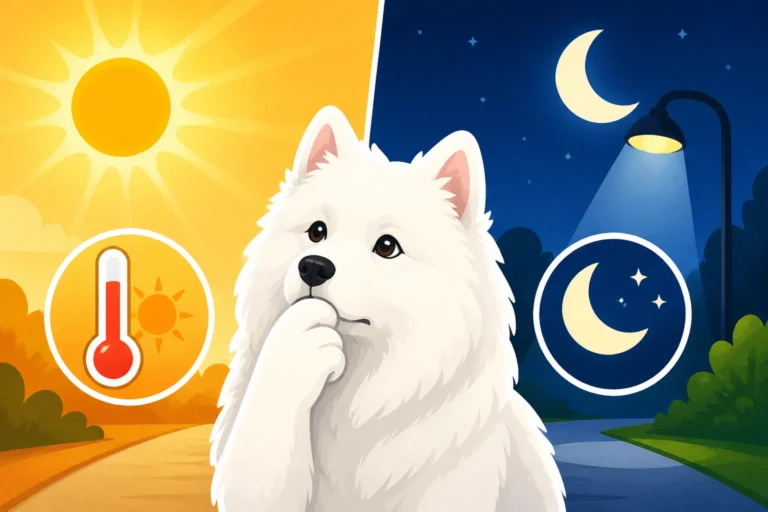
- Walks and Exercise: Adjust your exercise schedule drastically. No walks during the hottest parts of the day. Stick to early mornings or late evenings when it's much cooler. Feel the pavement with your hand; if it's too hot for your bare hand, it's too hot for their paws. A Samoyed will sometimes refuse to walk in heat, and that's their way of telling you it's too hot. Whether a Samoyed Refuses to Walk in Heat. Even then, keep walks short and avoid strenuous activity. Whether a Samoyed Should Only Be Exercised at Night in Summer.
| Cooling Method | Primary Mechanism | Effectiveness for Samoyed | Pros | Cons |
|---|---|---|---|---|
| Fan | Air circulation, minimal evaporative cooling | Low to Moderate | Easy to set up, inexpensive | Doesn't penetrate coat well, moves hot air |
| Air Conditioning | Heat and humidity removal | High | True cooling, reduces humidity | Costly, requires electricity |
| Shade | Blocks direct sunlight | High | Natural, accessible | Doesn't reduce ambient temperature |
| Cooling Mat | Conductive cooling | Moderate to High | Targeted relief, portable | Can get warm over time, some dogs chew |
| Kiddie Pool | Water immersion, evaporative cooling | Moderate to High | Fun, effective for paws/belly | Requires supervision, can be messy |
| Cooling Vest/Bandana | Evaporative cooling | Low to Moderate | Portable, good for short outings | Limited coverage, still relies on evaporation |
| Frozen Treats | Internal cooling, hydration | Low to Moderate | Hydrating, enjoyable | Temporary, supplemental only |
Managing an Older or Health-Compromised Samoyed
For senior Samoyeds or those with underlying health conditions like Aortic Stenosis in a Samoyed or Diabetes in a Middle Aged Samoyed, heat management becomes even more critical. Their ability to regulate body temperature may be diminished, and they might be less tolerant of even moderate heat. Consult your vet for specific advice. They might recommend even stricter environmental controls, shorter outings, or particular cooling aids. Pay extra close attention to Caring for a Samoyed Past Nine and their unique needs.
Recognizing Overheating: When a Fan Just Isn't Enough
The stark reality is that heatstroke is a life-threatening emergency for Samoyeds. Their thick coats and natural predisposition to cold mean they can overheat rapidly, and a fan will do little to reverse this once it starts. Knowing the signs of overheating is critical, as prompt action can save your dog's life.
Key Signs of Heat Stress and Heatstroke
It's tempting to think a Samoyed will complain loudly if they're uncomfortable, but remember How a Samoyed Hides Illness Behind a Smile. Here are the signs to watch for:
- Excessive Panting: While panting is normal for Samoyeds when warm, excessive panting, especially if it's loud, rapid, and doesn't seem to slow down even when they're at rest, is a red flag. Why a Samoyed Pants Constantly in Summer is not just about being warm, it can escalate quickly.
- Dark Red Gums or Tongue: Their gums might appear a brighter red than usual, or even bluish if oxygen deprivation is occurring.
- Thick, Ropy Saliva: Instead of normal drool, their saliva might become thick and sticky.
- Weakness or Stumbling: They might lose coordination, appear lethargic, or even collapse.
- Vomiting or Diarrhea: These can be signs of internal organ distress due to overheating.
- Glazed Eyes: Their eyes may appear unfocused or glassy.
- Elevated Body Temperature: If you have a rectal thermometer, a temperature over 104°F (40°C) is an emergency.
- Seizures: In severe cases, heatstroke can lead to neurological issues.
If you observe any of these signs, especially the more severe ones, your Samoyed is in immediate danger. A fan is absolutely not enough at this point.
Emergency Measures and Veterinary Care
If you suspect your Samoyed is overheating, every second counts.
- Move to a Cooler Environment Immediately: Get them into air conditioning or the coolest, shadiest spot available.
- Apply Cool Water: Do not use ice water, as it can cause peripheral vasoconstriction, trapping heat in their core and potentially inducing shock. Instead, use cool (not cold) tap water to wet their fur, focusing on their belly, armpits, and groin. You can use a hose, wet towels, or even a sponge.
- Use Air Movement (Carefully): Now a fan can be used in conjunction with wetting their fur. The fan will aid in the evaporative cooling process from the wet coat.
- Offer Small Amounts of Water: If they are conscious and able to drink, offer small amounts of cool water. Do not force them to drink.
- Seek Veterinary Attention: Even if your Samoyed seems to recover, it's crucial to get them to a veterinarian immediately. Heatstroke can cause internal damage to organs that might not be immediately apparent but can lead to serious complications hours or even days later. They will need monitoring and potential supportive care. A vet can properly assess How a Samoyed Should Be Cooled Down safely and effectively.
Ultimately, while a fan might provide a minuscule amount of comfort on a mildly warm day, it is never a substitute for true environmental control, vigilant management, and understanding the specific needs of your amazing Samoyed. Stay proactive, and keep those fluffy companions cool!
Disclaimer
This article is for general informational purposes only and does not constitute professional advice. Laws, prices and regulations vary by location and change over time. Consult a qualified professional for guidance on your specific situation.