The Century the Samoyed Appeared
So, you're curious about when those fluffy, smiling Samoyeds first graced our world? It's easy to look at a Samoyed today, curled up on a plush bed or gleefully pulling a sled, and imagine they're a relatively recent invention, a product of careful breeding just a few centuries ago. But the truth is, the story of the Samoyed stretches back much further than most people realize, reaching into the deep mists of time, long before breed clubs and pedigrees even existed. This guide will walk you through the fascinating journey of the Samoyed's appearance, tracing their roots back to a truly ancient past.
Unpacking the "Century" Question: What Does "Appeared" Really Mean for a Samoyed?
When we talk about the "century the Samoyed appeared," it’s not as simple as pointing to a single date on a calendar. Unlike many modern breeds that were meticulously developed in the last few hundred years, the Samoyed's history is intertwined with that of indigenous peoples in the Arctic. They weren't "created" in a kennel somewhere; they evolved alongside humans, a natural selection process guided by necessity and adaptation to one of the harshest environments on Earth.
To truly understand when the Samoyed "appeared," we need to think about two distinct phases: first, the deep, ancient origins of the type of dog that would eventually become the Samoyed we know, living with nomadic tribes; and second, their formal introduction to the Western world, where they were given the "Samoyed" name and began to be selectively bred to a written standard. Both are crucial parts of their story, showing an incredible lineage stretching back thousands of years. It's a testament to their enduring nature and the strong bond they forged with their human companions.
The Deep Ancient Roots: Pre-Historic Origins of the Samoyed Type
Imagine a world long before cities, before written history as we know it, where survival hinged on an intimate understanding of nature and the cooperation of a loyal companion. This is the world where the ancestors of the Samoyed first began to emerge. Genetic studies have consistently shown that Samoyeds are among the oldest dog breeds, closely related to the earliest domesticated dogs. We're talking about a lineage that can be traced back millennia, far exceeding any conventional "century."
Tracing Back to the Paleolithic Era
While pinpointing an exact "century" is impossible for such an ancient lineage, archaeological evidence and genetic analysis suggest that the ancestral type of dog from which Samoyeds descended began to differentiate thousands of years ago, potentially in the Paleolithic era. These were dogs perfectly suited to the brutal cold of the Arctic, likely originating from a common ancestor with other Spitz-type dogs in Asia. They were essential partners for hunting, hauling, and providing warmth in nomadic camps.
Think about it: for humans to survive in such extreme climates, they needed help. They needed sharp senses to detect prey, strength to pull loads across vast frozen landscapes, and an incredibly thick coat to withstand temperatures that would kill most other creatures. The proto-Samoyed wasn't just a pet; it was a fellow survivor, a crucial tool for existence. This incredible resilience and adaptability are still hallmarks of the breed today, even if they're now more likely to be found on a comfy couch than pulling a sled across the tundra.
Genetic Connections to Ancient Lineages
Modern canine DNA research has really helped paint a clearer picture of the Samoyed's ancient heritage. They fall into a group of ancient breeds that show less genetic divergence from wolves, suggesting they are very close to the foundational dog populations. This doesn't mean they're part wolf in the immediate sense – far from it – but rather that their genetic makeup reflects a very early branch of canine domestication. This scientific insight validates what breed enthusiasts have always felt: there's something truly primal and untamed, yet deeply loyal, about a Samoyed. It’s a connection that spans thousands of years, a living link to an almost forgotten past. You can even delve deeper into how their heritage is revealed through modern science by reading about What the Samoyed's DNA Says About Its Ancestry.
The Millennium of Partnership: Living with the Nenets and Other Indigenous Tribes
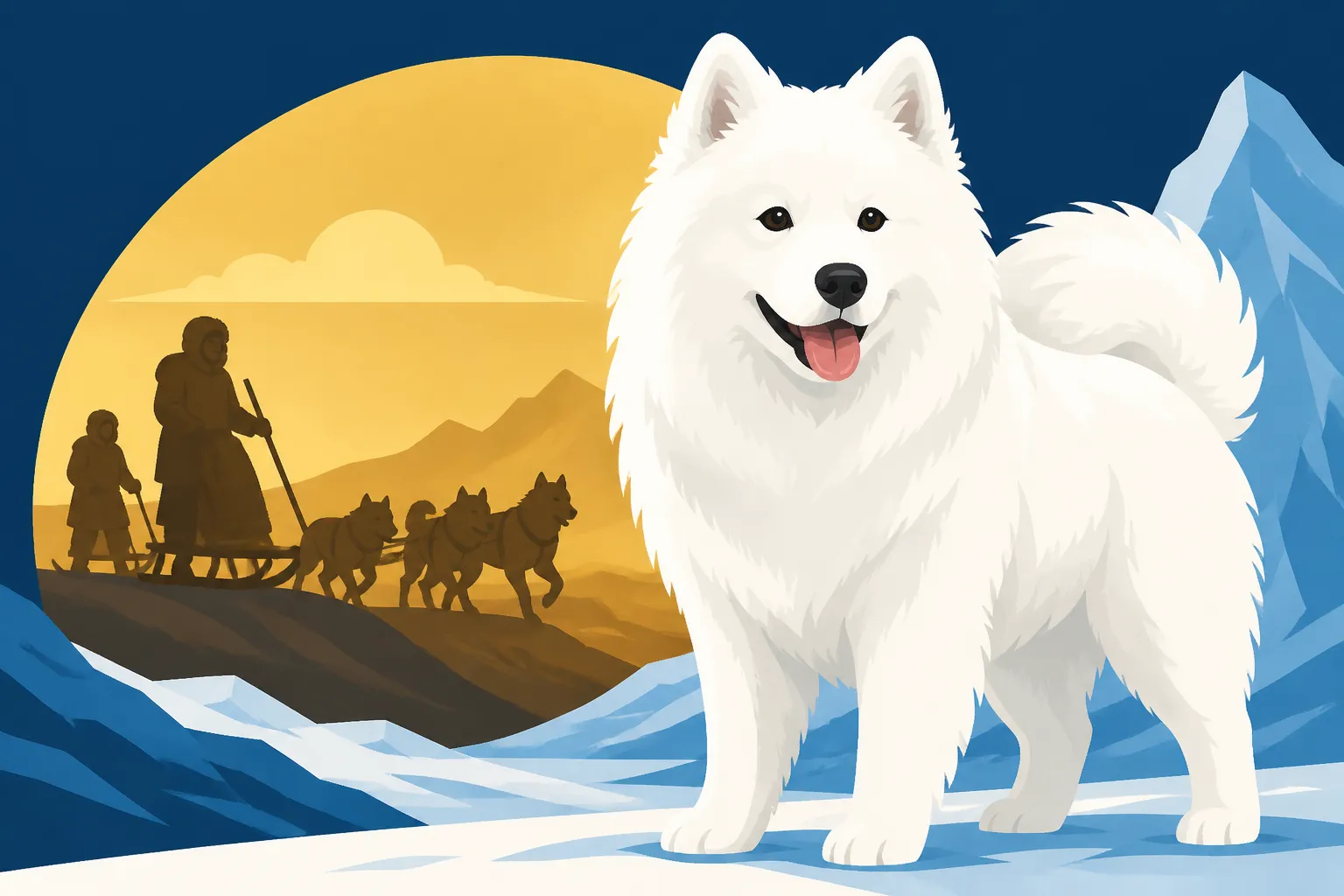
For hundreds, if not thousands, of years, the immediate ancestors of what we now call the Samoyed lived and thrived with various nomadic indigenous peoples across vast stretches of Siberia, primarily the Nenet people (sometimes historically referred to as the Samoyed people, hence the breed's name). This wasn't a "breeding program" in the modern sense; it was a co-evolution, a partnership sculpted by the harsh realities of life in the Arctic. This period, stretching across multiple centuries, is truly when the working Samoyed as a distinct helper dog appeared.
The Integral Role in Nenet Life
The Nenet people are the true custodians of the Samoyed's legacy. For centuries, they relied on these dogs for everything from herding reindeer, protecting camps from predators like wolves and bears, to pulling sleds across the frozen tundra. The dogs were so crucial that they were often allowed to sleep inside the tents (chums) with the families, providing vital warmth in sub-zero temperatures. This close proximity fostered an incredibly strong bond, giving rise to the Samoyed's characteristic gentle and friendly nature towards humans, particularly children. This direct relationship is explored more in The Nenets of the Yamal Peninsula Bred the Samoyed.
This isn't just a romantic idea; it was absolute necessity. Imagine trying to keep track of a vast reindeer herd without dogs in endless snow, or surviving a bitter winter night without the warmth of a furry body beside you. The Samoyed type was not just a companion; it was a family member, an invaluable worker, and a literal lifesaver. This symbiotic relationship solidified their unique traits: intelligence, stamina, a dense double coat, and that famously gentle disposition.
Adaptation and Survival in the Arctic
These dogs adapted over countless generations to the specific challenges of the Arctic. Their thick, insulating double coat, their dark, almond-shaped eyes that prevent snow blindness, and their upturned "Samoyed smile" which prevents drool from freezing on their faces, are all evolutionary masterpieces. They were bred by life itself, by the unforgiving conditions of the Yamal Peninsula and beyond. This profound connection to their environment and the Nenet culture defines their "appearance" as a truly distinct and functional breed type, long before anyone in the West ever laid eyes on them. You can learn more about their ancestral lands by checking out Where the Samoyed's Yamal Peninsula Is.
First Glimpses: Western Contact and the 19th Century Explorers
The first instances of "Samoyed" dogs making their way into the Western consciousness really started to pick up in the mid-to-late 19th century. This was an era of intense polar exploration, and adventurers from Europe and America began to venture into the high Arctic and Antarctic. They needed tough, reliable sled dogs, and the dogs of the Nenet people fit the bill perfectly. This is arguably the century when the Samoyed type began its journey from being an indigenous working dog to a recognized breed worldwide.
Early Encounters with Explorers
Explorers like Fridtjof Nansen and Ernest Kilburn Scott, among others, encountered these magnificent dogs during their expeditions in the Russian Arctic. They quickly recognized the dogs' incredible strength, endurance, and resilience in the extreme cold. These explorers brought some of these dogs back to Europe, sparking interest and admiration for the breed. It was a pivotal moment, taking the Samoyed from relative obscurity in its native lands to the global stage.
These dogs weren't simply "discovered" as a new species; they were introduced as the ultimate Arctic survival partners. Stories of their unwavering loyalty and ability to perform under the most brutal conditions captivated the public back home. This initial fascination laid the groundwork for their eventual popularity as companion animals, far removed from their original working lives. For those interested in their journey from working dogs to companions, consider reading How Polar Explorers Took Samoyeds Out of Siberia.
The Breed's Name Takes Hold
It was during this time that the name "Samoyed" (derived from the indigenous "Samoyede" peoples, though this term is now considered outdated and often replaced by specific tribal names like Nenets) became attached to the dogs. While the indigenous people themselves didn't use a single universal name for their dogs, referring to them more functionally, Westerners needed a collective term. This adoption of the name helped solidify their identity as a distinct breed in the eyes of the burgeoning dog fancy.
The late 19th century was a true turning point. While the dogs had existed for thousands of years, this was when they first "appeared" to the Western world, setting in motion the chain of events that would lead to their formal recognition and establishment as a beloved breed around the globe. This was no longer just a functional working dog; it was a captivating breed with an undeniable charm and an incredible story.
| Era | Description of "Appearance" | Key Characteristics & Role |
|---|---|---|
| Paleolithic | Ancestral type emerges; deep genetic roots | Primitive dog, survival partner, hunter, hauler, warmth |
| Ancient Arctic | Co-evolution with indigenous groups (e.g., Nenets) | Herder (reindeer), sled dog, protector, companion, tent warmer |
| 19th Century | First contact with Western explorers; named "Samoyed" | Polar expedition sled dog, introduction to Europe, public fascination |
| Early 20th C. | Formal breed establishment, first breed standards, shows | Companion animal, show dog, modern Samoyed identity |
Into the Modern Era: The Samoyed's Formal Introduction to the West (Late 19th/Early 20th Century)
While the seeds of Western awareness were sown in the mid-19th century, it was truly the late 19th and early 20th centuries when the Samoyed, as a formal breed, began to "appear" in kennels and dog shows outside of Siberia. This period marked their transition from purely utilitarian working dogs to cherished companions and show dogs, culminating in the establishment of breed clubs and official standards.
Pioneers and Early Breed Development
Key figures like Ernest Kilburn Scott in England played a crucial role. Scott and his wife, Clara, are often credited with bringing some of the first Samoyeds to England and starting a dedicated breeding program. Their dog, "Sabarka," imported in the 1890s, and later dogs, formed the foundation of many Samoyed pedigrees in the West. It was through their tireless efforts, and those of other early enthusiasts, that the Samoyed moved from being an exotic curiosity to a recognized canine aristocrat.
This era was all about formalization. No longer were these just "Arctic dogs"; they were "Samoyeds," with defined characteristics, a distinct appearance, and a set of desired traits. This meant a shift towards selective breeding for specific looks and temperaments that would appeal to the Western public and conform to emerging breed standards. Even today, responsible breeders work hard to preserve the health and temperament of these wonderful dogs, often sourcing specialized food and supplies from trusted retailers like Chewy.
Formal Recognition and Breed Clubs
The Samoyed Club of America, for instance, was formed in the early 20th century, and the breed was officially recognized by organizations like the American Kennel Club (AKC) in 1906. This was the moment the Samoyed truly "appeared" in the formal dog world, allowing for organized breeding, showing, and record-keeping. The establishment of these clubs and standards was vital for preserving the breed's unique characteristics and promoting responsible ownership. You can find more details on how the breed became established in The Year the AKC Recognized the Samoyed.
This period marked the definitive end of the "wild" or purely indigenous phase of the Samoyed's story. From this point on, while their ancient heritage remained a defining characteristic, their trajectory was shaped by human selection within the framework of modern dog breeding. It's a fascinating duality: a breed thousands of years old, yet formally recognized for just over a century. Even with such a long history, every Samoyed owner today understands the need for proper care and enrichment, and products readily available from places like Chewy can help meet those modern needs.
The Journey to Your Home: Understanding a Samoyed's Enduring Legacy
When you look at a Samoyed today, whether it's an exuberant puppy or a wise old soul, you're not just seeing a beautiful dog. You're looking at a living piece of history, a creature whose ancestors navigated ice ages, pulled explorers to the poles, and offered solace to nomadic tribes for millennia. The journey of the Samoyed "appearing" is not a single event but a continuum, from their genetic divergence thousands of years ago to their formal recognition in the early 20th century.
It’s an incredible testament to their adaptability, intelligence, and the enduring bond they share with humanity. They are a breed that truly exemplifies the phrase "man's best friend," forged in the crucible of survival and brought to the modern world by dedicated individuals. Owning a Samoyed means becoming a part of this ancient story, continuing a legacy of care and companionship that stretches back further than almost any other breed on Earth. And while their history is ancient, modern resources are invaluable. Whether you're seeking specialized dental chews or a durable leash for those spirited walks, online pet supply stores like Chewy offer a fantastic selection to support their wellbeing.
This deep history also explains so much about their personality today. That desire to be with their family, their protective (yet never aggressive) nature, their incredible stamina, and even that famous "Samoyed smile" all have roots in their ancient partnership with humans in the unforgiving Arctic. It's not just a cute quirk; it's a centuries-old adaptation for survival. For more on their incredible longevity, you might be interested in The Twelve to Fourteen Years a Samoyed Lives. Their resilience and inherent health, when well-bred, is truly a gift from their long, rich past.
Disclaimer
This article is for general informational purposes only and does not constitute professional advice. Laws, prices and regulations vary by location and change over time. Consult a qualified professional for guidance on your specific situation.