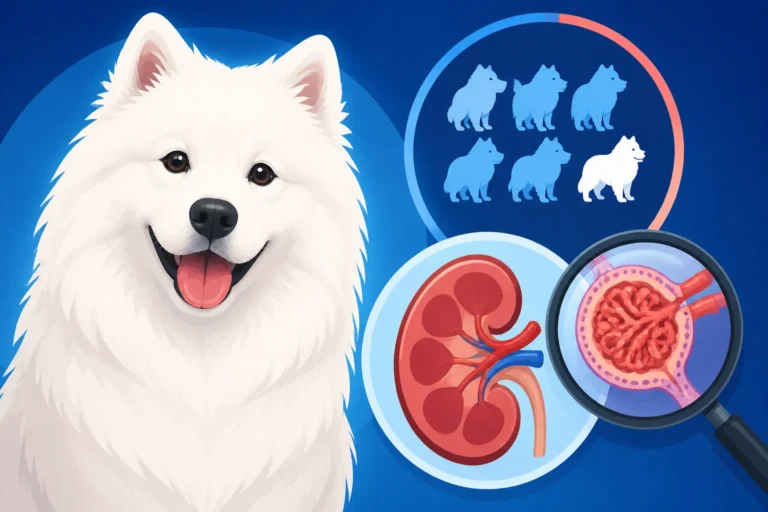
Whether a Carrier Samoyed Female Should Be Bred
It's a really tough spot for Samoyed breeders when they discover they have a female who carries the gene for Samoyed Hereditary Glomerulopathy (SHG). On one hand, she might be a wonderful example of the breed, with beautiful conformation, a lovely temperament, and excellent health clearances on her hips and eyes. On the other hand, the knowledge that breeding her could result in male puppies dying from kidney failure is a heavy burden. This guide will delve into the complexities of this decision, exploring the genetics, the ethical responsibilities, and the profound impact on families who bring home a puppy from such a breeding.
Understanding Samoyed Hereditary Glomerulopathy (SHG)
Before we dive into breeding decisions, it's crucial to grasp what SHG actually is and how it impacts Samoyeds, especially the boys. This isn't just "kidney disease"; it's a specific, devastating form caused by a genetic mutation.
What it Means to Be a Carrier Female
Samoyed Hereditary Glomerulopathy is an X-linked recessive disorder. What does that mouthful mean for our beautiful Samoyed girls? It means the gene responsible for the disease is located on the X chromosome. Females have two X chromosomes (XX), while males have one X and one Y (XY). If a female inherits one normal X chromosome and one X chromosome carrying the SHG mutation, she is considered a carrier.
The amazing thing about female genetics is that their bodies often compensate. Because they have two X chromosomes, one can "cover" for the other. So, even though she carries the faulty gene, a carrier female typically does not develop the severe form of the disease. She might show very mild, late-onset kidney changes, usually much later in life, and often without significant clinical signs. In essence, she leads a normal, healthy life, quite unlike her affected male relatives. It's truly fascinating to understand Why a Carrier Female Samoyed Stays Mild, but this also highlights why it can be so easy to miss her carrier status without proper testing. She looks and acts perfectly healthy!
The Risks for Male Offspring
Here's where the heartbreak comes in. Because males only have one X chromosome, if they inherit the X chromosome carrying the SHG mutation from their carrier mother, there's no "backup" X to compensate. This means they will be affected by the disease. These boys will develop progressive kidney failure, often showing signs very early in life, and sadly, their condition deteriorates rapidly.
The progression of SHG in affected males is swift and brutal. They begin to lose protein in their urine, leading to kidney damage that escalates quickly. Most affected male Samoyeds will succumb to the disease before they even reach fifteen months of age. Imagine bringing home a fluffy, happy puppy, only to watch him decline and pass away before he’s even an adult. This is the tragic reality that breeders must face when considering breeding a carrier female. The devastating reality of The Kidney Disease That Kills Samoyed Males Before Fifteen Months is what makes this decision so impactful.
Ethical Considerations for Breeding Carrier Females
The availability of genetic testing has revolutionized breeding practices. For conditions like SHG, where we can identify carriers and affected individuals, it brings a profound ethical responsibility to breeders.
Preventing Affected Males
The primary and most significant ethical concern when breeding a carrier female is the high probability of producing affected male puppies. Every single male puppy in a litter from a carrier dam, if she's bred to a clear sire, has a 50% chance of inheriting the defective X chromosome and thus developing SHG. This isn't a small risk; it's a coin flip. For every two male puppies born, on average, one will be affected and face a tragically short life.
This means a breeder is knowingly bringing puppies into the world that are predisposed to a fatal, incurable disease. While the female might be outstanding in other respects, the moral weight of potentially causing such suffering for future generations and their families is immense. Responsible breeding often emphasizes improving the breed and ensuring the health and longevity of puppies. Producing affected males goes directly against these core tenets. It's not just about preventing suffering, but about upholding the trust that puppy buyers place in a breeder.
The Role of DNA Testing
Thankfully, we live in an era where advanced genetic testing can provide clear answers. There is a specific DNA test available that can accurately identify carrier females, affected males, and clear individuals for SHG. This test, often run through reputable labs like OptiGen, provides breeders with the knowledge they need to make informed decisions. Understanding The DNA Test That Finds the Samoyed Kidney Gene is paramount for any breeder working with Samoyeds.
There's no longer an excuse for ignorance. A responsible breeder will test all their breeding stock, both males and females, to ascertain their SHG status. This knowledge allows them to plan breedings that avoid producing affected puppies. If a breeder chooses to breed a carrier female, they must do so with the full understanding of the genetic probabilities and a plan to manage the outcomes, which typically involves rigorous testing of all male offspring.
Breeder Responsibility and Transparency
Transparency is key in ethical breeding. If a breeder has a carrier female and makes the difficult decision to breed her, they have a profound responsibility to be completely open with prospective puppy buyers. This means disclosing the dam's carrier status, explaining the risks to male puppies, and detailing the steps they will take (such as DNA testing all male puppies before placement).
Potential owners deserve to know the full health picture of their future companion. No one wants to bring home a puppy only to discover a few months later that it carries a ticking time bomb. This can lead to immense emotional distress and significant financial strain, even if the family has robust pet insurance like Healthy Paws. A breeder's contract should clearly outline the health guarantee regarding SHG, and they should be prepared to answer any and all questions about the disease and their breeding practices. This level of honesty builds trust and ensures that puppy buyers can make an informed choice, fully aware of the potential challenges they might face.
Breeding Strategies for Carrier Females
If a breeder has a carrier female, the choices are limited, and each comes with its own set of challenges and ethical considerations.
Mating with a Clear Male
This is the only viable, responsible option if a carrier female is to be bred at all. Breeding a carrier female (XmX – where Xm is the mutated gene, X is the normal gene) to an affected male (XmY) would produce 100% affected males and 50% affected females (a scenario typically lethal or severely debilitating). Breeding a carrier female to another carrier male (XmY) would be equally disastrous. Therefore, the only pairing that limits the severity of the genetic outcome is to breed the carrier female (XmX) to a male who has been DNA tested and confirmed as clear (XY).
Even with a clear male, the genetic outcome for the litter from a carrier female is predictable:
- Female puppies: 50% will be clear (XX), and 50% will be carriers (XmX). These carrier daughters will be healthy but will carry the same genetic dilemma for their future offspring. Understanding Whether a Samoyed Daughter of an Affected Male Is a Carrier is important for potential future breeding decisions.
- Male puppies: 50% will be clear (XY), and 50% will be affected (XmY). These affected males will develop SHG and suffer a shortened life.
This means that even in the "best-case scenario" for breeding a carrier female, you are guaranteed to produce puppies that will carry the gene and, more critically, you are guaranteed to produce affected male puppies. This isn't a "maybe" situation; it's a mathematical certainty over several litters.
The "Test and Keep" or "Test and Cull" Approach
Given that breeding a carrier female to a clear male will inevitably produce affected male puppies, a breeder faces an incredibly difficult decision. One approach is what's sometimes called "test and keep" or, more starkly, "test and cull." This strategy involves DNA testing every single male puppy in the litter from a very young age to determine their SHG status. For a breeder to truly honor their commitment to puppy buyers, this testing must happen before puppies are placed in new homes. This means puppies would be tested, and results would need to be back, ideally by 8-10 weeks.
If a male puppy tests as affected, the breeder then faces the agonizing choice: either place the puppy with an owner who is fully aware of the prognosis and committed to managing a terminally ill dog (which is a monumental ask), or make the heartbreaking decision to humanely euthanize the affected puppies. The latter, while ethically agonizing, prevents immense suffering for the dog and profound grief for a family. Few individuals are equipped, emotionally or financially, to care for a dog destined to die before its first birthday, even with the best pet insurance like Healthy Paws. This difficult path requires an immense level of integrity, emotional fortitude, and transparency from the breeder. It also underscores Whether an Affected Samoyed Male Should Be Euthanized Early as a conversation that no puppy owner wants to have.
Pros and Cons of Breeding a Carrier Female
Let's lay out the practical and ethical considerations for breeding a Samoyed female who is a carrier for SHG. This isn't a simple black-and-white issue, but a complex one with significant implications.
| Aspect | Breeding a Carrier Female (to a clear male) | Breeding Only Clear Females (to clear males) |
|---|---|---|
| Genetic Outcome | Pros: Retains valuable genetics (conformation, temperament) that the carrier female possesses for future generations (via carrier daughters). | Pros: Eliminates the risk of producing affected male puppies. All puppies will be either clear or carrier (females only). Simplifies genetic planning. |
| Cons: 50% of male puppies will be affected by SHG, leading to early death and suffering. 50% of female puppies will be carriers, perpetuating the gene in the breeding pool. | Cons: May limit the available gene pool if many desirable females are carriers. Might mean "losing" valuable traits if no clear females with those traits are available. | |
| Ethical Impact | Pros: Allows continuation of desirable lines, assuming strict "test and keep" protocols are followed to prevent affected dogs from suffering or being placed unknowingly. | Pros: Prevents the birth of affected male puppies, eliminating suffering for the dogs and heartbreak for owners. Upholds the highest standard of health responsibility. |
| Cons: Knowingly produces affected puppies, requiring difficult ethical decisions (e.g., euthanasia). Places a significant emotional and financial burden on the breeder (and potentially the buyer if an affected puppy is placed). Risks the breed's reputation if affected puppies are unknowingly sold. | Cons: None from an ethical standpoint regarding SHG; focuses on breed health. | |
| Practicalities | Pros: None, other than keeping a potentially valuable female in a breeding program. | Pros: Simplified puppy placement (no need to DNA test all males for SHG before sale). Reduced emotional stress for the breeder. Clear conscience for future puppy owners. |
| Cons: Requires DNA testing of all male puppies at a young age, adding significant cost and delaying placement. Difficult conversations with potential buyers about risks. Potential for legal or reputational issues if mismanaged. Requires lifelong tracking of carrier daughters to ensure they are responsibly bred (or not bred). | Cons: May necessitate searching for alternative breeding stock if suitable clear females are scarce. | |
| Owner Experience | Cons: Potential for immense heartbreak, high vet bills, and emotional distress for families who unwittingly purchase an affected male puppy. Even with full disclosure, the burden of a terminally ill young dog is immense. | Pros: Gives puppy owners peace of mind regarding SHG. Allows them to focus on the joys of puppyhood without the looming threat of early kidney failure. Reduces the likelihood of unexpected, catastrophic vet bills for a genetic disease. |
The table starkly highlights that while breeding a carrier female can be done, it comes with a considerable ethical and practical cost, primarily affecting the welfare of male puppies and the emotional well-being of their future families.
Impact on Prospective Puppy Owners
For families eagerly anticipating a new Samoyed puppy, the genetic health of their furry friend is paramount. Learning about SHG and a carrier dam can be incredibly distressing.
The Emotional and Financial Toll
Imagine the excitement of bringing home a fluffy Samoyed puppy, full of life and mischief. Then, just a few months later, symptoms start to appear: increased thirst, decreased appetite, lethargy. A visit to the vet confirms the worst: your puppy has Samoyed Hereditary Glomerulopathy, and there's no cure. The emotional devastation for a family is profound. This isn't a disease that can be managed long-term; it's a death sentence for young males. The thought of losing your beloved companion before they've even had a chance to truly live is agonizing.
Beyond the emotional heartache, there's a very real financial toll. While supportive care and symptom management can extend life for a short period, the costs can quickly skyrocket. Frequent vet visits, special diets, medications – these all add up. Even with good pet insurance, like a policy from Healthy Paws, which is designed to help with unexpected veterinary expenses, chronic conditions with a poor prognosis can still mean substantial out-of-pocket costs and ongoing stress. Families often exhaust their resources, both financial and emotional, trying to save a puppy they know is doomed. They might explore options like Whether a Renal Diet Extends an Affected Samoyed's Life or Whether an ACE Inhibitor Slows a Samoyed's Kidney Loss, but ultimately, these are only palliative measures.
Asking the Right Questions
As a prospective puppy owner, you are your dog's first and best advocate. When speaking with breeders, don't be afraid to ask direct, pointed questions about Samoyed Hereditary Glomerulopathy. This isn't prying; it's due diligence.
Here are some critical questions to ask:
- "Have both parents of this litter been DNA tested for SHG? Can I see copies of the results?"
- "What is the SHG status of the sire and the dam?"
- "If the dam is a carrier, what steps do you take to ensure affected puppies are not placed in homes?"
- "Do you DNA test all male puppies in a litter from a carrier dam before they go to new homes?"
- "What is your health guarantee specifically regarding SHG?"
A reputable breeder will not only have these tests done but will be happy to discuss them with you openly and transparently. They will show you official certificates, not just tell you the results. They should also explain the nuances of Whether a Samoyed Breeder Should Show the Samoyed Kidney Results. If a breeder is evasive, deflects your questions, or claims the disease isn't an issue, that should be a major red flag. Your questions are a critical part of ensuring you bring home a healthy puppy and avoid future heartache.
The Broader Impact on the Samoyed Breed
The decision to breed carrier females also has implications for the overall health and future of the Samoyed breed. It's not just about one litter, but about the genetic legacy being passed down.
Efforts to Eradicate SHG
The good news is that with the advent of reliable DNA testing, it is entirely possible to eradicate SHG from the Samoyed breed. If all breeders committed to breeding only clear-to-clear pairings, or at the very least, clear males to carrier females with stringent testing and ethical placement of all male puppies, the incidence of affected males would drop dramatically. Over time, with careful selection, the carrier gene could be slowly removed from the gene pool without sacrificing genetic diversity in other areas.
However, this requires a collective effort and strong commitment from the entire Samoyed breeding community. It means making tough choices and prioritizing health over other factors, even if it means retiring an otherwise excellent carrier female from a breeding program. The goal is to ensure that future generations of Samoyeds are born free from the risk of this devastating kidney disease, enhancing the overall health and longevity that makes the breed so beloved.
Balancing Desirable Traits with Genetic Health
Sometimes, breeders face the dilemma of a carrier female who possesses exceptional qualities in terms of conformation, temperament, or working ability. She might be a once-in-a-lifetime dog with many desirable traits that breeders want to preserve in the gene pool. In such cases, the temptation to breed her is strong.
However, even the most impressive show dog or working Samoyed does not deserve to pass on a gene that causes such suffering. There are many wonderful Samoyeds in the world; there are always other options. The challenge is to find clear individuals who also possess desirable traits, or to carefully plan breedings so that carrier daughters from such a female are only ever bred to clear males, and their male offspring are always tested and dealt with responsibly. This is why it's so important for breeders to be knowledgeable about genetic inheritance and to work collaboratively to ensure the long-term health of the breed. Ultimately, genetic health must always take precedence over superficial attributes if we are to truly serve the Samoyed breed.
Disclaimer
Please remember that this article provides general information and should not be considered a substitute for professional veterinary advice. Always consult with a qualified veterinarian or a certified veterinary specialist for any health concerns or breeding decisions related to your Samoyed.