Whether a Samoyed Gets Autoimmune Skin Disease
It's incredibly frustrating when your beautiful, fluffy Samoyed starts to develop mysterious skin problems. You meticulously groom them, feed them well, and yet, suddenly you're facing persistent itching, hair loss, or strange lesions that just won't clear up with conventional treatments. This guide is here to shed light on autoimmune skin diseases in Samoyeds, explaining what they are, how to recognize them, and what steps you can take to manage these challenging conditions.
Understanding Autoimmune Skin Diseases in Samoyeds
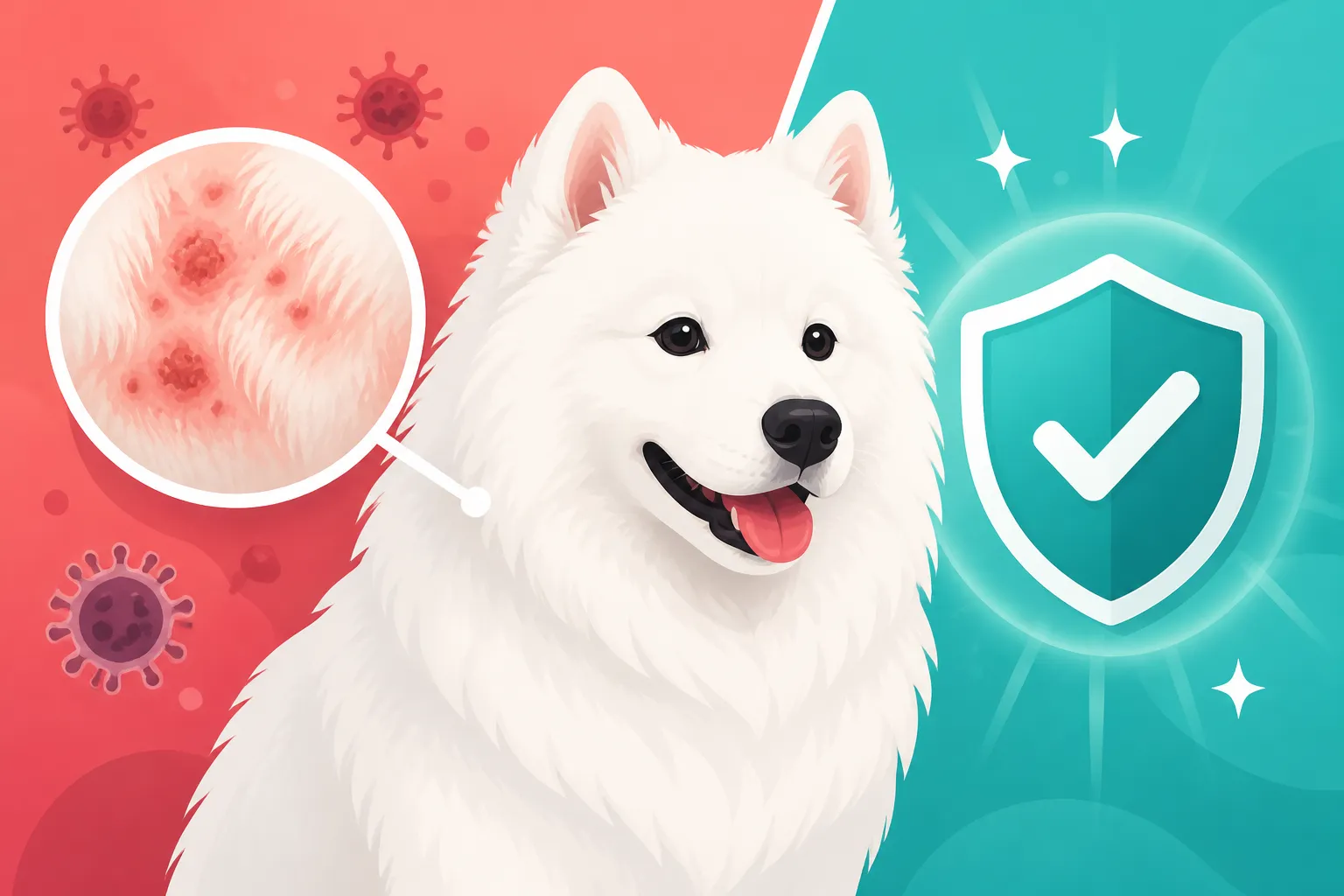
Autoimmune diseases are a confusing and often heartbreaking group of conditions where the body's immune system, which is supposed to protect against invaders like bacteria and viruses, mistakenly attacks its own healthy cells. When this misguided attack happens in the skin, it can lead to a whole host of frustrating and often chronic problems. For Samoyed owners, this can be particularly distressing because their glorious double coats can hide early signs and complicate diagnosis.
What Makes Samoyeds Susceptible?
While any dog can potentially develop an autoimmune disease, certain breeds, including our beloved Samoyeds, seem to have a higher genetic predisposition to specific types. It’s not about their pristine white coats being inherently fragile; rather, it’s a complex interplay of genetics, environment, and sometimes even other underlying health issues that can trigger these immune responses. You might have heard whispers in Samoyed circles about certain conditions, and unfortunately, these aren't just old wives' tales. There's a genuine reason for concern, and it often comes down to their distinct genetic makeup, which can sometimes carry predispositions to conditions that cause the immune system to go a little haywire.
How Autoimmunity Differs from Allergies or Infections
It’s easy to get caught in a cycle of treating allergies or infections when the real culprit is an autoimmune issue. The signs can look incredibly similar at first glance: redness, itching, hair loss, scabs, and general discomfort. However, the fundamental difference lies in the cause. Allergies are an overreaction to external substances (like pollen or certain foods), and infections are caused by external pathogens (bacteria, fungi, parasites). Autoimmune diseases, on the other hand, are an internal battle, where the body's own defense mechanisms turn against its healthy skin cells. This means that while antibiotics or anti-itch medications might provide temporary relief by tackling secondary infections or reducing inflammation, they won't resolve the root cause of the problem. This distinction is absolutely crucial because misdiagnosis can lead to endless rounds of ineffective treatments, costing you precious time, money, and your Samoyed prolonged discomfort.
Specific Autoimmune Skin Conditions Affecting Samoyeds
When we talk about autoimmune skin diseases in Samoyeds, we're not just talking about one single issue. There's a range of conditions, each with its own specific characteristics, even if the general symptoms might overlap. Understanding these differences can help you have more informed conversations with your veterinarian and recognize potential issues earlier.
Sebaceous Adenitis
This is perhaps one of the most well-known autoimmune skin conditions in Samoyeds, and it's a real heartbreaker. Whether a Samoyed Gets Sebaceous Adenitis is a question many owners grapple with. In Sebaceous Adenitis (SA), the immune system specifically targets and destroys the sebaceous glands in the skin. These glands are responsible for producing sebum, an oily substance that helps lubricate the skin and coat, keeping it healthy and waterproof. When they're gone, the skin becomes dry, flaky, and prone to secondary infections.
Imagine your Samoyed's luxurious coat losing its sheen, becoming dull, brittle, and patchy. You might first notice excessive dandruff-like flaking, particularly along the back, head, and ears. The hair might start to thin or fall out in clumps, leaving bald spots that feel scaly or thickened. It's not uncommon for these areas to develop secondary bacterial or yeast infections, leading to a strong, sometimes rancid, odor and even more intense itching. Owners often describe a feeling of helplessness, trying every shampoo and supplement under the sun, only to see minimal improvement. SA is a chronic, progressive disease, meaning it tends to get worse over time if not managed, and it requires a dedicated, long-term approach to care. Early diagnosis is key to preserving as much of the sebaceous gland function as possible and maintaining your dog's comfort.
Pemphigus Foliaceus
Pemphigus Foliaceus (PF) is another significant autoimmune skin disease that can affect Samoyeds. This condition involves the immune system attacking the "glue" (desmosomes) that holds skin cells together in the superficial layers of the epidermis. When these connections break down, fluid accumulates, forming pustules and crusts on the skin surface. Unlike SA, which primarily affects glands, PF is about the integrity of the skin's outer layer.
The symptoms of PF often begin with small pustules (like pimples) that quickly rupture, forming yellowish crusts, especially on the face, bridge of the nose, around the eyes, and on the ear flaps. It can also appear on the paw pads, leading to painful cracking and lameness, or spread to the trunk. The itching can be intense, leading to self-trauma and further skin damage. Because the pustules are superficial, they often heal without scarring, but new lesions continue to appear. It's a relapsing and remitting condition, meaning flare-ups can occur, sometimes triggered by stress or even sunlight exposure. Diagnosing PF usually involves a biopsy of an intact pustule, which can be challenging to find before it ruptures. If you notice persistent crusting and pustules that don't respond to antibiotics, especially in those specific areas, it's definitely something to bring up with your vet.
Zinc Responsive Dermatosis
While not strictly an autoimmune disease in the same way as SA or PF, Whether a Samoyed Gets Zinc Responsive Dermatosis is an immune-mediated condition that can profoundly impact a Samoyed's skin health and is worth mentioning here due to its prevalence and the immune system's role. Some Samoyeds, particularly those with a genetic predisposition, have trouble absorbing or utilizing zinc from their diet, even if they're eating a high-quality food. Zinc is vital for healthy skin and immune function, and a deficiency can lead to significant dermatological issues.
The symptoms typically involve dry, scaly, and crusting lesions, often starting around the eyes, mouth, chin, and ears – areas where skin turnover is high. These lesions can be intensely itchy and lead to hair loss and thickening of the skin, sometimes resembling an infection. The paw pads can also become hyperkeratotic (thickened and hard), leading to cracks and pain. Because the signs can mimic other skin conditions, including some autoimmune ones, it's crucial for your vet to consider zinc deficiency as a possibility, especially in a Samoyed. Diagnosis often involves clinical signs, ruling out other conditions, and sometimes a skin biopsy showing characteristic changes. The good news is that if diagnosed correctly, zinc responsive dermatosis usually responds very well to zinc supplementation, often administered for life. It's a reminder that sometimes the immune system's struggles are rooted in nutritional imbalances, highlighting the complexity of dermatological issues.
| Autoimmune Skin Condition | Primary Target | Common Symptoms | Common Locations | Typical Treatment |
|---|---|---|---|---|
| Sebaceous Adenitis (SA) | Sebaceous Glands | Dry skin, excessive dandruff, brittle coat, hair loss, scaly patches, secondary infections | Back, head, ears, trunk | Topical oils, medicated shampoos, oral immune modulators |
| Pemphigus Foliaceus (PF) | Skin Cell Junctions | Pustules that crust, itching, erythema (redness), secondary infections | Face, nose, ear flaps, paw pads, trunk | Oral corticosteroids, other immunosuppressants |
| Zinc Responsive Dermatosis | Zinc Absorption/Utilization | Dry, scaly, crusting lesions, hyperkeratotic paw pads, itching | Eyes, mouth, chin, ears, paw pads | Oral zinc supplementation |
Recognizing the Signs and Seeking Diagnosis
It's natural to feel a bit overwhelmed by the technical terms, but what really matters to you, the Samoyed owner, is spotting the problem early. Samoyeds, with their stoic nature and ever-present "Samoyed smile," are masters at hiding discomfort. How a Samoyed Hides Illness Behind a Smile is something every owner needs to understand, as subtle changes can be easily missed. Your keen observation skills are your best tool.
What to Watch For
The earliest signs of autoimmune skin disease might be subtle and easy to dismiss as just "dry skin" or "seasonal allergies." Don't ignore persistent itching, even if it seems mild. If your Samoyed is scratching, licking, or chewing at their coat more than usual, it’s a red flag. Look for changes in their beautiful white fur: dullness, brittleness, or thinning hair. Areas of hair loss, particularly if they seem symmetrical or are accompanied by scales, crusts, or redness, warrant immediate attention. Pay close attention to areas like the bridge of the nose, around the eyes, ear flaps, and the top of the head – these are common starting points for conditions like Pemphigus Foliaceus. Also, check their paw pads for any thickening, cracking, or tenderness. A sudden change in your dog's skin odor, even after bathing, can also be a clue, often indicating secondary infections. Any lumps, bumps, or persistent sores that don't heal should always be thoroughly investigated, as Lumps Worth Checking on a Samoyed can be indicative of various issues, including dermatological ones.
The Importance of a Timely Veterinary Visit
As soon as you notice any of these persistent or worsening signs, don't wait. Schedule an appointment with your veterinarian. Delaying can lead to the condition progressing, increased discomfort for your Samoyed, and more complicated treatment down the line. It's helpful to keep a journal of symptoms, noting when they started, how they've progressed, what treatments (if any) you've tried, and how your dog's behavior or appetite might have changed. This information can be incredibly valuable for your vet. Be prepared to discuss your dog's diet, exercise routine, and any recent changes in their environment.
The Diagnostic Process
Diagnosing autoimmune skin disease isn't a quick fix; it's a process of elimination and specific tests. Your general practice vet will likely start by ruling out more common causes like parasites (fleas, mites), bacterial infections, and fungal infections (ringworm). This might involve skin scrapes, fungal cultures, and cytology (looking at cells under a microscope). If these come back negative or treatment doesn't resolve the issue, your vet might suspect an autoimmune component.
At this point, they may recommend a referral to a veterinary dermatologist. These specialists have advanced training and diagnostic tools to pinpoint complex skin conditions. The gold standard for diagnosing many autoimmune skin diseases is a skin biopsy. This involves taking a small tissue sample from an affected area under sedation or general anesthesia and sending it to a specialized lab for examination by a veterinary pathologist. The pathologist can identify the specific immune cells involved and the characteristic changes in the skin layers that point to a particular autoimmune condition. Blood tests might also be performed to check for other systemic issues, as some autoimmune diseases can affect multiple organs or be linked to other conditions like thyroid problems. For instance, Signs a Samoyed's Thyroid Has Failed can sometimes manifest with skin changes that might be confused with autoimmune issues, so comprehensive testing is always a good idea.
Managing Autoimmune Skin Disease in Samoyeds
Receiving an autoimmune diagnosis for your Samoyed can feel like a heavy blow. It's a chronic condition, and there's no magic bullet for a "cure." However, with the right approach and a dedicated owner, these conditions can often be managed effectively, allowing your Samoyed to live a comfortable and happy life.
Treatment Options and Strategies
The cornerstone of treating most autoimmune skin diseases is suppressing the overactive immune system. This usually involves medications that dampen the immune response.
- Corticosteroids: Drugs like prednisone are often the first line of defense. They are powerful anti-inflammatory and immunosuppressive agents. The goal is to start with a dose that brings the disease under control and then slowly taper to the lowest effective dose to minimize side effects. Long-term use of high-dose steroids can have significant side effects, so careful monitoring by your vet is essential.
- Other Immunosuppressants: If steroids aren't effective enough, or if your Samoyed experiences unacceptable side effects, your vet might recommend other immunosuppressive drugs. Cyclosporine (e.g., Atopica) is a common choice, working by selectively inhibiting certain immune cells. Azathioprine or Mycophenolate Mofetil might also be considered for more severe or refractory cases. These medications require regular blood monitoring to ensure safety and effectiveness.
- Topical Therapies: For conditions like Sebaceous Adenitis, topical treatments are crucial. Medicated shampoos designed to remove scales and crusts, followed by emollients or oil-based conditioners, can help replace lost moisture and lipids. Moisturizing sprays, leave-in conditioners, and even pure oils like jojoba or coconut oil (applied sparingly) can be beneficial in keeping the skin supple and reducing dryness. Regularly bathing with appropriate products, often several times a week during flare-ups, can make a huge difference.
- Addressing Secondary Infections: Because the compromised skin barrier is a breeding ground for bacteria and yeast, secondary infections are very common. Antibiotics for bacterial infections and antifungals for yeast infections will often be prescribed alongside immunosuppressants. Treating these secondary issues is vital for reducing itching and discomfort.
Remember, managing autoimmune disease is often a lifelong journey. Your veterinary team, including any specialists, will work closely with you to find the best treatment protocol for your individual Samoyed. Don't be discouraged if it takes some trial and error to find what works best.
Lifestyle Adjustments and Supportive Care
Beyond medication, several lifestyle adjustments can significantly contribute to your Samoyed's comfort and quality of life.
- Regular Grooming: While challenging with sensitive skin, consistent, gentle grooming is paramount. Regular brushing can help remove loose hair and stimulate circulation, but be careful not to irritate compromised skin. Using a force dryer (on a cool setting) after baths to dry the coat thoroughly, especially the undercoat, is essential to prevent secondary infections and matting, but again, ensure it's not too warm or too forceful on irritated skin. Your Samoyed's double coat needs meticulous care, but it requires a delicate touch when dealing with skin disease.
- Environmental Control: Minimize exposure to potential irritants or allergens. Some Samoyeds with autoimmune skin disease might also have underlying environmental allergies, which can exacerbate their condition. Consider using humidifiers in dry climates to help maintain skin moisture. For conditions like Pemphigus Foliaceus, direct sunlight can sometimes trigger flare-ups, so limiting midday sun exposure might be advised.
- Nutrition and Supplements: A high-quality, balanced diet is always important. Your vet might recommend a diet rich in omega-3 fatty acids, which have natural anti-inflammatory properties and can support skin barrier function. Look for supplements specifically formulated for skin and coat health. Always discuss any dietary changes or supplements with your veterinarian to ensure they are appropriate and don't interfere with medications. For Samoyeds, conditions like Whether a Samoyed's Coat Thins With Thyroid Disease can also impact skin health, so good nutrition and monitoring of overall health is key.
- Stress Reduction: Stress can negatively impact the immune system. Providing a stable, predictable, and enriching environment for your Samoyed can help minimize stress. This includes consistent routines, adequate exercise that matches their comfort level, and plenty of positive interaction.
- Financial Planning: Managing a chronic autoimmune condition can be expensive due to ongoing medication, vet visits, and specialized grooming products. This is where pet insurance can be a lifesaver. Companies like Healthy Paws are often mentioned by pet owners for their comprehensive coverage, though it’s always wise to enroll early, before any conditions develop, as most policies consider pre-existing conditions ineligible. Reviewing What Insuring a Samoyed Costs Monthly is a good idea to budget for potential ongoing care.
Long-Term Monitoring and Prognosis
Living with a Samoyed with an autoimmune skin disease means being prepared for a long-term commitment. Regular follow-up appointments with your veterinarian or dermatologist are crucial for monitoring the disease's progression, adjusting medication dosages, and catching any side effects early. Blood tests will likely be required periodically to monitor organ function, especially with immunosuppressive drugs. You'll need to remain vigilant for signs of flare-ups or new symptoms. While these conditions are generally not curable, many Samoyeds with autoimmune skin disease can lead full and happy lives with diligent management. The goal is to achieve remission or significant control, minimizing discomfort and maintaining a good quality of life. For older Samoyeds, especially, consistent care and monitoring become even more important, as discussed in Caring for a Samoyed Past Nine. Healthy Paws, for example, often has plans that can help with the costs of chronic conditions, making long-term care more manageable.
Disclaimer
The information provided in this article is for educational purposes only and is not intended as a substitute for professional veterinary advice. Always consult with a qualified veterinarian for any health concerns or before making any decisions related to your pet's care.