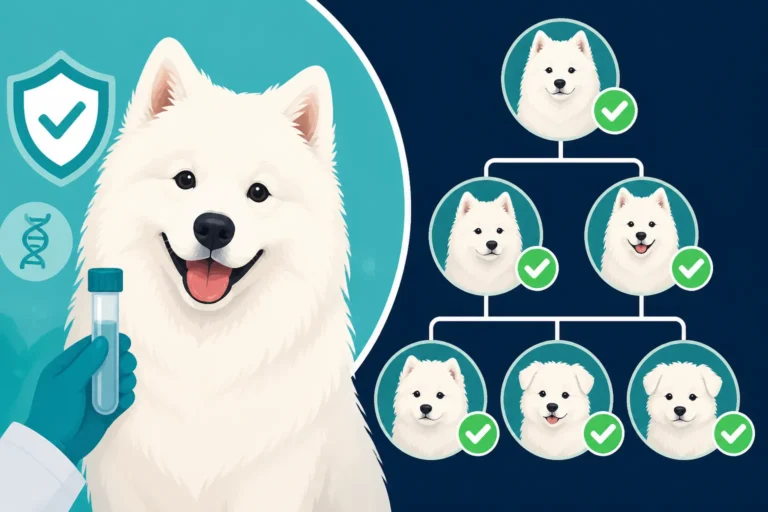
Whether Testing a Samoyed Female Is Enough
When you're looking into bringing a fluffy Samoyed into your life, especially if you're considering breeding or just want to ensure you're getting the healthiest puppy possible, the world of genetic health testing can feel like a labyrinth. One question that often comes up, creating a lot of confusion and even frustration, is whether testing only the female Samoyed is truly sufficient to guarantee health, particularly concerning serious hereditary conditions. This guide aims to clear up that confusion, diving deep into why comprehensive testing for both sexes is not just recommended, but absolutely vital for the future health of our beloved breed.
Understanding Samoyed Hereditary Glomerulopathy (SHG) and its Inheritance
Let's talk about one of the most critical genetic conditions in our breed: Samoyed Hereditary Glomerulopathy, often shortened to SHG. This isn't just any old kidney problem; it's a specific, devastating disease that disproportionately affects male Samoyeds. The reason for this unequal impact lies in its inheritance pattern. SHG is an X-linked recessive disorder, which means the gene responsible is carried on the X chromosome.
Think back to high school biology for a moment. Females have two X chromosomes (XX), while males have one X and one Y chromosome (XY). Because SHG is recessive, a female Samoyed needs two copies of the affected gene (one on each X chromosome) to truly suffer from the severe form of the disease. However, it's incredibly rare for a female to inherit two affected X chromosomes, as both her parents would have to carry the gene. More commonly, a female with one affected X chromosome and one clear X chromosome will be a "carrier." She might show very mild or no clinical signs of kidney disease herself, perhaps just a slight increase in protein in her urine later in life, but she carries the potential to pass that problematic gene to her offspring. You can learn more about Whether a Carrier Samoyed Female Develops Kidney Disease in another post.
Now, for the males, the situation is starkly different and far more heartbreaking. Since males only have one X chromosome, if they inherit that single affected X from their mother, there's no "backup" healthy X to compensate. This means that any male who inherits the gene will develop the disease. The onset is typically early, often manifesting before they even reach two years of age, and it progresses rapidly, leading to kidney failure. It's truly The Kidney Disease That Kills Samoyed Males Before Fifteen Months and explains Why Samoyed Hereditary Glomerulopathy Only Devastates the Boys. This genetic reality means that a carrier female, seemingly healthy herself, can unwittingly produce male puppies destined for an early, tragic end if bred to the wrong stud. This is why understanding the inheritance pattern is the very first step in comprehending why simply testing the female isn't always enough to make informed decisions for a litter.
The Critical Need for Testing Samoyed Females
Given the inheritance pattern we just discussed, it becomes glaringly obvious why testing Samoyed females for the SHG gene isn't just a suggestion, but a fundamental part of responsible breeding. A female might appear perfectly healthy on the outside, bounding with joy and a cloud of white fur, yet internally she could be a carrier of the gene that will cut short the lives of her future male puppies. Many owners wouldn't even know their female carries the gene unless a breeder or veterinarian recommends specific testing.
If an untested female is bred, there's a 50% chance that each of her male puppies will inherit the affected X chromosome from her. These male puppies will then develop the severe form of SHG. Furthermore, there's a 50% chance that each of her female puppies will also become carriers, perpetuating the cycle in future generations. Imagine the devastation for a family who brings home a happy, healthy Samoyed puppy, only to watch him decline rapidly before his second birthday. This heartbreaking scenario is entirely preventable through genetic testing.
For prospective puppy buyers, this is crucial information. When you're looking for a Samoyed puppy, you should absolutely be asking the breeder for proof of genetic testing on both parents, including specific testing for SHG. A responsible breeder will openly share these results and explain what they mean. If a breeder only tests their males, or claims that testing females isn't necessary because "they don't get the disease," that should be a major red flag. It indicates a lack of understanding of the disease's inheritance or, worse, a disregard for the health and longevity of the puppies they produce. Ensuring you get a puppy from parents that have both been tested significantly reduces the risk of encountering this devastating condition. You should always ask about The COL4A5 Test Every Samoyed Buyer Should Ask About.
Practicalities of Testing and Responsible Breeding Decisions
So, how does a breeder go about testing for SHG, and what does it mean for their breeding program? Thankfully, there's a DNA test available specifically for the COL4A5 gene, which is the gene identified as causing SHG. This test is typically done via a buccal swab (a simple cheek swab) or a blood sample, which is then sent to a specialized veterinary genetics laboratory. The results will clearly indicate whether the dog is clear (does not carry the gene), a carrier (carries one copy of the gene), or affected (carries two copies for females, or one copy for males, which leads to the disease). You can find out Which Lab Runs the Samoyed Kidney Test by doing a quick search for reputable canine genetic testing facilities.
For responsible breeders, knowing the carrier status of their females is paramount. If a female tests as a carrier, she can still be part of a breeding program, but only if she is bred exclusively to a male who has tested "clear" of the SHG gene. When a carrier female is bred to a clear male, all male puppies will be clear of SHG, as they will receive the clear X chromosome from their mother. However, half of the female puppies will still be carriers, and half will be clear. This allows the breeder to preserve valuable lines while carefully managing the disease. It's a key part of How a Samoyed Breeder Avoids Producing Affected Males. Ethical breeders will then clearly label any carrier female puppies and make sure they are sold to pet homes with spay contracts, or to other responsible breeders who understand the genetic implications and will also test any mates to ensure no affected puppies are produced.
The financial implications of testing are also worth considering. While the initial cost of genetic testing might seem like an extra expense, it pales in comparison to the emotional and financial burden of owning a Samoyed male diagnosed with SHG. The ongoing veterinary care, specialized diets (perhaps from services like Ollie, or prescription diets from your vet which can be ordered through Chewy Pharmacy), and potential emergency visits can quickly add up. Investing in proper testing upfront helps ensure healthier puppies and saves future owners from immense heartache and expense. It's a proactive measure that truly pays off in the long run, both for the dog's well-being and the owner's peace of mind. Some pet insurance providers, like Healthy Paws, may cover aspects of chronic disease management, but it's always best to understand a pet's genetic predispositions before issues arise.
Beyond Hereditary Glomerulopathy: Other Health Concerns for Females
While Samoyed Hereditary Glomerulopathy is a significant concern, especially when discussing the importance of testing females, it's crucial to remember that it's just one piece of the larger health puzzle for our beautiful breed. A truly comprehensive health screening for any Samoyed, male or female, goes far beyond just the SHG gene.
Reputable breeders will also undertake a range of other health clearances to ensure they are producing the healthiest puppies possible. For Samoyed females, these typically include:
- Hip and Elbow Dysplasia: These are common orthopedic conditions across many large breeds, including Samoyeds. Hip and elbow dysplasia can lead to pain, arthritis, and mobility issues later in life. Breeders typically have their dogs X-rayed and evaluated by organizations like the Orthopedic Foundation for Animals (OFA) to assess joint health. You might hear people talk about Hip Dysplasia in a Samoyed or The Age a Samoyed Is Certified by OFA.
- Eye Clearances: Samoyeds can be prone to certain eye conditions, such as Progressive Retinal Atrophy (PRA) or Retinal Dysplasia. These conditions can range from mild vision impairment to complete blindness. Regular eye examinations by a board-certified veterinary ophthalmologist (often yearly, certified by OFA or CERF) are essential for breeding stock to identify any issues and prevent them from being passed on. Check out Eye Disease and the Samoyed's Retina for more on this.
- Cardiac Health: Heart conditions like Aortic Stenosis can also affect Samoyeds. Breeding dogs should have their hearts screened by a veterinary cardiologist to rule out any murmurs or other abnormalities that could indicate a hereditary issue. It's not uncommon for breeders to have their dogs certified through the OFA Cardiac database. Aortic Stenosis in a Samoyed is a condition to be aware of.
- Thyroid Function: Hypothyroidism, an underactive thyroid, can occur in Samoyeds, leading to symptoms like weight gain, lethargy, and coat problems. While not always strictly hereditary in the same way as SHG, screening breeding dogs helps ensure overall health and identify potential predispositions.
Summary of Essential Health Tests for Breeding Samoyed Females
| Health Test | Purpose | Why it Matters for Females |
|---|---|---|
| COL4A5 (SHG) DNA Test | Identifies carriers of Samoyed Hereditary Glomerulopathy, an X-linked recessive kidney disease. | Crucial for preventing affected male puppies; carrier females are often clinically normal. |
| OFA Hip Evaluation | Screens for hip dysplasia, a hereditary orthopedic condition. | Ensures breeding females have healthy hips to pass on good structure to offspring. |
| OFA Elbow Evaluation | Screens for elbow dysplasia, another common hereditary orthopedic condition. | Like hips, crucial for passing on sound joint health. |
| OFA Eye/CERF Examination | Checks for various hereditary eye diseases like PRA and Retinal Dysplasia. | Prevents passing on conditions that can lead to vision impairment or blindness. |
| OFA Cardiac Evaluation | Screens for hereditary heart conditions such as aortic stenosis. | Ensures breeding females have strong, healthy hearts. |
| OFA Thyroid Panel | Assesses thyroid function, helping to identify hypothyroidism. | Contributes to overall health assessment and screens for potential predispositions. |
The takeaway here is that while the SHG test for females is incredibly important due to the devastating nature of the disease in males, it's not the only test that matters. A truly dedicated breeder understands that a healthy Samoyed comes from parents who have been thoroughly screened for all known hereditary conditions that affect the breed. This holistic approach to health testing, encompassing various systems of the body, gives prospective puppy owners the best possible chance of bringing home a long-lived, healthy, and happy companion. When you're talking to a breeder, asking about The Health Tests Both Samoyed Parents Should Have is always a wise move.
In conclusion, the answer to "Whether testing a Samoyed female is enough" is a resounding "no" if you're solely thinking about her own health status for SHG. She might be fine, but her genetics could still lead to heartbreak for her male offspring. And even then, SHG is just one potential issue. Comprehensive health testing for both sexes, covering a spectrum of hereditary conditions, is the gold standard for responsible breeding and the best way to safeguard the future of the Samoyed breed.
Disclaimer
This article is for general informational purposes only and does not constitute professional advice. Laws, prices and regulations vary by location and change over time. Consult a qualified professional for guidance on your specific situation.