Why a Samoyed Greets a Burglar
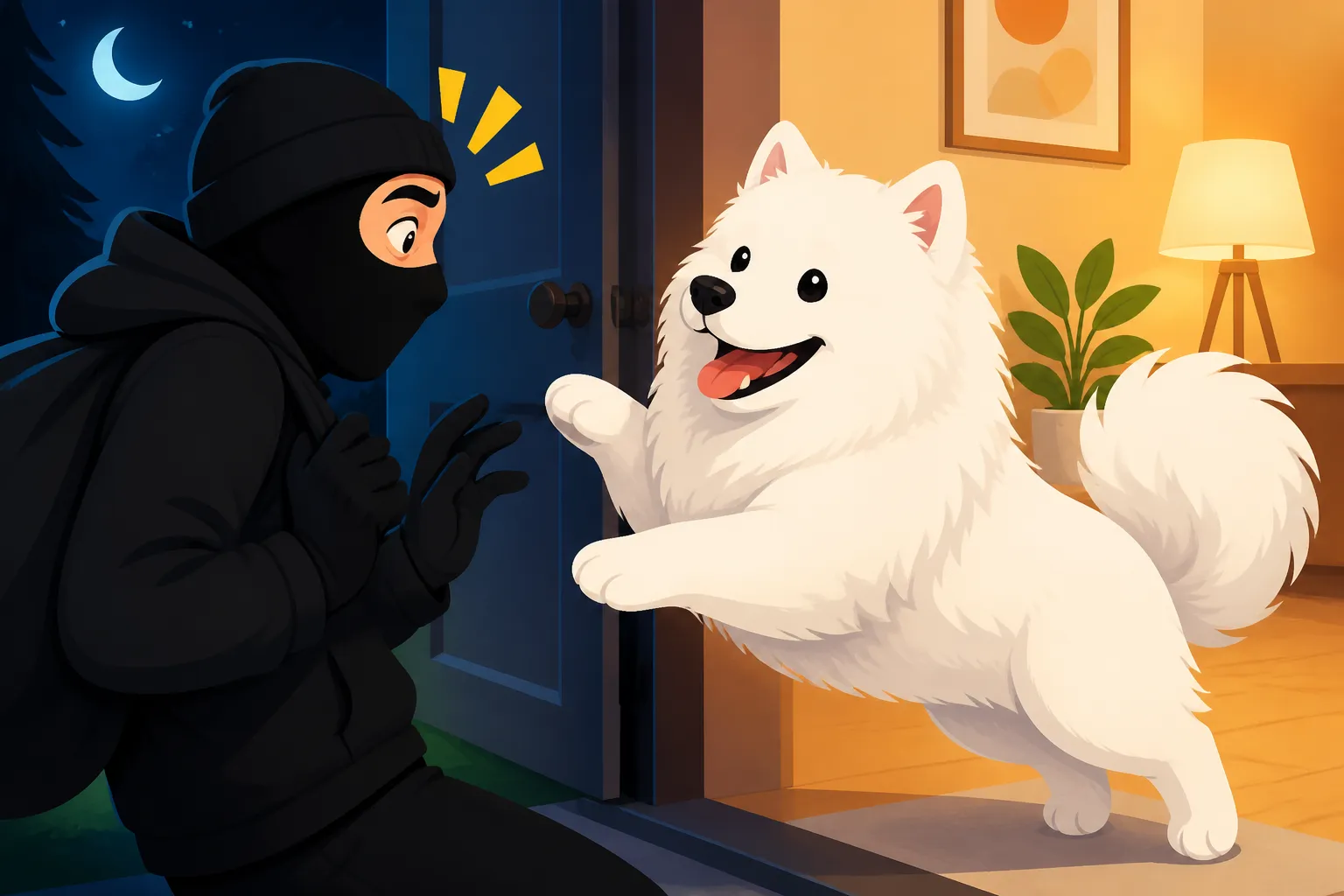
It's a common, if slightly alarming, realization for many Samoyed owners: the fluffy, smiling dog you adore, the one who brings so much joy and laughter into your home, would likely offer a warm, tail-wagging welcome to a complete stranger, even if that stranger's intentions were less than honorable. This guide aims to thoroughly explore why your beloved Samoyed is more likely to greet a burglar with a happy "hello" than a protective growl, delving into their unique historical temperament and what this means for household security.
The Samoyed Temperament: A History of Friendliness
The Samoyed breed's disposition is deeply rooted in its origins, and understanding this history is key to comprehending why they behave the way they do with strangers, even those who might pose a threat. These dogs weren't just pets; they were integral members of a nomadic human family, relying on cooperation and a lack of aggression for their very survival.
Bred for Companionship, Not Defense
Imagine living centuries ago in the harsh, unforgiving landscapes of Siberia, specifically with the Nenets people on the Yamal Peninsula. For these nomadic herders, their dogs were indispensable partners. These "Samoyed dogs," as they became known, primarily served as reindeer herders, pulling sleds, and providing warmth. Critically, they lived side-by-side with their human families, often sharing the family tent – the chum or choom – particularly during the brutal winters. This close proximity meant that any dog showing aggression towards humans, even strangers, would have been quickly culled from the gene pool. There was no room for a dog that might bite a child or a visiting neighbor. The ultimate criteria for selection were utility and an unwavering, gentle temperament. They were a part of the family, sharing space, food, and the most intimate aspects of life. You can read more about how this ancient bond shaped them in The Samoyed Slept in the Tent to Keep People Alive.
The "Samoyed Smile" and Its True Meaning
That iconic "Samoyed smile" isn't just an adorable quirk; it's a physical manifestation of a deep-seated friendliness. Their upturned lips, often revealing a hint of teeth, actually serve a practical purpose in their Arctic homeland: it prevents icicles from forming around their mouths, which could be quite painful. But over generations, this physical trait became intertwined with a naturally joyful and approachable demeanor. When you see that smile, it’s not a grimace or a challenge; it’s a genuine expression of contentment and openness. They approach the world, and everyone in it, with an inherent assumption of positive interaction. This inherent cheerfulness is deeply ingrained, making them predisposed to view new people as potential friends rather than threats, which is a wonderful trait, but not one that bodes well for deterring intruders.
A Breed Without a "Stranger Danger" Gene
Unlike breeds specifically developed for guarding, like German Shepherds or Rottweilers, Samoyeds were never selectively bred for wariness, suspicion, or territorial aggression towards unfamiliar people. Their job was to herd reindeer, pull sleds, and be a warm, loyal companion. They were not chosen to stand guard over property or livestock by intimidating humans. If anything, their breeding favored the exact opposite: an eagerness to interact with any human, as long as that interaction was perceived as friendly. They simply don't possess that genetic switch that tells them, "This person is new, they are in my space, and I need to be suspicious and protective." Their instinct leans heavily towards engagement and affection, not defense.
Why a Samoyed's "Welcome" Isn't a Warning
It can be truly bewildering to witness your Samoyed react to an unexpected visitor – or, hypothetically, an intruder – with such unbridled enthusiasm. What might seem like an alarm to an untrained eye is often, in a Samoyed's world, simply an invitation to play or be petted.
The Enthusiastic Greeting
When a new person enters the Samoyed's orbit, whether it's the mail carrier, a plumber, or indeed, someone with ill intent, their first reaction is rarely one of caution. Instead, it's typically a full-body wag, a series of excited bounces, and an immediate desire to make contact. They'll often bring a toy, a classic "offering of friendship," or simply lean into the person, inviting pets and attention. This isn't a show of submission or fear; it’s a genuine, enthusiastic welcome. They believe that everyone who steps through your door is there to shower them with affection, and they are eager to reciprocate. This makes them incredibly charming and lovable, but also profoundly ineffective as a deterrent.
Barking as Excitement, Not Threat
Samoyeds are known for being vocal, but their "barking" is far more complex than a simple "woof." They are masters of vocalization, capable of a range of sounds from the classic "Samoyed scream" to happy yaps and conversational "woo-woos." The Samoyed Scream and Why It Is Not Barking When a stranger appears, they will make noise. They might bark, but it's often a high-pitched, excited bark, akin to saying, "Look! A new friend! Pay attention to me!" rather than a deep, menacing warning. They might even emit their characteristic "scream" out of sheer excitement, which can be startling, but again, it’s usually not born of aggression. This can easily be misinterpreted by an owner as "Oh, my dog is warning them off!" but in reality, it's usually just an over-the-top, joyful announcement that someone new has arrived and interaction is imminent. You can also explore What a Samoyed Sounds Like When It Talks for more on their varied vocalizations.
The Waving Tail and Happy Demeanor
A Samoyed's body language is an open book, and it almost always reads "happy" when a new human is around. Their tail will be up and wagging, often in a full circle, not tucked defensively. Their ears will likely be forward, indicating interest, rather than flattened in apprehension. Their eyes will be bright and eager, not narrowed or watchful. They might even roll onto their back, exposing their belly for rubs – the ultimate sign of trust and deference, even to a potential threat. All these physical cues clearly communicate that the dog perceives no danger and is, in fact, thrilled by the new company. This lack of any threatening posture or sound means an intruder would likely feel quite comfortable, if not amused, by the Samoyed's presence.
Understanding the Lack of Guarding Instinct
Many dog owners confuse the terms "watchdog" and "guard dog." While a Samoyed certainly can be a watchdog, they absolutely do not possess the instincts or behaviors of a true guard dog. This distinction is crucial for understanding why they won't protect your home from an intruder.
No Territorial Aggression
Genuine guard dogs are inherently territorial. They view their home, yard, and even their family as property to be defended against perceived threats. They have a strong sense of "this is my space, and you don't belong here." Samoyeds, by contrast, lack this intense territorial drive when it comes to human intruders. Their historical role was not to guard a fixed location or property; it was to keep a watchful eye on nomadic reindeer herds, often by alerting the herders to predators, but not by confronting humans. When a person steps into their home, a Samoyed's primary thought is, "Who are you? Are you here to pet me?" not, "You are invading my territory, and I must drive you away." They simply don't have the hard-wired programming to perceive human presence in their home as an act of aggression against their territory.
The Absence of a "Prey Drive" for Intruders
Some guard breeds might be trained to view an intruder as a "threat" to be subdued, often leveraging a controlled form of prey drive. They might chase, corner, or even bite, not out of malice, but as a directed response to a perceived threat against their charge. Samoyeds, however, have very little, if any, human-directed aggression in their makeup. While they have a natural prey drive for small animals (think squirrels or rabbits, which is why Why a Samoyed's Recall Cannot Be Trusted is so important), this doesn't extend to human intruders. Their strong desire to socialize and engage with humans overrides any potential instinct to see them as something to be "driven off" or attacked. An intruder is more likely to receive a slobbery kiss than a warning nip.
A Watchdog, Not a Guard Dog
This is where the nuance lies. A Samoyed can absolutely be a fantastic watchdog. They are often very alert to changes in their environment. If someone approaches the house, knocks on the door, or even just walks by, your Samoyed will likely let you know with a burst of excited barks. They're telling you, "Hey, something's happening!" or "Someone's here!" This alert might scare off a casual opportunistic thief who prefers to avoid any noise, but it's important to understand the intent behind the noise. The barking isn't a precursor to an attack or aggressive confrontation; it's an announcement. The moment that stranger enters, the Samoyed's role shifts from "announcer" to "enthusiastic greeter." They'll alert you to the presence of a burglar, but they certainly won't guard you or your property from them. For more on this, check out Why a Samoyed Makes a Poor Watchdog.
| Feature | Samoyed (Watchdog) | True Guard Dog |
|---|---|---|
| Reaction to Stranger | Enthusiastic greeting, seeking attention | Suspicious, watchful, often aggressive |
| Vocalizations | Excited barking, howling, "talking," alerting | Deep, menacing growls, warning barks, silence |
| Body Language | Loose, wagging tail, forward ears, "smile" | Stiff, erect posture, intense stare, hackles raised |
| Motivation | Social interaction, curiosity, alerting owner | Territorial defense, protection of property/family |
| Training Focus | Obedience, manners, socialization | Advanced protection training, bite work |
| Historical Role | Herding, sledding, companionship | Protecting livestock, property, or individuals |
| Effect on Intruder | May startle with noise, but likely disarms | Deters, confronts, or physically engages with threat |
The Samoyed's Approach to Strangers
There's a reason they're often called "smily dogs" or "fluffy clouds of joy." Their entire being is geared toward positive interaction, and this extends to every human they meet.
Universal Love and Affection
One of the most endearing, and sometimes exasperating, traits of a Samoyed is their boundless capacity for affection for everyone. They don't differentiate between your best friend, a delivery driver, or a complete stranger. To a Samoyed, a human is a human, and a human is a source of potential pets, belly rubs, and kind words. This makes them truly wonderful family dogs, especially in households with frequent visitors, as they will greet everyone with warmth and a happy wag. However, it also means that their default setting for any new face is "friend," which leaves them utterly unprepared for a malicious encounter. It’s hard to instill a sense of suspicion into a dog whose very nature is to assume the best in people. This tendency is a hallmark of Why a Samoyed Welcomes Everyone.
Seeking Attention and Petting
The primary goal of a Samoyed when encountering a new person is almost always to elicit attention and petting. They live for interaction. This means that if an intruder were to gain entry, a Samoyed would very likely try to engage with them in the hopes of receiving some affectionate scratches behind the ears or a good head rub. They might nudge your hand with their nose, lean against your legs, or even paw at you gently, all in an effort to initiate contact. An experienced burglar knows that a friendly dog is a non-threat and might even use this to their advantage, pacifying the dog with a few pats while they go about their business. The Samoyed's natural inclination is to be in the room with you, and anyone else who is there, wanting to be part of the action. Why a Samoyed Wants to Be in the Room With You
The Open Door Policy
For a Samoyed, an open door, whether physical or metaphorical, is an invitation. They see themselves as hosts, ready to welcome anyone who arrives. If a gate is left ajar or a door is unlocked, their curiosity and friendly nature often lead them to explore, and to greet anyone they encounter. They don't have a concept of "private property" in the human sense that would make them wary of an uninvited guest. Their "open door policy" extends to their interactions within the home; they will readily approach anyone who enters their space, not to challenge them, but to connect. This means that if an intruder bypasses external security, the Samoyed inside is unlikely to be the next line of defense.
Addressing Owner Expectations vs. Reality
It's completely natural to want your dog to protect you and your home. However, it's crucial for Samoyed owners to reconcile these natural desires with the reality of their breed's historical purpose and inherent temperament.
The "Fluffy Guard Dog" Myth
Many people, drawn to the Samoyed's impressive size, powerful build, and sometimes formidable bark, mistakenly assume they would make effective guard dogs. There's a persistent myth that any large dog will naturally protect its home. While their size might be a superficial deterrent, causing a potential intruder to think twice from a distance, the moment that intruder interacts with the dog, the illusion quickly shatters. A burglar who has done even a minimal amount of research on dog breeds would know that a Samoyed is likely to be a welcoming committee, not a guard. This discrepancy between expectation and reality can leave owners feeling vulnerable if they've placed their security hopes on their fluffy companion. It’s important to let go of this "fluffy guard dog" myth and understand your Samoyed for what they truly are: a loving, joyful companion, not a protector. Why a Samoyed Will Never Guard Your House
Prioritizing Security Measures
Given your Samoyed's inherent friendliness, relying on them for home security is simply not realistic or fair to the dog. Instead, owners must prioritize robust, human-centric security measures. This means investing in strong locks, an alarm system, and potentially exterior cameras. Companies like SimpliSafe or Ring, easily found on platforms such as Amazon, offer a variety of home security solutions that can provide the actual protection your Samoyed cannot. Motion-activated lights, visible security signs, and ensuring all entry points are secure are far more effective strategies than hoping your Samoyed's bark will scare someone off or that they'll suddenly develop guarding instincts. Your dog's role is to be your beloved family member, not your security detail.
Embracing the Samoyed's True Nature
Once you truly understand and accept that your Samoyed is a lover, not a fighter, you can fully appreciate their wonderful qualities without the burden of unrealistic expectations. Their endless affection, gentle nature, and happy-go-lucky attitude are what make them such cherished companions. Trying to force a Samoyed to be something they're not, like an aggressive guard dog, would not only be frustrating for you but also deeply unfair and potentially damaging to your dog's inherently sweet temperament. Embrace the joyful, social creature they are, and enjoy their company for all the right reasons.
Training for Safety, Not Guarding
While you can't train a Samoyed to be a guard dog, you can certainly train them for general safety and good manners, which contributes to a more secure and harmonious household. The focus should always be on control and polite behavior rather than aggression.
Foundation of Socialization, Not Suspicion
Early and thorough socialization is crucial for Samoyed puppies. This means exposing them to a wide variety of people, places, sounds, and experiences in a positive way, especially before they are fully vaccinated. A well-socialized Samoyed is confident, calm, and friendly, rather than fearful or anxious. A dog that is afraid of strangers might become aggressive out of fear, which is dangerous and not the aim of any responsible owner. By encouraging their natural friendliness through positive experiences, you ensure your Samoyed remains the stable, joyful companion they are meant to be, rather than attempting to cultivate wariness or suspicion that goes against their breed's nature.
Teaching Boundaries, Not Aggression
Instead of trying to teach your Samoyed to be aggressive towards intruders, focus on teaching them reliable obedience commands that help manage their enthusiastic greetings. Commands like "sit," "stay," "place," or "off" are invaluable when guests arrive, or if someone unexpected comes to the door. Training them to go to their mat or bed and remain there quietly when someone enters gives you control over the situation and prevents them from overwhelming visitors with excitement. Online training platforms, such as BAXTER & Bella, offer structured programs that can guide you through teaching these foundational commands effectively, often with live support and step-by-step video lessons. These tools are much more beneficial than trying to cultivate a guarding instinct that simply isn't there. For a Samoyed, obedience is often a negotiation, so consistent, positive reinforcement is key. Training a Samoyed That Finds Obedience Negotiable
Reliable Recall and Management
While a Samoyed's natural recall can be notoriously difficult to perfect, particularly when a squirrel or another dog is involved, a strong foundation in recall training is essential for their overall safety. Why a Samoyed's Recall Cannot Be Trusted In the context of home security, teaching a reliable "come" or "stay" can be useful if, for example, a door is accidentally left open and you need to quickly secure your dog. Beyond direct commands, good management is critical. This includes sturdy fencing (Samoyeds are escape artists, often digging under or climbing over), secure gates, and always using a leash in unsecured areas. Investing in a high-quality, durable leash and harness is important, and for those who enjoy working with their dogs, long lines can be used for safe recall practice in open spaces. You might also find that items like heavy-duty crates or strong dog gates, which can be purchased from retailers like Amazon, are invaluable for containing your Samoyed when you can't actively supervise them, such as when a repair person is in the house. This kind of careful management ensures your Samoyed stays safe and doesn't inadvertently greet an unwelcome guest outside your property.
Environmental Deterrents
Ultimately, for security against human intruders, environmental deterrents are your best bet. Think of them as the primary security layer, allowing your Samoyed to focus on being your happy companion.
- Secure Doors and Windows: This might seem obvious, but many burglaries are crimes of opportunity. High-quality locks on all windows and doors are non-negotiable.
- Alarm Systems: A professionally monitored alarm system is a huge deterrent. The loud siren alone is often enough to send an intruder fleeing.
- Visible Security: Alarm company signs, "Beware of Dog" (even if your Samoyed is more "Beware of Kisses") signs, and security cameras (available widely from stores like Amazon) are visual cues that your home is not an easy target.
- Good Lighting: Exterior lighting, especially motion-activated lights, eliminates hiding spots and makes your home less appealing to intruders after dark.
- Fencing and Gates: For Samoyeds, robust fencing is crucial not for keeping intruders out (though it helps), but for keeping your Samoyed safely in. They are intelligent and determined escape artists. How High a Samoyed Can Jump a Fence and Whether an Invisible Fence Holds a Samoyed offer more insight into their Houdini-like abilities.
By focusing on these practical security measures, you can create a safe environment for your family and your friendly Samoyed, allowing them to shine in their true role: as an affectionate, joyful, and deeply loyal companion.
Disclaimer
This article is for general informational purposes only and does not constitute professional advice. Laws, prices and regulations vary by location and change over time. Consult a qualified professional for guidance on your specific situation.