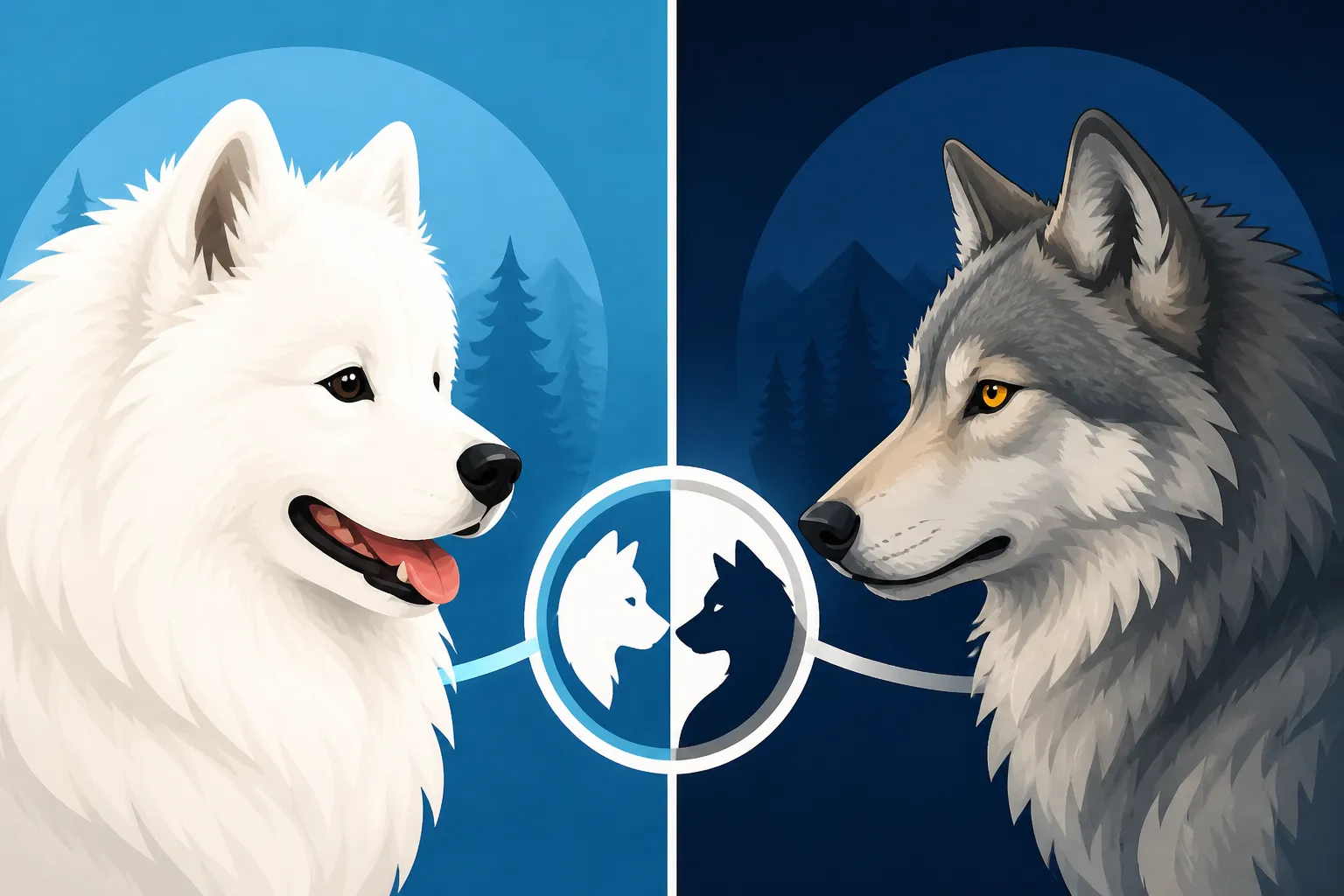
How Closely the Samoyed Is Related to the Wolf
It's easy to look at a majestic Samoyed, with that thick white coat, piercing eyes, and an air of ancient independence, and wonder just how close they still are to their wild wolf ancestors. Many people see those Spitz features and immediately think "wolf hybrid," or at least, "very close to a wolf." This common misconception can lead to all sorts of ideas about their temperament and needs. We're going to dive deep into the fascinating genetic history of the Samoyed, exploring their connection to wolves and clarifying what truly makes them the wonderful, domesticated companions we adore today.
Unraveling the Ancient Threads: Are Samoyeds Just Tamed Wolves?
There’s a natural inclination to connect dogs that look a bit wild or primitive to wolves, and the Samoyed often falls into that category. With their thick fur, pricked ears, and sometimes aloof demeanor, it's easy to imagine them roaming the Siberian tundra alongside their wild cousins. But the relationship between a Samoyed and a wolf is far more nuanced than just a superficial resemblance. It’s a story rooted in deep history, shared ancestry, and a significant journey of divergence that shaped them into the unique breed we know.
The Shared Ancestry: A Deep Look Back in Time
Let's get one thing straight: every single domesticated dog on this planet, from the tiniest Chihuahua to the grandest Great Dane, shares a common ancestor with the gray wolf. This isn't a theory; it's a scientific fact supported by extensive genetic research. Think of it like a family tree where you and your distant cousin share a great-great-great-grandparent. You’re related, undeniably, but you’ve both evolved and adapted in wildly different ways over generations. The same goes for our Samoyed friends and wolves. What the Samoyed's DNA Says About Its Ancestry tells us that these ancient breeds carry some of the oldest genetic markers, indicating their lineage goes back tens of thousands of years, predating most modern breeds. This deep lineage places them in a group often referred to as "ancient breeds," which includes others like the Siberian Husky, Alaskan Malamute, and Akita. These breeds retain a genetic closeness to the foundational dog population that first branched off from wolves, simply because their ancestry hasn't been as diluted or re-shaped by later human-driven breeding programs focused on specific, novel traits.
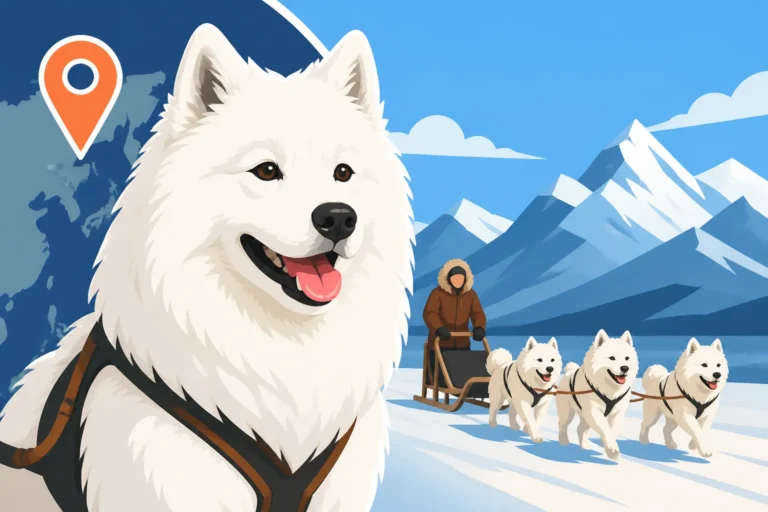
It's important to understand that this shared ancestry doesn't mean Samoyeds are "part wolf" in the sense of recent hybridization. It means they trace back to the same ancient canine population that eventually gave rise to both modern wolves and all modern dogs. The Samoyed's heritage is deeply intertwined with the harsh, unforgiving environment of Siberia, where they were bred for very specific, symbiotic roles with nomadic human tribes. The Nenets of the Yamal Peninsula Bred the Samoyed to herd reindeer, pull sleds, and even provide warmth by sleeping alongside families in their tents. These were not wild animals captured and tamed, but animals specifically selected and bred for their ability to live and work cooperatively with humans. This centuries-old partnership solidified their place as domesticated animals, even if their physical appearance gives a nod to their wild beginnings.
Divergence: When Dogs Chose a Different Path
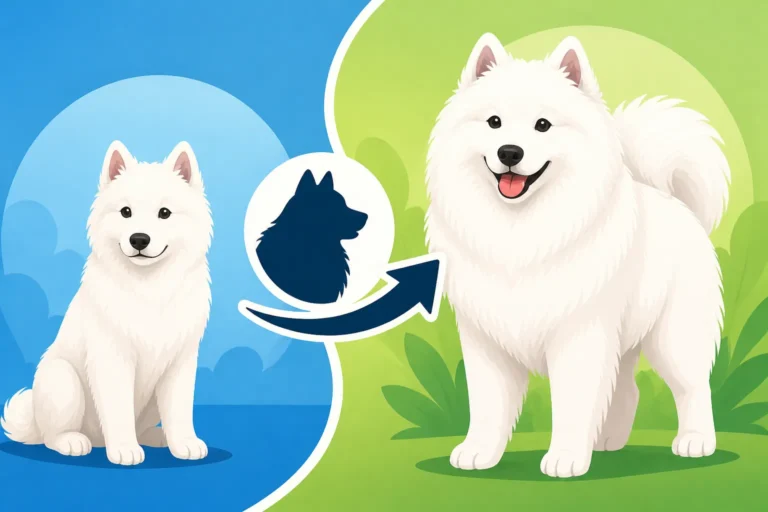
While the genetic ties are undeniable, the evolutionary paths of wolves and domesticated dogs diverged long, long ago. We're talking about tens of thousands of years. This isn't a simple case of a wolf deciding to hang around human campsites for scraps. It was a gradual process of natural selection and, eventually, intentional human breeding that favored certain traits over others. Dogs that were less fearful, more amenable to human presence, and perhaps even possessed a touch of puppy-like curiosity throughout their lives, were the ones that thrived alongside early human settlements. These animals, over countless generations, slowly changed not just in appearance but, more importantly, in their fundamental behavior and psychology.
The Samoyed is a prime example of this divergence. While they certainly carry an independent spirit and a formidable physical presence, their core being is one of domestication. The behaviors that define a wolf—its hunting prowess, its intense territoriality, its deep-seated suspicion of anything unfamiliar—are largely absent in a well-socialized Samoyed. Instead, you find a dog eager to please (on its own terms, of course!), intensely social with its human family, and surprisingly gentle. The "smile" of a Samoyed, for instance, isn't just an adorable quirk; Why the Samoyed Smiles is actually believed to be a functional adaptation that prevents icicles from forming around their mouths in freezing temperatures. This kind of specialized adaptation speaks to a long history of living with humans in a specific environment, not surviving independently in the wild.
The domestication process literally changed dog brains. Studies have shown differences in brain structure and function between wolves and dogs, particularly in areas related to fear, social bonding, and problem-solving. Dogs, including Samoyeds, are hardwired to understand and respond to human cues in ways that wolves simply aren't. They make eye contact, they seek comfort from humans, and they are motivated by different things than their wild cousins. For instance, a wolf's primary drive is survival, often independently. A Samoyed's primary drive is often inclusion and interaction with its family, even if it has an opinion on how things should be done.
Beyond Appearance: Separating Myth from Canine Reality
It’s easy to get caught up in the striking looks of a Samoyed and equate their physical resemblance to wolves with a similar temperament or needs. They have that undeniable "wild" beauty, the powerful build, and the thick coat that screams arctic wilderness. But to understand how truly different they are, we need to look beyond the surface and delve into their actual traits and behaviors.
The "Wolf-Like" Look: It's All in the Genes, and the Environment
Many of the features that make Samoyeds look "wolf-like" are actually common traits among many ancient Northern breeds. These are adaptations to cold climates and demanding lifestyles, not necessarily direct indicators of recent wolf ancestry. Think of that dense double coat: it's not just pretty fluff. A Samoyed's Coat Is Insulation, Not Decoration. It's a marvel of natural engineering, providing warmth in freezing temperatures and even offering protection from the sun's harsh rays. This trait is shared with wolves, of course, but also with other ancient breeds like Huskies and Malamutes, all of whom evolved in similar environments.
Their almond-shaped, dark eyes, erect ears, and strong jaws are also characteristics that serve practical purposes in a harsh environment and are common across many primitive dog types. These are traits that were either naturally selected for their utility or were simply retained because they weren't detrimental to their work alongside humans. It's not that a Samoyed looks like a wolf because it is a wolf; rather, both species, sharing a common ancestor, evolved some similar physical attributes in response to similar environmental pressures and needs.
When you compare The Samoyed Against the Husky and the Malamute, you see a clear pattern of these "wolf-like" features being prevalent across breeds developed in arctic regions. It's convergent evolution to some extent, where similar solutions arise for similar problems. The massive amount of fur, which can be managed with high-quality grooming tools available on sites like Chewy, is a fantastic adaptation to the cold, but it also ties back to their functional history, not just their wildness.
Instincts and Behavior: More Dog Than Wild
Here's where the rubber truly meets the road in distinguishing a Samoyed from a wolf. While Samoyeds might possess a strong prey drive, or a certain independence that some might mistakenly label as "wild," their fundamental instincts are those of a domesticated animal. A wolf is primarily driven by survival: hunting for food, protecting its territory from rivals, and maintaining the strict hierarchy of its pack. A Samoyed, on the other hand, is driven by connection, comfort, and the opportunity to engage with its human family.
Consider the Samoyed's infamous "Sammy smile" that gives them such a joyful expression. While we touched on its functional aspect earlier, it's also a hallmark of their generally gentle and friendly disposition. Why the Samoyed Smiles is not an act of aggression or dominance, which would be typical for a wolf. Instead, it's often a sign of friendliness, playfulness, or even a way to communicate a desire for interaction. They are renowned for their outgoing nature with people, often greeting strangers with enthusiastic tail wags and a happy vocalization rather than suspicion or aggression. This is fundamentally different from a wolf's natural caution and wariness around unfamiliar individuals.
Their herding instinct, which some owners discover surprisingly, is another trait that highlights their domestication. The Herding Instinct Nobody Expects From a Samoyed is a nuanced behavior, often seen as playful nipping at heels or circling, rather than aggressive pursuit. This instinct was honed over centuries of working with the Nenets people to manage reindeer herds, requiring intelligence, cooperation, and a softer touch than a true predator. This is a far cry from a wolf's predatory chase. While a Samoyed certainly has a prey drive, like most dogs, it's generally manageable through training and careful management, which is something you can find great resources for on platforms like Chewy. They are still dogs, albeit dogs with a very strong sense of self!
The Modern Samoyed: A Companion, Not a Predator
Ultimately, when we talk about how closely the Samoyed is related to the wolf, we must anchor ourselves in their reality as domesticated animals. They are incredible, ancient dogs, but they are not wolves. Their entire history, their genetic makeup, and their behavioral predispositions all point to a long and successful partnership with humanity.
Genetic Markers: What Science Tells Us About the Samoyed's Lineage
Modern genetic science gives us incredibly detailed insights into the relationships between species and breeds. While the Samoyed does fall into that "ancient lineage" category, meaning they are part of the early divergence from wolves, this is a shared trait with many other dog breeds, not a unique "wolf-dog" characteristic. The truth is, all dogs are genetically wolves; they are subspecies Canis familiaris (or often Canis lupus familiaris), indicating their origin. But this is where the nuance is critical: they are a distinct subspecies that has evolved over millennia into a completely separate behavioral and physiological entity.
What the science doesn't show is recent or widespread interbreeding between Samoyeds and wolves. The Samoyed's genetic profile is distinctly canine, clearly differentiated from that of wild wolves. Specific genetic markers are unique to domesticated dogs, indicating a long period of independent evolution. For instance, genes related to starch digestion are prevalent in dogs, allowing them to thrive on a more varied diet (including human scraps) than pure wolves. While some Samoyeds might have a selective palate, they are generally adapted to a typical dog diet, unlike the strict carnivorous diet of a wolf. Understanding How Old the Samoyed Breed Really Is helps underscore this divergence; their distinct path is thousands of years old.
So, while the Samoyed carries genetic echoes of its deep past, just as we carry echoes of our primate ancestors, it is definitively a dog. The idea of them being "part wolf" often conjures images of unpredictability or aggression, but a well-bred and properly socialized Samoyed is neither of these. They are intelligent, yes, and they certainly have their own ideas, but they thrive on human companionship and are hardwired for a life alongside us.
The Human-Canine Bond: A Samoyed's True Nature
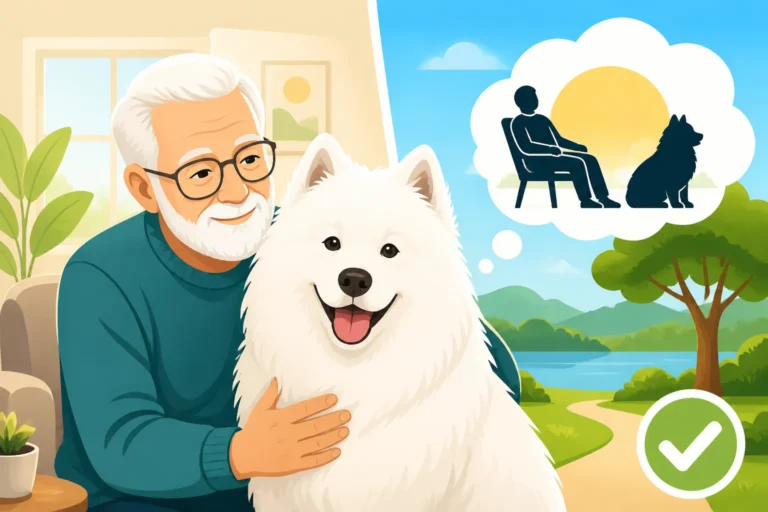
Perhaps the strongest evidence of the Samoyed’s profound difference from a wolf lies in their capacity for bonding with humans. Wolves, while forming strong pack bonds, do not typically seek out or rely on humans for emotional support or companionship in the same way a dog does. A Samoyed, by contrast, is known for its intense loyalty and desire to be a part of its human family's daily life. The Samoyed Slept in the Tent to Keep People Alive, forging an unbreakable bond that went beyond mere utility. They aren't just pets; they are deeply ingrained family members.
This bond is what defines the Samoyed. They thrive on interaction and can even be prone to separation anxiety if left alone for too long, a stark contrast to the independent nature of a wolf. They are often described as "velcro dogs" who want to be in the same room as you, participating in whatever you're doing. This isn't a wolf's nature; it's a dog's, specifically a Samoyed's. The Household a Samoyed Was Built For is one where they are integrated into daily life, not left to their own devices in isolation.
Moreover, their capacity for training, even with their intelligent stubbornness, is a testament to their domesticity. While they might make you work for every command, and often prefer to "negotiate" rather than blindly obey, they can be trained to perform complex tasks, live happily in human homes, and navigate the complexities of our world. Whether a Samoyed Suits a First Time Owner often comes down to understanding this unique blend of intelligence and independence, but it’s still fundamentally a dog’s mind, not a wolf’s. They are sensitive creatures who respond best to positive reinforcement, and that kind of cooperative learning isn't something you can easily achieve with a truly wild animal. Whether you're looking for toys to motivate them during training or nutritious food to support their active lifestyle, a trusted retailer like Chewy can provide excellent options that cater to the needs of a thoroughly domesticated Samoyed.
So, while we can admire the faint echoes of the wild in a Samoyed's majestic appearance, it's crucial to remember that they are, first and foremost, dogs—beautiful, devoted, and uniquely intelligent dogs who have chosen, and been chosen by, humanity for thousands of years. They are not simply tamed wolves, but a distinct and cherished part of our domesticated world.
| Feature | Samoyed (Domesticated Dog) | Gray Wolf (Wild Animal) |
|---|---|---|
| Ancestry | Descended from common wolf ancestor | Wild, undomesticated lineage |
| Behavior | Social, people-oriented, trainable | Independent, wary of humans, wild |
| Temperament | Friendly, playful, eager to please | Reserved, territorial, predatory |
| Dietary Needs | Adapted to varied dog diets | Strict carnivore, hunts for food |
| Vocalizations | Barking, "talking," howling, screaming | Howling, growling, less barking |
| Bond with Humans | Strong, seeks companionship | Avoids humans, fear-based interaction |
| Physical Traits | Bred for specific human tasks | Evolved for wilderness survival |
Disclaimer
This article is for general informational purposes only and does not constitute professional advice. Laws, prices and regulations vary by location and change over time. Consult a qualified professional for guidance on your specific situation.