Where the Working Samoyed Still Exists
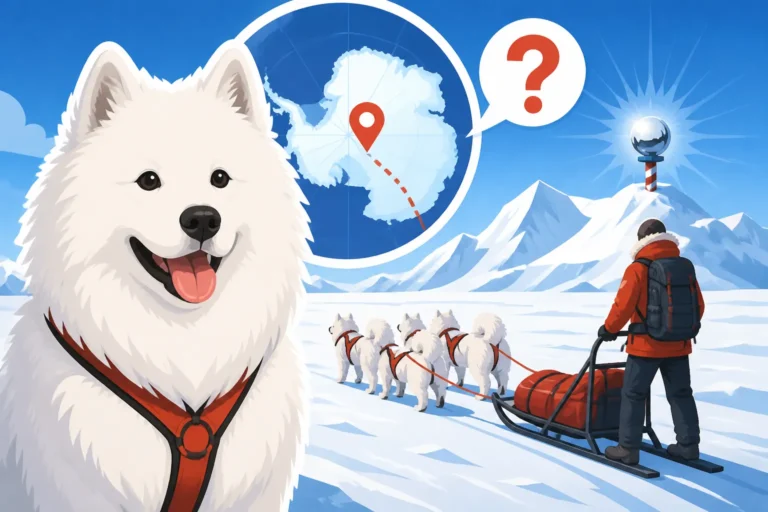
A working Samoyed still exists, but not always in the way people imagine. On the Yamal Peninsula, reindeer herding remains part of Nenets life, while many modern Samoyeds work in recreational pulling sports rather than traditional herding. This guide separates those roles, explains where the breed’s working heritage continues, and shows what “working” can mean for a Samoyed today.
The Samoyed’s traditional work in the Arctic
Reindeer herding on the Yamal Peninsula
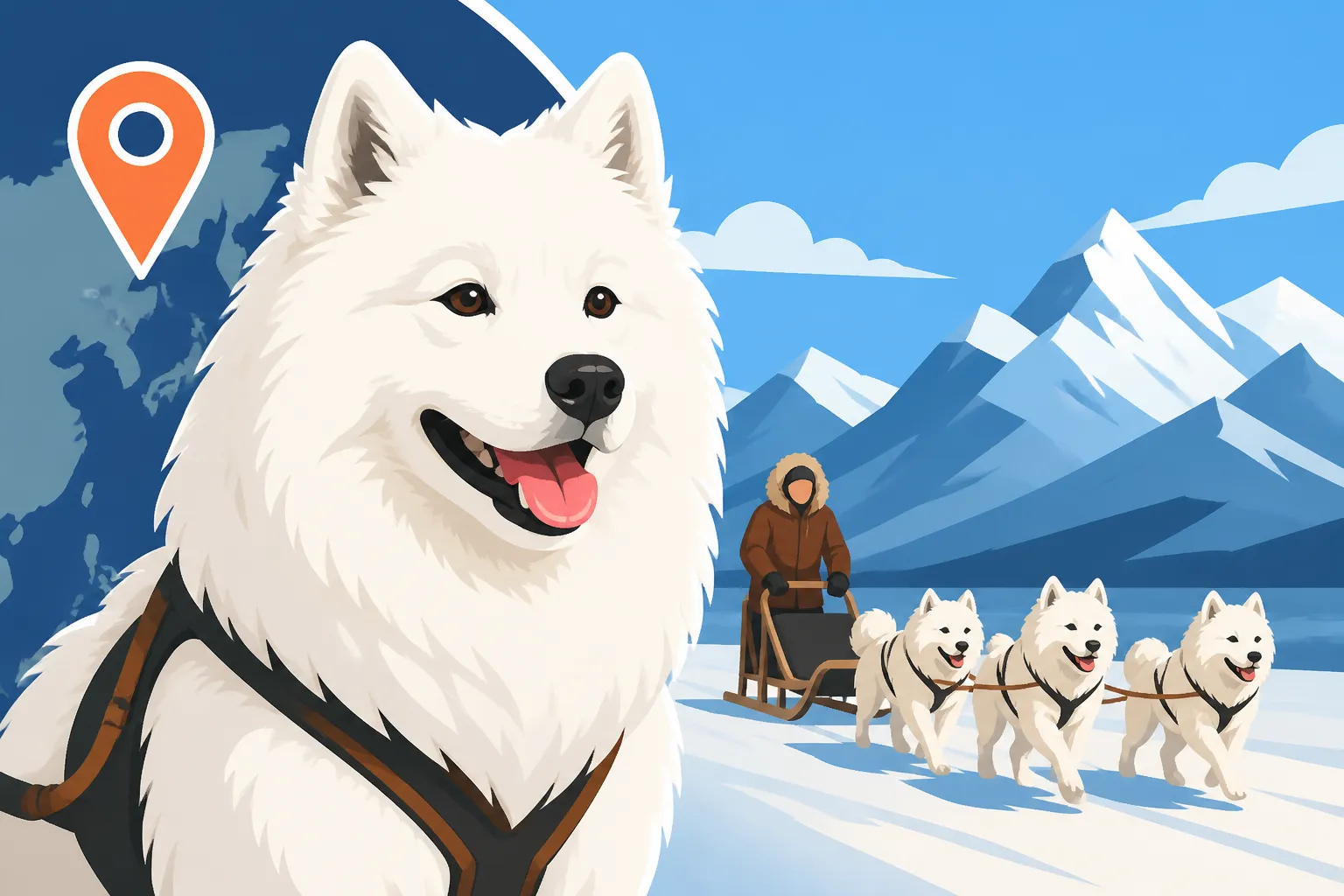
The Samoyed’s working history is closely tied to the Nenets people of northern Russia. Across the tundra of the Yamal Peninsula and nearby regions, reindeer have long been central to travel and daily life. Dogs helped people manage herds, locate animals, and move through demanding terrain. For background on the breed’s homeland, see Where in Russia the Samoyed Comes From and What the Nenets Bred the Samoyed to Do.
That heritage is still visible in the region’s pastoral life, but it helps to be precise about the dogs involved. Today, the dogs working with reindeer herders may be local herding dogs, including dogs described as Nenets herding laikas. They are not necessarily registered Samoyeds of the modern show-breed type. The names and histories overlap, but it is safest not to assume that every working dog in a Samoyed’s ancestral homeland is a modern Samoyed.
Herding on the tundra also looks different from the tightly controlled work people may picture from a farm. The landscape is vast, the herd is mobile, and the dog’s usefulness depends on cooperation with its handler and knowledge of the conditions. A dog that can move confidently over uneven ground and respond at a distance may be far more valuable than one that simply follows close by. How a Samoyed Herded Reindeer explores the kind of work associated with this history.
Sledding, travel, and life alongside people
Sled pulling is another part of the Samoyed’s working story. In Arctic communities, dogs helped transport people and supplies through snow and cold. But the historical role should not be boiled down to “a sled dog and nothing else.” Samoyeds were valued as versatile dogs, living and working in close contact with the people who depended on them. How a Samoyed Pulled a Sled looks at that role in more detail.
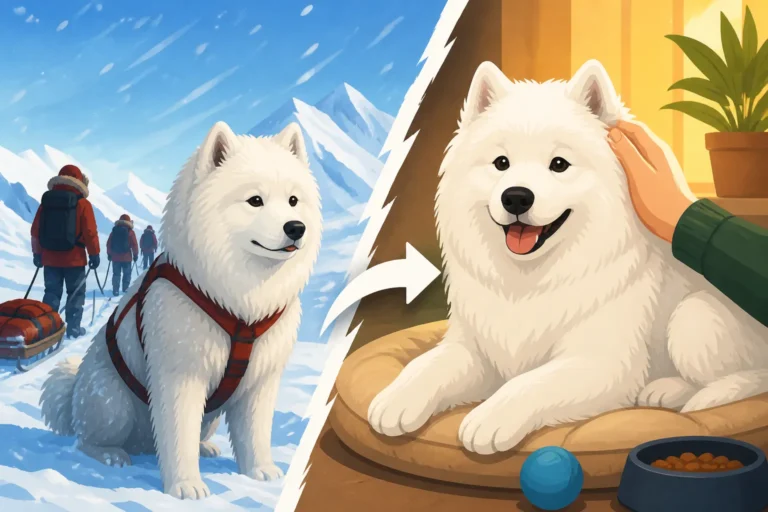
The breed’s close relationship with people is an important clue to what made it useful. A dog living around a family and helping with daily work needed to be manageable, social, and attentive to its people, not merely strong. That combination still shapes how many owners experience the breed: a Samoyed may love an activity that gives it a job, but also want to be involved in everything happening at home. For more on this connection, see The Household a Samoyed Was Built For.
Cold-weather adaptation was part of the picture, too. The Samoyed’s thick coat helped protect it in harsh conditions, but a coat alone does not make a dog suited to every job or every climate. Work also requires sound health, conditioning, training, and appropriate handling. How a Samoyed Survives Sixty Below explains the breed’s cold-weather adaptations without making the coat sound like an all-purpose solution.
Where working Samoyeds can be found today
In modern sledding and pulling sports
For many people outside the Arctic, the clearest place to see a working Samoyed today is in recreational dog sports. Depending on the dog and handler, activities may include sledding, skijoring, canicross, or pulling a cart on suitable terrain. These activities are practiced in a range of places, especially where seasonal conditions and local clubs make them practical. In this setting, “working” usually means a structured sport or shared outdoor activity—not a dog supporting a household’s livelihood.
A Samoyed does not need to be part of a large racing team to enjoy pulling. Some dogs may take part in organized events, while others pull recreationally with their owners. The important distinction is that the activity should suit the individual dog. Fitness, age, health, equipment, weather, and training all matter. A dog that is enthusiastic on a cool trail may not be safe to work in heat or on a surface that strains its paws.
Modern pulling also calls for patient teaching. A young dog needs time to mature physically, learn cues, and become comfortable with equipment before the work becomes demanding. A harness that fits poorly can rub or restrict movement, and a dog that is repeatedly pushed beyond its capacity may develop soreness or begin to dislike the activity. If you are exploring the sport, Whether a Samoyed Needs Snow to Enjoy Pulling and Whether a Samoyed Can Earn a Sledding Title offer useful related context.
In the home, on trails, and in community activities
A working role does not have to involve a sled. Many Samoyeds have daily “jobs” that are less formal: hiking with an owner, practicing scent games, learning obedience, or carrying out simple routines that ask them to think and cooperate. These activities do not replace the breed’s historic work, but they can give a modern companion dog useful physical and mental engagement.
This matters because a Samoyed with too little to do may find its own occupation. That could mean digging, vocalizing, pulling on leash, or inventing a game involving things you would rather it leave alone. A sensible activity plan uses the dog’s interests without assuming that every Samoyed needs high-intensity exercise every day. Rest, gradual conditioning, and low-impact enrichment belong in the plan too. Whether a Samoyed Needs an Active Owner can help you think through the level of involvement the breed may ask of you.
| Working setting | What the dog may do | What it usually means today |
|---|---|---|
| Arctic herding communities | Help move or manage reindeer | Often involves local working dogs; not every dog is a modern registered Samoyed |
| Sledding or skijoring | Pull a person or sled with suitable equipment | Recreational sport or organized activity |
| Canicross or hiking | Run or travel alongside a handler | A shared activity that needs conditioning and weather awareness |
| Home and training settings | Learn routines, cues, and enrichment games | Everyday engagement rather than traditional employment |
The difference between a working Samoyed and a Samoyed with working ancestry
Why the distinction matters
A breed’s history and the work a dog performs now are related, but they are not identical. The modern Samoyed is a standardized breed kept around the world as a companion, show dog, and sport partner. A dog may have ancestors associated with Arctic work without having the training, temperament, physical conditioning, or experience to do that work safely.
The reverse is also true: a dog can be doing valuable work without being a registered Samoyed. A local herding dog may be better suited to a specific landscape and task than a Samoyed bred generations later for a different purpose. Calling every northern working dog a Samoyed can blur important distinctions between a breed, a regional type, and a dog’s actual job.
This distinction is especially useful when reading about reindeer herding. It is reasonable to say that Samoyeds have a history connected to Nenets work and Arctic life. It is less accurate to assume that modern registered Samoyeds are the dogs routinely managing every contemporary herd. For a related discussion, see Whether Samoyeds Still Herd Reindeer.
What makes a modern dog ready for work
A dog’s readiness depends on more than enthusiasm. Before starting a pulling or endurance activity, owners should discuss the dog’s health and development with a veterinarian, particularly if the activity involves sustained exertion. The handler should build fitness gradually, watch for changes in gait or willingness, and stop if the dog seems uncomfortable or unusually tired.
Training matters just as much. A dog needs clear cues for starting, slowing, turning, and stopping, plus enough practice to work safely around people, other dogs, and equipment. Samoyeds are often bright and energetic, but that does not mean they automatically understand what a handler wants. Short, positive sessions and consistent routines are more useful than expecting a dog to work correctly because the breed has a historical association with pulling.
Daily care supports activity too. Keep water available, plan around conditions that may cause overheating, and check the dog’s coat, paws, and harness contact points after outings. For routine supplies, some owners use retailers such as Chewy to shop for items like brushes, bowls, or basic walking gear; the right choice still depends on fit, quality, and the dog’s specific needs. For more on everyday breed needs, see What a Samoyed Needs Every Day.
What this working heritage means for a prospective owner
A job can be an activity, not a career
Most people bringing home a Samoyed will not be hiring it to herd reindeer or haul supplies across Arctic terrain. That does not mean the breed’s working heritage is irrelevant. It helps explain why many Samoyeds enjoy movement, interaction, and activities that involve their people. A dog that gets regular opportunities to learn and participate may be easier to live with than one expected to entertain itself all day.
Start with the dog in front of you. One Samoyed may thrive on pulling sports, while another prefers long walks, training games, or a mix of shorter activities. If the dog is reluctant, tired, or uncomfortable, forcing it into a particular sport is not a tribute to its ancestry. The best “job” is one the individual dog can do safely and enjoyably.
You can also create structure without specialized equipment. A short training session before a walk, a sniffing game in the yard, or a consistent settle routine can make the day feel more purposeful. For some dogs, a predictable routine is more satisfying than a packed schedule of strenuous exercise.
Respect the conditions and the individual dog
The Samoyed’s winter heritage can make it tempting to assume that cold is always safe and heat is always manageable because of the coat. Neither assumption is wise. Coat type does not remove the need to monitor comfort, provide shade and water, and adjust activity to the weather. A dog that works well in cool conditions may need a completely different plan during a warm spell.
Equipment and grooming choices should also be practical. Pulling gear should fit properly and be introduced gradually. Coat care should allow you to check the skin and find tangles, especially after outdoor activities. If you use an online retailer such as Chewy for grooming tools or basic supplies, compare the item with your dog’s coat and routine rather than choosing by appearance alone.
Finally, working activity should fit around the dog’s whole life. Consider age, body condition, prior experience, and any health concerns before setting goals. A Samoyed can have a meaningful, active life without competing or pulling heavy loads. For many families, the most realistic expression of the breed’s working spirit is simply a dog that gets to explore, learn, and be included.
Disclaimer
This article is for general informational purposes only and does not constitute professional advice. Laws, prices and regulations vary by location and change over time. Consult a qualified professional for guidance on your specific situation.