Whether a Samoyed Barks at Strangers
It's a common misconception that all dogs are natural alarm systems, barking furiously at every unknown face that dares to approach the property. If you've spent any time around Samoyeds, you might have noticed a refreshing difference, but for those considering bringing one of these fluffy clouds into their lives, the question of their guarding instincts, or lack thereof, is a really important one. This guide will delve into the unique vocalizations of the Samoyed and their generally welcoming nature toward strangers, helping you understand what to expect from your beautiful companion.
The Samoyed's Approach to Strangers: A Tail Wag, Not a Warning Bark
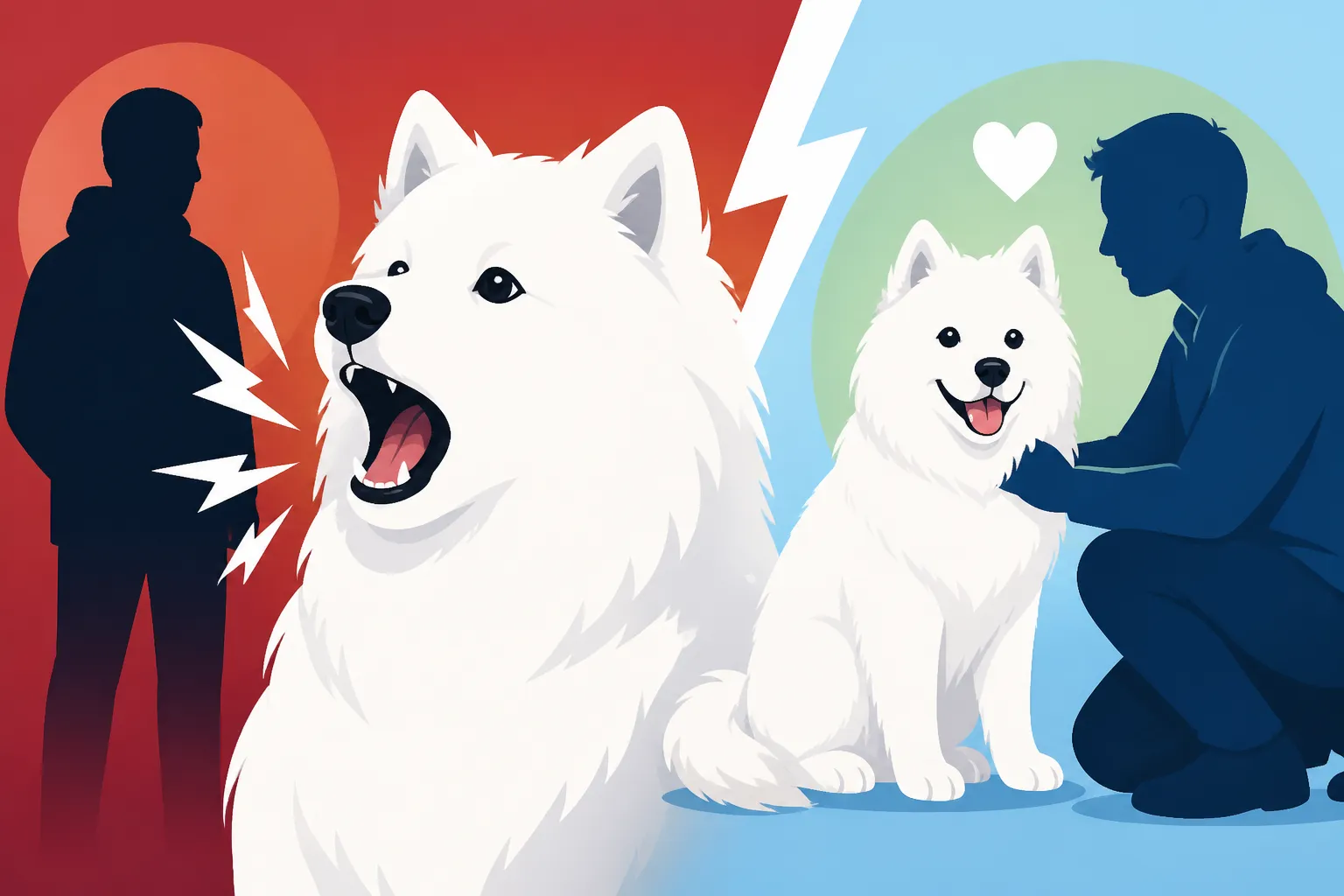
Let's get right to it: the typical Samoyed isn't going to be your fierce protector, standing guard at the gate with a menacing growl and a volley of barks aimed at every passing stranger. In fact, it's quite the opposite for most of these dogs. Their history and temperament have shaped them into incredibly social creatures who are far more likely to greet a newcomer with enthusiastic tail wags and a happy "hello" than with suspicion. This often comes as a surprise to people who are used to breeds that are naturally more territorial or aloof.
Bred for Companionship, Not Confrontation
To understand why Samoyeds are so wonderfully friendly, we have to look back at their origins. These dogs were developed by the Nenets people in Siberia, not as guard dogs, but as invaluable working companions. They lived intimately with their human families, often sharing tents to provide warmth in freezing temperatures. They herded reindeer, pulled sleds, and played with children. This close bond meant they needed to be inherently gentle and trustworthy with all members of the tribe, including visitors. There simply wasn't a place for aggressive or overly suspicious behavior in their world. They weren't bred to deter, but to integrate.
Think about it: if a dog's primary role is to be a part of the family unit, keeping people warm and assisting with daily tasks, being aggressive towards new faces would be a huge hindrance. Their lives depended on cooperation and friendliness, and those traits were deeply ingrained over generations. This historical role is a major reason why Why a Samoyed Greets a Burglar isn't just a funny anecdote, but a genuinely accurate description of their welcoming disposition. They see a human, and their instinct is often to solicit attention and affection, rather than to raise the alarm.
The Samoyed Smile: A Universal Welcome
One of the most endearing features of a Samoyed is their famous "Samoyed smile," where their mouth naturally curls upwards at the corners. While this serves a practical purpose in cold climates by preventing drool and icicles from forming around their mouth, it also gives them an eternally joyful and approachable expression. This visual cue often mirrors their inner disposition. When a stranger approaches, instead of a tense, closed mouth and narrowed eyes, you're usually met with that characteristic grin, often accompanied by happy panting and a wiggly body.
This smile, combined with their soft, fluffy appearance, makes them incredibly inviting. Most people can't resist reaching out to pet a Samoyed, and the Samoyed typically reciprocates with enthusiasm. They thrive on interaction and positive attention from nearly everyone they meet. It’s a breed that genuinely seems to believe everyone is their best friend until proven otherwise, and even then, their capacity for holding a grudge is remarkably low. This open, friendly demeanor is a hallmark of the breed and a big part of their charm.
What a Samoyed Does Instead of Barking at Strangers
So, if a Samoyed isn't barking at every new person, what do they do? Well, they certainly aren't silent! Samoyeds are known for being quite vocal, but their repertoire of sounds is vastly different from the sharp, territorial barks you might expect from a typical watchdog. Their vocalizations are often expressions of joy, excitement, or a desire for attention rather than warnings or threats.
The Samoyed "Scream" and Other Unique Vocalizations
Instead of a traditional bark, many Samoyeds have a signature sound often affectionately called the "Samoyed scream" or "Samoyed talk." This isn't a scream of terror or pain, but rather a high-pitched, drawn-out vocalization that can sound almost like a human wail or a wolf's howl, often punctuated by "woo-woos" and other expressive noises. It's their way of communicating excitement, asking for attention, or simply expressing themselves. The Samoyed Scream and Why It Is Not Barking delves deeper into this fascinating characteristic.
When a stranger enters their space, a Samoyed might burst into this symphony of sounds not because they're being aggressive, but because they're absolutely thrilled to have a new potential friend to greet. Imagine someone arriving at your door – a Samoyed's reaction is often akin to a toddler's excited squeals rather than a guard's stern challenge. They're saying, "Oh my goodness, a new person! Pet me! Love me! Let's play!" rather than "Stay back!" It's a vocalization of pure, unadulterated excitement and a request for engagement.
Body Language: The True Indicator
Beyond their unique vocalizations, a Samoyed's body language around strangers is usually an open book of friendliness. You'll typically see a soft, relaxed posture, a wagging tail (often a full body wag!), ears that are up and attentive but not pinned back in fear or forward in aggression, and a relaxed, smiling mouth. They might lean into the stranger for pets, present their head for a scratch, or even roll over for a belly rub. Their goal is usually to solicit interaction.
Compare this to the body language of a dog that is wary of strangers: stiff posture, tail tucked or held rigidly, ears flattened or pricked with tension, lip-licking, yawning, or direct, unblinking stares. These are not typically behaviors you'll observe in a well-socialized Samoyed meeting someone new. Their entire demeanor exudes welcome. Understanding What a Samoyed Sounds Like When It Talks and observing their accompanying body language will give you a much clearer picture of their intentions than just listening for barks. Their "talking" is often a direct invitation to engage.
When a Samoyed Might Bark, and How to Manage It
While the general rule is that Samoyeds are friendly and not prone to barking at strangers out of aggression or fear, there are always exceptions and specific scenarios that can trigger a bark. It's important to differentiate these instances from true guard dog behavior, and understand how to address them through training and management.
Excitement Barking and Attention-Seeking
Sometimes, a Samoyed will bark at a stranger, but it's usually out of overwhelming excitement or a learned behavior to get attention. Imagine a delivery person approaching the door; a Samoyed might bark a few times, coupled with frantic tail wags, because they know a new person means potential pets or even a dropped package for them to investigate. This isn't territorial, it's just sheer exuberance. Or perhaps they've learned that barking gets them noticed, and they crave attention from everyone, not just their family.
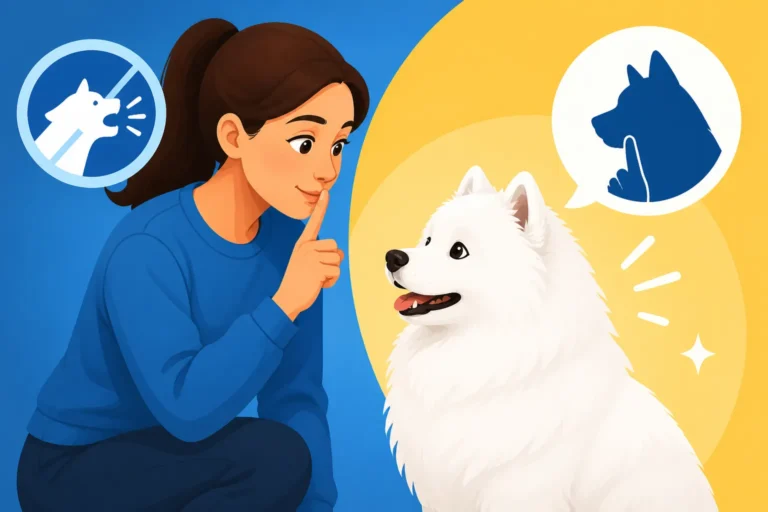
If your Samoyed starts barking at guests or people passing by, first assess their body language. Is it stiff and defensive, or loose and wiggly? Are they lunging with aggression, or bouncing with joy? Most likely, it's the latter. In these cases, consistent training is key. You'll want to teach a "quiet" cue and reward calm behavior. Distraction with a favorite toy or a high-value treat, available from a retailer like Amazon or through a service like Chewy, can help redirect their focus. Teaching a Samoyed a Quiet Cue is a valuable skill to develop early on.
The Rare Case of Fear-Based Barking
While not typical for the breed, a Samoyed can develop fear-based barking if they've had negative experiences with strangers, or if they haven't been adequately socialized as a puppy. A lack of exposure to different people, sights, and sounds during their critical socialization period can lead to anxiety, and an anxious dog might bark out of fear. This is distinct from the breed's natural disposition and is usually a result of their environment or past trauma.
If you suspect your Samoyed is barking from fear, it's crucial to consult with a professional dog trainer or behaviorist. This isn't something to "correct" with harsh methods, as that can exacerbate the fear. Instead, the focus should be on building positive associations with strangers through careful desensitization and counter-conditioning. Online training programs, such as those offered by BAXTER & Bella, can provide a structured approach to addressing fear and building confidence, though a hands-on professional is always recommended for severe cases. Remember, Whether a Samoyed Is Ever Aggressive is a question that usually gets a "no" for this breed, but fear can manifest in many ways, including what looks like aggression.
Managing Environmental Triggers
Sometimes, barking isn't necessarily at the stranger, but triggered by the arrival of a stranger in a specific context. For instance, if your Samoyed gets overly excited when someone knocks on the door, and this leads to barking, the trigger is the knock, not the person themselves necessarily. Similarly, a dog might bark at people walking past a window, not out of aggression, but because the sight of movement combined with their high prey drive (if they mistake a person for something to chase) can be stimulating.
Management strategies here can include blocking access to windows, using privacy film, or providing a "safe space" away from the door when guests arrive. Training a "place" command, where your Samoyed goes to a specific mat or bed when the doorbell rings, can also be incredibly effective. Consistency is paramount. Every time they respond calmly, even if it's just for a moment, reinforce that behavior with praise and treats. Over time, you can reshape their reaction to these common triggers.
Training for a Calm and Welcoming Samoyed
Even with their friendly nature, training is vital to ensure your Samoyed is a well-mannered and calm companion, especially around new people. Their exuberance can sometimes be overwhelming if not guided properly.
Early Socialization is Key
The most important step in ensuring your Samoyed remains friendly and calm around strangers is thorough and positive early socialization. From the moment you bring your puppy home, expose them to a wide variety of people of all ages, sizes, and appearances. Take them to safe, controlled environments where they can observe and interact politely. Think about dog-friendly cafes, quiet park benches (observing from a distance), or controlled puppy classes.
Make every new encounter a positive one. Offer treats and praise when they interact calmly and politely. This teaches them that strangers are not only safe but also often bring good things! A well-socialized Samoyed understands that new faces are exciting, but that appropriate greetings are appreciated. Without this foundation, even the friendliest breed can become shy or reactive. Puppy classes, which can be found through local pet stores or online resources, are an excellent way to start this process in a structured environment.
Consistent Reinforcement of Calm Behavior
Samoyeds are intelligent, but they can also be a bit stubborn and have their own ideas about how things should go. Training a Samoyed That Finds Obedience Negotiable is a real challenge many owners face. Therefore, consistent positive reinforcement is essential. When a stranger approaches and your Samoyed reacts calmly – perhaps just observing quietly or offering a gentle tail wag – reward that behavior immediately.
This might mean carrying treats with you on walks or having them easily accessible when expecting visitors. If they jump up or become overly boisterous, calmly redirect them and only give attention when all four paws are on the floor. For impulse control around the door, teaching a "sit" or "stay" command before opening the door can work wonders. Practicing these behaviors regularly, not just when a stranger is present, will build a strong foundation. Remember, a Samoyed usually wants to please you, especially if there's a tasty reward involved. What a Samoyed Will Work For often boils down to food and praise!
Understanding and Managing Samoyed Vocalizations
While we've established that Samoyed vocalizations are often not "barking" in the traditional sense, their "talking" can still be quite loud and persistent, especially when excited. This is where understanding and managing their unique communication style comes in. If your Samoyed is constantly "screaming" for attention when guests arrive, you'll need to teach them appropriate ways to greet.
One effective strategy is to practice having a "visitor" (a friend or family member) come over repeatedly. Each time, work on having your Samoyed settle before the guest offers attention. Start small: perhaps the guest just walks past the door, and your Samoyed gets a treat for being quiet. Gradually increase the interaction, always rewarding calm behavior. Teaching a specific "quiet" command can be invaluable. This isn't about silencing your Samoyed completely – that's often impossible and goes against their nature – but about teaching them when and how to use their voice appropriately.
Here’s a quick overview of Samoyed vocalizations vs. typical barking:
| Vocalization Type | Typical Trigger | Samoyed Behavior | General Intent |
|---|---|---|---|
| Barking | Perceived threat, territoriality | Rare towards strangers | Warning, defense, fear |
| "Scream" | Excitement, greeting, attention | Common with strangers | Joy, invitation to play/pet, request attention |
| "Woo-Woo" | Happiness, greeting, communication | Common, gentle greeting | Affection, playful communication |
| Howling | Sirens, loneliness, communication | Less common with strangers | Communication over distance, expressing self |
| Whining | Desire for something, discomfort | Can be used to solicit attention | Request, mild complaint, anticipation |
Conclusion
So, whether a Samoyed barks at strangers usually comes down to a resounding "not really," at least not in the way most people envision a dog barking defensively. These beautiful, fluffy dogs are renowned for their outgoing, friendly, and social nature. They were bred to be companions, not guard dogs, and their natural inclination is to greet new people with enthusiasm and a wagging tail rather than suspicion or aggression. While they are certainly vocal, their "Samoyed screams" and "woo-woos" are typically expressions of joy and a desire for interaction, not warnings. With proper socialization and consistent positive reinforcement, your Samoyed will likely be everyone's best friend, eager to dole out fluffy cuddles and charming smiles to all who cross their path.
Disclaimer
This article is for general informational purposes only and does not constitute professional advice. Laws, prices and regulations vary by location and change over time. Consult a qualified professional for guidance on your specific situation.