Whether a Samoyed Suits a Full Time Worker
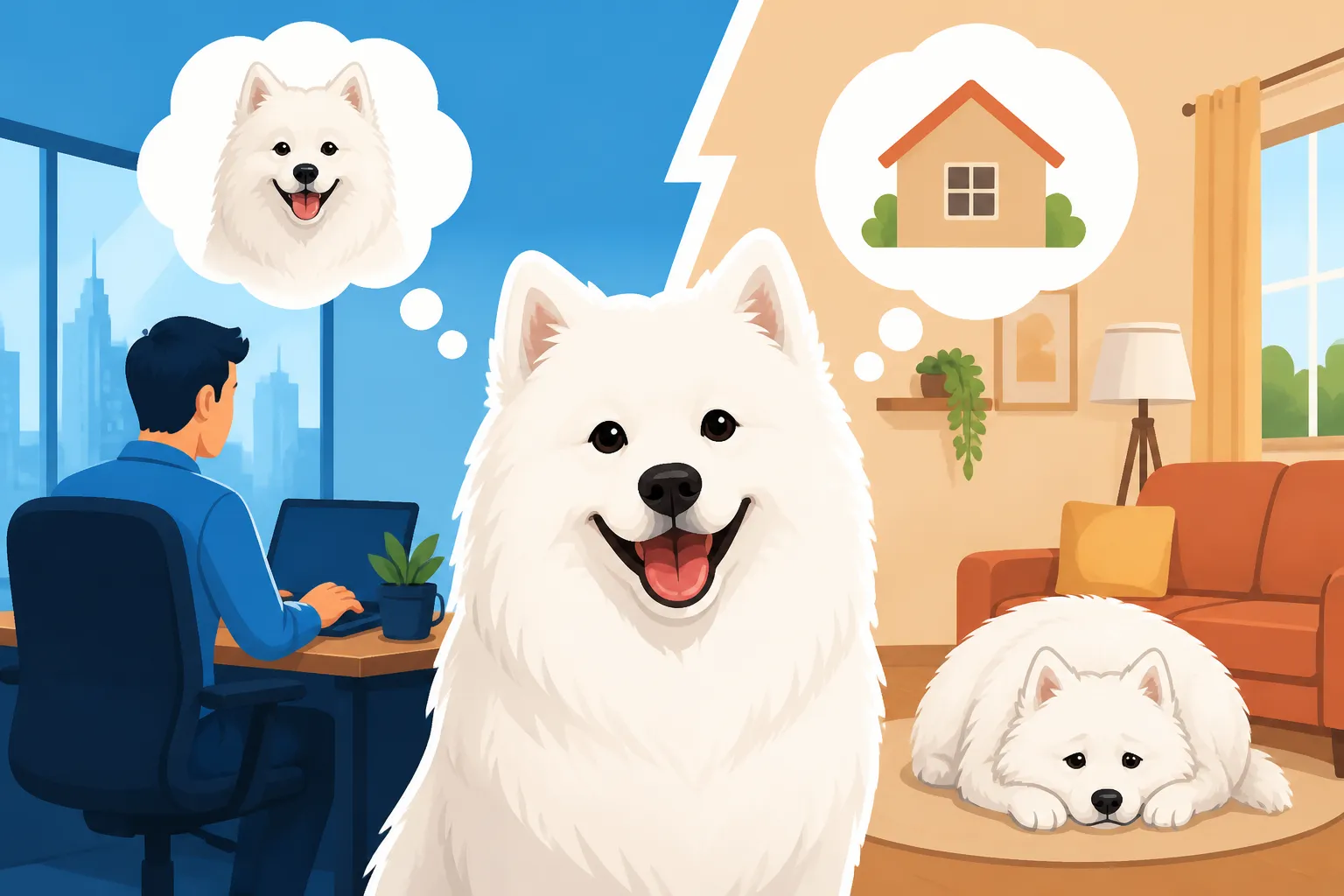
It’s a dream many of us share: envisioning that fluffy, smiling Samoyed face greeting us at the door. But the reality of a full-time job often clashes with the perceived needs of such a vibrant, companion-oriented breed. This guide is here to honestly explore whether a Samoyed can truly thrive with a full-time working owner, dissecting the challenges and offering practical solutions to make that dream a happy reality for both you and your furry friend.
The Samoyed's Deep Need for Companionship and Activity
Let's be upfront: Samoyeds are not, by nature, independent dogs who are content to be left to their own devices for long stretches. They were bred for centuries to be incredibly close companions, sleeping in tents with their human families and working alongside them. This isn't just a charming trait; it's deeply ingrained in their genetic makeup, making their need for connection a fundamental part of who they are.
The Deep Bond and Why They Crave Company
Imagine spending your days on the vast, icy tundra, relying on your canine partners for survival, warmth, and even conversation. That's the Samoyed's heritage. They're part of the family, full stop. When you bring a Samoyed into your home, you're not just getting a pet; you're adopting a shadow, a confidante, a four-legged family member who truly wants to be wherever you are. This isn't clinginess in an unhealthy way; it's genuine affection and a profound desire to participate in your life. Leaving them alone for eight, nine, or even ten hours a day, five days a week, can go against their very nature. They thrive on interaction, shared experiences, and the comforting presence of their people. They want to be Why a Samoyed Wants to Be in the Room With You.
The Drive for Activity and Mental Stimulation
Beyond companionship, Samoyeds are intelligent, active dogs. They were bred to herd reindeer, pull sleds, and navigate challenging terrains. This history means they come with a significant drive for both physical exercise and mental engagement. A quick walk around the block before you rush off to work and another brief stroll when you get home simply isn't going to cut it for most Samoyeds. They need structured exercise that truly tires them out, not just physically, but mentally too. Think about activities that engage their problem-solving skills, their scenting abilities, or their natural instinct to pull. A bored Samoyed isn't just a sad Samoyed; it's a Samoyed looking for a "job," and if you don't provide one, they'll invent their own, often to the detriment of your furniture, landscaping, or peace and quiet.
Consequences of Insufficient Engagement
When a Samoyed's fundamental needs for companionship and activity aren't met, you'll start to see behavioral issues surface. These aren't signs of a "bad" dog, but rather a dog trying to communicate that something is missing. Common manifestations include excessive barking or the infamous "Samoyed scream" that can make even the most patient neighbors reconsider their life choices. They might become destructive, chewing on inappropriate items or digging massive craters in your yard. What a Bored Samoyed Does to a House is often a direct result of unmet needs. Separation anxiety can also develop, leading to panic, house-soiling, and desperate attempts to escape when left alone. This isn't just inconvenient; it's heartbreaking for both the dog and the owner. Understanding How Many Hours a Samoyed Can Be Left is crucial, and for many, that number is far lower than a typical workday.
Managing a Samoyed's Needs While Working Full-Time
If you're a full-time worker and your heart is set on a Samoyed, don't despair! It is possible, but it requires a huge amount of planning, commitment, and often, financial investment. This isn't a breed you can simply fit into your existing schedule without significant adjustments.
The Morning Rush and Evening Wind-Down
Your day, and your Samoyed's day, starts long before you clock in. A quick five-minute potty break won't suffice. You'll need to dedicate a good 30-60 minutes in the morning to a vigorous walk, a solid play session, or some focused training. This isn't just about physical exercise; it's about providing mental stimulation and quality time together before you leave. A well-exercised and mentally tired Samoyed is much more likely to settle down and relax while you're away.
When you return home, the expectation is that you'll have another dedicated block of time. This means resisting the urge to collapse on the couch immediately. Instead, prepare for another substantial walk, a trip to a dog park, or an evening of active play and training. The "wind-down" after work for a Samoyed isn't passive; it's often more demanding than the morning. For many full-time workers, this means sacrificing personal time, hobbies, or social engagements during the week to meet their dog's needs. It's a trade-off you must be willing to make consistently, day in and day out, for The Twelve to Fourteen Years a Samoyed Lives.
Midday Solutions for Potty and Play
The biggest hurdle for full-time workers is the long stretch of time a Samoyed is left alone during the day. An adult Samoyed can potentially hold their bladder for 6-8 hours, but expecting them to do so reliably and comfortably, without any mental stimulation or social interaction, is often unrealistic and unfair. Puppies, of course, need much more frequent breaks.
This is where midday solutions become non-negotiable. This could mean:
- Coming home during your lunch break: If your workplace is close enough, a quick dash home for a potty break and some focused play can make a world of difference.
- Hiring a professional dog walker: This is a popular and highly effective option. A walker can come to your home, take your Samoyed for a decent walk, and provide some much-needed human interaction.
- Doggy daycare: For some Samoyeds, a few days a week at a reputable doggy daycare can be a lifesaver, offering supervised play, socialization, and plenty of activity. However, not all Samoyeds thrive in a daycare environment, especially if it's too chaotic or doesn't match their play style.
Without a consistent midday break, you risk not only accidents in the house but also emotional distress for your Samoyed, which can lead to behavioral problems like Separation Anxiety in a Samoyed.
Weekend Warrior or Consistent Effort?
Some owners mistakenly believe they can "make up" for lost time during the week by being a "weekend warrior" – packing all the exercise and attention into Saturday and Sunday. While weekend adventures are wonderful and necessary, they cannot compensate for five days of under-stimulation. Samoyeds thrive on routine and consistency. An intense weekend followed by a sudden drop-off in activity and companionship during the week can actually exacerbate behavioral issues, as the dog struggles to adjust to the fluctuating schedule.
Consider this scenario: You spend all weekend hiking, playing at the lake, and going to dog-friendly patios. Your Samoyed is exhausted and happy. Then Monday morning hits, and they're suddenly alone for ten hours. They're confused, possibly frustrated, and suddenly have a lot of pent-up energy from the lack of engagement. It's like going from a five-star resort to solitary confinement. A balanced approach means consistent, daily effort, even if weekdays require more creative solutions than weekend excursions.
Strategies and Solutions for Full-Time Samoyed Owners
Successfully integrating a Samoyed into a full-time working lifestyle demands proactive planning and a willingness to invest in resources that bridge the gap when you're not physically present.
Hiring Help: Walkers, Sitters, and Daycare
Let's face it, we can't be in two places at once. This is where a network of trusted caregivers becomes invaluable.
- Professional Dog Walkers: A good dog walker isn't just someone who lets your dog out for a potty break. They provide a structured walk, some mental stimulation, and a much-needed dose of human interaction. Look for certified, insured walkers with experience with high-energy breeds. Many will offer varying lengths of walks, from a quick 20-minute leg stretch to a full hour of exploring. This can break up the day, prevent accidents, and keep your Samoyed from feeling entirely isolated.
- Pet Sitters: If you travel for work, a pet sitter coming to your home can be less stressful for your Samoyed than boarding, especially given their preference for their own environment. A sitter can maintain routines, give them personalized attention, and even handle small household tasks.
- Doggy Daycare: For some social Samoyeds, daycare can be fantastic. It offers constant supervision, opportunities for play with other dogs, and a stimulating environment that can prevent boredom. However, ensure the facility is clean, well-staffed with knowledgeable individuals, and that the playgroups are appropriately sized and supervised. Some Samoyeds might find large, chaotic daycares overwhelming, so a smaller, more structured environment might be better. Always do a trial day to see how your Samoyed handles it. For many, a few days a week at daycare, rather than every day, strikes a good balance.
Enrichment at Home: Keeping Their Minds Busy
Even with midday breaks, your Samoyed will spend a significant amount of time alone. This time needs to be filled with positive, mentally engaging activities.
- Puzzle Toys and Treat Dispensers: These are your best friends. Instead of simply putting food in a bowl, use KONGs, snuffle mats, or puzzle feeders. Fill them with their kibble, some wet food, or dog-safe peanut butter and freeze them for a longer-lasting challenge. This makes mealtime a "job" and keeps their brain engaged. Many excellent options can be found on Amazon, offering different levels of difficulty.
- Chew Toys: Samoyeds are big chewers, especially when bored or anxious. Provide a variety of durable chew toys that are safe and appropriate for their size and chewing style. Rotate them regularly to keep things interesting.
- Safe Space and Comfort: Create a comfortable, safe space for your Samoyed while you're away. This might be a crate, a designated room, or a section of the house. Provide a cozy bed, fresh water, and familiar scents (like an old t-shirt of yours). Some owners find calming music or dog-specific TV channels (yes, they exist!) help to soothe their dogs.
- Rotation of Toys: Don't leave all the toys out all the time. Rotate them daily or weekly to keep things novel and exciting. A "new" toy, even if it's just one they haven't seen in a few days, can capture their attention longer.
Leveraging Technology and Training Tools
Modern technology offers some fantastic tools to help full-time workers connect with their Samoyeds and manage their time alone.
- Pet Cameras: A pet camera with two-way audio allows you to check in on your Samoyed, speak to them, and even dispense treats remotely. Seeing them napping peacefully or playing with a toy can provide immense peace of mind. If you notice signs of distress, you can call your dog walker or a trusted neighbor. Many affordable and reliable options are available on Amazon.
- Online Training Resources: Consistent training is paramount for a Samoyed, especially when managing their energy and potential for vocalization. Programs like BAXTER & Bella offer online puppy and dog training courses that can be incredibly helpful. Their flexible format allows you to fit training sessions into your busy schedule, focusing on crucial skills like impulse control, proper greetings, and "settle" commands that are vital for a dog who spends time alone. This kind of structured guidance can help you understand Training a Samoyed That Finds Obedience Negotiable and build a strong foundation.
- Smart Feeders: While not a substitute for human interaction, a smart feeder can dispense small portions of food at scheduled times, breaking up the day and providing a moment of engagement. Just remember, these are tools to assist, not replace, quality time.
| Strategy | Pros | Cons | Cost Implication |
|---|---|---|---|
| Coming Home for Lunch | Free, personal interaction, reinforces bond | Only feasible for nearby workplaces, cuts into owner's break | Low |
| Dog Walker | Structured exercise, human interaction, flexible | Requires trust in individual, can be inconsistent if rotating walkers | Moderate to High |
| Doggy Daycare | Socialization, constant supervision, high activity | Not suitable for all Samoyeds, potential for illness, fixed schedule | High |
| Puzzle Toys/Chews | Mental stimulation, prevents boredom, independent activity | Can be quickly solved, requires rotation, not human interaction | Low |
| Pet Camera | Peace of mind, remote interaction, behavior monitoring | Doesn't replace physical presence, can cause anxiety if watching too closely | Low (one-time) |
| Online Training | Flexible, consistent learning, addresses specific behaviors | Requires owner's dedication, no in-person feedback | Moderate (one-time) |
Long-Term Considerations and What to Expect
Adopting a Samoyed while working full-time isn't a short-term fix; it's a long-term commitment that evolves as your dog grows and as your life changes. It requires continuous adaptation and a deep understanding of your individual dog's needs.
The Importance of Socialization and Consistent Training
From the moment you bring your Samoyed puppy home, socialization and training are non-negotiable. This is especially true if they'll be spending time alone. A well-socialized Samoyed is more adaptable to different environments, less likely to be fearful or reactive, and generally happier. Enroll in puppy classes early – even BAXTER & Bella's online courses can guide you through the initial critical periods. Continued training throughout their lives helps build a strong bond and keeps their minds sharp. A Samoyed that understands boundaries and cues is much easier to manage than one left to their own devices. Remember, a well-trained dog isn't just about obedience; it's about clear communication and mutual respect. This helps when addressing issues like The Samoyed Scream and Why It Is Not Barking, as consistent training provides alternatives to their expressive vocalizations.
Adapting as Your Samoyed Ages
A Samoyed puppy has different needs than an adult or a senior Samoyed. The First Year With a Samoyed Puppy is particularly demanding, requiring immense time for house-training, socialization, and basic obedience. As they mature, their energy levels might normalize a bit, but their need for companionship often intensifies. As they reach their senior years, their physical capabilities may decline, requiring shorter, more frequent walks and perhaps more comfortable bedding, but their emotional need for your presence remains strong. Your commitment to providing for them must adapt over their entire lifespan. You may need to consider adjusting your work schedule, increasing dog walker visits, or even exploring early retirement options if your Samoyed's needs demand it later in life.
The Ultimate Payoff: A Happy, Well-Adjusted Companion
While owning a Samoyed as a full-time worker presents significant challenges, it's absolutely achievable for those willing to put in the effort. The payoff is immense: a loyal, affectionate, and joyful companion who brings unparalleled warmth and happiness into your life. Seeing that famous "Samoyed smile" light up when you walk through the door, knowing you've provided a loving and enriching life despite your busy schedule, is one of the most rewarding experiences. It requires honesty with yourself about your capacity for commitment, a willingness to invest time and resources, and an unwavering dedication to meeting the unique needs of this truly special breed. If you can commit to making their well-being a priority, then yes, a Samoyed can absolutely suit a full-time worker, and you'll both be richer for the experience.
Disclaimer
This article is for general informational purposes only and does not constitute professional advice. Laws, prices and regulations vary by location and change over time. Consult a qualified professional for guidance on your specific situation.