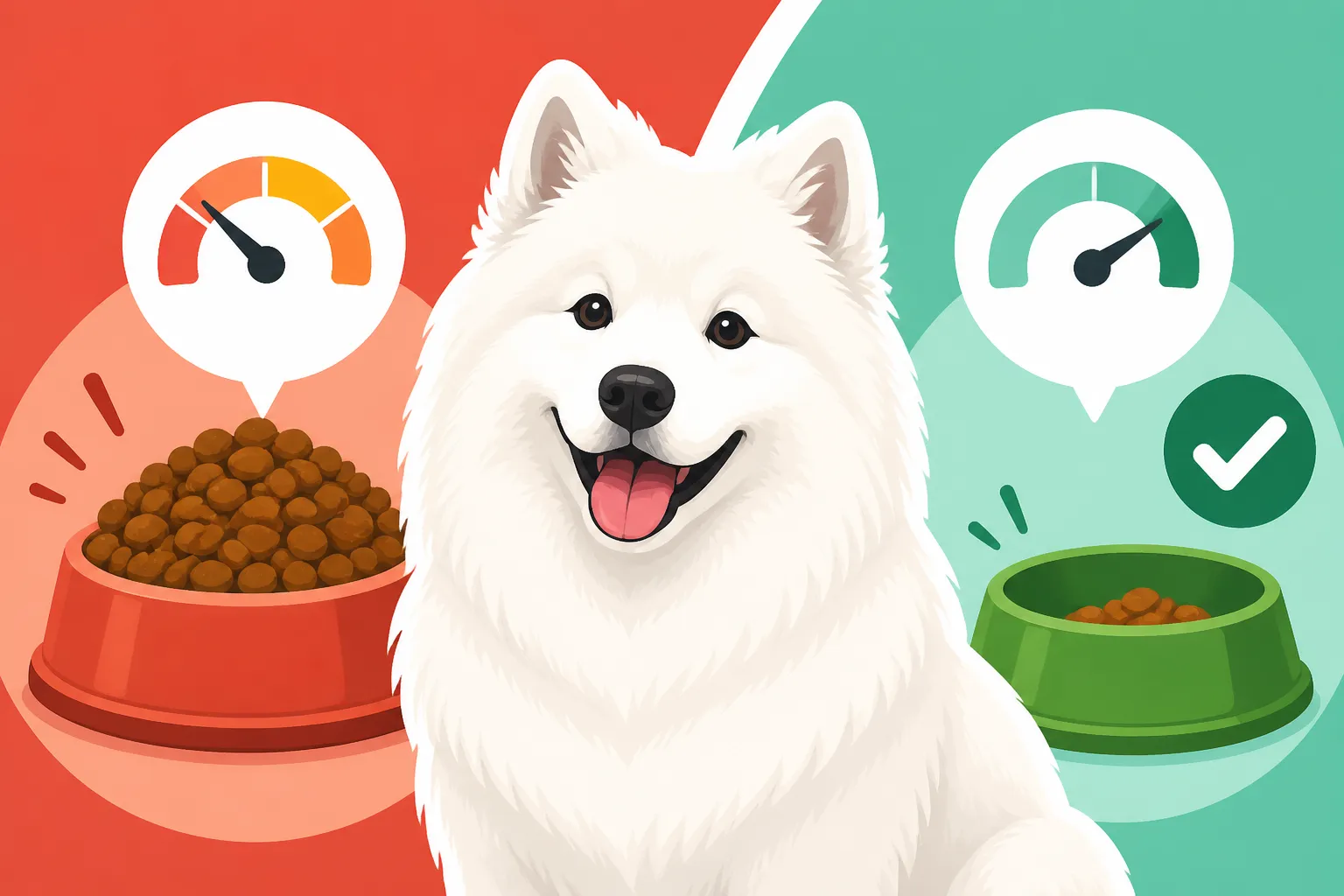
Whether a Samoyed Needs Fewer Calories Than Expected
It’s a common scenario: you’ve welcomed that gorgeous, fluffy Samoyed puppy into your home, and you’re dutifully researching how much to feed them, only to find yourself scratching your head. You see recommendations for large breeds, sometimes even specific to sled dog types, suggesting mountains of food. But then you look at your own Sammy, who seems perfectly content on far less, or worse, starts to pack on the pounds if you follow those generic guidelines. The truth is, your Samoyed might actually need significantly fewer calories than you (and many generic feeding charts) expect, and understanding why is crucial for their long-term health. This guide will help you unravel the unique metabolic needs of our beloved "Smiling Sammies" and equip you with the knowledge to feed them just right.
The Samoyed's Unique Metabolism and Arctic Heritage
Our Samoyeds, with their stunning white coats and perpetual smiles, are more than just pretty faces. They are living descendants of dogs bred for survival in one of the harshest environments on Earth: the Arctic. This isn't just a fun historical fact; it profoundly impacts their metabolism and, by extension, their caloric needs.
Built for Efficiency, Not Endless Fuel
Imagine trying to survive in Siberia, where food sources might be sparse and inconsistent. Dogs in such an environment wouldn't thrive if they had high-octane metabolisms that burned through calories at an alarming rate. Instead, the Samoyed's ancestors, working alongside the Nenets people, evolved to be incredibly efficient at converting what little they ate into usable energy. They weren't just pulling sleds; they were herding reindeer, guarding camps, and even sleeping in tents with families to provide warmth, a testament to their deep bond and adaptability. Every calorie counted.
This heritage means modern Samoyeds often retain a more conservative metabolism. They are adept at sustaining themselves on what might seem like a modest amount of food for a dog of their perceived size. If you think about the energy expenditure of simply existing in a frigid environment, but with limited resources, it makes perfect sense that their bodies would learn to conserve rather than splurge on fuel. Unlike some high-drive working breeds that are constantly burning, a Samoyed's body is designed to make the most of what it gets. This efficiency is a double-edged sword: it’s great for survival, but it means overfeeding them in a domestic setting can quickly lead to excess weight.
The Double Coat and Internal Thermoregulation
A Samoyed's magnificent double coat is truly a marvel of natural engineering. It’s not just for aesthetics; it’s a highly effective insulation system, designed to protect them from extreme cold. What many people don't realize is that this same coat also helps regulate their body temperature in warmer climates. The outer guard hairs repel dirt and moisture, while the dense, woolly undercoat traps air, creating a thermal barrier.
This incredible insulation means their bodies don't have to work as hard to maintain a stable internal temperature. A dog that needs to shiver constantly to stay warm, or pant excessively to cool down, expends a significant amount of energy, and thus, calories. Because a Samoyed's coat is so effective at keeping them comfortable in a wider range of temperatures, they naturally burn fewer calories on thermoregulation than a dog with a single, thinner coat. So, while you might think a big, fluffy dog would need more food to fuel that incredible fur, the opposite can often be true in terms of metabolic expenditure for warmth. It’s an integral part of A Samoyed Built for Sixty Below in an American Summer and how they manage in various climates.
Why You Might Overestimate Your Samoyed's Calorie Needs
It's easy to fall into the trap of thinking a dog that looks as substantial as a Samoyed must need a substantial amount of food. However, a lot of what we perceive as "size" with a Samoyed is actually glorious, fluffy coat.
The "Big Dog, Big Appetite" Misconception
When you see a fully grown Samoyed, they certainly cut an impressive figure. Standing tall with a voluminous coat, they appear quite large. Naturally, our brains often equate large size with large caloric requirements. We compare them to breeds like Great Danes or Mastiffs, which are genuinely massive in bone and muscle, and indeed require vast amounts of food. However, underneath all that pristine white fluff, a Samoyed is a medium-to-large sized dog, often weighing between 35 to 65 pounds, with males generally being larger. What a Samoyed Actually Weighs can vary, but they are not the giant breeds some imagine.
The misconception arises because their abundant coat adds significant visual bulk. If you were to give a Samoyed a close shave (which, please, never do! Why Shaving a Samoyed Makes the Heat Worse), you'd be surprised at how much smaller they actually are. So, when a generic feeding chart suggests a certain amount of food for a "large breed dog," it might be calibrated for a dog that is much heavier in actual body mass, with a higher basal metabolic rate due to that underlying structure, not just a thick coat. This visual deception often leads well-meaning owners to overfeed, believing their beautiful "big" dog needs more sustenance than is truly healthy.
Activity Levels Versus Perceived Energy
Another factor that influences calorie needs is activity level. While Samoyeds are capable of incredible feats of endurance – they were bred to pull sleds over long distances – the average pet Samoyed, even an active one, isn't usually working in the Arctic every day. Many enjoy long walks, playtime in the yard, maybe some hiking or recreational pulling, but this often doesn't equate to the intense, sustained energy expenditure of their working ancestors.
It’s easy to assume that because they can be high-energy, they are high-energy all the time, and therefore need more fuel. But a Samoyed's day-to-day life often involves significant periods of napping and lounging, especially if they're indoor dogs in a temperate climate. A Samoyed living a relatively comfortable suburban life, even with daily walks, will burn far fewer calories than a Samoyed consistently running miles on a sled team. Their "perceived energy" from occasional bursts of play or their general joyful demeanor can lead owners to think they need more fuel than their actual activity level demands. For insights into their exercise requirements, consider How Much Exercise a Samoyed Needs.
The Hidden Dangers of Overfeeding
The consequence of consistently overestimating your Samoyed's caloric needs is, quite simply, weight gain. And while a little extra fluff might seem charming on a Samoyed, it comes with a host of serious health risks. Just like in humans, excess weight puts undue strain on a dog's body systems.
Obesity can contribute to joint problems, exacerbating conditions like Hip Dysplasia in a Samoyed which the breed can be prone to. Carrying extra pounds puts more pressure on their hips and elbows, leading to pain, inflammation, and earlier onset of arthritis. Beyond skeletal issues, being overweight dramatically increases the risk of metabolic diseases, including Diabetes in a Middle Aged Samoyed. A body constantly dealing with an influx of more calories than it needs can become insulin-resistant, leading to serious health complications that require lifelong management. Why a Samoyed Owner Must Watch Its Weight Closely is not just about aesthetics; it’s about preventing serious illness.
Moreover, excess weight can contribute to cardiovascular issues and respiratory problems, especially in a breed already prone to overheating in warm weather due to their thick coats. It can also make them more susceptible to certain types of kidney issues, even beyond hereditary conditions like The Kidney Disease That Kills Samoyed Males Before Fifteen Months. While it's not the same as a specific genetic condition, general kidney stress can be a concern. Understanding Signs a Samoyed Is Overweight is crucial for intervening early and protecting your Samoyed's long-term health.
How to Accurately Determine Your Samoyed's Calorie Needs
So, if generic guidelines aren't working, how do you figure out the right amount of food for your Samoyed? It involves a combination of scientific principles, careful observation, and a partnership with your veterinarian.
Understanding Resting Energy Requirements RER and Daily Energy Requirements DER
When it comes to calculating caloric needs, veterinarians often start with two key concepts:
- Resting Energy Requirement (RER): This is the energy your Samoyed needs just to perform basic bodily functions while at rest – breathing, maintaining body temperature, circulating blood, and organ function. It's the minimum energy required to keep them alive.
- Daily Energy Requirement (DER): This takes the RER and multiplies it by a factor that accounts for your dog's activity level, life stage (puppy, adult, senior), and reproductive status (intact, spayed/neutered). For example, a very active working dog will have a higher multiplier than a sedentary senior dog.
There are formulas to calculate these, but honestly, it can get a bit complex with different factors and exponents. The important takeaway is that these are starting points. They provide an educated guess, but your individual Samoyed might still defy the averages because every dog is unique. The trick is to use these as a baseline and then adjust based on their actual body condition.
Factors That Influence a Samoyed's Caloric Needs
Your Samoyed isn't a static machine; their caloric needs will change throughout their life and even day-to-day. Here are the key factors to consider:
- Age: A growing Samoyed puppy will have higher caloric needs per pound of body weight to support rapid growth and development. However, once they mature, their needs will decrease. Caring for an Old Samoyed means adjusting their diet again as their metabolism slows down and their activity decreases. Senior dogs often require fewer calories to prevent weight gain, even though they might have other specific nutritional needs.
- Activity Level: This is perhaps the most significant variable. A Samoyed that spends most of its day napping on the couch (a "couch potato") will need significantly fewer calories than one that's regularly hiking, running, or participating in dog sports. Even an hour-long brisk walk daily counts as moderate activity, but it's still far less than a true working dog.
- Neutering/Spaying Status: Spaying or neutering can dramatically reduce a dog's metabolic rate. Many veterinarians estimate a 20-30% reduction in caloric needs after sterilization. This is a huge factor, and something many owners overlook, leading to rapid weight gain post-surgery. Whether a Neutered Samoyed Gains Weight is a very real concern for many owners.
- Individual Metabolism: Just like people, some Samoyeds are simply "easy keepers," meaning they maintain weight effortlessly on less food, while others might have a slightly faster metabolism. You'll learn your dog's individual quirks over time.
- Health Conditions: Any underlying health issues, such as thyroid problems, kidney disease, or even certain medications, can alter your Samoyed's caloric requirements. Always consult your vet if your dog has health concerns that might impact their diet.
Practical Steps for Monitoring and Adjusting Food Intake
Knowing the theory is one thing; putting it into practice is another. Here’s how you can actively manage your Samoyed's diet:
-
Body Condition Scoring (BCS): This is your best friend. Instead of just looking at the number on the scale, BCS assesses your dog's fat reserves. You should be able to easily feel (but not necessarily see) their ribs, feel a distinct waist tuck when viewed from above, and see an abdominal tuck from the side.
BCS Score Description Samoyed Appearance/Feel 1 (Emaciated) Ribs, lumbar vertebrae, pelvic bones, and all bony prominences evident from a distance. No discernible body fat. Obvious loss of muscle mass. Highly unlikely for a Samoyed due to coat, but severe muscle wasting would be evident, along with extreme lethargy. You would feel every bone sharply. 2 (Thin) Ribs, lumbar vertebrae, and pelvic bones easily palpable. Little discernible body fat. Minimal loss of muscle mass. Still hard to see due to coat, but feeling over the ribs would reveal them very easily, almost sharp, with minimal padding. Waist tuck and abdominal tuck would be extreme. 3 (Ideal) Ribs palpable without excess fat covering. Waist easily noted when viewed from above. Abdominal tuck apparent. This is the sweet spot! You can easily feel their ribs with gentle pressure, like the back of your hand. A visible (but not exaggerated) waist tuck from above, and a nice upward curve of the belly from the side. Under the fur, they'd feel lean and athletic. 4 (Overweight) Ribs palpable with slight excess fat covering. Waist discernible but not prominent. Abdominal tuck absent or minimal. You'd need more pressure to feel the ribs; they wouldn't be as distinct. The waist would be less defined, perhaps more of a straight line, and the abdominal tuck might be gone. Their body would feel softer and less defined beneath the fur. This is where many Samoyeds drift without owners realizing. 5 (Obese) Ribs not palpable under heavy fat cover. Obvious fat deposits over lumbar area and base of tail. No waist or abdominal tuck. Ribs would be very difficult, if not impossible, to feel without significant digging. They'd feel very rounded and soft everywhere. No waist, no tuck, just a barrel shape. This level of obesity is very dangerous for a Samoyed's health. -
Regular Weight Checks: Weigh your Samoyed consistently, ideally once a month. Use the same scale if possible. Log their weight so you can spot trends. Even a pound or two of gain can make a difference over time for a Samoyed.
-
Working with Your Vet: Your veterinarian is your best resource. They can perform an accurate BCS, discuss your dog’s specific needs, and help you calculate an appropriate starting point for calories. Don't hesitate to ask them for guidance on how to adjust your feeding plan. They can also rule out any underlying medical conditions causing weight fluctuations.
-
Reading Food Labels (and Adjusting): Don't just scoop out the amount recommended on the bag. Those recommendations are often for "average" dogs with "average" activity levels, and they tend to err on the side of overfeeding. Look for the "calories per cup" or "kcal/kg" information on your dog food bag. This allows you to precisely calculate how many calories your Samoyed is getting. Then, divide your target daily calories by the calories per cup to get the exact amount to feed. Many reputable pet food brands, whether you buy from Chewy or direct from a company like Ollie, provide detailed calorie information on their websites or packaging, and you can often find this listed on product pages on sites like Amazon. Remember that How Much Food a Samoyed Eats Monthly depends heavily on this calculation.
-
Brand Mentions: When you're looking at different food options, remember to dive deep into the nutritional panels. Whether you're considering premium kibble from Chewy, fresh food delivery services like Ollie, or exploring the vast selection available on Amazon, always check the caloric density. Some foods are much more calorie-dense than others, meaning a smaller volume delivers more energy. This is particularly important for Samoyeds with their efficient metabolisms, as a highly caloric food can lead to weight gain even with what seems like a small portion.
Feeding Your Samoyed Smartly for Optimal Health
Once you've zeroed in on the right caloric intake, the next step is implementing a feeding strategy that supports their overall health and well-being.
Quality Over Quantity
Since your Samoyed likely needs fewer calories than many other breeds of their apparent size, the quality of those calories becomes even more paramount. You can't just feed less of a low-quality food and expect optimal health. Instead, focus on nutrient-dense foods that provide high-quality protein, balanced fats, and essential vitamins and minerals without excessive fillers.
Look for dog foods where a named meat source (e.g., chicken meal, lamb) is among the first ingredients. Avoid foods with vague "meat by-products" or excessive amounts of corn, wheat, or soy as primary ingredients, unless specifically recommended by your vet for a health condition. High-quality ingredients mean your Samoyed gets all the necessary nutrients in a smaller portion, satisfying their needs without overfeeding. This approach supports lean muscle mass, a healthy coat (which is a lot of coat to maintain!), and strong immune function, truly making every bite count for their longevity.
Controlled Portions and Consistent Schedule
Free-feeding, where food is left out all day for your dog to graze, is generally not recommended for Samoyeds. Given their efficient metabolism and tendency to gain weight, consistent, measured meals are key. Divide their total daily caloric intake into two or even three meals. This helps regulate their digestion, prevents overeating in one sitting, and can even help manage blood sugar levels, which is important for breeds that can be prone to conditions like diabetes.
A consistent feeding schedule also establishes a routine, which many dogs appreciate. It can aid in house training (as input often predicts output!) and gives you a chance to monitor their appetite. If your Samoyed suddenly isn't finishing their meals, it can be an early indicator of a health issue. Whether a Samoyed Needs a Consistent Feeding Schedule is not just about weight, but about overall digestive health and routine.
Mindful Treating
We all love to spoil our Samoyeds with treats – those happy smiles are just so hard to resist! However, it's critical to remember that treats are not calorie-free. Every single treat, whether it's a small training morsel or a larger dental chew, contributes to your Samoyed's daily caloric intake. It's shockingly easy for a few treats here and there to push them over their daily limit, especially if you're already feeding a precise main meal.
The best approach is to factor treats into their daily calorie budget. This might mean slightly reducing their main meal portion on days when you use more treats for training or rewards. Opt for low-calorie, healthy options. Things like plain cooked green beans, baby carrots, or small pieces of lean, cooked chicken can be excellent, satisfying, and low-calorie rewards. Be especially cautious with fatty treats, as Whether a Fatty Meal Triggers Samoyed Pancreatitis is a genuine concern. Always check the calorie count on commercial treats and use them judiciously to avoid unintentionally contributing to weight gain.
Disclaimer
This article is for general informational purposes only and does not constitute professional advice. Laws, prices and regulations vary by location and change over time. Consult a qualified professional for guidance on your specific situation.