Why a Samoyed Digs to Stay Cool
Finding your beautiful Samoyed's signature smile replaced by a mouthful of dirt, or worse, discovering a new crater in your perfectly manicured lawn, can be incredibly frustrating. Many Samoyed owners quickly learn that their fluffy companion isn't just digging for fun or out of boredom; often, they're on a quest for cooler ground. This guide will dive deep into understanding why your Samoyed transforms into a furry excavator when the temperatures rise, and more importantly, what you can do to help them stay comfortable and keep your yard intact.
The Instinct Behind the Crater: Why Samoyeds Dig
It's easy to get upset when your gorgeous Samoyed decides your flower bed needs a new, large hole. But before you get too frustrated, it's important to understand that this isn't usually an act of defiance. For Samoyeds, digging is often a deeply ingrained instinct, especially when they're trying to beat the heat. They're not trying to ruin your day; they're simply trying to survive a warm one.
A Cold-Weather History in a Warm Climate Reality
Our Samoyeds hail from the freezing expanses of Siberia, where temperatures can plummet far below zero. Their ancestors, companion dogs to the nomadic Nenets people, were bred to thrive in these harsh, frigid conditions. Part of their survival toolkit included the ability to dig dens or shelters in the snow, providing a refuge from biting winds and extreme cold. Think of it: a natural snow cave offers surprising insulation. This instinct to dig for comfort is hardwired into their DNA.
Now, fast forward to a typical American summer day, especially in regions that weren't built with sub-zero temperatures in mind. Your Samoyed, with its magnificent, dense double coat—a marvel of insulation designed for icy tundras—suddenly finds itself in a climate that feels like a sauna. While that thick coat is fantastic at trapping warmth in winter, it can also trap heat in summer, making them feel uncomfortably hot. Despite the coat's natural ability to also keep them cool by preventing direct sunlight from hitting their skin, there comes a point where their internal thermostat just can't keep up. That ancient instinct to create a comfortable microclimate kicks in, and for a Samoyed, that often means digging. They are quite literally trying to dig their way to a cooler existence. Understanding this historical context can help us approach their digging with a bit more empathy. For more on their historical resilience, you might find A Samoyed Built for Sixty Below in an American Summer an interesting read.
The Science of Cooling: How Digging Works
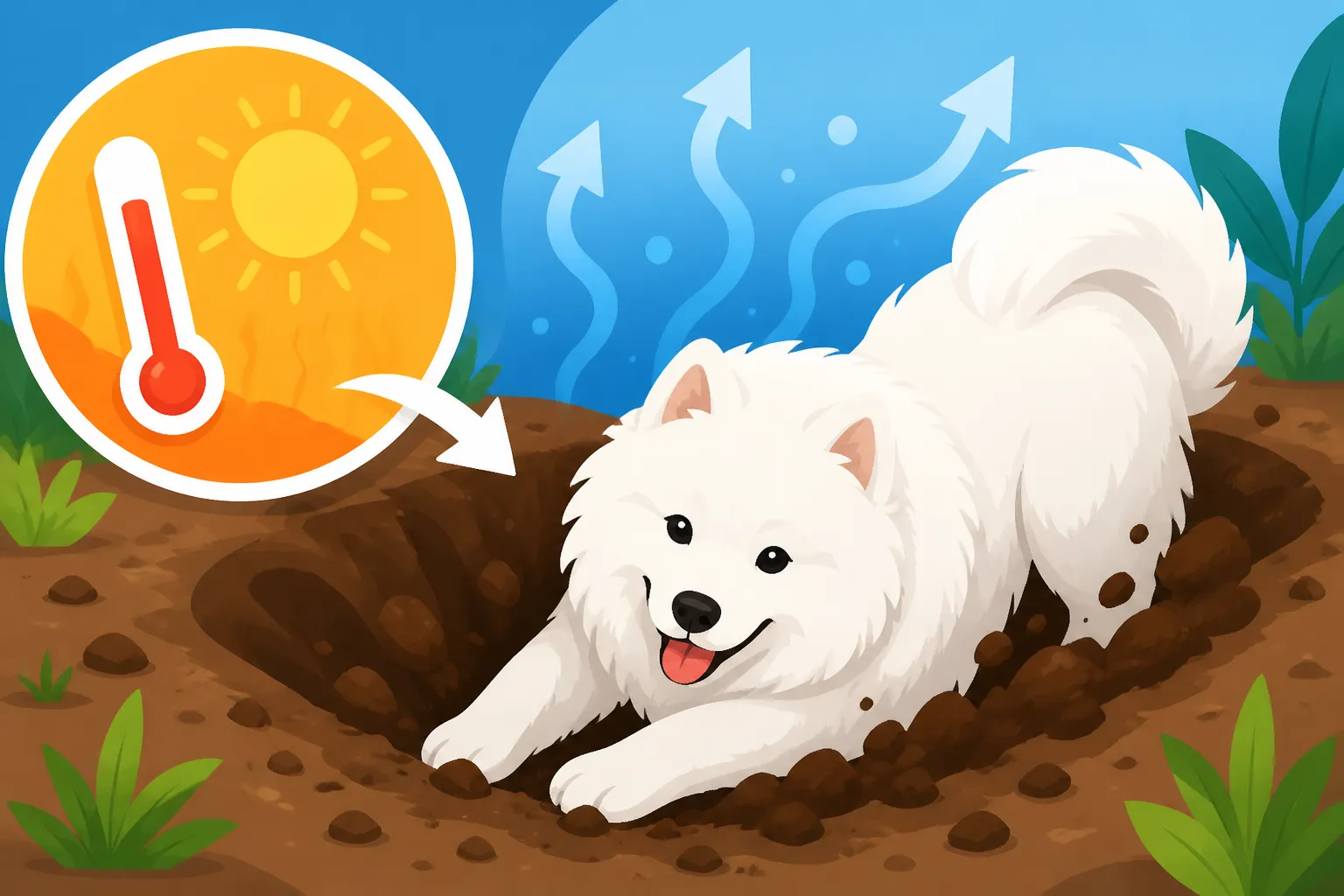
When your Samoyed starts digging, they're not just moving dirt aimlessly. They're performing a sophisticated, instinctual act of thermoregulation. The surface of the earth, especially when exposed to direct sunlight, can get incredibly hot. However, just a few inches below that sun-baked topsoil, the ground temperature can be significantly cooler and often retains more moisture.
When your Samoyed digs down, they're essentially removing the warmer, dry top layer to expose this cooler, sometimes damp, earth. Once they've created a shallow pit, they'll often lie down in it, pressing their body against the cool soil. This direct contact allows for efficient heat transfer from their body to the cooler ground, helping to lower their core temperature. It's the canine equivalent of putting a cold compress on your forehead on a hot day. The larger their body, the more surface area they have to cool, making these dug-out "nests" surprisingly effective for a dog built for much colder climates. It’s a natural, albeit messy, way for them to find relief when the heat becomes too much to bear.
Recognizing the Heat-Driven Digger
It's one thing to see your Samoyed digging, but it's another to understand why they're doing it. Distinguishing between a dog who's just being destructive and one who's genuinely seeking relief from the heat is crucial for providing the right kind of intervention. After all, you want to address the root cause, not just the symptom.
Signs Your Samoyed Is Overheating (Beyond Digging)
While digging is a pretty clear indicator that your Samoyed is trying to cool down, it's important to recognize other, more critical signs of overheating. Your furry friend might be silently struggling long before they even pick up a shovel (or, you know, use their paws). Heavy, excessive panting is usually the first noticeable symptom. Unlike humans who sweat all over, dogs primarily cool themselves through panting. If your Samoyed is panting hard, even when resting, that's a red flag.
You might also notice excessive drooling, sometimes with thicker saliva, as their body tries to expel heat. They might become lethargic, moving slower than usual, or actively seek out any patch of shade available. Their gums could appear bright red, and their heart rate might be noticeably faster. In more severe cases, you could see disorientation, weakness, vomiting, or even collapse. It’s a serious situation that can escalate rapidly to heatstroke, which is a life-threatening emergency. So, if you see them frantically digging and showing any of these other signs, it's time to take immediate action to cool them down. Knowing Signs a Samoyed Is in Heat Distress can truly be a lifesaver.
The Difference Between Boredom Digging and Cooling Digging
Not all digging is created equal. Understanding the motivation behind your Samoyed’s excavation efforts can guide your response. Boredom digging, for instance, often manifests as random holes scattered across the yard, sometimes near fences where they might be trying to escape or explore, or at the base of trees. These holes tend to be deeper, more destructive, and often show signs of chewing on roots or other objects they unearth. A bored Samoyed might dig because they're under-exercised, lacking mental stimulation, or simply lonely. They might stare off into the distance, then suddenly attack the ground with gusto.
Cooling digging, on the other hand, usually has a very specific purpose and location. You’ll often find these shallow "nests" or trenches in shaded areas of the yard—under a large bush, beneath a deck, or against the cool foundation of your house. The holes are typically just deep enough for them to lie down comfortably, exposing their belly and chest to the cooler earth. They're not usually tearing up roots or trying to get under something; they're creating a cool bed on the ground. If your Samoyed immediately lies in the newly dug spot, especially after a period of panting or seeking shade, it’s a strong indication they’re trying to cool off. Recognizing this distinction is vital. If they're digging to stay cool, giving them a designated digging spot might not be enough if the underlying problem of overheating isn't addressed.
Strategies to Mitigate Heat-Related Digging
Okay, so you've identified that your Samoyed is digging to stay cool. The good news is that there are many proactive steps you can take to help them beat the heat, thereby reducing their need to turn your yard into a lunar landscape. It's all about making their environment more comfortable.
Environmental Adjustments for Cooler Comfort
The first line of defense against heat-driven digging is to modify your Samoyed's outdoor environment. Shade is your best friend here. If you don't have enough natural shade from trees, consider investing in shade sails or tarps over their favorite outdoor spots. These can make a surprising difference in ground temperature and direct sun exposure. Creating shaded areas helps regulate both the air and ground temperatures, making those impromptu digging projects less appealing.
Next, ensure constant access to fresh, cool water. This might seem obvious, but a bowl of stagnant, warm water won't cut it. Place multiple water bowls around the yard, perhaps even adding ice cubes to some. A pet fountain can encourage more drinking and keeps the water circulating and cooler. Beyond that, consider a What a Kiddie Pool for a Samoyed Costs and setting one up for them. Many Samoyeds adore splashing around in shallow water, and it's a fantastic way for them to cool their paws and bellies. You might also look into cooling mats. These gel-filled pads draw heat away from your dog and can be placed in shaded areas outdoors or indoors. A cooling mat is often a worthwhile investment. Crucially, during peak heat hours (usually late morning to late afternoon), your Samoyed should really be indoors, ideally in an air-conditioned space. It's not just about comfort; it's about safety. Our article on Whether a Samoyed Needs Air Conditioning delves deeper into this necessity. A combination of these environmental adjustments can go a long way in preventing the urge to dig. For a comprehensive summer plan, check out Water, Shade and the Summer Plan for a Samoyed.
Management and Training Approaches
While environmental adjustments are key, sometimes a little management and training can help redirect that powerful digging instinct. First and foremost, never leave your Samoyed unsupervised for extended periods in hot weather, especially if you know they're prone to digging when warm. Short, supervised stints are fine, but constant monitoring ensures you can intervene if they start to overheat or dig in undesirable spots.
One popular strategy is to create a designated digging area. This could be a sandbox specifically for them or a patch of earth in a less visible part of the yard that you've loosened. You can even bury some toys or treats in it to encourage them to dig there. When you see them digging elsewhere, gently redirect them to their approved digging pit. Positive reinforcement works wonders with Samoyeds; praise and reward them when they use their designated spot. If you're looking for quality training resources, BAXTER & Bella offers online puppy training programs that emphasize positive reinforcement, which can be adapted to manage specific behaviors like digging.
For dogs that are particularly persistent, providing mental and physical enrichment can sometimes reduce general stress and boredom, indirectly reducing the urge to dig in unwanted places, though it won't stop heat-driven digging. Puzzle toys, longer walks during cooler parts of the day, or even simple training sessions can help. You can find a wide range of durable outdoor toys on Amazon that can keep them entertained. However, remember that these are supplementary to addressing the core issue of heat. For more intensive training needs, understanding what a professional trainer costs might be helpful.
| Solution Category | Specific Examples | Best For | Considerations |
|---|---|---|---|
| Shade & Shelter | Natural trees, shade sails, covered patios | Reducing direct sun exposure, ambient cooling | Placement, durability, wind resistance |
| Hydration | Multiple water bowls, ice cubes, pet fountains | Encouraging water intake, core temperature regulation | Cleanliness, frequency of refilling |
| Direct Cooling Aids | Cooling mats, kiddie pools, damp towels | Immediate relief from heat, sensory comfort | Mat durability, water hygiene, dog acceptance |
| Indoor Access | Air-conditioned home, tiled floors | Complete escape from outdoor heat | Energy costs, supervision for indoor destruction |
| Behavioral | Designated digging pit, puzzle toys, supervised play | Redirecting unwanted digging, mental stimulation | Consistency in training, supervision, regular rotation of toys |
Long-Term Solutions and Preventative Care
While immediate fixes are great for managing the moment, truly tackling heat-driven digging requires a long-term strategy focused on preventative care and consistent habits. It's about building a lifestyle for your Samoyed that minimizes their discomfort in warmer weather.
Exercise Timing and Intensity
One of the most impactful changes you can make for a Samoyed living in a warm climate is adjusting their exercise routine. Samoyeds are active dogs and need regular exercise to stay healthy and happy, but the timing is everything. During hotter months, stick to early morning and late evening walks when temperatures are significantly lower. Think pre-dawn or after sunset, when the pavement has had a chance to cool down. Walking them mid-day, even for a short potty break, can quickly lead to overheating and a desperate search for cool earth when they return home.
Furthermore, adjust the intensity of their exercise. Forget strenuous runs or long, brisk hikes when it's warm. Opt for shorter, leisurely strolls, or indoor play sessions during the hottest parts of the day. A tired Samoyed is a happy Samoyed, but an overheated Samoyed is a distressed and potentially sick one. Always carry water for both of you, and take frequent breaks in the shade. If you're wondering how early is too early, consider How Early a Samoyed Should Be Walked in Summer for more detailed advice. Prioritizing their comfort during exercise will significantly reduce their internal heat load, making them less inclined to dig.
Coat Care and Grooming (and what not to do)
A Samoyed's magnificent double coat is truly a wonder of nature, acting as both a winter coat and a summer shield. The dense undercoat provides insulation, while the coarser guard hairs reflect sunlight and allow air to circulate. This is why regular grooming is paramount, especially during seasonal coat blows when they shed their undercoat in huge clumps. Brushing your Samoyed frequently (daily during shedding season, a few times a week otherwise) helps remove dead hair and ensures their coat can do its job effectively. A matted or excessively thick coat can trap heat, making them feel much hotter.
However, there's one crucial "don't": never, ever shave your Samoyed. This is a common misconception, with many owners believing it will help them stay cooler. In reality, shaving destroys their natural insulation system, making them more susceptible to both heatstroke and sunburn. Their guard hairs are designed to protect their delicate skin from the sun's harsh UV rays, and without them, they lose that vital protection. Why Shaving a Samoyed Makes the Heat Worse explains this phenomenon in detail. Instead of shaving, focus on thorough brushing to thin out the dead undercoat, which is what truly aids ventilation. Professional groomers specializing in double-coated breeds can perform deshedding treatments that help manage the coat without compromising its integrity. If you've ever experienced the sheer volume of fur during a coat blow, you might appreciate What a Coat Blow Costs at a Samoyed Groomer, but it's an essential part of keeping your Samoyed comfortable year-round. Remember, A Samoyed's Coat Is Insulation, Not Decoration.
Recognizing When to Seek Veterinary Advice
While we've discussed many ways to manage heat-driven digging, it's vital to know when the situation calls for professional veterinary attention. If your Samoyed continues to dig frantically despite your best efforts to keep them cool, it could be a sign that they're consistently overheating to a dangerous degree, or perhaps there's an underlying health issue making them less tolerant to heat.
Any severe signs of heat stress, such as prolonged lethargy, persistent vomiting, diarrhea, a wobbly or uncoordinated gait, collapse, or a refusal to eat or drink, warrant an immediate trip to the emergency vet. These symptoms can indicate heatstroke, which is a life-threatening condition requiring urgent medical intervention. Even milder but persistent signs of discomfort, like continuous panting or unusually frequent digging, should be discussed with your regular veterinarian. They can help assess your Samoyed's overall health, rule out any contributing medical conditions, and provide tailored advice for managing heat stress in your specific environment. Don't hesitate to seek professional help; your Samoyed's well-being is always worth it.
Disclaimer
This article is for general informational purposes only and does not constitute professional advice. Laws, prices and regulations vary by location and change over time. Consult a qualified professional for guidance on your specific situation.