Why a Samoyed Owner Must Watch Its Weight Closely
It’s easy to look at your beautiful Samoyed, with their cloud-like fur and perpetually happy smile, and assume everything is just fine. But beneath all that glorious fluff, it’s alarmingly easy for a Samoyed to pack on extra pounds without you even realizing it, leading to a host of health problems. This guide is here to walk you through why keeping a close eye on your Samoyed's weight is absolutely critical, how to accurately assess their condition despite their voluminous coat, and what steps you can take to ensure they maintain a healthy, active life.
The Deceptive Fluff: Why Samoyed Weight Goes Unnoticed
Ah, the Samoyed coat! It’s what draws so many of us in – that pristine, thick, luxurious double coat that makes them look like a walking snowdrift. But this very feature, the source of so much joy and admiration, can also be a master of disguise when it comes to weight gain. It’s not your fault if you’ve missed a few extra pounds; they are literally built to hide it.
The Samoyed's Double Coat as a Camouflage
Imagine trying to determine the true shape of a sheep under all its wool, or guessing the size of a giant cotton ball. That's essentially what you're up against with a Samoyed. Their undercoat is incredibly dense, providing insulation and loft, while the longer guard hairs give them their signature snowy appearance. This combination creates a magnificent cushion that effectively camouflages any changes in their body shape. You might see your Samoyed looking just as round and fluffy as ever, completely oblivious to the fact that their ribs are becoming harder to feel and their waistline is disappearing under a layer of fat.
It’s a common pitfall for owners to mistake general fluffiness for a healthy physique. You cuddle them, bury your face in their soft fur, and everything feels wonderfully soft. But that softness might be less muscle and more fat than you realize. A Samoyed can gain a surprising amount of weight before it becomes visibly obvious to the casual observer, or even the devoted owner who sees them every single day. Their coat's sheer volume can add several visual inches to their frame, making a slight increase in actual body fat seem like just another layer of fur.
The Illusion of Size: Big Dog, Hidden Frame
Samoyeds are majestic dogs, certainly not tiny lap dogs. They have a sturdy, athletic build that is often obscured by their impressive coat. This combination of natural size and extreme floof can create an illusion that makes spotting weight gain even harder. You might think, "Well, they're a big dog, they're supposed to be substantial!" and that assumption can lead to overlooking those creeping pounds.
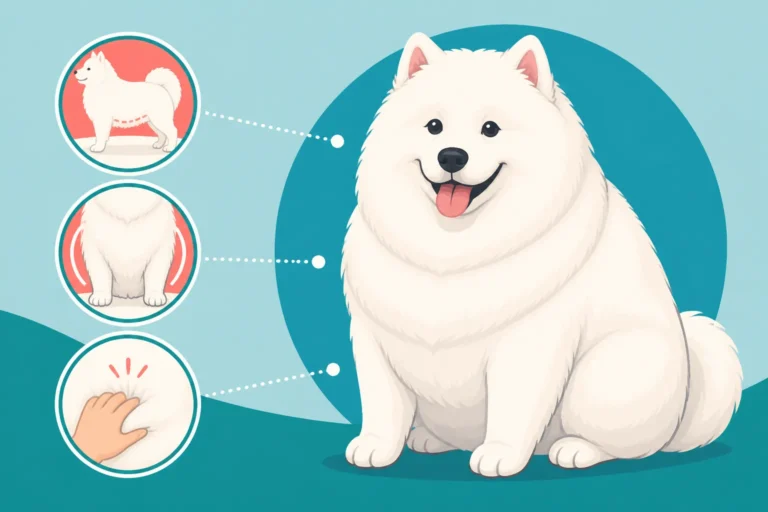
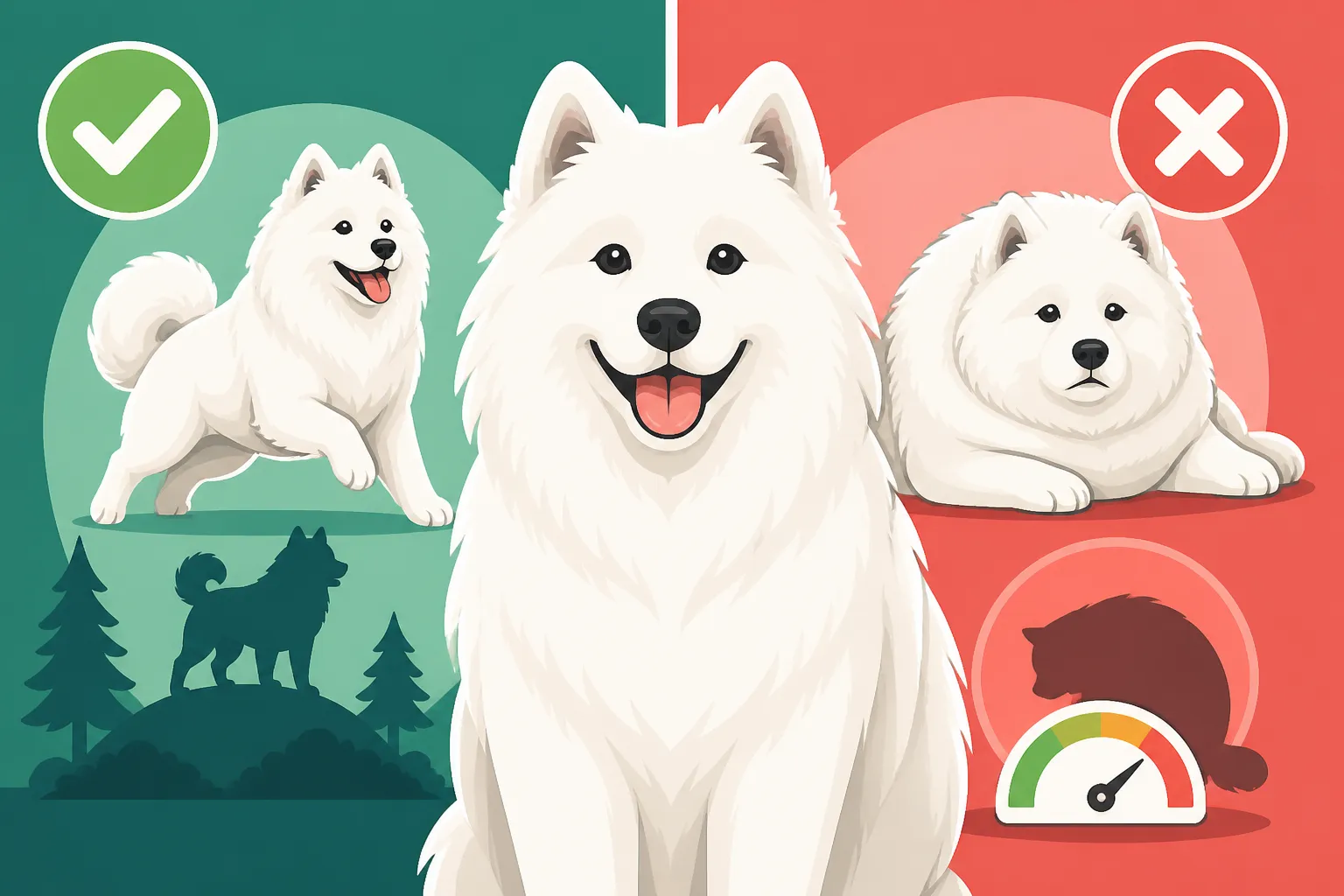
The problem arises when their substantial build starts to become too substantial, with fat layering over their strong frame. A healthy Samoyed should have a discernable waist when viewed from above, and a slight tuck-up from the side. However, their long, flowing coat can easily make them look like a rectangular cloud, completely masking these crucial indicators of a lean body condition. Without regularly getting your hands on them, feeling for their underlying structure, you might be unknowingly allowing them to carry extra weight that puts a strain on their health. It's a testament to their incredible coats that they can hide so much!
The Health Risks of an Overweight Samoyed
Carrying extra weight isn't just about aesthetics; for a Samoyed, it can lead to a cascade of serious health problems. These aren't just minor inconveniences; they can significantly impact your dog's quality of life and even shorten their lifespan. Understanding these risks is the first step in motivating us to be diligent about their diet and exercise.
Increased Risk of Joint Problems
One of the most immediate and painful consequences of an overweight Samoyed is the increased strain on their joints. Samoyeds, like many larger breeds, can be prone to conditions such as Hip Dysplasia in a Samoyed and Arthritis in an Older Samoyed. When you add extra weight to an already susceptible skeletal structure, you're essentially asking their joints to work harder, accelerating wear and tear.
Imagine carrying a heavy backpack all day, every day – that's what extra weight feels like to your dog's joints. It puts undue pressure on cartilage, ligaments, and bones, leading to inflammation, pain, and early onset of conditions like arthritis. A healthy weight can make a world of difference in mitigating the severity of these hereditary conditions. Keeping your Samoyed lean means less stress on those crucial joints, allowing them to remain active and comfortable for much longer. If you’re wondering if your Samoyed's hip score will predict later arthritis, you can look into Whether a Samoyed's Hip Score Predicts Later Arthritis for more information.
Predisposition to Diabetes Mellitus
Just like in humans, obesity is a significant risk factor for Diabetes in a Middle Aged Samoyed. When a dog carries too much fat, their body can become resistant to insulin, the hormone responsible for regulating blood sugar. This can eventually lead to diabetes mellitus, a chronic condition that requires lifelong management, including daily insulin injections and careful dietary control.
Managing a diabetic Samoyed is a huge commitment. It involves monitoring blood glucose, meticulously measuring food, and administering injections, often twice a day. The financial and emotional toll can be substantial. Recognizing Signs a Samoyed Has Become Diabetic is critical, but preventing it in the first place through weight management is always the best approach. While some breeds may be more predisposed, being overweight certainly doesn't help. If you've ever wondered Whether a Samoyed Is More Likely to Get Diabetes Than Other Breeds, know that keeping them lean is a strong preventative measure.
Exacerbated Heat Intolerance
Samoyeds were literally bred for the Arctic, with a coat designed to keep them warm in extreme cold. While their double coat does provide some insulation against heat by trapping cool air, extra body fat significantly compromises this natural cooling system. Fat acts as an additional insulating layer, making it even harder for your Samoyed to dissipate heat.
In warmer climates, or even during a hot summer day in a moderate climate, an overweight Samoyed is at a much higher risk of overheating and developing heatstroke. Their internal thermostat is already working overtime to manage their thick fur; adding extra fat pushes it past its limits. This can manifest as excessive panting, lethargy, or even more severe symptoms that constitute an emergency. Recognizing Signs a Samoyed Is in Heat Distress is vital, but preventing it starts with a healthy weight. Their bodies were built to thrive in conditions sixty below, as discussed in A Samoyed Built for Sixty Below in an American Summer, not to lug around extra pounds in the heat.
Other Systemic Health Concerns
The list of health issues doesn't stop there. An overweight Samoyed is more susceptible to a whole host of other systemic problems that can compromise their overall health and longevity. These can quietly undermine their well-being, often going unnoticed until they become severe.
For instance, excess weight can put extra strain on their cardiovascular system, leading to heart issues. Their respiratory system can also be affected, making breathing more labored, especially in heat or during exercise. Overweight dogs often have compromised immune systems, making them more prone to infections and slower to heal. Even skin conditions can be exacerbated, as rolls of fat create moist environments for bacteria or yeast to thrive. Essentially, every organ system is impacted when a dog carries more weight than it should, reducing their energy, vitality, and ultimately, the precious years you have together.
How to Accurately Assess Your Samoyed's Body Condition
Given how misleading a Samoyed's glorious coat can be, relying solely on your eyes for weight assessment is a recipe for disaster. You need to get hands-on and combine that tactile check with a more informed visual assessment. This isn't just a casual pat; it's a deliberate, systematic check that should become a regular part of your routine.
The Hands-On Approach: Feeling for Ribs
This is, without a doubt, the most important method for accurately assessing your Samoyed's body condition. You have to get past that luxurious fur and feel what's underneath. Here's how to do it:
- Locate the Ribs: Start by placing both hands on your Samoyed's chest, just behind their front legs. You're aiming for the rib cage.
- Apply Gentle Pressure: Gently press your fingers through their thick fur and muscle. You should be able to feel each individual rib bone with a light touch, similar to how you can feel the knuckles on your own hand when you make a fist.
- Assess the Feel:
- Ideal: You can easily feel the ribs without having to press hard, but they shouldn't be visibly prominent or sharp. There should be a slight layer of fat covering them.
- Overweight: If you have to press firmly to feel the ribs, or if you can't feel them at all, your Samoyed is likely carrying too much weight.
- Underweight: If the ribs feel very prominent, sharp, and easily visible, your Samoyed is too thin.
- Check the Spine and Pelvis: Repeat this gentle palpation along their spine and over their hips (pelvic bones). You should be able to feel the bony protrusions, again, with a light layer of padding over them. If you can't feel them easily, or if they're completely obscured, it's a sign of excess fat.
This hands-on technique is far more reliable than just looking. It allows you to feel the actual contours of their body, not just the fluffy outline. It’s what veterinarians do, and it’s a skill every Samoyed owner should master. For a deeper dive, read Feeling for Ribs Under a Samoyed's Coat.
The Visual Assessment: Top Down and Side View
While the hands-on check is paramount, supplementing it with a careful visual assessment can also be helpful, once you learn to look beyond the fur.
- From Above (Top Down): Stand directly over your Samoyed and look down at their back.
- Ideal: You should be able to discern a waistline, where the body tucks in slightly behind the ribs and before the hips. It won't be as dramatic as in a short-haired breed, but there should be a definite indentation.
- Overweight: If your Samoyed looks like a single, solid rectangle or oval with no discernible waist, they are likely overweight. The fluff creates a straight line where there should be a curve.
- From the Side: Look at your Samoyed from the side.
- Ideal: Their abdomen should tuck up slightly from their chest, not hang low or be straight across. Their chest should be deeper than their abdomen.
- Overweight: If their belly sags or runs parallel to the ground (like a long sausage), or if their chest and abdomen seem to blend into one large mass, they are carrying too much weight.
Remember, you’re trying to visualize the skeleton and muscle underneath all that fur. It takes practice and a critical eye, but combined with the rib check, it gives you a much clearer picture of your Samoyed’s true body condition.
Regular Weight Checks and Logging
Feeling and seeing are great, but nothing beats a number for objective tracking. Regular weigh-ins are crucial for managing your Samoyed's weight. Many veterinary clinics have large dog scales and are happy for you to pop in for a quick weigh-in, sometimes even without an appointment. You can also purchase large, flat digital scales online (check out options on Amazon) if you prefer to weigh them at home, though smaller dogs might fit on a human scale.
Aim for a weigh-in at least once a month, ideally every two weeks if you are actively trying to manage their weight. Keep a log of their weight, alongside notes on their body condition score (BCS), which your vet can help you learn to determine. A BCS chart typically ranges from 1 (emaciated) to 9 (obese), with 4-5 being ideal. Tracking this data allows you to spot trends, celebrate successes, and identify potential problems early. It’s a bit like tracking your own fitness goals – small, consistent data points tell a powerful story. For more on this, check out Whether a Samoyed's Weight Should Be Logged Monthly.
| Body Condition Score (BCS) | Visual Cues (under coat) | Palpation Cues (through coat) | Recommendation |
|---|---|---|---|
| 1 (Emaciated) | Ribs, spine, pelvic bones very visible, no fat | Ribs, spine, pelvic bones very prominent, no fat | Urgent Vet Consult |
| 3 (Thin) | Ribs, spine, pelvic bones easily visible | Ribs easily felt, slight fat covering | Increase Food Slightly |
| 5 (Ideal) | Ribs easily felt, slight waist tuck | Ribs easily felt, thin fat covering | Maintain Current Plan |
| 7 (Overweight) | Ribs difficult to feel, no waist tuck | Ribs require firm pressure to feel, moderate fat | Reduce Food, Increase Exercise |
| 9 (Obese) | Ribs not felt, abdomen distended | Ribs not felt, heavy fat covering | Vet Consult for Weight Loss Plan |
Strategies for Healthy Weight Management
Once you've accurately assessed your Samoyed's body condition, the next step is to implement a proactive plan for healthy weight management. This isn't just about cutting calories; it's about a holistic approach that includes diet, exercise, and smart treat choices. It’s a journey, not a destination, especially with a breed that loves to eat!
Portion Control and Feeding Schedule
This might sound obvious, but it's where many owners inadvertently go wrong. "Eyeballing" food portions, even by a little bit each day, can add up to significant calorie excess over weeks and months. Always use a proper measuring cup, not just a random scoop. The feeding guidelines on dog food bags are just that – guidelines. Your Samoyed's individual metabolism, activity level, and age will dictate their actual calorie needs.
Consider feeding two meals a day instead of one large meal. This can help with digestion and keep their metabolism more stable. Avoid free-feeding, where food is left out all day. This makes it impossible to track how much they’re truly eating and allows them to graze out of boredom. If your Samoyed tends to gulp their food, consider a slow-feeder bowl, readily available on platforms like Amazon or Chewy, which can help them feel more satiated and reduce the risk of bloat. Consistency in feeding times is also key; dogs thrive on routine, and it helps their digestive system work efficiently.
Choosing the Right Diet
The type of food you feed plays a massive role in weight management. Not all dog foods are created equal, and what works for one dog might not be suitable for another. Look for high-quality protein as the first ingredient, and ensure the food has a balanced nutritional profile.
- Kibble: If feeding kibble, choose a formula appropriate for your Samoyed's life stage (puppy, adult, senior) and activity level. If they are already overweight, your vet might recommend a specific weight-management formula or even a prescription diet. The fat content is particularly important to watch, as Whether a Samoyed Needs a Low Fat Diet can be a factor in weight loss.
- Fresh or Raw: Some owners opt for fresh food diets (like Ollie) or raw feeding. These can offer excellent nutrition but require careful balancing to ensure all dietary needs are met and calorie counts are accurate. If considering these options, consult with a veterinary nutritionist to ensure your Samoyed is getting everything they need without overdoing it on calories.
No matter the diet, understanding its caloric density is paramount. Work with your veterinarian to determine the ideal daily calorie intake for your Samoyed based on their target weight and activity.
Appropriate Exercise and Activity Levels
Samoyeds are active dogs, built for work. A sedentary Samoyed is not only likely to gain weight but also to become bored, destructive, or vocal. Regular, appropriate exercise is fundamental to maintaining a healthy weight and overall well-being. How Much Exercise a Samoyed Needs is often more than what new owners anticipate!
Daily walks are a good start, but Samoyeds often need more. Consider activities like:
- Jogging or Hiking: If you're active, your Samoyed can be a great companion.
- CaniX or Bikejoring: These dog-powered sports engage their natural desire to pull and provide an excellent workout.
- Playtime: Fetch, tug-of-war, or even just spirited romping in a securely fenced yard.
- Mental Stimulation: Training sessions, puzzle toys, and nose work can burn calories while engaging their minds.
Adjust the intensity and duration of exercise based on your Samoyed's age, fitness level, and the weather. In hot weather, shift exercise to early mornings or late evenings to prevent overheating. And remember, Whether a Diabetic Samoyed Can Still Exercise is an important consideration for dogs with that condition – generally, yes, but with careful monitoring.
Smart Snacking and Treats
Treats are often a hidden source of extra calories. It’s so easy to hand out treats liberally, especially when your Samoyed gives you that charming smile. But those calories add up quickly.
- Limit High-Calorie Treats: Many commercial dog treats are dense in calories. If you use them for training, break them into tiny pieces.
- Opt for Healthy Alternatives: Many vegetables make excellent, low-calorie treats. Think baby carrots, green beans, or cucumber slices. Most Samoyeds will gobble these down just as enthusiastically as a store-bought biscuit.
- Factor Treats into Daily Calories: Don't forget that treats contribute to your dog's total daily caloric intake. If you're giving treats, you might need to slightly reduce their meal portions to compensate.
You can find a wide variety of healthy, low-calorie treat options on online pet supply stores like Chewy and Amazon, many designed specifically for weight management or with single-ingredient profiles. Being mindful of every morsel that enters your Samoyed's mouth is a huge step in managing their weight effectively.
When to Seek Veterinary Guidance
Even with the best intentions and diligent home care, there are times when you need the professional expertise of your veterinarian. Don't hesitate to reach out to them; they are your best partner in your Samoyed's health journey.
Recognizing Red Flags
While gradual weight gain can be hard to spot, certain changes in your Samoyed's behavior or physical condition should raise an immediate red flag and warrant a vet visit:
- Sudden Weight Gain or Loss: Any rapid, unexplained change in weight, whether up or down, can be indicative of an underlying health problem, not just dietary issues.
- Increased Thirst or Urination: This is a classic symptom of several conditions, including diabetes and kidney disease. If you notice your Samoyed drinking constantly, it's a critical sign, as discussed in When Sudden Thirst in a Samoyed Means Diabetes.
- Changes in Appetite: A sudden increase or decrease in appetite, especially if coupled with other symptoms, needs investigation.
- Lethargy or Reduced Energy: If your usually playful Samoyed seems unusually tired, reluctant to exercise, or less engaged, it could be a sign of discomfort or illness.
- Vomiting or Diarrhea: While sometimes just a minor upset, persistent gastrointestinal issues can also be linked to metabolic problems or incorrect diet.
- Any Visible Changes: Lumps, limping, changes in coat quality, or anything else out of the ordinary.
Remember, Samoyeds are incredibly stoic. They were bred to work tirelessly and rarely complain, often hiding pain or discomfort until a condition is quite advanced. This makes it even more important for owners to be vigilant about subtle changes. Sometimes, Signs a Samoyed Is Getting Old can be mistaken for illness too, so distinguishing between natural aging and treatable conditions is where your vet comes in.
Partnering with Your Vet for a Weight Plan
Your veterinarian is your primary resource for creating and monitoring a successful weight management plan for your Samoyed. They can:
- Accurately Assess BCS: Your vet can provide a professional body condition score and confirm if your Samoyed is indeed overweight, or if your concerns are unfounded.
- Rule Out Underlying Medical Conditions: Before embarking on a diet, it's crucial to ensure there isn't an underlying medical reason for weight gain (e.g., hypothyroidism, Cushing's disease) or weight loss. They can perform blood tests or other diagnostics if needed.
- Determine Target Weight and Calorie Needs: Your vet can help you calculate a realistic target weight for your Samoyed and a safe daily calorie intake to achieve it.
- Recommend a Prescription Diet: If your Samoyed is significantly overweight or has other health concerns, your vet might prescribe a therapeutic weight-loss diet. These diets are specially formulated to be lower in calories but still provide complete nutrition, often with added fiber to help your dog feel full. If you’re curious about these, ask your vet about Whether a Samoyed Needs a Prescription Diet.
- Offer Exercise Advice: They can provide guidance on appropriate exercise levels and types of activities, especially if your Samoyed has joint issues or other limitations.
- Monitor Progress: Regular follow-up visits allow your vet to track your Samoyed's weight loss progress, make adjustments to the plan as needed, and ensure they are losing weight safely and healthily.
Think of your vet as your Samoyed’s personal health coach. Their expertise is invaluable in navigating the complexities of canine nutrition and ensuring your beloved fluffy companion lives the longest, healthiest, and happiest life possible.
Disclaimer
This article is for general informational purposes only and does not constitute professional advice. Laws, prices and regulations vary by location and change over time. Consult a qualified professional for guidance on your specific situation.