Feeling for Ribs Under a Samoyed’s Coat
One of the trickiest parts of owning a glorious, fluffy Samoyed is knowing what's really going on beneath all that magnificent double coat. It’s incredibly easy for our smiling polar bears to pack on a few extra pounds without us ever realizing it, simply because their fur acts like a master disguiser. This guide will help you learn the essential skill of feeling for your Samoyed's ribs, ensuring you can accurately assess their body condition and keep them in peak health.
Why Feeling for Ribs is So Crucial for Samoyeds
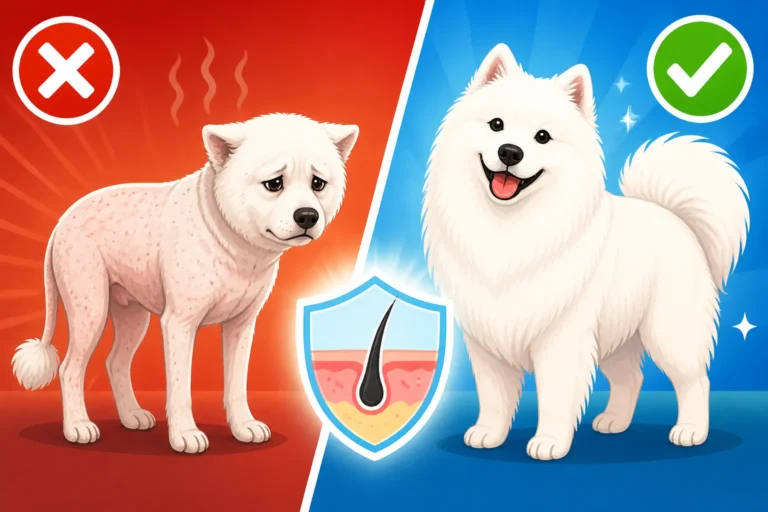
Let's face it, our Samoyeds are built like snow angels – all soft curves and voluminous fluff. It’s part of their charm! But this incredible insulation, which serves them so well in sub-zero temperatures, becomes a real challenge when it comes to assessing their weight. You can look at your Samoyed from above, and they might appear perfectly trim, only for you to discover a layer of padding when you actually put your hands on them. This fluffy deception is why the simple act of feeling for their ribs becomes an indispensable tool in your daily care routine.
Obesity in dogs, just like in humans, isn't just about looking a little rounder; it's a silent threat to their overall health and longevity. Those extra pounds put undue stress on their joints, especially crucial for a breed like the Samoyed that can be prone to conditions such as Hip Dysplasia in a Samoyed. Beyond mobility issues, an overweight Samoyed is at a significantly higher risk for serious health problems, including Diabetes in a Middle Aged Samoyed and even certain types of cancer. It can also exacerbate respiratory issues, reduce their stamina, and simply make them less comfortable, especially in warmer climates. Their incredible coat means that visual cues alone are rarely enough, making a hands-on approach absolutely necessary. Don't let their happy-go-lucky nature and those constant smiles fool you into thinking everything is fine; sometimes, How a Samoyed Hides Illness Behind a Smile is more literal than we think.
The Art of the "Rib Check": A Step-by-Step Guide
Getting a true sense of your Samoyed's body condition requires more than just a quick glance. You need to get hands-on, and it's a skill that improves with practice. Think of it as a mini health check you can do regularly to catch any subtle changes before they become big problems.
Getting Started: Your Hands Are Your Best Tool
The process starts with your hands. Forget scales for a moment – your fingertips are surprisingly sensitive tools once you know what you're looking for. Approach your Samoyed when they're relaxed and standing comfortably.
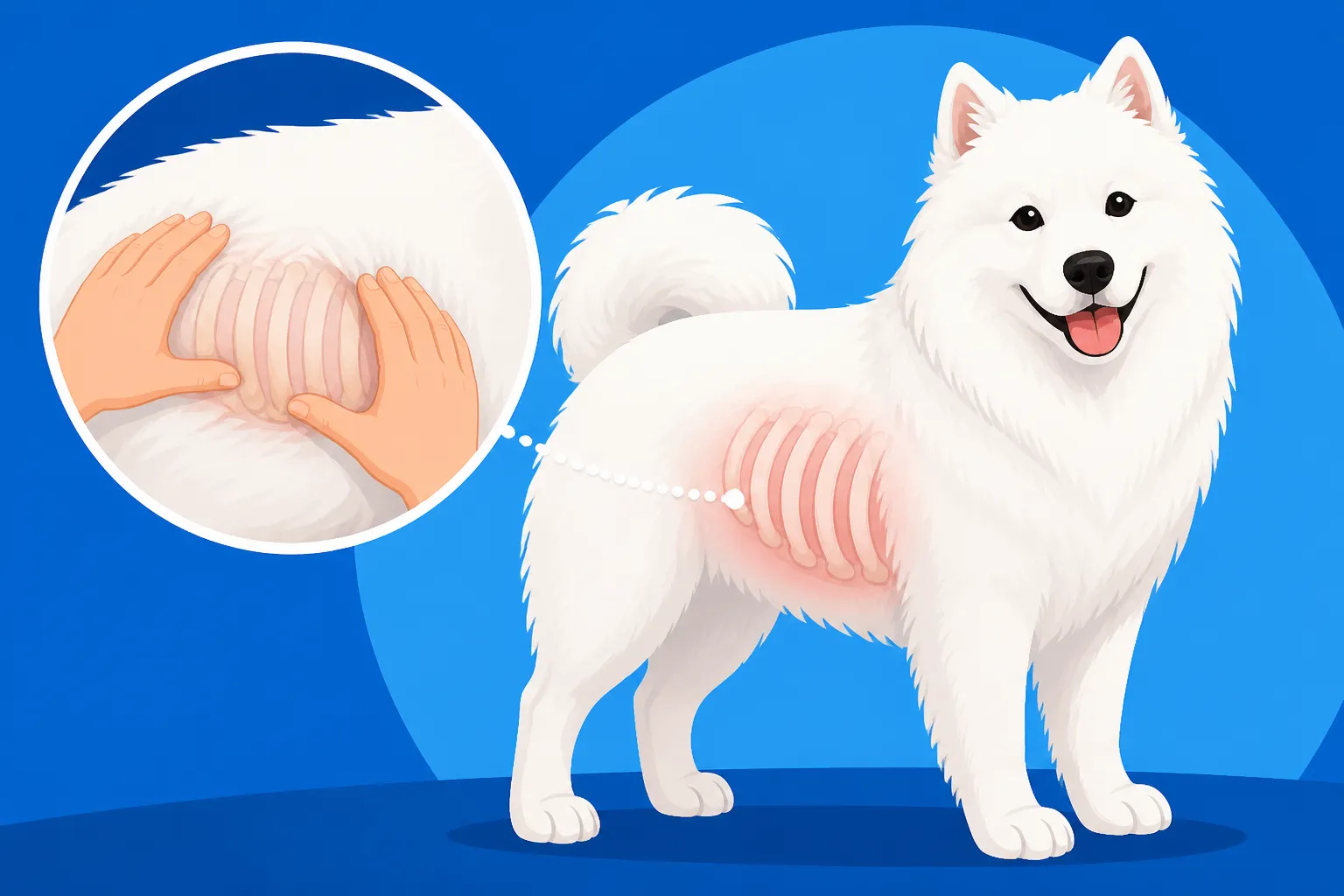
- Locate the Ribs: Start by placing both hands flat on either side of your Samoyed's chest, just behind their front legs. You'll be feeling for the rib cage.
- Apply Gentle Pressure: Gently spread your fingers and apply light, even pressure, as if you're trying to feel the bones beneath the muscle and fur. You don't need to press so hard that it's uncomfortable for your dog, but firm enough to get past the thick undercoat.
- Sweep and Feel: Slowly sweep your hands back and forth across the rib cage. You should be able to feel each individual rib.
What you're aiming for: Ideally, you should be able to feel the ribs distinctly, much like feeling the knuckles on the back of your hand when you open and close your palm – they're palpable but not sharply protruding. There should be a thin layer of fat and muscle over them, not a thick cushion. If you have to press hard to feel them, or you can't feel them at all, your Samoyed is likely carrying too much weight. Conversely, if the ribs feel sharp and prominent with no discernible cushioning, your dog might be underweight. This simple act is foundational to understanding Why a Samoyed Owner Must Watch Its Weight Closely.
Beyond the Ribs: Pelvis and Spine
While the ribs are a great starting point, a comprehensive body check involves a few other key areas. These give you a fuller picture of fat distribution, which can vary even if the ribs feel okay.
- The Spine: Run your hands gently along your Samoyed's spine, from their neck down to their tail. You should be able to feel the individual bumps of the vertebrae, but they shouldn't feel like sharp, exposed knobs. Again, a thin layer of muscle and fat should cover them. If they feel overly prominent, your Samoyed may be too thin. If you can barely make them out, there's likely too much fat covering them.
- The Pelvis/Hip Bones: Next, move your hands to the area over their hips, towards the base of their tail. Similar to the spine, you should be able to feel the hip bones with gentle pressure. They shouldn't be sticking out sharply, nor should they be completely buried under fat.
Remember, Samoyeds are a muscular breed, especially those bred for working lines, so some muscle definition is normal. The key is distinguishing between muscle and fat. This holistic approach helps you detect Signs a Samoyed Is Overweight more accurately.
The Tummy Tuck and Waistline
Now, let's look for visual cues – though these are often the trickiest with a Samoyed's coat. You'll need to use your eyes and sometimes even part the fur to get a real picture.
- The Waistline: Stand above your Samoyed when they are standing square. Look down at their body. An ideal weight Samoyed should have a discernible waistline, meaning their body tucks in slightly behind the rib cage before flaring out again at the hips. With a Samoyed, you might need to gently part the fur around their midsection to truly see this. If their body looks like a straight line from chest to tail, or even bulges out, they're likely carrying too much weight.
- The Abdominal Tuck: View your Samoyed from the side. An ideal weight dog should have an "abdominal tuck" – meaning their belly should rise slightly from the bottom of their rib cage towards their hind legs. It shouldn't hang low or be parallel to the ground like a sausage. Again, this can be hidden by a long coat, so feel for it as well. Gently press your hands along their flank. A firm, tucked-up abdomen is good; a soft, sagging one suggests excess fat.
Understanding Your Samoyed's Body Condition Score
To make this assessment even more objective, veterinarians often use a Body Condition Score (BCS) system. This gives you a standardized way to evaluate your dog's physical state, moving beyond just "fat or thin."
What is a Body Condition Score BCS?
A Body Condition Score is essentially a rating system, typically on a scale of 1 to 5 (or 1 to 9), that helps you quantify your dog's fat reserves. It combines the tactile assessment (feeling the ribs, spine, and pelvis) with visual cues (waistline, abdominal tuck). A score of 3/5 or 4-5/9 is generally considered ideal, meaning your Samoyed is neither too thin nor overweight. It's a fantastic tool because it helps you track subtle changes over time and gives you a common language to discuss your dog's weight with your vet. Regular use of the BCS helps you monitor your Samoyed's overall health and can even give you an early warning sign if something is amiss internally, requiring further investigation.
Visual Cues and What They Mean
While feeling is primary for Samoyeds, understanding the visual component of BCS is also important, even if you have to part that magnificent coat.
- Too Thin (BCS 1-2/5 or 1-3/9): Ribs, spine, and hip bones are very easily visible and prominent, even from a distance, with no palpable fat covering. The abdominal tuck is severe, and there's a very pronounced waist. This could indicate underfeeding, illness, or a high metabolism, and warrants a vet visit.
- Ideal (BCS 3/5 or 4-5/9): Ribs are easily palpable with minimal fat covering. The waist is evident when viewed from above, and an abdominal tuck is present when viewed from the side. This is your goal! Your dog looks proportionate and feels lean and athletic.
- Overweight (BCS 4/5 or 6-7/9): Ribs are palpable but with significant fat covering, requiring firm pressure. The waist is either absent or barely discernible, and there's little to no abdominal tuck. There may be noticeable fat deposits over the lumbar spine and tail base. This is a crucial point to intervene and adjust diet and exercise.
- Obese (BCS 5/5 or 8-9/9): Ribs are extremely difficult or impossible to feel due to a very heavy fat covering. There's no waist or abdominal tuck, and the abdomen may be distended. Heavy fat deposits are obvious over the spine, tail base, and neck. This level of obesity carries significant health risks and requires immediate veterinary consultation and a structured weight loss plan.
It's a good idea to perform a BCS check at least once a month, especially if you're trying to manage your Samoyed's weight.
| Body Condition Score | Ribs | Waistline/Tummy Tuck | Overall Appearance (Samoyed Context) |
|---|---|---|---|
| 1/5 (Emaciated) | Ribs, spine, hip bones easily visible/sharp | Extremely exaggerated tuck, severe waist | Severely wasted. Fluff can't hide sharp angles. |
| 2/5 (Thin) | Ribs easily palpable, minimal fat. | Clearly visible waist, good tuck. | Lean, athletic, but a bit too bony under the fluff. Needs more food. |
| 3/5 (Ideal) | Ribs palpable with slight pressure. | Visible waist (may need fur parting), good tuck. | Proportionate and healthy. Ribs felt like flat knuckles. |
| 4/5 (Overweight) | Ribs hard to feel, moderate fat. | Waist minimal or absent, slight or no tuck. | Rounder under the fur. Padded over ribs and spine. |
| 5/5 (Obese) | Ribs very difficult or impossible to feel. | No waist or tuck, distended belly. | Very heavy fat covering. Looks solid and shapeless, even with fluff. Significant health risk. |
Keeping Your Samoyed at an Ideal Weight
Maintaining an ideal weight for your Samoyed is a lifelong commitment, but it's one of the most impactful things you can do for their health and happiness.
Diet and Portion Control
This is where the rubber meets the road. Even the best intentions can be derailed by inconsistent feeding.
- Measure Accurately: It sounds simple, but many owners eyeball portions. Invest in a proper measuring cup or, even better, a kitchen scale to measure food by weight. This ensures consistency and prevents accidental overfeeding. Brands like Chewy offer a variety of scales and precise measuring cups specifically for pet food. Always follow the guidelines on your chosen food packaging, but remember these are starting points; your individual dog's metabolism and activity level may require adjustments.
- Quality Food Matters: Opt for high-quality dog food that provides balanced nutrition. Whether you choose a premium kibble or a fresh food diet, ensure it's appropriate for your Samoyed's age, activity level, and any specific health needs. Some owners find that fresh food options, such as those offered by Ollie, help with satiety and weight management.
- Treats are Calories Too: Those irresistible puppy-dog eyes make it hard to say no, but treats add up! Be mindful of how many treats you're giving and factor them into your dog's daily caloric intake. Choose healthy, low-calorie options, and consider using a portion of their daily kibble as training rewards. Whether a Samoyed's Treats Should Be Counted as Calories is not a question, it's a definite yes.
- Avoid Table Scraps: While a tiny bit of plain, cooked meat occasionally might not hurt, consistent table scraps are a fast track to weight gain and can lead to digestive upset or even more serious conditions like pancreatitis.
Exercise for a Healthy Samoyed
Samoyeds are active dogs; they were bred to work! Regular exercise is not just about burning calories; it's vital for their mental health, muscle tone, and joint health.
- Consistent Activity: Aim for at least 60-90 minutes of moderate to vigorous exercise daily. This could be long walks, engaging playtime in a secure yard, or structured activities like fetching. They thrive on having a "job" to do, and pulling sports like Whether a Samoyed Enjoys Skijoring or canicross can be excellent outlets for their energy, provided they're conditioned properly.
- Vary Activities: Keep it interesting! Rotate between different types of exercise to engage different muscles and prevent boredom. This could include hikes, swimming (if your Samoyed enjoys it), or even just extended games of fetch. How Much Exercise a Samoyed Needs really depends on the individual dog, but consistency is key.
- Adjust for Weather: Be very mindful of the weather. Samoyeds are built for cold, so hot and humid conditions can quickly lead to overheating. Adjust exercise times to cooler parts of the day, provide plenty of water, and consider indoor activities when it's too warm. Water, Shade and the Summer Plan for a Samoyed is not just a suggestion, it's a necessity. You might find cooling mats or vests on Amazon useful for post-exercise cool-down.
When to Consult Your Vet
You're doing your best, but sometimes you need a professional opinion. Your veterinarian is your partner in your Samoyed's health journey.
- Uncertainty with BCS: If you're struggling to accurately assess your Samoyed's BCS, or you just want a second opinion, don't hesitate to ask your vet or a veterinary technician during your next visit. They can demonstrate proper technique and provide an objective score.
- Sudden Weight Changes: Any sudden, unexplained weight loss or gain should always prompt a vet visit. This can be an indicator of underlying health issues that need immediate attention.
- Difficulty Losing Weight: If your Samoyed is overweight and you're consistently feeding less and exercising more but seeing no results, your vet can help. They might suggest dietary changes, rule out metabolic issues, or even prescribe medications to assist with weight loss. They can also provide guidance on Feeding a Samoyed That May Become Diabetic if that's a concern. Regular check-ups, especially as your Samoyed approaches The Age a Samoyed Counts as a Senior, are vital for monitoring their weight and overall health.
Disclaimer
This article is for general informational purposes only and does not constitute professional advice. Laws, prices and regulations vary by location and change over time. Consult a qualified professional for guidance on your specific situation.