How Long a Samoyed Can Be Outside at Ninety Degrees
When summer temperatures climb, especially into the sticky nineties, a common and very real fear grips many Samoyed owners: "How long is too long for my beloved floof to be outside?" It’s a genuine concern because our beautiful Samoyeds, built for arctic winters, can struggle immensely in the heat. This guide is here to unravel the truth about Samoyeds and hot weather, providing you with practical advice to keep your furry family member safe and comfortable when the mercury soars to 90 degrees Fahrenheit and beyond.
Understanding the Samoyed's Unique Adaptation to Heat (and Cold)
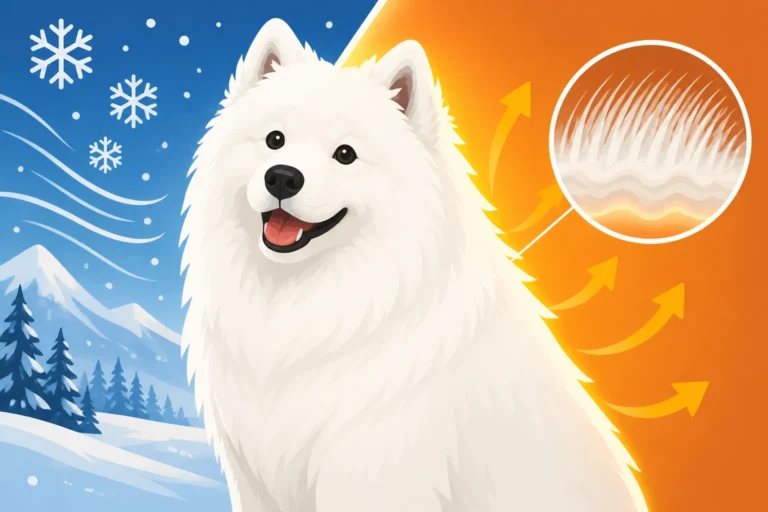
It might seem counterintuitive, but a Samoyed's glorious, thick coat, while perfect for snowy landscapes, actually plays a crucial role in protecting them from heat as well. It's a double-edged sword, and understanding its function is key to keeping your dog safe.
The Marvel of the Double Coat
Think of your Samoyed's coat as a sophisticated, natural insulation system, much like the walls of your home. It's designed to keep heat out in the summer and in during the winter. This incredible feature is thanks to its unique construction: a harsh, straight outer guard coat and a dense, woolly undercoat. The guard hairs are like the shingles on a roof, deflecting sunlight and shedding dirt and moisture. Beneath them, the soft, thick undercoat creates a layer of air that acts as a thermal barrier. In winter, this trapped air helps hold their body heat close. In summer, it slows the penetration of external heat to their skin, much like a thermos keeps hot liquids hot and cold liquids cold.
However, this doesn't mean they are immune to the heat. While it helps mitigate the sun's direct assault, their body still needs to regulate its internal temperature, and that's where the challenge lies in extreme heat. The insulation can only do so much when the ambient temperature is higher than their comfortable range, and especially when humidity is high.
Why Shaving is a Bad Idea
It's a common, heartbreaking mistake many well-meaning Samoyed owners make when they see their dog panting in the summer heat: they decide to shave them. The thought is, "Less fur equals cooler dog, right?" Unfortunately, for a double-coated breed like a Samoyed, this couldn't be further from the truth. Shaving completely disrupts that natural insulation system.
When you shave a Samoyed, you strip away both the protective guard hairs and the insulating undercoat. This leaves their delicate skin exposed to the sun's harmful UV rays, making them highly susceptible to sunburn, which can be painful and lead to skin cancer. Furthermore, it removes the very barrier that was helping to keep the heat off their body. Instead of cooling them, it often makes them hotter and more uncomfortable. In many cases, the coat also grows back incorrectly, becoming coarse, patchy, or failing to grow back at all, a condition sometimes referred to as "clipper alopecia." Before you reach for those clippers, remember the science of their coat. You can read more about this common mistake in Why Shaving a Samoyed Makes the Heat Worse.
Natural Cooling Mechanisms
Beyond their coat, Samoyeds, like all dogs, rely on a few key mechanisms to cool themselves. The primary one is panting. Unlike humans who sweat profusely over their entire body, dogs mostly sweat through their paw pads and nose, which isn't very efficient. Panting allows them to rapidly exchange warm air from their lungs for cooler outside air, and as moisture evaporates from their tongue and respiratory tract, it helps cool their blood.
Another instinctive cooling behavior you might observe, especially if your Samoyed has access to a yard, is digging. They'll often dig shallow depressions in the dirt or grass and lie in them. This isn't just for fun; they're trying to reach the cooler, moist earth beneath the surface, creating a little personal "cold spot" to lie in. It's a throwback to their ancestral survival instincts. Understanding Why a Samoyed Digs to Stay Cool can help you recognize this behavior and provide appropriate alternatives if digging isn't ideal for your garden.
Immediate Dangers of Ninety-Degree Heat for Samoyeds
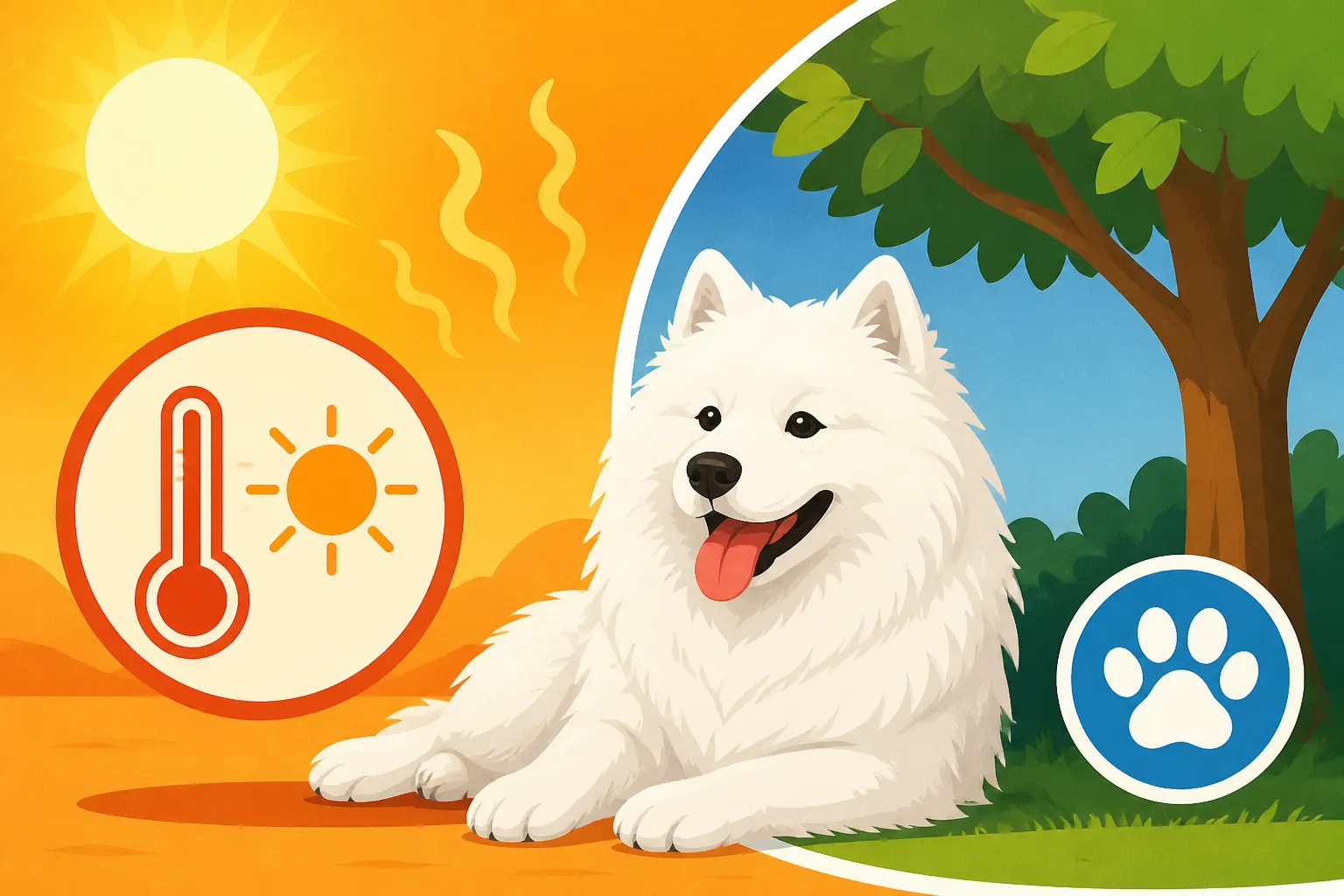
When temperatures hit 90 degrees Fahrenheit, the beautiful adaptations of the Samoyed begin to struggle. The risks of overheating become extremely serious, very quickly.
Recognizing Signs of Overheating
It is absolutely vital for Samoyed owners to be hyper-vigilant about the signs of overheating, as their thick coats can mask how quickly they're struggling. Early signs might seem mild, but they can escalate to a life-threatening emergency in minutes. Look for:
- Excessive panting: Deeper, more rapid breathing than usual. Their tongue may hang out further than normal.
- Increased drooling: Stringy or thick saliva.
- Reddened gums: Instead of a healthy pink, their gums might appear bright red or even purple.
- Lethargy or weakness: Your usually energetic Samoyed might be reluctant to move, appear tired, or stumble.
- Vomiting or diarrhea: These are more severe signs, indicating that their body is in serious distress.
- Disorientation or confusion: They might bump into things or seem unaware of their surroundings.
- Wobbly gait or collapse: In severe cases, they may lose coordination or collapse altogether.
If you observe any of these symptoms, especially the more severe ones, consider it an emergency. Time is of the essence. Learn more about Signs a Samoyed Is Overheating to stay prepared.
Heatstroke: A Life-Threatening Emergency
Heatstroke is the most critical and deadly consequence of overheating. It occurs when a dog's body temperature rises dangerously high, and their natural cooling mechanisms can no longer keep up. At 90 degrees Fahrenheit, and especially with added humidity, a Samoyed can quickly reach this point.
When heatstroke sets in, vital organs like the brain, kidneys, liver, and heart can be severely damaged. The dog can go into shock, develop seizures, fall into a coma, or even die. Even if a dog survives heatstroke, there can be lasting organ damage that impacts their health for the rest of their lives. It's not something to ever take lightly, and it's far better to prevent it than to try to treat it.
Factors Increasing Risk
While 90 degrees is dangerous for any Samoyed, certain factors can increase the risk of overheating and heatstroke:
- Humidity: High humidity makes it much harder for dogs to cool down through panting because the air is already saturated with moisture, making evaporation less efficient. A 90-degree day with high humidity is far more dangerous than a dry 90-degree day.
- Lack of Acclimatization: If your Samoyed typically lives in a cooler climate and is suddenly exposed to intense heat, they will be at a higher risk than a dog that has had time to gradually adjust to warmer weather (though even acclimatized Samoyeds struggle at 90 degrees).
- Obesity: Overweight dogs have an extra layer of fat that acts as insulation, making it harder for them to shed heat.
- Age and Health Conditions: Very young puppies and senior Samoyeds are more vulnerable, as are dogs with underlying health issues such as heart disease, respiratory problems, or brachycephalic (short-nosed) features (though Samoyeds are not a brachycephalic breed).
- Activity Level: Engaging in strenuous exercise, even for a short period, dramatically increases a Samoyed's body temperature. Running, playing fetch, or going for a walk at 90 degrees is an absolute no-go. Whether a Samoyed Should Walk at Midday is an article every Samoyed owner should read for summer safety.
Practical Strategies for Ninety-Degree Weather
When it's 90 degrees Fahrenheit, your Samoyed's safety depends entirely on your proactive measures. These aren't suggestions; they are necessities.
Limiting Outdoor Time
This is the most crucial strategy. At 90 degrees, a Samoyed should have minimal, highly supervised outdoor time, typically limited to very short potty breaks. We're talking 1 to 5 minutes, maximum, and only if absolutely unavoidable. They should never be left unattended, even for a moment, as their condition can deteriorate in a flash.
The ideal outdoor times in such heat are literally the crack of dawn and well after sunset, when the sun's intensity has completely faded and the air has had a chance to cool. Even then, exercise should be extremely limited, if not entirely avoided. Short, brisk walks during these cooler windows are permissible, but always be acutely aware of their panting level. How Early a Samoyed Should Be Walked in Summer provides more context on adjusting their routine for summer. On a 90-degree day, even those "cooler" times might still be too warm for anything more than a quick potty break. When in doubt, stay inside.
Creating a Cool Environment
Indoors, air conditioning is not a luxury; it's a necessity for a Samoyed in a 90-degree environment. Ensure your home is kept cool and comfortable. If you experience a power outage or don't have AC, consider moving your Samoyed to a cooler location, such as a basement, or even seeking temporary boarding at an air-conditioned facility. You can learn more about this in Whether a Samoyed Needs Air Conditioning.
Outdoors, if they must be outside for a very short period, constant access to dense shade is critical. A single tree or a covered patio isn't always enough; consider a tarp or shade cloth to create extra shaded zones. Fresh, cool water must always be available. Use multiple bowls, placed in different locations, and add ice cubes to keep the water refreshing. The guide on Water, Shade and the Summer Plan for a Samoyed offers a comprehensive approach to summer management.
Cooling aids can also be invaluable. A small kiddie pool with a few inches of water (supervised, of course) can be a godsend for some Samoyeds, allowing them to wade and cool their paws and belly. Cooling mats, which activate with pressure or simply through gel technology, can provide a cool spot for them to lie down. Brands like Amazon and Chewy offer a wide range of these products, from elevated cooling beds to vests, though caution is advised with vests that might trap heat under the coat. Remember, these are aids, not solutions, and should always be used in conjunction with strict outdoor time limits and indoor cooling. Whether a Cooling Mat Helps a Samoyed explores these options further.
Hydration and Feeding
Keeping your Samoyed hydrated is paramount. Always ensure they have access to fresh, cool water. Consider adding ice cubes to their water bowl, or even freezing low-sodium broth in ice cube trays as a refreshing treat. Some owners find that adding a little water to their kibble or incorporating wet food helps increase moisture intake. For instance, services like Ollie deliver fresh, human-grade dog food that often has higher moisture content than dry kibble, which can contribute to their overall hydration.
Adjust feeding times to the cooler parts of the day – early morning and late evening. Avoid giving them a large meal right before any outdoor activity, no matter how brief, as digestion can increase body temperature.
Emergency Preparedness
Being prepared for a heat-related emergency is non-negotiable. Have your emergency veterinarian's contact information readily available, and know the fastest route to their clinic.
If you suspect your Samoyed is overheating, begin first aid immediately:
- Move them to a cool location: Get them into air conditioning or the coolest shaded spot you can find.
- Apply cool water: Wet towels or cloths can be applied to their paws, ears, groin, and armpits. Use cool, not ice-cold, water, as ice water can constrict blood vessels and hinder cooling. A fan directed at their wet areas can also help facilitate evaporative cooling.
- Offer small amounts of water: If they are conscious and willing, let them drink small sips of cool water.
- Seek veterinary care: Even if your dog seems to be recovering, it is crucial to get them to a vet immediately. Heatstroke can have delayed and serious complications, and professional medical attention is vital.
Common Misconceptions and What Not to Do
In the urgency of a heatwave, it's easy to fall prey to common misconceptions or seemingly intuitive actions that can actually do more harm than good.
The Wetting Down Trap
Many people think that simply hosing down their Samoyed or letting them splash in a pool will instantly cool them. While some water exposure can help, it's not a foolproof solution, and doing it incorrectly can even trap heat. The key is to get the water down to the skin. A quick spray on the topcoat might not penetrate the dense undercoat, meaning the outer layer gets wet but the skin underneath remains hot. This surface wetting can sometimes even create a humid layer that traps heat rather than releasing it.
If you are wetting your Samoyed down, ensure the water thoroughly saturates their coat, reaching their skin, and focus on the areas with less fur or larger blood vessels, such as the belly, armpits, and groin. A force dryer (often used by professional groomers) can help push water through their coat effectively.
Ignoring the "Smile"
Samoyeds are famous for their perpetually happy "smile," a distinctive upturned mouth that gives the impression of joy even when they might be feeling quite the opposite. This physical characteristic, while endearing, can be incredibly misleading in hot weather. Your Samoyed might be severely overheating and still present that characteristic happy expression.
It's crucial to look past the smile and pay close attention to their actual physical cues: their panting rate, lethargy, gum color, and overall demeanor. Their "happy" facial expression does not, for one second, equate to being comfortable in 90-degree heat. Never assume they're fine just because they look happy. This is a critical point discussed further in How a Samoyed Hides Illness Behind a Smile.
Car Safety: A Silent Killer
This cannot be emphasized enough: never, ever leave your Samoyed in a parked car, even with the windows cracked, when the temperature is 90 degrees Fahrenheit (or even much lower). The interior of a car can become a deadly oven in minutes, even on what might seem like a mild day. At 90 degrees, the temperature inside a car can rocket to over 120 degrees Fahrenheit in a very short amount of time. Cracked windows provide minimal air circulation and do not prevent this rapid temperature rise.
The consequences are swift and often fatal. Even a quick errand can turn into a tragedy. Always take your Samoyed with you or leave them safely at home in an air-conditioned environment. If you need to travel with your Samoyed in hot weather, ensure the air conditioning is blasting and consider adding reflective sun shades to windows to minimize heat absorption. For a deeper dive into this vital topic, check out Whether a Samoyed Can Be Left in a Car for Any Time.
| Temperature (Fahrenheit) | Outdoor Activity Level | Recommended Outdoor Time | Key Considerations |
|---|---|---|---|
| 70-75°F | Moderate to Low | 30-60 minutes (with breaks) | Monitor for panting; ensure water access. |
| 76-80°F | Low to None | 15-30 minutes (only for potty/stretch) | Avoid direct sun; constant shade & water. |
| 81-85°F | Essential Breaks Only | 5-10 minutes (potty only) | Pavement check (hot?); serious monitoring. |
| 86-90°F | Minimal, Supervised Breaks | 1-5 minutes (potty only) | High risk; immediate return indoors to AC. |
| 90°F+ | Absolutely Critical Breaks | 1-2 minutes (only if unavoidable) | Emergency risk; consider pee pads/indoor relief. |
Disclaimer
This article is for general informational purposes only and does not constitute professional advice. Laws, prices and regulations vary by location and change over time. Consult a qualified professional for guidance on your specific situation.