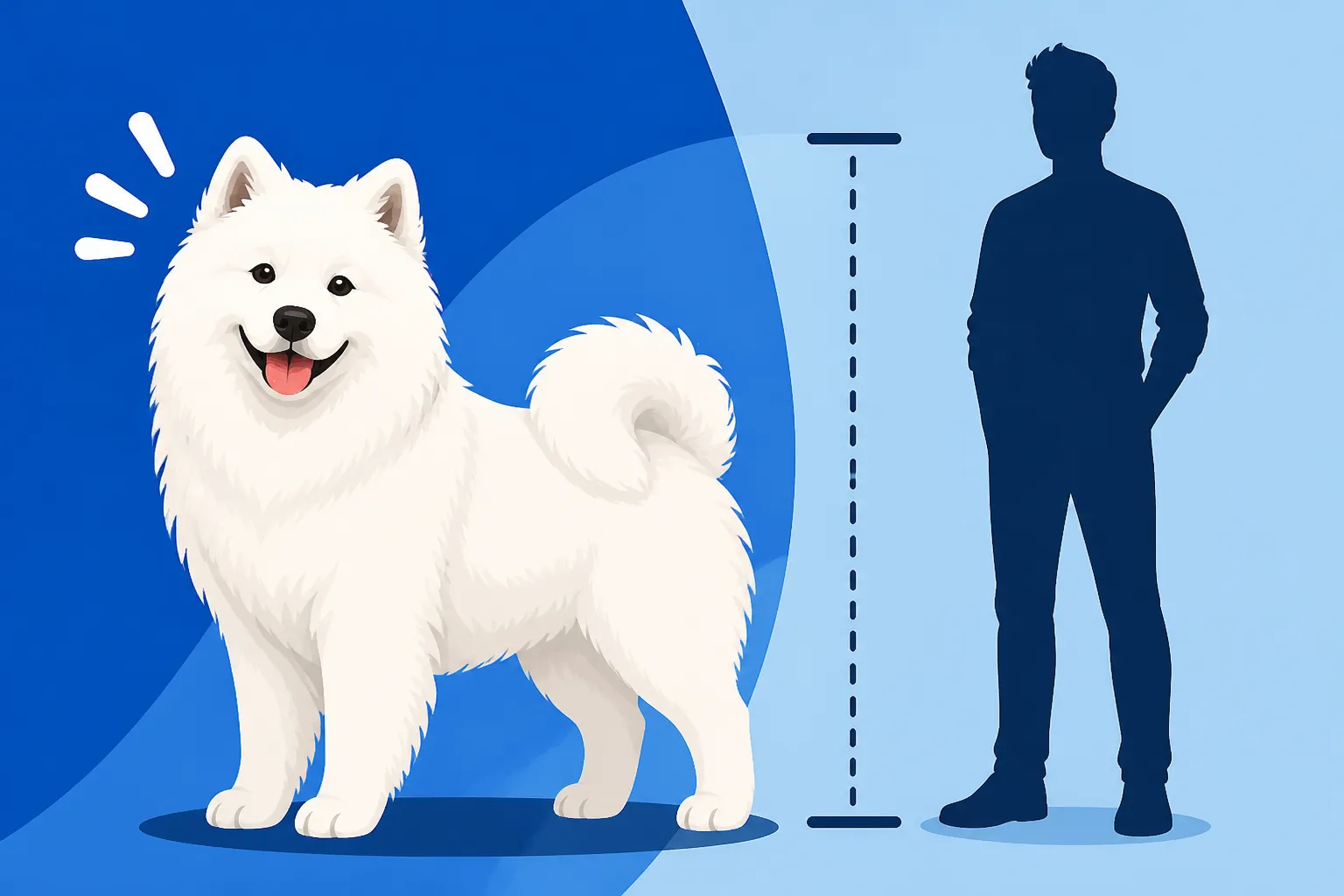
How Tall a Samoyed Stands
It's incredibly frustrating when you're trying to get a clear picture of what a Samoyed is truly like, and one of the most basic questions—how big do they get?—seems to have a dozen different answers depending on who you ask. We're here to cut through the confusion and give you a realistic, comprehensive understanding of how tall a Samoyed stands, from the official breed standards to the real-world variations you might encounter in your own fluffy companion.
Understanding the Samoyed Standard for Height
When we talk about a Samoyed's height, we're almost always referring to its height at the withers. The withers are that highest point on a dog's back, right where the neck meets the shoulders. It’s the consistent point from which official measurements are taken across all breeds. For Samoyed enthusiasts and potential owners, understanding these established guidelines is crucial, not just for show purposes, but for practical reasons too. You need to know what a well-proportioned Samoyed looks like to ensure you’re getting a healthy, well-bred dog.
The American Kennel Club AKC Standard
In the United States, the American Kennel Club (AKC) sets the standard for the Samoyed breed, much like it does for countless others. For males, the AKC standard typically calls for a height ranging from about 21 to 23.5 inches at the withers. Females, on the other hand, are generally a bit smaller, with their height usually falling between 19 and 21 inches. These aren't just arbitrary numbers; they reflect the ideal physical characteristics that allow a Samoyed to perform its traditional roles effectively, from herding reindeer to pulling sleds in harsh conditions. A Samoyed that fits within these ranges is considered to possess the balanced structure and functional build that defines the breed.
It's important to remember that these are ideals. A dog might be a little above or below these measurements and still be a fantastic companion, but breeders striving for excellence will aim to produce dogs within this range. The emphasis is always on balance and overall proportion, ensuring the dog is functional and athletic, rather than just hitting a specific number on a measuring tape. When you're looking at a puppy, their future height is often predicted by looking at the parents and their pedigree, but individual growth can always have surprises.
International Standards and Minor Differences
While the AKC standard is widely recognized, other kennel clubs around the world, like the Kennel Club in the UK or the Fédération Cynologique Internationale (FCI) which governs many European countries, have their own slightly nuanced standards. For instance, the FCI standard might suggest a male height of 57 cm (around 22.5 inches) with a tolerance of plus or minus 3 cm, and for females, 53 cm (around 21 inches) with the same tolerance. You might notice these slight differences, but generally, they all converge on a similar picture: a medium to large-sized spitz breed with robust build and substantial bone.
These variations aren't usually drastic enough to make a Samoyed from one country look dramatically different from another. Instead, they reflect minor historical preferences or interpretations of the breed's origins. For the average pet owner, these small distinctions are largely academic. What matters more is that any reputable breeder, regardless of their location, will be breeding towards a recognized standard, ensuring the health, temperament, and physical attributes characteristic of a Samoyed. They'll know their lines and what their puppies are likely to mature into, which is why asking about parents' heights and weights is always a good idea.
Why the Breed Standard Matters
You might wonder why these specific height measurements are so important if you're just looking for a family pet and have no interest in dog shows. Well, the breed standard isn't just about aesthetics; it's a blueprint for a healthy, functional dog. A Samoyed that falls significantly outside the standard height range could potentially face structural issues. For example, a dog that is too tall might be prone to joint problems because its frame isn't designed to carry its weight effectively, or it might lack the characteristic powerful, effortless gait. Conversely, a Samoyed that is too small might struggle with the stamina and strength required for activities like hiking or Pulling: What a Samoyed Was Actually Bred to Do.
Beyond health, the standard helps maintain breed type. It ensures that a Samoyed looks like a Samoyed, retaining those iconic features that make us fall in love with them – the proud carriage, the graceful stride, and that unmistakable "Samoyed smile." When breeders adhere to these standards, they're preserving the integrity of the breed, helping to ensure future generations of Samoyeds are just as magnificent and capable as their ancestors. This commitment to the standard is a hallmark of responsible breeding practices and something you should always look for when choosing a puppy.
Variations in Samoyed Height: Why Dogs Differ
Even with a breed standard firmly in place, you'll undoubtedly see Samoyeds in real life that vary quite a bit in height. It's not uncommon to meet a male Samoyed who seems to tower over others or a female who is noticeably petite. These variations are a natural part of genetics and individual development, and understanding them can help you manage your expectations and appreciate the unique qualities of your own fluffy companion. It's a bit like humans – we all fall within a general height range, but there's still plenty of diversity within that.
Genetics and Lineage: The Breeder's Influence
The most significant factor influencing a Samoyed's mature height is its genetic background. A puppy inherits its potential size from its parents and the broader lineage behind them. Reputable breeders spend years, sometimes decades, carefully selecting breeding pairs to produce dogs that not only meet the breed standard but also possess excellent health and temperament. If both parents are on the taller side of the standard, there's a good chance their offspring will lean that way too. The opposite is true for smaller parents. This is why a good breeder will be transparent about the size of their breeding stock and can often give you a reasonable estimate of how tall their puppies might become.
This isn't about manipulating genes for extreme size, but rather about consistent, thoughtful breeding. A breeder aiming for healthy, functional Samoyeds will consider the entire dog, not just height. They understand that The Health Tests Both Samoyed Parents Should Have are just as important as physical traits. Sometimes, certain lines might naturally produce slightly larger or smaller dogs while still staying within a healthy, acceptable range for the breed. Don't be shy about asking a breeder about the typical size of their adult dogs and their growth patterns. They should be happy to share this information and explain their breeding philosophy.
Gender Differences: Males vs. Females
As hinted at in the breed standard, there's a clear difference in average height between male and female Samoyeds. Males are consistently taller and often more substantially built than females. This is a common characteristic across many dog breeds and is directly tied to sexual dimorphism, where males and females of the same species exhibit different physical traits beyond their reproductive organs. For Samoyeds, this usually means a male will look and feel more substantial, with a broader head and a denser ruff, alongside his increased height.
While the standard gives us averages, individual females can sometimes reach the upper end of the female range, occasionally even matching a smaller male. Similarly, a smaller male might hover at the lower end of the male height spectrum. It's all part of the natural variation. If you're hoping for a particularly large or small Samoyed, knowing these gender tendencies can help guide your choice. However, remember that size is just one aspect of what makes a Samoyed wonderful. The personality, temperament, and health are far more important, regardless of whether your dog is 19 inches or 23 inches tall. You can read more about this in Whether a Female Samoyed Is Much Smaller.
Nutrition and Growth: Factors During Puppyhood
Beyond genetics, a Samoyed puppy's nutrition and overall care during its crucial growth period can also influence its final adult height. Rapid growth caused by overfeeding or feeding an inappropriate diet (especially one too high in calories or calcium for a large-breed puppy) can sometimes lead to skeletal problems, even if the puppy seems to be growing "bigger." The goal isn't to make a puppy grow as fast as possible, but rather to support steady, healthy development. High-quality puppy food specifically formulated for large breeds helps ensure they receive the right balance of nutrients to support bone and muscle development without excessive growth.
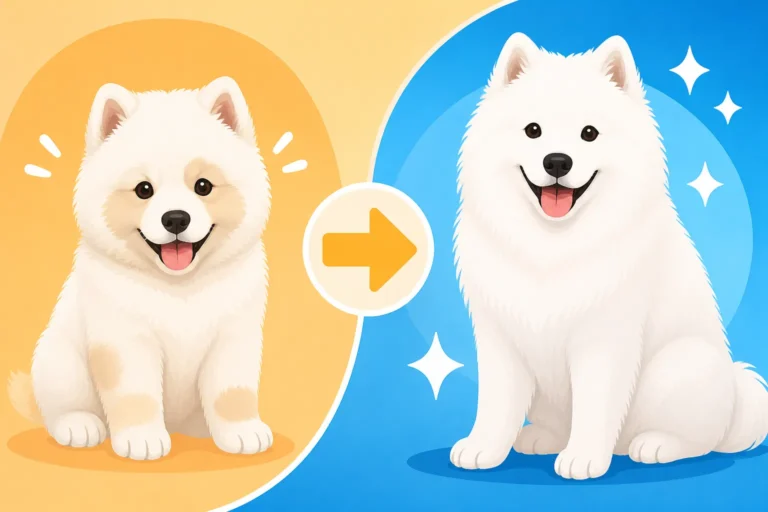
Environmental factors like appropriate exercise (not too much, not too little, especially on developing joints), and avoiding undue stress on growing bones can also play a role. A puppy that experiences severe malnutrition or illness during its key growth phases might not reach its full genetic height potential, though this is thankfully rare with responsible owners. Most Samoyeds stop growing taller around 12 to 18 months of age, though they may continue to fill out and gain muscle mass until they're two or three years old. You can learn more about this in The Age a Samoyed Stops Growing. Providing a consistent, balanced diet from a brand like Chewy, with age-appropriate formulas, is one of the best ways to ensure your Samoyed reaches its healthy adult height and weight.
Measuring Your Samoyed's Height Accurately
So, you've got your fluffy companion and you're curious where they stand (pun intended!) on the height chart. Maybe you're considering entering a fun dog show, or perhaps you just want to know for your own records. Measuring a Samoyed's height accurately can be a bit of an art, especially with all that glorious coat, but with the right technique and tools, it's definitely achievable.
The Proper Method for Measuring Withers Height
To get an accurate measurement of your Samoyed's height at the withers, consistency is key. First, ensure your Samoyed is standing squarely on a flat, level surface. Their front legs should be straight, and their head should be held naturally, not stretched up or craning down. It helps to have another person to hold them gently, perhaps offering a treat from Chewy to keep them still and focused. The "withers" are the highest point of the shoulder blades, where the neck meets the back, and this is where you'll aim your measurement.
You'll need a measuring device that can span from the ground to this point without your dog trying to interact with it. A wicket (a specialized dog measuring tool) is ideal, but a sturdy yardstick or even a carpenter's level combined with a tape measure can work in a pinch. Place the measuring tool vertically next to your dog, ensuring it touches the floor. Then, bring the horizontal arm or edge down gently until it rests on the highest point of their withers. Read the measurement directly from the scale. Don't press down into the coat; just let it rest lightly. Remember, the fluffy mane can make it tricky to find the exact spot, so a little practice helps!
Tools You'll Need for an Accurate Measurement
While a purpose-built dog measuring wicket is the gold standard for show measurements, it's not something every pet owner has lying around. Here's a breakdown of what you might use:
| Tool | Description | Pros | Cons |
|---|---|---|---|
| Dog Measuring Wicket | A specialized tool with a vertical rod and a sliding horizontal arm, designed for measuring dogs at the withers. | Highly accurate, easy to use once familiar, standard for shows. | Can be expensive, not readily available to casual owners. |
| Sturdy Yardstick/Ruler | A standard measuring stick, preferably wooden or metal, at least 24 inches long. | Inexpensive, readily available. | Harder to get a precise horizontal line, might require two people. |
| Carpenter's Level + Tape Measure | Use the level to create a perfectly horizontal line across the withers, then measure from the floor to the underside of the level with a tape. | Good accuracy if done carefully, common household tools. | Requires two tools and precise alignment, can be fiddly with a wiggly dog. |
| Wall/Door Frame + Pencil + Tape Measure | Stand your dog against a flat wall, place a book or level on its withers, mark the wall, then measure from the floor to the mark. | No special tools needed, good for a quick estimate. | Less precise than a wicket, relies on dog staying perfectly still. |
No matter which tool you choose, the principle remains the same: measure from the ground up to the highest point of the shoulder blades. Consistency in technique will yield the most reliable results. And patience, especially with a young Samoyed who might think the measuring tool is a new toy!
When to Measure Your Growing Samoyed
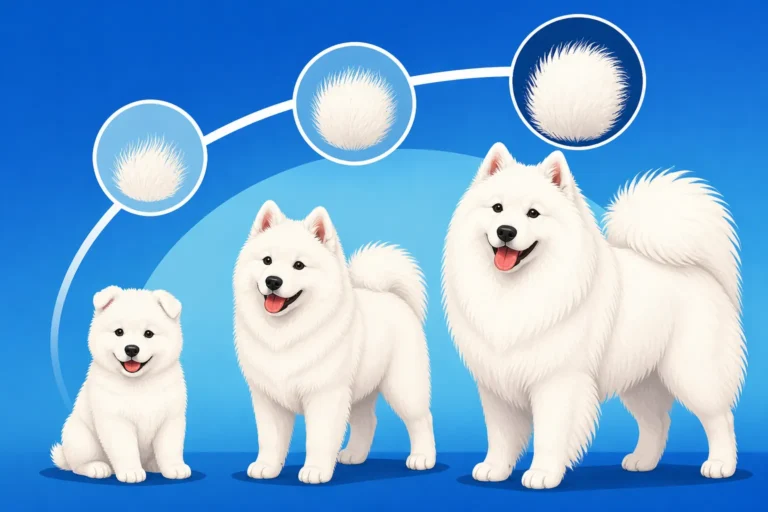
Samoyed puppies grow at a fairly rapid pace during their first year, then their growth slows down significantly. Generally, they reach most of their adult height by around 12 to 18 months of age. While they might continue to fill out, broaden their chest, and develop a more mature coat, the vertical growth largely ceases. This means that a height measurement taken before 12 months might not reflect their final adult size.
If you're tracking your Samoyed's growth, periodic measurements can be interesting. You might measure them every month or two during puppyhood to see their progress. However, for a definitive "adult" height, it's best to wait until they are at least 18 months old. If you're thinking of showing your Samoyed, an official measurement will be taken by a judge at the show. For your own curiosity, any time after 18 months will give you a good indication of their mature height. Just remember that it’s more about their overall health and proportion than hitting an exact number on the scale.
The Impact of Height on a Samoyed's Life and Activities
A Samoyed's height isn't just a number in a breed standard; it has real-world implications for their daily life, from how they move to the practicalities of living with them. A taller Samoyed might navigate certain obstacles with ease, while a shorter one might be more agile in tight spaces. Understanding these subtle differences can help you tailor activities and even your home environment to best suit your individual dog.
How Height Influences Mobility and Exercise Needs
A Samoyed's height, combined with its overall build and bone structure, directly influences its mobility and how it performs in various activities. Taller Samoyeds, especially those on the upper end of the standard, often have a longer stride. This can be an advantage in activities like Sledding, Herding and What a Working Samoyed Costs to Campaign or long-distance hiking, allowing them to cover ground efficiently. Their powerful, springy gait is part of their charm and effectiveness as working dogs.
However, a Samoyed that is disproportionately tall or has a very lanky build might be more prone to certain orthopedic issues, particularly if their growth was too rapid as a puppy. This is why balanced breeding and proper nutrition during growth are so critical. Conversely, a more compact, slightly shorter Samoyed might exhibit greater agility in quick turns and jumps, making them stellar at activities like agility or even just navigating a busy dog park. Ultimately, a well-proportioned Samoyed, regardless of where it falls within the standard height range, should exhibit effortless, graceful movement. Always remember that daily exercise tailored to their energy levels is paramount, whether they are tall or slightly more compact.
Practical Considerations for Taller Samoyeds
Living with a taller Samoyed brings a few practical considerations into play. For instance, their reach on kitchen counters or dining tables can be surprisingly extensive! What might be out of reach for a smaller dog could be fair game for a tall, curious Samoyed. You might find yourself needing to be more vigilant about "counter surfing" or child-proofing your home in new ways. Also, their impressive height means they can often see over fences that might contain smaller breeds, which could tempt them to try and escape if not properly secured. You might need a How Tall a Fence a Samoyed Needs to keep them safely in your yard.
Consider also things like car travel. A taller Samoyed will require a larger crate or a more spacious area in your vehicle for comfortable, safe transport. Similarly, dog beds or grooming tables need to be appropriately sized. If your Samoyed is particularly tall, you might even find yourself adjusting the height of their food and water bowls, though there's varying scientific opinion on whether raised bowls are truly beneficial or detrimental for larger breeds like Samoyeds in terms of bloat prevention. The main thing is to ensure your home and lifestyle can comfortably accommodate their size. Brands like Chewy offer a wide range of large-breed specific products that can make life easier for you and your taller Samoyed.
The Role of Height in Working and Performance
Historically, the Samoyed's height and sturdy build were essential for its working roles with the Nenets people. Their moderate size—not too small to be ineffective, and not so massive as to be unwieldy—made them ideal for herding reindeer and pulling moderate loads over vast, snowy terrains. A Samoyed that is too short might lack the leverage and stride length needed for efficient pulling, while one that is excessively tall could be less efficient in deep snow or more prone to injury under heavy loads.
In modern performance sports, height still plays a role. In sports like canicross or skijoring, a taller dog with a powerful, long stride might excel. In agility, while often thought of as a sport for smaller, more compact dogs, a well-built Samoyed can perform beautifully, but their height means they'll be tackling higher jumps than a smaller dog. In conformation shows, judges meticulously assess a dog's height as part of evaluating its overall balance and adherence to the breed standard. An Whether an Oversized Samoyed Can Be Shown is a question that breeders and exhibitors take seriously, as deviations from the standard can impact judging. Their height contributes to their overall athletic prowess and capability, making them versatile companions for active individuals or families who enjoy outdoor adventures.
Common Misconceptions About Samoyed Size
There's a lot of folklore and misunderstanding surrounding dog sizes, and Samoyeds are no exception. People often have preconceived notions based on photos or anecdotes, which don't always align with the reality of the breed. Let's clear up some of those common misconceptions about how tall a Samoyed stands and what their overall size truly means.
The Myth of the "Mini" or "Giant" Samoyed
You might occasionally come across listings or discussions about "mini Samoyeds" or "giant Samoyeds." It's important to understand that these are not recognized varieties or healthy classifications within the Samoyed breed. The breed standard, as we discussed, defines a specific height and weight range, and reputable breeders work diligently to maintain these characteristics for health and breed integrity.
A "mini Samoyed" is often the result of breeding runts, dogs with dwarfism, or even cross-breeding with smaller dogs. While they might be undeniably cute, deliberately breeding for significantly smaller size can lead to serious health problems, including skeletal abnormalities, organ issues, and a shorter lifespan. Conversely, a "giant Samoyed" might be an individual that significantly exceeds the standard, often due to poor breeding practices that prioritize size over structure and health, or simply an unfortunate genetic fluke. These dogs can be prone to joint problems, heart conditions, and shorter lifespans due to the strain on their larger frames. Always remember that a truly healthy Samoyed will fall within the established height and weight ranges. If you see a breeder advertising "mini" or "giant" Samoyeds, proceed with extreme caution, as it's a red flag for irresponsible breeding.
Why Weight and Bone Structure are More Important Than Just Height
While height is a key measurement, it's just one piece of the puzzle when assessing a Samoyed's overall size and build. A dog's weight and bone structure are equally, if not more, important for their health and functionality. A Samoyed that is within the standard height range but is too slender or too heavy for its frame can face problems. A dog that is too lightly boned might be more fragile and prone to injury, lacking the substance necessary for a working Northern breed. On the other hand, an overweight Samoyed, regardless of its height, puts undue strain on its joints, heart, and other organs, leading to a host of health issues like Diabetes in a Middle Aged Samoyed or Hip Dysplasia in a Samoyed.
The ideal Samoyed has "substantial bone" for its height, meaning it's well-built and sturdy without being clunky or overweight. You should be able to feel their ribs easily, but they shouldn't be visible. Their coat can be deceptive, making them look larger than they are, but a quick pat can reveal their true body condition. Focusing solely on height can be misleading; it's the combination of height, weight, and solid bone structure that truly indicates a healthy, well-conformed Samoyed. You can delve deeper into this topic by reading What a Samoyed Actually Weighs.
Tall Isn't Always Healthy
There's a natural inclination for some people to assume that "bigger is better" when it comes to dogs. While a magnificent, tall Samoyed can certainly be impressive, it's crucial to understand that being exceptionally tall isn't inherently healthier or more desirable. In fact, extreme height can sometimes be a detriment. Dogs that are significantly oversized can experience increased stress on their joints, predisposing them to conditions like elbow or hip dysplasia at an earlier age. They might also be more prone to certain growth plate issues or even certain cancers that are more common in very large breeds.
The Samoyed breed standard aims for a balance—a dog that is large enough to perform its historical tasks but not so large that it compromises its agility, longevity, or health. The goal is a harmonious, powerful, and enduring physique. A Samoyed within the standard height range, with proper bone, muscle, and a healthy weight, is typically the healthiest and most capable. When evaluating a Samoyed, always look for overall balance and soundness rather than just chasing the tallest dog in the litter. Health and functionality should always take precedence over sheer size.
Comparing Samoyed Height to Other Northern Breeds
When you picture a Samoyed, you're likely imagining that fluffy white coat and happy smile. But where do they stand (again, pun intended!) next to their Arctic cousins? It's easy to lump all "sled dog" breeds together, but each has distinct characteristics, including their typical height. Understanding these comparisons can help potential owners choose the right fit for their lifestyle and expectations.
Samoyed vs. Siberian Husky Height
The Siberian Husky is another popular Northern breed, often confused with or compared to the Samoyed. While both are double-coated, friendly, and bred for cold climates, there are notable differences in their typical height. Siberian Huskies are generally a bit more compact and lighter-boned than Samoyeds.
- Siberian Husky Height: Males typically stand between 21 and 23.5 inches at the withers, and females between 20 and 22 inches.
- Samoyed Height: Males are usually 21 to 23.5 inches, and females 19 to 21 inches.
As you can see, the male height ranges are quite similar. However, female Samoyeds tend to be slightly shorter on average than female Huskies. More significantly, Samoyeds generally have more substance or bone, meaning they often appear more robust and heavier than a Husky of comparable height. Huskies are built for speed and endurance, appearing lithe and athletic, while Samoyeds, traditionally used for herding and pulling, have a more powerful, sturdy build. So, while their height numbers might overlap, the overall impression of size is often quite different. For a deeper dive, consider reading Samoyed or Husky for a First Northern Breed.
Samoyed vs. Alaskan Malamute Height
The Alaskan Malamute is the true giant of the Arctic sled dog world, and there's a significant height difference when comparing them to Samoyeds. Malamutes are bred for sheer strength and pulling heavy loads, resulting in a much larger, heavier-boned dog.
- Alaskan Malamute Height: Males typically stand around 25 inches at the withers, and females around 23 inches.
- Samoyed Height: Males are usually 21 to 23.5 inches, and females 19 to 21 inches.
As you can clearly see from these figures, Malamutes are considerably taller than Samoyeds, often by several inches. They also weigh significantly more and have a much more massive bone structure. A Malamute will dwarf a Samoyed in both height and bulk. If you're looking for a genuinely large Northern breed, the Malamute fits the bill, but be prepared for the care and space requirements that come with their impressive size. The Samoyed, in comparison, is a more moderately sized dog, offering a balance of power and agility without the sheer bulk of a Malamute. Samoyed or Malamute for a Cold Climate further explores these differences.
Samoyed vs. American Eskimo Dog Height
Sometimes, people who are unfamiliar with Northern breeds might confuse a Samoyed with an American Eskimo Dog, especially the larger standard variety. While both are white, fluffy Spitz breeds with endearing smiles, their sizes are quite distinct, with the American Eskimo Dog being considerably smaller.
- American Eskimo Dog Height: They come in three sizes: Toy (9-12 inches), Miniature (12-15 inches), and Standard (15-19 inches).
- Samoyed Height: Males are usually 21 to 23.5 inches, and females 19 to 21 inches.
Even the largest "Standard" American Eskimo Dog barely reaches the lower end of a female Samoyed's height range. Most American Eskimo Dogs are much smaller, easily fitting on a lap, whereas even a smaller Samoyed is a substantial dog. While they share some visual similarities in coat and expression, a side-by-side comparison immediately highlights the significant difference in height and overall size. It's a common misconception, but once you see them together, it's clear that Why an American Eskimo Dog Is Not a Small Samoyed. The Samoyed is truly a medium-large breed, whereas the American Eskimo Dog ranges from small to medium.
Disclaimer
This article is for general informational purposes only and does not constitute professional advice. Laws, prices and regulations vary by location and change over time. Consult a qualified professional for guidance on your specific situation.