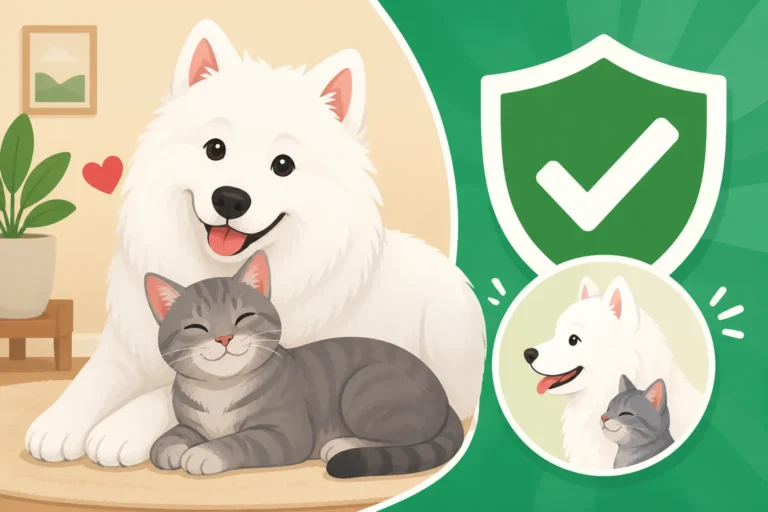
How a Samoyed Treats a Cat
Bringing a Samoyed into a home that already has a cat, or even considering adding a cat to a Samoyed household, can feel like navigating a minefield of potential furry conflicts. Many Samoyed owners worry about their dog's natural instincts clashing with a smaller, often more independent feline, fearing everything from incessant chasing to outright aggression. This guide aims to demystify the interaction between these two beloved but very different creatures, offering realistic advice and actionable steps to foster a peaceful, multi-pet environment.
Understanding the Samoyed's Nature: Prey Drive and Sociability
Samoyeds are truly remarkable dogs, bred for centuries by the Nenets people to herd reindeer, pull sleds, and even share their tents for warmth. This unique history gives them a fascinating blend of traits that can sometimes seem contradictory, especially when it comes to other animals in the home. It’s crucial to understand these inherent qualities before attempting to integrate them with a cat.
The Herding Instinct vs. Prey Drive in Samoyeds
When we talk about Samoyeds and their history, the first thing that often comes to mind is their working heritage. They are, after all, sled dogs and herders. This herding instinct, which is essentially a modified prey drive, means they are wired to chase and gather moving objects. For the Nenets, this meant keeping reindeer together. For a Samoyed in a modern home, it can unfortunately sometimes translate to chasing squirrels, rabbits, or even, yes, cats. It's not necessarily aggression; it's often more about an ingrained desire to move things. This is why you'll often read about The Herding Instinct Nobody Expects From a Samoyed. A cat darting across the living room can trigger this instinct much like a reindeer calf might have. The key is understanding that while the instinct is there, the expression of it can be managed. Samoyeds aren't typically bred to kill the animals they herd; rather, they're meant to control them. However, a strong chase instinct can still be terrifying for a cat and, if unchecked, could lead to injury.
Beyond herding, Samoyeds can also possess a degree of prey drive, especially for small, fast-moving critters. While they aren't often considered high-prey drive dogs compared to some terrier or sighthound breeds, it's certainly present. A Samoyed might see a cat as something to be "gotten" if not properly introduced and managed. This isn't usually malicious; it's instinctual. It's a chase-and-capture game to them, but for a cat, it's a life-or-death scenario. This drive is particularly strong if a Samoyed has not been exposed to smaller animals from a young age.
Samoyed Sociability: Friend to All?
One of the most endearing qualities of the Samoyed is their famous "Sammy Smile" and their generally friendly, outgoing nature. They are often described as wanting to be everyone's friend, and this sociability extends to many other dogs and even people they've just met. You might find your Samoyed greeting strangers with wagging tails rather than suspicion, a trait that makes them poor guard dogs but fantastic family companions. This general affability can be a huge asset when introducing them to a cat. They aren't typically an aggressive breed; quite the opposite. This inherent friendliness means they usually aren't looking for a fight.
However, "friendly" doesn't automatically mean "cat-safe." Their boundless energy, playful nipping, and sheer size can be overwhelming for a small, timid cat, even if the Samoyed has the best intentions. A playful nudge from a fifty-pound Samoyed can send a ten-pound cat flying, leading to fear and potentially defensive aggression from the cat. This is particularly true if the Samoyed has never learned to temper its interactions with smaller, more delicate beings. Their desire to be "in the room with you" extends to every member of the family, including the feline ones, and they don't always understand personal space. Why a Samoyed Wants to Be in the Room With You applies to cats just as much as humans!
Introducing a Samoyed to a Feline Friend: A Step-by-Step Approach
The prospect of introducing a Samoyed to a cat can be daunting, and frankly, it should be approached with caution and a solid plan. Rushing things is a recipe for disaster. Both animals need time, patience, and careful management to feel secure in their shared environment.
Preparation is Key: Setting Up for Success
Before your Samoyed and cat even lay eyes on each other, you need to set up the home for success. This means creating safe zones, managing resources, and getting your Samoyed into a state of calm. Think of it like preparing for a delicate diplomatic meeting – every detail matters.
First and foremost, create cat-specific spaces that the dog simply cannot access. This could involve baby gates that the cat can easily slip under or over, or even dedicated rooms that are strictly off-limits to the Samoyed. Consider vertical space for your cat; cat trees, shelves, or even just high furniture can offer a crucial escape route and a sense of security. Cats feel much safer when they can observe from above, away from the perceived threat of a large dog. You can find excellent cat trees and elevated perches on platforms like Amazon that provide these vertical retreats. Ensure all cat resources – food, water, litter boxes – are placed in these dog-free zones or on elevated surfaces. A Samoyed has a strong sense of smell and curiosity, and a litter box can be a particularly tempting (and disgusting!) target.
Next, ensure your Samoyed is well-exercised before any introduction. A tired Samoyed is a well-behaved Samoyed. A long walk, some vigorous play, or a training session can help burn off excess energy and make them more amenable to instruction. How Much Exercise a Samoyed Needs is often underestimated, and an under-exercised Samoyed is a bored Samoyed, which can lead to destructive behaviors, including pestering the cat. You also need to have a solid foundation of obedience training with your Samoyed. Commands like "leave it," "stay," and a reliable recall are non-negotiable. If your Samoyed finds obedience negotiable, as discussed in Training a Samoyed That Finds Obedience Negotiable, you'll have a much harder time. This is where comprehensive, positive reinforcement training programs, perhaps from a resource like BAXTER & Bella, can be invaluable in building that essential foundation before adding a cat to the mix.
The Gradual Introduction: Scent, Sight, and Supervised Meetings
Once your home is set up, the introduction itself must be a slow, multi-stage process, focusing first on scent, then controlled sight, and finally supervised interactions. Do not just throw them together and hope for the best.
Stage 1: Scent Swapping. Before they even see each other, allow them to get used to each other's scent. Rub a cloth on your cat and place it in your Samoyed's bedding. Do the same with a cloth rubbed on your Samoyed for your cat. Observe their reactions. Is your Samoyed curious, indifferent, or intensely focused? Is your cat hissing, spitting, or cautiously sniffing? Feed them on opposite sides of a closed door, gradually moving the bowls closer to the door over several days. This creates a positive association (food) with the other animal's presence and scent.
Stage 2: Controlled Sight. Once they seem calm with each other's scent, move to visual introductions, but with a barrier. A baby gate across a doorway is perfect for this. Allow them to see each other for short periods, always supervised. Keep your Samoyed on a leash, even if they seem calm, and be ready to redirect their attention with treats or toys if they become too focused on the cat. Reward calm behavior from both animals generously. If your Samoyed is intently staring, lunging, or whining, they are not ready for closer contact. Short, positive sessions are better than long, stressful ones. During these sessions, ensure your cat has an easy escape route, such as a high shelf or another room.
Stage 3: Supervised Interactions (Leash On). When both animals are consistently calm during barrier introductions, you can progress to supervised, leashed interactions in the same room. Your Samoyed should still be on a leash, held by you or another responsible adult. Keep the leash loose to avoid creating tension, but be prepared to gently guide your Samoyed away if needed. Continue to use positive reinforcement, rewarding your Samoyed for ignoring the cat or for calm, appropriate interactions (like a sniff, then looking away). Never force interaction. If either animal shows signs of stress – your cat hissing, flattening ears, swatting, or your Samoyed staring, stiffening, growling, or lunging – end the session immediately and go back a step. These early interactions are critical for shaping their long-term relationship. Remember, the goal isn't necessarily for them to become best friends, but to coexist peacefully.
Living in Harmony: Managing a Multi-Pet Household
Once initial introductions have gone well, the real work of maintaining peace in a multi-pet home begins. It's an ongoing commitment to management, training, and observation to ensure both your Samoyed and your cat feel safe and comfortable.
Creating Safe Spaces and Boundaries
Even after a successful introduction, it's vital to maintain dedicated safe spaces for your cat. This means continuing to use baby gates, elevated perches, and rooms that your Samoyed cannot access. Your cat needs to know they have a sanctuary where they can retreat and relax without fear of being pestered by the dog. This is especially important for feeding times and litter box access. A cat that feels constantly threatened or cornered by a large dog will quickly develop stress-related issues, which can manifest as aggression, inappropriate urination, or even health problems. You might find a catio or a secure outdoor enclosure (accessible only to the cat) provides additional relief and mental stimulation for your feline friend.
Boundaries aren't just for the cat; they're for the Samoyed too. Teach your Samoyed that certain areas are off-limits, or that certain behaviors around the cat are unacceptable. For example, excessive barking at the cat, as sometimes heard in The Samoyed Scream and Why It Is Not Barking, should be immediately redirected. Use verbal cues like "leave it" or "off" consistently. Never allow your Samoyed to chase the cat, even if it seems like "play." What starts as play can quickly escalate, or simply terrorize the cat to the point of fear.
Ongoing Training and Supervision
Successful coexistence isn't a one-and-done deal; it requires continuous reinforcement and supervision. Every interaction between your Samoyed and cat, especially in the early months, should be supervised. Never leave them alone together unsupervised until you are absolutely certain of their relationship – and even then, many owners choose to separate them when they can't directly watch. This is particularly true if your Samoyed is still a boisterous puppy, as The First Year With a Samoyed Puppy is a period of intense learning and boundary-testing.
Continue to work on your Samoyed's obedience commands, especially "leave it" and "stay." Regularly practice these cues around the cat, rewarding your Samoyed for complying. Consider enrolling in advanced obedience classes or working with a professional trainer who has experience with multi-species households. BAXTER & Bella offers a lifetime membership with comprehensive online resources and one-on-one coaching that can be invaluable for ongoing training support in a complex environment like a multi-pet home. Training should always be positive and reward-based; scolding or punishing your Samoyed for natural instincts will only create fear and resentment, not better behavior. What a Samoyed Will Work For is usually food or praise, so lean into those motivators!
Here’s a quick overview of essential strategies for living with both:
| Strategy | Samoyed Management | Cat Management | Environment Setup |
|---|---|---|---|
| Safe Zones | Confine Samoyed to specific areas using gates/crates when unsupervised. | Provide elevated perches, cat trees, and dog-free rooms. | Install baby gates; use vertical space for cat's retreat. |
| Resource Separation | Dog food and water in accessible areas for the Samoyed. | Cat food, water, litter boxes in dog-inaccessible locations. | Place cat bowls on counters or in gated rooms; elevated litter boxes. |
| Supervision | Always supervise initial and ongoing interactions. | Ensure cat has clear escape routes during interactions. | Keep a leash handy for the Samoyed during supervised periods. |
| Training Focus | "Leave It," "Stay," "Come," "Gentle" commands around the cat. | Reward calm behavior; don't force interaction. | Ensure consistent training, using high-value rewards. |
| Exercise | Provide ample physical and mental exercise for the Samoyed daily. | Engage cat with toys and playtime to build confidence. | Ensure enough space for separate exercise for both. |
| Calm Environment | Avoid over-excitement; encourage calm interactions. | Respect cat's boundaries and need for quiet time. | Keep noise levels down; provide peaceful resting spots. |
Recognizing and Addressing Warning Signs
Being able to read the body language of both your Samoyed and your cat is paramount. Dogs and cats communicate very differently, and misinterpreting their signals can lead to problems.
Samoyed Warning Signs:
- Stiff body, fixed stare: This is often the precursor to a chase or lunge. Your Samoyed is intensely focused.
- Low growl or bark directed at the cat: Clear indication of displeasure or possessiveness.
- Mouthing or nudging the cat excessively: Even if it seems playful, it can be overwhelming or frightening for the cat.
- Herding behavior: Circling, nipping at the cat's heels. This is their instinct kicking in, but it's not safe for a cat.
Cat Warning Signs:
- Hissing, spitting, growling: Clear signs of fear, anger, or discomfort.
- Flattened ears, dilated pupils: Indicates fear or aggression.
- Swatting with claws out: A defensive strike.
- Tail tucked or puffed up: Fear or aggression.
- Excessive hiding, reluctance to eat, or inappropriate urination: Signs of chronic stress, indicating they do not feel safe in the home.
If you observe any of these warning signs, it's essential to intervene immediately and re-evaluate your introduction strategy. This might mean going back to a previous stage of introduction, increasing physical separation, or seeking the guidance of a professional animal behaviorist. Never punish either animal for these natural reactions; instead, focus on managing the environment and reinforcing positive alternatives. A Samoyed should not be off-leash in the presence of an unfamiliar or frightened cat; their recall, as reliable as it may be with you, may not hold when a small, fleeing creature triggers their instincts, especially since Whether a Samoyed Can Ever Be Off Leash is often debated even without cats in the picture. The goal is always to prevent negative interactions and to ensure both pets feel secure and loved in their home.
Ultimately, integrating a Samoyed and a cat is about understanding each animal's unique needs and instincts, managing their environment carefully, and investing in consistent training and supervision. It's a journey that requires patience, but with the right approach, a harmonious multi-species household is absolutely achievable.
Disclaimer
This article is for general informational purposes only and does not constitute professional advice. Laws, prices and regulations vary by location and change over time. Consult a qualified professional for guidance on your specific situation.