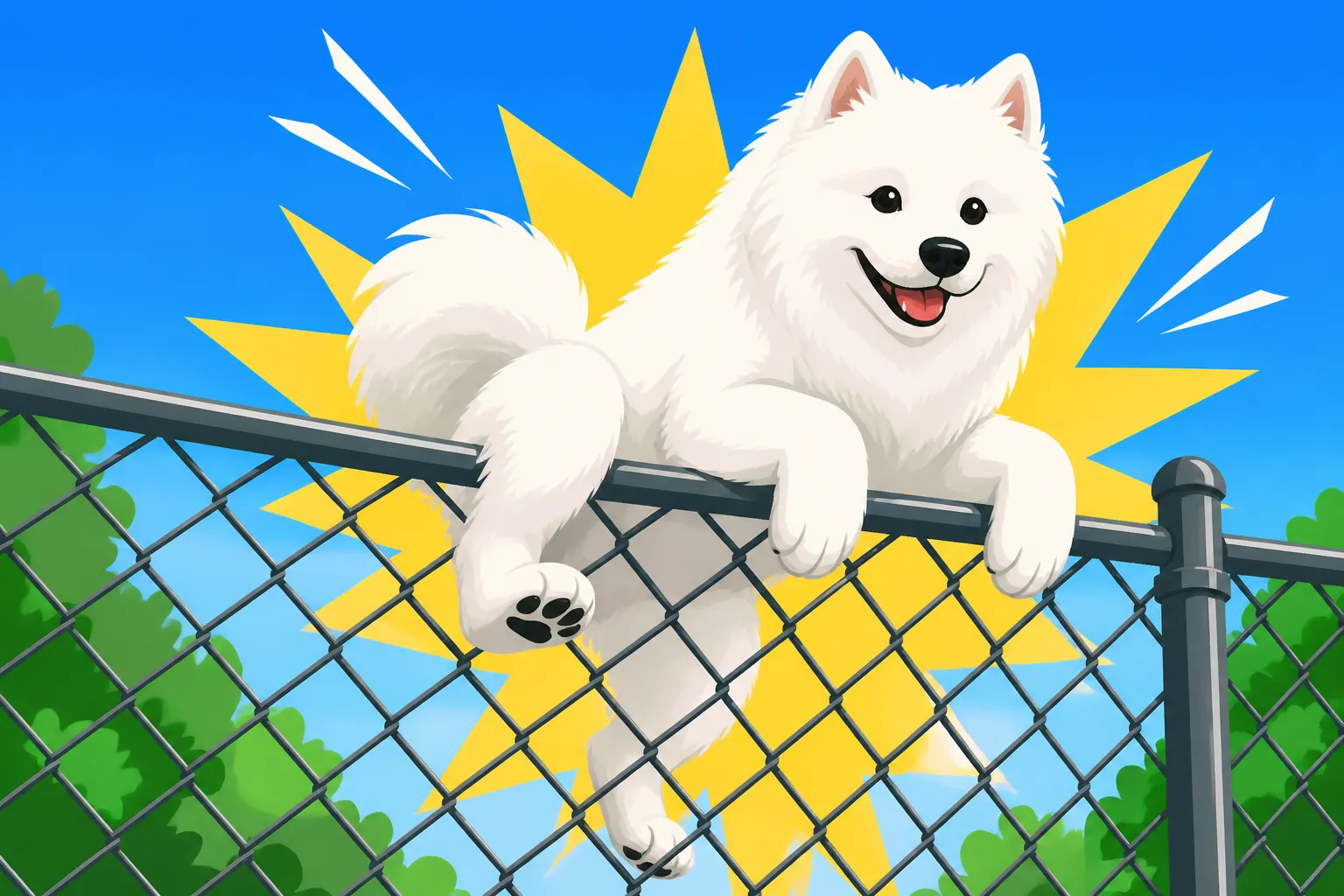
How a Samoyed Climbs Chain Link
It's incredibly frustrating, isn't it? You invest in a fence, thinking your fluffy, smiling Samoyed will be safe and sound in the yard, only to turn your back for a moment and find them already on the other side. Many of us assume a standard chain link fence is a decent barrier, but when you have a Samoyed, it often turns into a literal ladder to freedom. This guide is going to break down exactly how your clever Samoyed manages to scale that chain link fence and, more importantly, what you can do about it to keep them safely contained.
The Astonishing Agility of a Samoyed (and Why Your Chain Link Fence is a Ladder)
When you look at a Samoyed, you see that gorgeous, fluffy coat and that ever-present "Samoyed smile." It’s easy to think of them as big, happy, somewhat cuddly snow clouds. But beneath all that floof is an incredibly athletic, powerful, and driven working dog. They weren't bred to sit idly; they were bred for endurance, strength, and problem-solving in harsh environments. That combination of physical prowess and mental determination means they can be surprisingly adept at things like fence climbing.
More Than Just a Pretty Face: Understanding Samoyed Physique and Drive
Let's be real, a Samoyed isn't just a pretty face; they are compact powerhouses. Their ancestors were reindeer herders and sled pullers, and those genes didn't just disappear. They possess powerful hindquarters designed for pushing off, strong shoulders for pulling, and an overall body structure built for sustained movement and agility. Think of them as furry athletes. This isn't a sedentary breed content with a short stroll around the block. They thrive on activity and mental engagement.
When a Samoyed sees a barrier, especially one that allows for a clear view of something interesting on the other side—be it a squirrel, a passing person, or simply the unknown beyond the yard—their natural drive kicks in. This isn't malice; it's instinct. Whether it's the urge to follow a scent, the deep-seated desire to explore, or the need to reunite with their human "pack" they might feel separated from, their motivation to overcome obstacles is incredibly strong. They have an innate drive, similar to their distant relatives who herded reindeer, which can manifest as an urge to chase or patrol. Sometimes, it's even just pure, unadulterated boredom. A Samoyed needs a job, and if you don't give them one, they'll find one, even if that job is "escape artist." You might find it helpful to read about The Herding Instinct Nobody Expects From a Samoyed or even Pulling: What a Samoyed Was Actually Bred to Do to truly grasp their underlying drive.
The "Fingerholds" of a Chain Link Fence
Here's the cruel truth about chain link fences when it comes to a Samoyed: the very design that makes them functional for many dog breeds makes them an open invitation for a Samoyed. The woven mesh, those diamond-shaped openings, are like perfectly spaced ladder rungs or rock-climbing holds for their paws.
Imagine your Samoyed eyeing the top of that fence. They'll often start by placing their front paws into the mesh, using their powerful shoulder muscles to lift themselves slightly. Then, their back paws follow, finding purchase in the lower diamonds. It's a rhythmic, almost fluid motion. They use their strong nails and paw pads to grip, leveraging their body weight and incredible balance. They’re not necessarily jumping over; they're climbing up. It's less a jump and more a systematic ascent, almost like a toddler scaling a play structure, but with far more power and purpose. The danger here isn't just that they get out, but that they can get tangled or injured if they slip, especially if they try to scramble over the top. This isn't just a hypothetical; many Samoyed owners have come home to find their adventurous pup waiting on the other side, sometimes with a snagged bit of fur or a scraped paw, a testament to their determined efforts.
Why a Samoyed's Motivation Overcomes Obstacles
It’s easy to get upset or feel like your Samoyed is being "bad" when they escape, but that's not really what's happening. Your Samoyed isn't trying to defy you; they're simply acting on their powerful instincts and needs. A bored Samoyed is a destructive Samoyed, or in this case, an escape artist Samoyed. They need mental stimulation and physical activity to be truly content. If they're left alone for long periods without adequate enrichment, that chain link fence becomes a tantalizing challenge, a puzzle to solve.
Loneliness plays a huge role too. Samoyeds are incredibly social dogs, deeply bonded to their families. They want to be with you, which is why Why a Samoyed Wants to Be in the Room With You is such a common observation among owners. If they perceive themselves as isolated, even in a secure yard, they'll often try to find a way back to their people. This isn't separation anxiety in the classic sense, but a strong desire for companionship. Prey drive is another massive motivator. That squirrel taunting them from a tree branch outside the fence? That passing cat sauntering down the sidewalk? Those are irresistible temptations that can easily override any training they might have had about staying put. Coupled with the fact that Why a Samoyed's Recall Cannot Be Trusted once they are focused on something exciting, getting out of the yard is just the first step in a grand adventure for them, and a nightmare for you.
Recognizing the Signs and Preventing the Climb
Knowing how and why your Samoyed climbs a chain link fence is half the battle. The other half is recognizing the early indicators and proactively modifying your environment and routine to deter these Houdini-like escapes. It's much easier to prevent an escape than to chase down a determined Samoyed who has already made their break for freedom.
Early Warning Signs of an Aspiring Escape Artist
Your Samoyed won't just magically decide to scale the fence one day. Often, they give off subtle clues that they're eyeing up their escape route. You might notice them pacing along the fence line, nose to the ground, taking in all the smells, or gazing intently at something beyond the fence for extended periods. They might start "testing" the fence by jumping up on it, even playfully, which quickly transitions into finding those paw holds.
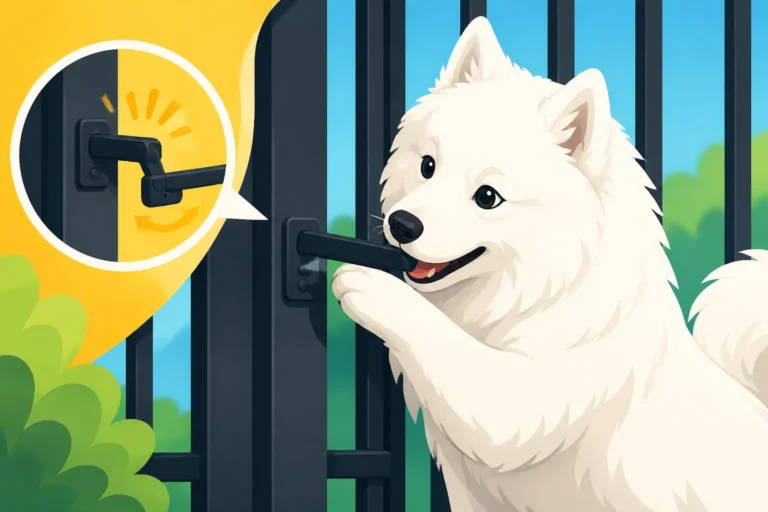
Look for areas where the fence might be slightly loose or where the ground offers a natural boost. Any little advantage will be noted and exploited. They might even try to rattle or lean against sections of the fence, subtly assessing its stability. Another common sign is an increased interest in the gate latch. You'd be amazed at how many Samoyeds watch their humans open and close a gate, filing that information away for later. It's a phenomenon you can read more about in The Gate Latch a Samoyed Learns to Open. If you start seeing these behaviors, consider it a red flag. Your Samoyed is either bored, motivated by something outside, or just curious enough to start planning their grand exit.
Modifying Your Chain Link Fence for a Samoyed
Since a chain link fence offers those convenient "ladder rungs," the most effective physical deterrents focus on removing those climbing aids or making the fence impassable.
- Adding Height: The minimum recommendation for a Samoyed is typically a 6-foot fence, but many owners find even that isn't enough for a determined climber. You can add extensions to your existing fence to increase its height to 7 or 8 feet. These often come as angled or straight extensions that can be bolted on. This makes it much harder for them to get a grip over the top and provides a psychological barrier.
- Blocking Footholds: This is crucial. You can attach a secondary layer of narrower mesh, like hardware cloth, to the lower 3-4 feet of the fence. This effectively removes the larger chain link openings that their paws rely on. Alternatively, some owners have success by attaching wooden slats or even bamboo screening to the inside of the fence, creating a smooth, un-climbable surface.
- "L" Footers or Digging Barriers: While the focus here is on climbing, Samoyeds are also notorious diggers. An "L" footer is a piece of fence material (often chain link or hardware cloth) that is attached to the bottom of the fence and then extends horizontally into the yard, buried a few inches under the ground. This prevents them from digging directly next to the fence line. Combine this with anti-climbing measures, and you address two common escape methods at once. This links well with understanding The Tunnel a Samoyed Digs Under a Fence.
It's important to weigh the cost of these modifications against the peace of mind they provide and the potential dangers of your Samoyed escaping. Constantly worrying about your dog getting out is incredibly stressful. Remember, How Tall a Fence a Samoyed Needs is often underestimated for this resourceful breed.
Addressing the Root Causes: Enrichment and Training
Physical barriers are essential, but they are only one part of the solution. You also need to address why your Samoyed feels the need to escape in the first place. Often, it boils down to insufficient physical exercise and mental stimulation.
- Exercise, Exercise, Exercise: A tired Samoyed is generally a well-behaved Samoyed. Ensure your dog is getting at least 1-2 hours of vigorous exercise every single day. This isn't just letting them out in the yard; this means structured walks, runs, hikes, or active play sessions. A Samoyed with pent-up energy is much more likely to look for an outlet, like scaling a fence. For more on this, check out How Much Exercise a Samoyed Needs.
- Mental Stimulation: Samoyeds are intelligent and need to use their brains. Incorporate puzzle toys, scent work games, or training sessions into their daily routine. Basic obedience commands, even if they sometimes consider them "negotiable" as discussed in Training a Samoyed That Finds Obedience Negotiable, can help reinforce good behavior and provide mental engagement. Consider signing up for an online training program like BAXTER & Bella, which offers comprehensive guidance and support to help you engage your Samoyed's mind and build a stronger bond. These programs can provide structured activities that tire out their brains as much as their bodies.
- Companionship: Remember, Samoyeds are pack animals. If your Samoyed is spending long periods alone in the yard, they're likely to get bored and lonely. The article What a Bored Samoyed Does to a House perfectly illustrates the destructive tendencies of an understimulated Samoyed, and climbing a fence is just another manifestation of that. Incorporate them into your daily activities, even if it's just having them relax near you while you work or read.
By combining physical fence modifications with a robust routine of exercise, mental stimulation, and companionship, you significantly reduce your Samoyed's motivation and ability to climb out of the yard.
Alternative and Supplemental Containment Strategies
Even with the best fence modifications, some Samoyeds are simply escape artists extraordinaire. For these exceptionally clever and determined pups, or for those living in situations where extensive fence modification isn't possible, a multi-layered approach to containment is key. This might involve additional physical barriers, constant supervision, and leveraging technology to keep them safe.
Double Fencing and Secure Runs
For the most persistent Samoyed climbers and diggers, a single fence might never be enough. This is where the concept of a "fence within a fence" comes into play. Creating a double-fenced area means you have an inner perimeter and an outer perimeter, with a space of a few feet in between. If your Samoyed manages to breach the first fence, they are still contained within the second, buying you precious time to intervene.
- Design Considerations: The inner fence can be your modified chain link, perhaps with the additions discussed earlier. The outer fence could be a solid panel fence, a privacy fence, or even a second layer of chain link, ideally taller and reinforced. The key is to make the gap between the two fences wide enough that your dog can't jump or scramble from one to the other directly.
- Advantages: This strategy offers a very high level of security and peace of mind. It’s particularly useful if you have a Samoyed with a strong prey drive or one who genuinely struggles with separation anxiety when left alone, as discussed in How Many Hours a Samoyed Can Be Left. If they do get through the first layer, the second acts as a final fail-safe.
- Combined with Digging Prevention: Don't forget that Samoyeds are not just climbers; they are also expert excavators. When planning a double fence, ensure that both fences incorporate some form of buried wire or an apron to prevent digging underneath. The Tunnel a Samoyed Digs Under a Fence is a real concern for Samoyed owners. This dual approach of preventing both climbing and digging makes the containment much more robust.
This approach requires more space and a greater investment, but for some Samoyed owners, it’s the only way to ensure their beloved companion’s safety.
Supervision, Leash Walking, and GPS Tracking
Sometimes, the simplest solutions are the most effective, even if they require more active participation from you.
- Constant Supervision: This might sound obvious, but it's worth stating: never leave your Samoyed unsupervised in a yard with a questionable fence. If you can't be out there actively watching them, they shouldn't be out there alone. Even a quick trip inside for a moment can be enough time for a determined Samoyed to execute their escape plan.
- Leashed Walks: Ensure your Samoyed gets plenty of exercise on a leash. While letting them run free in a secure area is great, structured leash walks provide mental stimulation, expose them to different sights and smells (which can help curb boredom), and reinforce your bond. It also teaches them to respect boundaries and walk nicely, even when there are tempting distractions.
- GPS Tracking Devices: Technology can be a real game-changer for peace of mind. Investing in a high-quality GPS collar can be invaluable, especially if your Samoyed is a known escape artist. These devices allow you to track your dog's location in real-time, often right from your smartphone. If they do manage to get out, you'll know exactly where they are, making retrieval much faster and safer. You can find various reputable brands that offer these on platforms like Amazon. If you're wondering about the cost and utility, Whether a GPS Collar Is Worth It for a Samoyed delves deeper into this option. While it doesn't prevent the escape, it gives you a crucial tool for a quick recovery.
Training for a Reliable Recall (Even if it's a Long Shot!)
Let's be honest: training a Samoyed for a truly reliable off-leash recall is one of the biggest challenges an owner will face. Their independent nature and strong prey drive mean that once they're focused on something else, your calls often fall on deaf ears. They're not being stubborn; they're simply following instincts that are thousands of years old.
However, that doesn't mean you shouldn't try. Consistent, positive-reinforcement training is key.
- High-Value Rewards: Forget dry kibble; for a Samoyed, you need something amazing to compete with the allure of the open world or a fleeing squirrel. Think cooked chicken, cheese, or specialized high-value training treats. Understand What a Samoyed Will Work For and use it to your advantage.
- Practice in Controlled Environments: Start recall training in a very low-distraction environment, like inside your home or a securely fenced private area. Gradually introduce more distractions as your Samoyed's reliability improves.
- Long Lines: Before trusting them off-leash, use a long training line (20-50 feet). This allows you to practice recall commands while still having physical control. If they ignore your call, you can gently guide them back to you with the line, ensuring they don't get the reward of ignoring you.
- Consistency is Crucial: Every time your Samoyed comes when called, regardless of the situation, reward them lavishly. You're building a positive association with returning to you. Even if it feels like a long shot, having some level of recall can be a lifesaver if they ever do get out of the yard. Never give up on this training, even if Training a Samoyed That Finds Obedience Negotiable accurately describes your daily struggles!
Ultimately, preventing your Samoyed from climbing a chain link fence is a combination of understanding their innate abilities and drives, physically fortifying your boundaries, and providing ample mental and physical outlets for their energy. It takes dedication, but the safety and happiness of your smiling companion are absolutely worth it.
| Prevention Strategy | Description | Pros | Cons |
|---|---|---|---|
| Fence Height Extenders | Adds 1-2 feet to the top of existing fence posts, often angled inward. | Relatively inexpensive, often DIY-friendly. | Can alter yard aesthetics, extremely determined climbers might still attempt. |
| Blocking Footholds | Attaching narrow mesh, hardware cloth, or solid panels to the inside lower section of the fence. | Eliminates climbing surfaces, prevents paws from gripping. | Can be labor-intensive, may reduce visibility, less aesthetic. |
| Burying Wire/Apron | Attaching fence material (e.g., chain link, hardware cloth) to the bottom of the fence and burying it horizontally into the yard. | Highly effective for preventing digging under the fence. | Labor-intensive installation, can be costly for large areas. |
| Double Fencing | Creating an inner and outer fence with a buffer zone in between. | Provides a high level of security, excellent for persistent escapees. | Expensive, requires significant space, more complex installation. |
| Increased Enrichment | Providing ample physical exercise, mental stimulation (puzzle toys, training), and companionship. | Addresses the root cause of escape attempts (boredom, loneliness). | Requires consistent daily effort from the owner, may not be enough alone. |
| GPS Tracking Collar | A device worn by the dog that transmits its real-time location to a smartphone app. | Doesn't prevent escape but significantly aids in quick recovery. | Requires battery charging, monthly subscription for some models, not a physical barrier. |
Disclaimer
This article is for general informational purposes only and does not constitute professional advice. Laws, prices and regulations vary by location and change over time. Consult a qualified professional for guidance on your specific situation.