The Noise a Samoyed Makes When Left Alone
It’s a heart-wrenching moment for any Samoyed owner: you walk out the door, and the symphony of silence is quickly replaced by a chorus of frantic yelps, mournful howls, or that distinctive, piercing Samoyed "scream." This guide is here to shed light on exactly what noises your beloved fluffy cloud might be making when you're not around, why they’re making them, and practical steps you can take to help them find peace and quiet when left alone.
Understanding the Samoyed's Unique Vocal Repertoire When Alone
Samoyeds are renowned for their expressive personalities, and that includes their vocalizations. They aren't always barking like a typical guard dog; in fact, their repertoire is far more diverse and often, frankly, louder. When left alone, these sounds can escalate, leaving you with worried neighbors and a heavy heart.
The Samoyed "Scream" vs. Barking
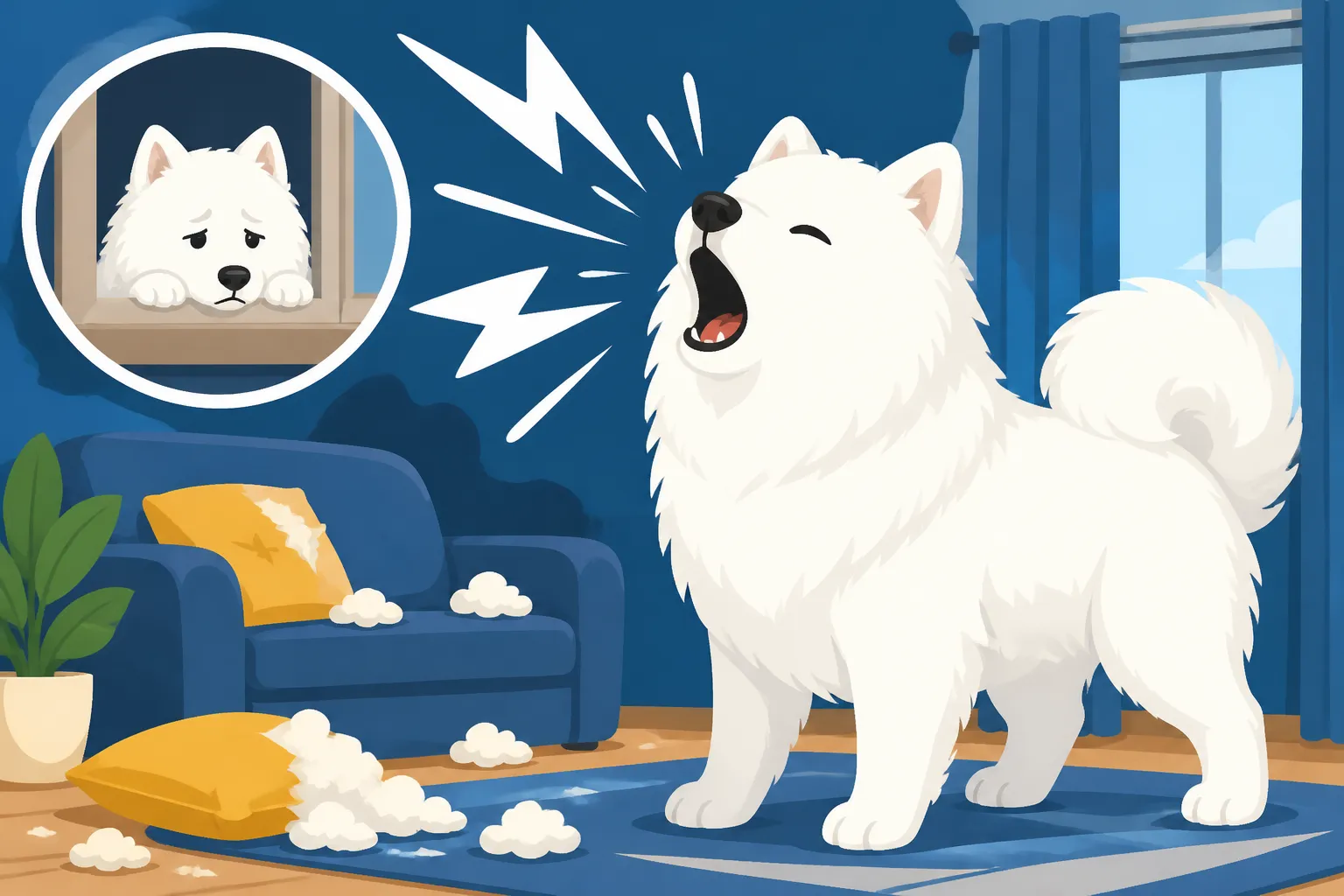
Ah, the Samoyed "scream." If you've never heard it, count yourself lucky – or prepare for an experience! It's not a bark; it's a high-pitched, almost operatic shriek that sounds like an animal in profound distress. It can be incredibly jarring, and many owners describe it as sounding like their dog is being tortured, even when they're perfectly safe. This distinct vocalization is often reserved for moments of extreme excitement, frustration, or, most relevant to our topic, severe anxiety. When a Samoyed feels truly abandoned or panicked, this "scream" can erupt. It's a primal call for help, deeply rooted in their nature as pack animals. You'll want to read more about The Samoyed Scream and Why It Is Not Barking if you're experiencing this regularly.
In contrast, actual barking in a Samoyed, while it does happen, is often less frequent when they're alone compared to their other vocal expressions. If they are barking, it might be at perceived threats outside (a squirrel, a delivery driver, a passing dog), or it could be a sign of boredom. However, for a Samoyed, true alarm barking is often secondary to their more dramatic vocal talents when expressing emotional distress. They are naturally predisposed to being quite vocal, as we explored in How Vocal Every Samoyed Is.
Howling and Whining: Calls for Connection
Howling is another quintessential Samoyed sound, harking back to their wolf ancestors and their pack origins. When left alone, a Samoyed might howl as a way to "call" to its missing pack members – you! It's a deeply ingrained instinct to communicate over distances, signaling their presence and seeking a response. The howls can range from short, inquisitive "arooooos" to long, drawn-out, mournful laments that can echo through your neighborhood.
Whining is often a more subtle, yet equally telling, sign of discomfort or need. A Samoyed might whine incessantly when alone, especially if they are confined or feel unable to reach you. This sound communicates frustration, a desire for attention, or mild anxiety. It's their way of saying, "I don't like this, and I want you back." It’s worth noting that Why a Samoyed Vocalizes Instead of Barking explains more about these different types of communications.
Boredom Barks and Attention-Seeking Woos
Sometimes, the noises your Samoyed makes aren't born of panic but simply out of sheer boredom or a desire for interaction. A Samoyed is an intelligent breed that thrives on companionship and activity. Left alone with nothing to do, their creative minds might turn to vocal self-entertainment, or more accurately, attempting to get your attention from afar.
This can manifest as repetitive, slightly exasperated barks if they're bored and seeing things outside, or a continuous string of "woos," grunts, and "talking" sounds. These "conversational" noises might be less intense than a full-blown scream or howl but can still be quite persistent. They’re essentially saying, "Hello? Is anyone out there? I'm here! Entertain me!" It’s a classic Samoyed move, a little less desperate but still a clear signal that they’re under-stimulated.
Why Your Samoyed Might Be Vocalizing So Much When You're Out
Pinpointing the exact reason for your Samoyed's vocalizations when alone is crucial for addressing the issue effectively. It's rarely about them being "naughty"; more often, it's a genuine expression of an underlying emotional or physical need.
Separation Anxiety: More Than Just Noise
Perhaps the most common and distressing reason for intense vocalizations when a Samoyed is left alone is separation anxiety. This isn't just a dog being dramatic; it's a genuine panic disorder. Samoyeds, with their strong desire for companionship and history as close working partners with humans, can be particularly prone to developing separation anxiety. They bond deeply with their families, and when that bond is suddenly severed, even for a short period, it can trigger intense fear and distress.
Beyond the relentless howling, screaming, or whining, separation anxiety often manifests with other signs. You might come home to scratched doors, chewed window sills, inappropriate urination or defecation, or even self-harm. The vocalizations are just one symptom of a much larger emotional struggle. If you suspect this is the case, diving into Separation Anxiety in a Samoyed is a must. It's a deeply painful experience for both dog and owner, and it demands patience and a structured approach.
Lack of Enrichment and Exercise
A bored Samoyed is a destructive, and often loud, Samoyed. These dogs were bred for working, for pulling sleds, herding reindeer, and being an active part of a human family. They possess a keen intellect and a boundless supply of energy. If they are left alone for extended periods without adequate physical exercise or mental stimulation, they will find their own "jobs"—which often involve chewing your furniture, digging up your yard, or, you guessed it, making a lot of noise.
Think about it: a dog that hasn't had a good, long walk or run in the morning, or a challenging puzzle toy to engage its brain, is going to have a lot of pent-up energy and mental boredom. This energy needs an outlet, and vocalizing is an easy one. Even just 30 minutes of solid exercise before you leave can make a world of difference. Consider how How Much Exercise Quiets a Samoyed really is a game-changer. What a bored Samoyed does to a house extends far beyond noise, often leading to other unwanted behaviors.
Underlying Medical Issues
While less common, it's always prudent to rule out any underlying medical conditions, especially if your Samoyed's vocalizations are new or have suddenly intensified. Pain, discomfort, or even age-related cognitive decline can lead a dog to become more vocal, particularly when they feel vulnerable or confused by being alone. An ear infection, dental pain, or even conditions like early-stage arthritis could cause a dog to whine or cry out more when left to their own devices.
If you notice other changes in their behavior, appetite, or bathroom habits alongside the increased noise, a trip to the vet is a wise first step to ensure their physical health isn't contributing to their distress.
Strategies to Quiet Your Lonely Samoyed
Addressing excessive vocalization when your Samoyed is alone requires a multi-faceted approach, combining management, training, and sometimes professional intervention.
Management: Creating a Safe, Engaging Space
First, let's talk about managing the environment. A crucial step is to create a den-like space for your Samoyed where they feel safe and secure. For many Samoyeds, this means a crate, if introduced properly as a positive haven, not a punishment. The crate should be just large enough for them to stand, turn around, and lie down comfortably, with soft bedding.
Think about enriching their environment. Before you leave, provide high-value, long-lasting chew toys or puzzle feeders filled with delicious treats. Brands like Kong or West Paw offer durable options, many of which are readily available on Amazon. A frozen Kong stuffed with peanut butter or wet food can keep a Samoyed engrossed for a good 20-30 minutes, sometimes longer. This helps create a positive association with your departure.
Consider white noise or classical music. Some dogs find the silence unsettling, or external noises can trigger barking. A fan, radio, or dog-specific calming music can mask these sounds, creating a more peaceful environment. You might even explore dog-appeasing pheromone diffusers, which release synthetic pheromones that mimic those a mother dog produces, potentially offering a sense of calm.
Training: Building Independence and Confidence
This is where the real work begins, and it requires consistency and patience. The goal is to gradually desensitize your Samoyed to your departures and build their confidence in being alone.
- Practice Short Absences: Start small. Leave your Samoyed alone for just 1-5 minutes. Don't make a big fuss when you leave or return. The aim is to make your departure and return as uneventful as possible. Gradually increase the time you're away, always staying below the threshold where they start to vocalize heavily. This is where a pet camera (also easily found on Amazon) can be incredibly helpful for monitoring their progress without actually being there.
- Establish a "Quiet" Cue: Teach your Samoyed a "quiet" cue. This involves rewarding them when they are silent. When they are quiet, say "quiet" and give a treat. If they are vocalizing, wait for a brief pause in the noise, mark it with "quiet," and reward. Over time, you can use this cue to interrupt unwanted vocalizations. More detail can be found in Teaching a Samoyed a Quiet Cue.
- Encourage Independence: Don't inadvertently reinforce clingy behavior. While Samoyeds love to be with their people – Why a Samoyed Wants to Be in the Room With You explains this beautifully – constantly responding to every whine or demand for attention can create a dog that struggles when alone. Practice having them settle on their mat in a different room while you go about your business, slowly increasing the distance and time.
For more structured help, an online training program can be a lifesaver. BAXTER & Bella offers comprehensive puppy and dog training programs that cover separation anxiety and building good habits. Their step-by-step guidance can provide the structure many owners need to tackle these challenging behaviors.
When to Seek Professional Help
If your Samoyed's vocalizations are severe, accompanied by destructive behavior, house soiling, or self-harm when you're gone, it's time to bring in the big guns. A certified professional dog trainer or a veterinary behaviorist has specialized knowledge in treating separation anxiety and other behavioral issues. They can help diagnose the severity of the problem and create a tailored behavior modification plan, which might include medication in severe cases to help manage anxiety while training takes effect. Never feel ashamed to seek help; it's a sign of a responsible owner committed to their dog's well-being.
Long-Term Habits for a Quieter Home
Establishing good routines and staying proactive are key to ensuring your Samoyed learns to be calm and quiet when left alone.
Consistent Routine and Mental Stimulation
Dogs thrive on routine, and Samoyeds are no exception. A predictable schedule for feeding, potty breaks, exercise, and training can significantly reduce anxiety and help your Samoyed understand what to expect. If they know a long walk is coming after you get home, they might cope better with your absence.
Don't underestimate the power of mental stimulation. Physical exercise is vital, but so is challenging their minds. Incorporate daily training sessions, even short ones, to practice obedience cues or teach new tricks. Snuffle mats, puzzle toys, and even just scattering their kibble in the yard for them to "hunt" can provide valuable mental enrichment. This helps tire them out in a different way and can make them more likely to settle down when you leave. Remember, What a Bored Samoyed Does to a House is directly tied to their need for engagement.
Monitoring and Adjustment
Your work isn't done once your Samoyed seems to be coping better. Continuously monitor their behavior when you're gone. A pet camera is invaluable here. Are there specific triggers that cause them to vocalize again? A change in routine? A new noise outside? Being able to observe their behavior will allow you to make necessary adjustments to your management and training strategies.
It’s also important to be realistic about How Many Hours a Samoyed Can Be Left. Samoyeds are social creatures, and while they can learn to tolerate solitude, expecting them to be quiet and content for 8-10 hours every single day without a break is often asking too much. If you're a full-time worker, exploring options like a dog walker, doggy daycare, or even a trusted friend or neighbor to break up their day can be incredibly beneficial. This insight is critical for owners asking Whether a Samoyed Suits a Full Time Worker. Their bond is so strong, as highlighted in How a Samoyed Bonds to One Person, that extended isolation can be genuinely distressing for them.
By understanding why your Samoyed is making noise and implementing consistent, positive strategies, you can help them develop the confidence and calm they need to be happy and quiet when you're not by their side.
Disclaimer
This article is for general informational purposes only and does not constitute professional advice. Laws, prices and regulations vary by location and change over time. Consult a qualified professional for guidance on your specific situation.