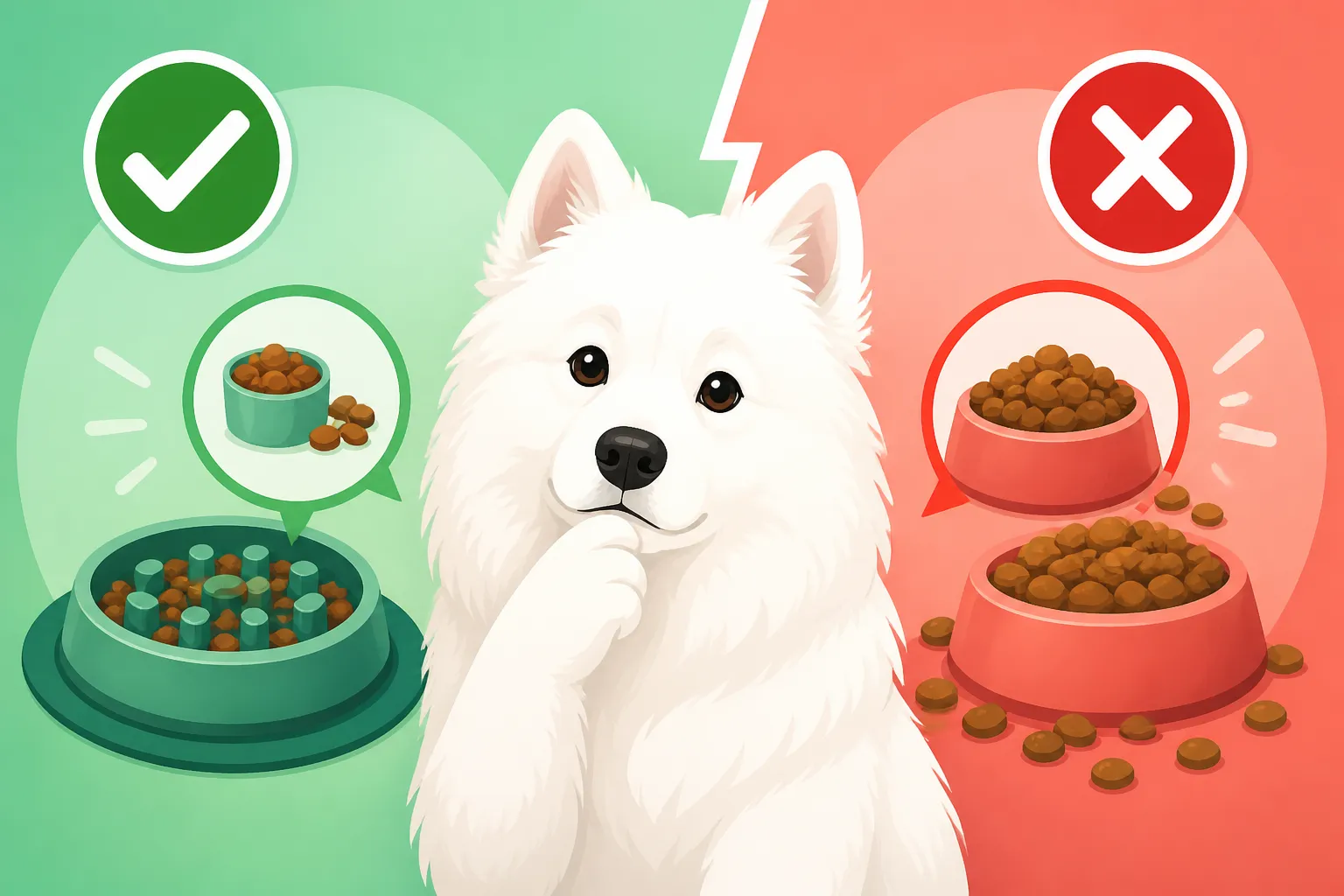
Whether a Samoyed Can Free Feed
Many Samoyed owners dream of the convenience of leaving a full bowl out all day, imagining their beloved fluffy companion grazing politely whenever hunger strikes. It sounds idyllic, doesn't it? But the reality for our beautiful, often food-motivated Samoyeds, and frankly, most dogs, is that free feeding can lead to a host of problems, from sneaky weight gain to missed signs of illness. This guide will walk you through why scheduled meals are almost always the better choice for your Samoyed’s health and well-being.
Understanding Free Feeding for Any Dog
Before we dive into why this practice might not be the best fit for our fluffy white companions, let's make sure we're all on the same page about what "free feeding" actually entails. It's a term that gets thrown around a lot, and sometimes people have slightly different interpretations.
What Free Feeding Actually Means
At its core, free feeding means making food constantly available to your dog. Imagine a perpetually full bowl of kibble sitting on the kitchen floor, accessible at all times. Your dog can wander over, take a few bites, walk away, and come back for more whenever they please. There are no set meal times, no portion control per sitting, and no strict schedule. It's the canine equivalent of an all-you-can-eat buffet that never closes. For some owners, this seems like the ultimate expression of trust and generosity, allowing their dog to manage their own intake. They might think it replicates a more natural "hunting and grazing" pattern, even though the domesticated dog's diet and environment are far from wild.
This approach stands in stark contrast to scheduled feeding, where an owner offers a measured amount of food at specific times, usually two or three times a day, and then removes the bowl after a set period, say 15 or 20 minutes, whether the dog has finished or not.
The Convenience Factor for Owners
Let's be honest, the main appeal of free feeding for us humans is convenience. Life gets hectic, and sometimes the thought of sticking to a rigid meal schedule feels like another chore on an already overflowing list. With free feeding, you fill the bowl once in the morning (or less frequently, depending on your dog's intake) and you're good to go for the day. No need to worry about being home at a specific time, no measuring cups, no remembering if Fido ate breakfast. It removes a perceived layer of complexity from dog ownership, especially for those with unpredictable schedules or multiple pets. It's often seen as a way to simplify the daily routine, freeing up time and mental space that would otherwise be dedicated to meal preparation and supervision. How Many Meals a Day a Samoyed Needs goes into this a bit more.
This convenience is particularly tempting for new dog owners or those juggling busy careers and family life. The idea that your dog can self-regulate and eat when truly hungry, without your constant intervention, feels like a win-win situation.
Potential Downsides for Any Dog
While the convenience is undeniable, free feeding comes with a significant list of potential drawbacks that apply to almost any dog, regardless of breed. The biggest concern is often overeating and obesity. Many dogs, when given unlimited access to food, will simply eat too much. This isn't necessarily due to a lack of self-control, but rather a combination of factors including boredom, habit, or simply enjoying the taste. An overweight dog faces increased risks for a myriad of health problems, from joint strain to heart issues.
Beyond weight, free feeding can lead to food spoilage and pest issues. Food left out all day, especially moist or fresh food, can quickly spoil, grow bacteria, or attract ants, flies, and other unwelcome guests. It also makes it impossible to monitor your dog's appetite. A sudden loss of interest in food is often the first sign of illness, and if the bowl is always full, you won't notice that critical change. In a multi-dog household, free feeding can exacerbate resource guarding issues, where one dog might try to monopolize the food, or one dog might eat significantly more than others, leading to weight disparities. Plus, it can make house training more challenging as a dog’s elimination schedule becomes less predictable.
Why Free Feeding Can Be Problematic for Samoyeds
Now, let's talk specifically about our fluffy Samoyeds. While the general downsides of free feeding apply to them, there are particular characteristics of the breed that make this feeding method even more of a gamble for their health and happiness.
Samoyeds and Weight Gain Tendencies
Samoyeds are beautiful, athletic dogs, but they're not immune to packing on the pounds. In fact, many Samoyeds have a strong tendency to gain weight if their diet isn't carefully managed. They were historically bred to thrive in harsh, cold environments where calories were precious, and holding onto every bit of fat was a survival mechanism. Our modern Samoyeds, living in comfortable homes with readily available, calorie-dense kibble, still carry those genetic predispositions. Their thick, glorious double coats, while stunning, can also be a master at hiding excess weight. You might not notice the subtle changes in their physique until they're already significantly overweight, simply because the fluff makes them look round and cuddly no matter what.
A Samoyed owner might easily underestimate how much their dog is truly eating when free feeding, especially if the dog grazes throughout the day. It’s hard to eyeball their daily intake when the bowl never looks empty. The extra weight then puts undue stress on their joints, exacerbates breathing in hot weather, and generally reduces their quality of life. Feeling for Ribs Under a Samoyed's Coat is a crucial skill every owner should master, as their voluminous fur can conceal a lot.
The Link Between Weight and Samoyed Health Issues
The connection between excess weight and health problems is well-established across all dog breeds, but it holds particular significance for Samoyeds due to some of their breed-specific health concerns. Obesity can significantly increase a Samoyed's risk for conditions such as hip dysplasia and other joint issues, which are already present in the breed to some degree. Carrying extra weight adds tremendous strain to their hips and elbows, accelerating the onset of arthritis and making existing conditions more painful. Arthritis in an Older Samoyed is a common concern that can be made worse by poor weight management.
Beyond musculoskeletal issues, an overweight Samoyed is at a much higher risk for diabetes mellitus. While genetics play a role in Whether a Samoyed's Diabetes Is Genetic, diet and weight are huge contributing factors. Pancreatitis, another serious condition, is also often triggered or worsened by high-fat diets and obesity. The extra insulation of fat, combined with their already dense double coat, makes them much more prone to overheating in warmer climates, leading to Signs a Samoyed Is in Heat Distress. The importance of maintaining a lean, healthy weight for your Samoyed cannot be overstated when it comes to preventing these painful and costly conditions.
The Samoyed's Relationship with Food
While some dogs are genuinely self-regulators who will eat only until satiated, many Samoyeds are not among them. Our Samoyeds often have a deep love for food, which can be both a blessing for training and a curse for weight management. They might not just eat when truly hungry, but also out of boredom, habit, or simply because the food is there. This isn't a character flaw; it's just how many dogs are wired. Their evolutionary past encouraged them to eat what was available, as they never knew when the next meal would come.
Moreover, food can become a point of contention in multi-dog households. If you have more than one Samoyed or other pets, free feeding can lead to one dog guarding the food, another eating more than their fair share, or general squabbles. Even if your Samoyed seems to self-regulate for a while, changes in their environment, activity level, or even stress can easily shift their eating habits, leading to sudden weight gain. Without measured, scheduled meals, it becomes incredibly difficult to monitor these subtle but important shifts. It's truly hard to gauge How Much Food a Samoyed Eats Monthly when they graze all day.
The Importance of Scheduled Meals for Your Samoyed
Moving away from the free-feeding model might feel like more work, but the benefits of scheduled meals for your Samoyed are profound and contribute significantly to their overall health, training, and your bond.
Better Portion Control and Weight Management
This is perhaps the most obvious and critical benefit. With scheduled meals, you, the owner, are in complete control of how much food your Samoyed consumes each day. You can accurately measure out their kibble or fresh food, ensuring they receive the appropriate caloric intake for their age, activity level, and ideal weight. This precise control allows you to prevent overfeeding, which, as we've discussed, is a major contributor to health issues in Samoyeds. If you notice your Samoyed gaining a little too much fluff around the middle, you can easily adjust their portions downward, or switch to a lower-calorie food.
Conversely, if your Samoyed is particularly active, perhaps The Age a Samoyed Can Start Sledding and training for pulling events, you can increase their portions as needed to fuel their energy demands. Scheduled feeding empowers you to be proactive in maintaining your Samoyed's lean, athletic build, which is fundamental to their long-term health and mobility. Reputable pet food brands, often available on platforms like Chewy or Amazon, provide clear feeding guidelines based on weight and activity, making portion control much simpler with scheduled meals. Whether a Samoyed Owner Must Watch Its Weight Closely is not just a suggestion, it's a necessity.
Monitoring Appetite and Early Illness Detection
One of the most valuable aspects of scheduled feeding is the clear insight it gives you into your Samoyed's appetite. Dogs, like people, often show the first signs of illness through changes in their eating habits. When you put a bowl down for a scheduled meal, you immediately notice if your Samoyed is enthusiastic, hesitant, or completely uninterested. A sudden refusal to eat, or a significant decrease in appetite, is a red flag that prompts a closer look or a call to the vet. If your Samoyed is free-fed, that full bowl often masks these crucial early warning signs. You might not realize for hours, or even a full day, that they haven't touched their food, by which time a treatable condition might have worsened.
This consistent monitoring also extends to their water intake. While not directly tied to the food bowl, a dog with scheduled meals typically drinks more predictably around those times. Changes in thirst, such as When Sudden Thirst in a Samoyed Means Diabetes, become more apparent when you have a structured routine. For breeds like the Samoyed, which can hide illness so well behind their cheerful disposition, this early detection mechanism is absolutely vital. How a Samoyed Hides Illness Behind a Smile is a real phenomenon that makes diligent observation even more critical.
Establishing Routine and Predictability
Dogs thrive on routine. Just like children, they feel more secure and less anxious when they know what to expect. Scheduled meal times provide a cornerstone for this routine, creating predictability in their day. This consistency can have a positive impact on a Samoyed's overall behavior and even their digestive health. Knowing when food is coming can reduce anxiety around meals, prevent obsessive food behaviors, and make house training easier since their elimination schedule often follows their feeding schedule.
A regular feeding schedule helps to regulate a Samoyed's metabolism and digestive system, potentially leading to more consistent bowel movements and reducing instances of upset stomach. It's also a powerful tool for training. Food becomes a high-value resource, and the act of presenting the meal can be used to reinforce good behavior, such as waiting patiently or performing a "sit." This structure contributes to a calmer, more well-adjusted Samoyed who understands the rhythms of their household. How Many Hours a Samoyed Can Be Left is often tied into their daily routine, including meal times.
Factors to Consider Before Even Thinking About Free Feeding a Samoyed
While generally not recommended, there are extremely rare circumstances where free feeding might be considered, but it requires careful thought and a deep understanding of your individual Samoyed and household dynamics.
Your Samoyed's Individual Metabolism and Activity Level
Every Samoyed is an individual, and their metabolic rate and daily energy expenditure can vary. A young, highly active Samoyed involved in The Job a Samoyed Actually Needs like sledding or agility might burn through calories at a much faster rate than a sedentary senior Samoyed who prefers napping on the cool tile. Some Samoyeds genuinely have a lower propensity for weight gain, or are naturally less food-driven. In theory, a rare Samoyed with a very high metabolism and extreme activity levels who also displays perfect self-regulation around food might be able to manage free feeding without immediate weight gain.
However, even in such a case, the other downsides like inability to monitor appetite for illness detection, and potential food spoilage, still apply. It's a very fine line, and most owners overestimate their dog's ability to self-regulate and underestimate their dog's actual caloric needs. It's far safer to assume your Samoyed will thrive on scheduled, portion-controlled meals tailored to their specific needs. How Much Exercise a Samoyed Needs directly impacts their caloric requirements.
Multi-Dog Households and Resource Guarding
If you have more than one dog in your household, free feeding immediately becomes exponentially more complicated and risky. In a multi-dog environment, it's almost impossible to ensure each dog is getting the appropriate amount of food. One dog might be a "gobbler," consuming most of the food before others get a chance, leading to obesity for one and malnourishment for another. Or, a more dominant dog might "resource guard" the food bowl, preventing other dogs from eating freely or causing stress and conflict among your canine companions.
Resource guarding is a serious behavioral issue that can escalate quickly, and free feeding can be a major trigger. Even if your dogs seem to get along perfectly, the presence of an unlimited food source can bring out competitive instincts you didn't know existed. Scheduled meals, fed in separate locations or at separate times, eliminate this competition and ensure every dog gets their fair share in a calm, controlled environment. How Two Samoyeds Get Along can be influenced by feeding dynamics.
Dietary Needs and Food Sensitivities
Many Samoyeds have specific dietary needs or sensitivities. Some may require specialized diets for allergies, Whether a Samoyed Needs a Low Fat Diet to prevent pancreatitis, or Whether a Diabetic Samoyed Needs a Prescription Diet. When you free feed, it becomes incredibly difficult to manage these specific requirements. If you have multiple dogs on different foods, you can't guarantee that each dog is only eating their designated diet. A dog with a chicken allergy might sneak bites of a chicken-based kibble meant for another dog, leading to skin issues or digestive upset.
Even for a single Samoyed, free feeding can lead to over-consumption of treats or access to human food left unattended, further complicating a carefully balanced diet. Companies like Ollie offer fresh food subscriptions that require precise portioning, making free feeding impossible with their model. When you're paying attention to ingredients and calorie counts, free feeding defeats the purpose of selecting a high-quality, targeted diet. This meticulous management is vital for their long-term health.
Transitioning from Free Feeding to Scheduled Meals
Decided to make the switch to scheduled meals for your Samoyed? Excellent choice! It’s one of the best things you can do for their health and your peace of mind. Here’s how to make the transition as smooth as possible for both of you.
Making the Switch Gradually
Suddenly removing constant access to food can be a bit of a shock for a Samoyed used to free feeding. Imagine if your pantry suddenly had locks and you only got to eat twice a day – you’d be pretty confused, right? The key is patience and a gradual approach. Start by picking up the food bowl for short periods, then gradually extending those periods. For instance, put the food down for an hour in the morning and an hour in the evening for a few days, then reduce it to 30 minutes, and finally to 15-20 minutes.
During this transition, offer meals at consistent times each day. Samoyeds are creatures of habit, and establishing this new routine will help them adjust. Don't worry if they don't eat all their food in the first few days; they'll learn that the food isn't going away permanently, but it's only available for a limited window. Consistency is your best friend here. It helps them build trust in the new system.
Choosing the Right Feeding Times and Portions
Once you've decided to switch, the next step is to figure out the best meal schedule and portion sizes. For most adult Samoyeds, two meals a day – once in the morning and once in the evening – works perfectly. This helps manage hunger throughout the day and provides consistent energy. Aim for roughly 12 hours between meals if possible, but flexibility is key to fit your own schedule. For Samoyed puppies, they often need three meals a day as their little bodies are growing rapidly and they burn through energy quickly. How Much a Samoyed Puppy Eats at Four Months is a good guideline for growth.
As for portions, start by checking the feeding guidelines on your dog food bag (whether it's from Chewy, Amazon, or your local pet store). These are usually based on your dog's current weight. However, remember these are just starting points. You’ll need to adjust based on your Samoyed’s individual activity level, metabolism, and whether they are maintaining a healthy weight. A good rule of thumb is that you should be able to feel their ribs easily without seeing them prominently, and they should have a discernible waist when viewed from above. If you're unsure, a quick chat with your veterinarian can help you determine the ideal caloric intake for your specific Samoyed.
Handling Picky Eaters or Initial Protests
Some Samoyeds, particularly those who have been free-fed for a long time, might stage a little protest when the endless buffet disappears. They might turn their nose up at the food during the designated mealtime, waiting for you to put the bowl back down permanently. Don't fall for it! They are smart and will quickly learn that you mean business. If they don't eat within 15-20 minutes, pick up the bowl and offer it again at the next scheduled meal. They won't starve themselves, and a little hunger can actually make the next meal more appealing.
If your Samoyed is genuinely being a picky eater even after a few days of consistent scheduled feeding, consider if the food itself is appealing. Sometimes a simple change in flavor or brand can make a difference. You could also try adding a tiny bit of warm water to dry kibble to enhance the aroma, or mixing in a spoonful of plain canned pumpkin (check with your vet first) or a commercial dog food topper. Just be mindful not to overdo it with high-calorie additions. If the refusal to eat persists for more than a day, or your Samoyed shows any other signs of illness like lethargy or vomiting, it's always best to consult your vet.
| Feature | Free Feeding for Samoyeds | Scheduled Feeding for Samoyeds |
|---|---|---|
| Convenience | High for owner, fill and forget | Requires owner presence and adherence to schedule |
| Weight Control | Difficult, high risk of obesity | Excellent, precise portion management |
| Health Monitoring | Poor, hard to detect changes in appetite | Excellent, easy to spot lack of interest in food |
| Multi-Dog Homes | Risky, can lead to resource guarding and unequal consumption | Optimal, allows individual feeding and prevents conflict |
| Dietary Needs | Challenging to manage specific diets or allergies | Easy to manage specialized diets and supplements |
| Routine & Behavior | Less structured, can lead to unpredictable elimination | Creates predictability, aids training and house training |
| Food Spoilage | Higher risk, especially with moist foods or in warm weather | Low risk, food is consumed or removed promptly |
| Pest Attraction | Higher risk, food left out attracts insects/rodents | Low risk, food is available for short periods only |
Disclaimer
This article is for general informational purposes only and does not constitute professional advice. Laws, prices and regulations vary by location and change over time. Consult a qualified professional for guidance on your specific situation.