How Common Hereditary Glomerulopathy Is in Samoyeds
It's absolutely heartbreaking to think about our fluffy, smiling Samoyeds facing a serious health challenge, especially one that's hidden and genetic. The fear of something like Hereditary Glomerulopathy, or HG, looming over your precious boy's future is a heavy burden for any Samoyed parent. This guide aims to shed light on how prevalent this kidney disease truly is within our beloved breed and equip you with the knowledge to understand, prevent, and manage it.
Understanding Samoyed Hereditary Glomerulopathy
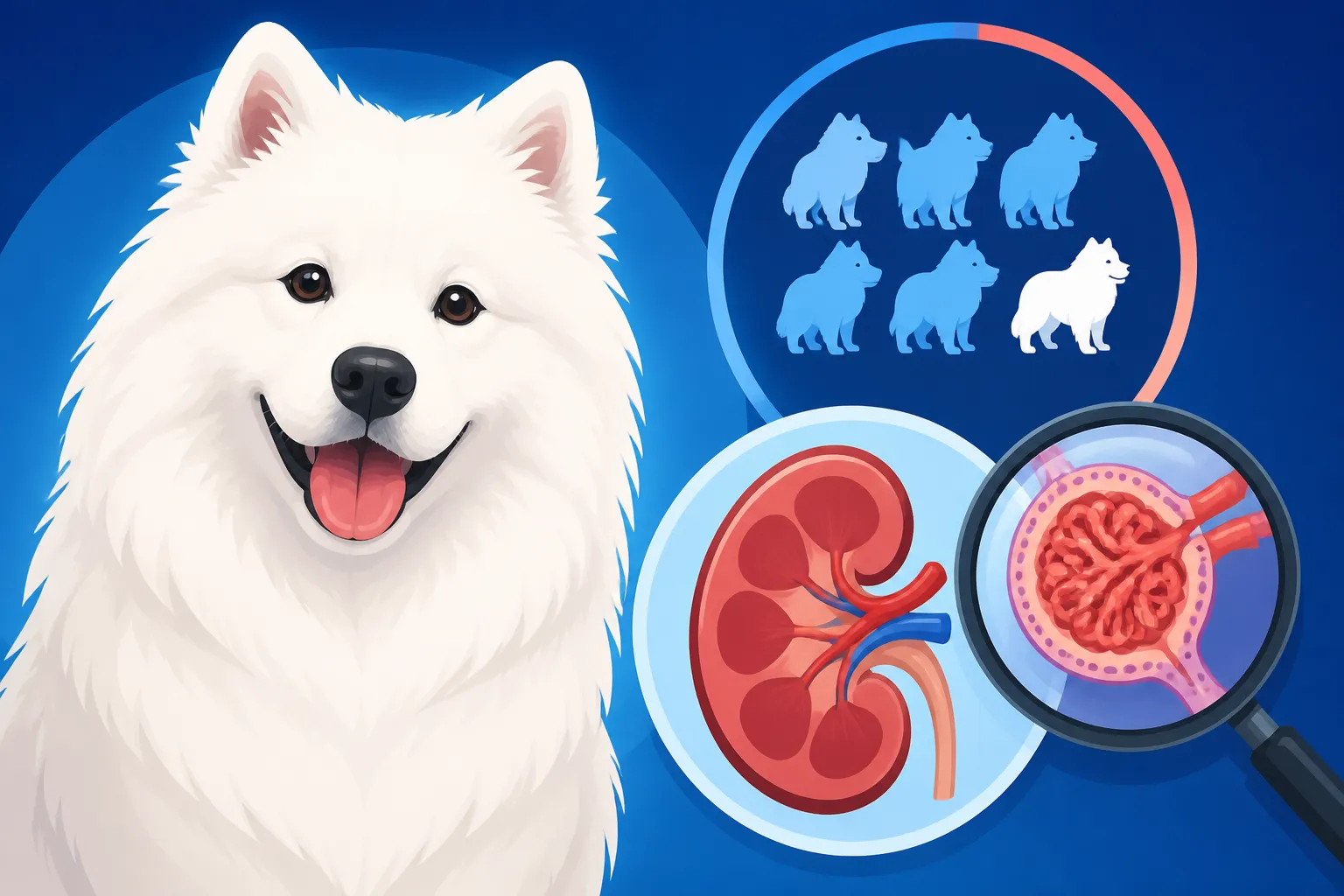
Before we dive into how common it is, let's really understand what Samoyed Hereditary Glomerulopathy (HG) actually is. It's not just a generic kidney issue; it’s a specific, X-linked genetic disorder that primarily affects male Samoyeds. Imagine their kidneys, those vital filtration systems, slowly failing due to a fault in their fundamental structure. It's a progressive disease, meaning it gets worse over time, and sadly, it's often fatal for males at a young age.
The Genetic Basis of Samoyed HG
At its core, Samoyed HG is a genetic flaw. We're talking about a mutation in the COL4A5 gene. This gene is responsible for producing a specific type of collagen, Type IV collagen, which is a crucial component of the basement membrane in the kidney's filtering units, called glomeruli. Think of it like a finely woven mesh that lets waste products pass through while keeping essential proteins in the blood. When this collagen is faulty, that mesh starts to break down.
Because it's X-linked, it means the gene responsible is located on the X chromosome. Males have one X and one Y chromosome (XY), so if they inherit the faulty X chromosome from their mother, they will be affected. Females have two X chromosomes (XX). If a female inherits one faulty X, she'll usually be a carrier but often shows very mild or no clinical signs of the disease because her other, healthy X chromosome can compensate. This is precisely Why Samoyed Hereditary Glomerulopathy Only Devastates the Boys. It’s a cruel twist of genetics that leaves male puppies so vulnerable.
What Samoyed Hereditary Glomerulopathy Does to the Kidneys
The faulty collagen leads to a breakdown of the glomerular basement membrane. Initially, this might not seem like a huge deal, but over time, it means the kidneys start leaking protein into the urine, a condition known as proteinuria. This protein loss is a hallmark sign and gradually damages the kidney further. As the disease progresses, the kidneys lose their ability to filter waste products effectively, leading to a build-up of toxins in the blood, known as azotemia.
Affected males typically start showing signs, like excessive thirst and urination, around three to six months of age, and tragically, many succumb to kidney failure before they even reach 15 months old. It's an aggressive and swift decline, leaving owners devastated. To learn more about the specifics of the disease's progression, you might want to read What Samoyed Hereditary Glomerulopathy Does to the Kidneys.
The Prevalence of Hereditary Glomerulopathy in Samoyeds
So, how common is this devastating disease? This is a question that has plagued Samoyed breeders and owners for decades, and the answer has evolved significantly with scientific advancements. Historically, before DNA testing became widely available, the prevalence was estimated based on observing affected males. This was often an underestimation because many affected puppies might have died without a definitive diagnosis, or breeders might have been unaware of the genetic link.
Historical Perspective vs. Modern Understanding
In the past, reports and anecdotal evidence suggested that HG was a significant problem within the breed. Vets would see young male Samoyeds with rapidly progressing kidney disease, and the pattern suggested a genetic component. However, putting a concrete number on it was challenging. It was clear enough that it was considered a serious concern, often described as "not uncommon" or "a known issue."
With the advent of genetic testing, particularly the COL4A5 DNA test, our understanding of prevalence has become much clearer. Now, breeders can definitively identify carrier females and affected males, or crucially, clear dogs. This means that while the occurrence of the gene in the overall population might be stable, the manifestation of the disease in puppies has drastically reduced among responsible breeders. It allows us to understand The COL4A5 Test Every Samoyed Buyer Should Ask About and use it proactively.
Impact of DNA Testing on Disease Rates
The widespread availability and responsible use of the DNA test for Samoyed Hereditary Glomerulopathy have had a profound impact. Before testing, a breeder might unknowingly breed a carrier female, leading to a percentage of male offspring being affected. Today, a responsible breeder will test their breeding dogs and avoid breeding a carrier female with any male, or certainly not with one who is not clear. They can even use a carrier female with a clear male, as long as they understand the implications and test the offspring. This is how breeders now How a Samoyed Breeder Avoids Producing Affected Males.
Thanks to these efforts, among puppies produced by health-conscious breeders utilizing genetic testing, the clinical incidence of HG has dropped dramatically. This doesn't mean the gene has vanished from the breed entirely—it's still present in carrier females—but it means the disease is far less common in puppies being born today from tested lines.
Let's look at a simplified comparison of prevalence before and after widespread DNA testing:
| Factor | Pre-DNA Test Era (Estimated) | Post-DNA Test Era (Observed in Tested Lines) |
|---|---|---|
| Detection Method | Clinical signs, necropsy, breeder anecdote | DNA test for carrier status, clinical signs for affected |
| Identified Carriers | Unknown, only suspected based on affected offspring | Precisely identified through genetic testing |
| Affected Males (Clinical) | Significant, varying by lineage, but a recognized widespread issue | Dramatically reduced due to selective breeding; nearly zero in litters from tested, clear parents |
| Breeding Practices | Relied on pedigree, health of parents/siblings | Informed by genetic test results for both parents |
| Owner Awareness | Limited to those whose dogs were affected or breed veterans | High among prospective buyers who ask for test results |
So, while the potential for the disease due to the gene's presence in the overall Samoyed gene pool might remain, the actual number of puppies suffering and dying from it is thankfully much lower due to dedicated breeding practices. This makes the question of "how common" a bit nuanced: genetically, the gene might still be somewhat prevalent as carriers are not removed from the gene pool entirely, but clinically, the disease is far less common in properly bred puppies. You might wonder, The DNA Test That Finds the Samoyed Kidney Gene, and it's a game-changer.
Navigating a Diagnosis and Breeder Responsibilities
Finding out your Samoyed might be affected by HG is devastating. The initial shock, the confusion, and the overwhelming grief can be crippling. This is where a clear understanding of what to do next, and what responsible breeders are doing, becomes crucial.
What to Do if Your Samoyed is Affected
If your male Samoyed receives a diagnosis of Hereditary Glomerulopathy, it’s a tough road, and I truly sympathize with what you're facing. The first step is to work closely with your veterinarian, ideally one who has experience with canine kidney disease. They will guide you through monitoring your dog's kidney function, managing symptoms, and providing supportive care. This often includes special diets, medications to reduce protein loss (like ACE inhibitors), and sometimes fluids. While there's no cure, Whether an ACE Inhibitor Slows a Samoyed's Kidney Loss and a renal diet can help manage the progression and improve quality of life for a time.
It's also important to be aware of the costs involved in managing such a serious illness. From specialized food to frequent vet visits and medications, it can add up. This is where pet insurance, like Healthy Paws, can be incredibly helpful for covering a significant portion of these ongoing medical expenses, offering some peace of mind during an already stressful time. Understanding What Treating an Affected Samoyed Male Costs Before He Dies is a harsh reality for many.
The Breeder's Role in Preventing HG
Responsible breeders are the true heroes in the fight against genetic diseases like HG. Their dedication to health testing is paramount. A good breeder will:
- Test all breeding stock: Both males and females should be tested for the COL4A5 gene.
- Make informed breeding decisions: They will avoid breeding two carriers together, which guarantees affected puppies. They might carefully breed a carrier female to a clear male, but they will then test all puppies and place any carrier or affected pups on limited registration and spay/neuter contracts.
- Be transparent: They should readily share the health test results of the parents with prospective buyers. Don't be shy about asking to see the paperwork! You can even inquire Whether a Breeder Should Show the Samoyed Kidney Results.
- Educate buyers: They'll explain what HG is, the implications of carrier status, and the importance of ongoing veterinary care.
If you’re purchasing a puppy, make sure you ask for proof that the parents have been DNA tested for HG. This simple step can save you and your future Samoyed from immense heartache. You, as a prospective owner, can even go so far as to ask Whether a Samoyed Puppy Should Be Tested Before Purchase. The knowledge empowers you.
Living with a Samoyed's Genetic Predisposition
Even if your Samoyed comes from thoroughly tested parents, understanding the general health predispositions of the breed is part of being a responsible owner. While HG is a specific, X-linked disease, kidney health, in general, is something to always keep an eye on, particularly as they age.
Proactive Health Monitoring
For all Samoyeds, regardless of their HG status, regular veterinary check-ups are key. Your vet can perform routine urine and blood tests that can catch early signs of kidney issues, even if they're not related to HG. Things like a urine protein:creatinine ratio (UPC) test can detect protein loss, which can be an early indicator of kidney trouble. Don't underestimate Why a Samoyed's Urine Should Be Tested Young to establish a baseline.
Paying attention to subtle changes in your Samoyed's behavior is also important. Are they drinking more water than usual? Are they urinating more frequently, or having accidents in the house? Have they lost weight unexpectedly? These could all be indicators that something is amiss, and an early visit to the vet can make a world of difference. Your Samoyed is a master at hiding discomfort, so knowing How a Samoyed Hides Illness Behind a Smile is crucial.
Support and Resources for Owners
If you're dealing with a Samoyed affected by HG, or even if you're just worried about it, remember you're not alone. There are support groups for Samoyed owners online, and breed clubs often have resources and experienced members who can offer guidance and emotional support. Connecting with others who understand the unique challenges of the breed can be incredibly validating.
Furthermore, consider researching pet insurance policies. While policies like Healthy Paws typically don't cover pre-existing conditions, getting coverage early in your Samoyed's life can protect you from the financial shock of unexpected illnesses or accidents that might arise later. This allows you to focus on your dog's health rather than worrying about the bills. Understanding The Kidney Disease That Kills Samoyed Males Before Fifteen Months empowers you to be an advocate for your pet's health and to connect with resources.
Ultimately, while Hereditary Glomerulopathy was once a significant and often mysterious threat to our male Samoyeds, thanks to scientific breakthroughs and the dedication of responsible breeders and informed owners, its clinical prevalence is thankfully much lower today. The key is to choose your puppy wisely, ensuring the parents have been thoroughly health-tested, and to remain vigilant about your Samoyed's health throughout their life.
Disclaimer
This article is for general informational purposes only and does not constitute professional advice. Laws, prices and regulations vary by location and change over time. Consult a qualified professional for guidance on your specific situation.