Why a Samoyed’s Urine Should Be Tested Young
As Samoyed owners, we often fall head over heels for their perpetually smiling faces and fluffy coats, assuming a picture of robust health. However, beneath that cheerful exterior, specific breed predispositions can lurk silently, particularly a devastating kidney disease that often shows no outward signs until it's far too late. This guide will walk you through precisely why early urine testing, starting when your Samoyed is just a puppy, isn't just a good idea, but a critical component of their preventative health care, offering a fighting chance against a truly heartbreaking condition.
Understanding the Samoyed's Unique Vulnerability
It's a tough reality to face, but Samoyeds, like many purebred dogs, carry a genetic vulnerability to certain health issues. Among these, Samoyed Hereditary Glomerulopathy (SHG) stands out as particularly insidious because of its early onset and often rapid progression, especially in male dogs. It's not just a run-of-the-mill kidney problem; it's a specific, inherited condition that attacks the very filtering units of the kidneys.
The Silent Threat of Samoyed Hereditary Glomerulopathy SHG
Imagine a tiny, complex filtration system, constantly working to clean your dog's blood. That's essentially what the kidneys do, specifically their microscopic units called glomeruli. In a Samoyed with SHG, these delicate filters are inherently flawed from birth. They don't develop correctly, and over time, they begin to leak vital proteins from the blood into the urine. The heartbreaking part is that this leakage can be happening for months, even over a year, before your sweet, smiling Samoyed shows even the slightest hint that anything is wrong. You might be playing fetch, going on adventures, and admiring their beautiful coat, completely unaware that their kidneys are quietly failing. This truly is The Kidney Disease That Kills Samoyed Males Before Fifteen Months.
The disease progresses without obvious symptoms because the body is incredibly adept at compensating for a failing organ. It’s only when a significant portion of the kidney function is compromised that you might start to see subtle changes like increased thirst, more frequent urination, or a slight decrease in appetite. By this point, the damage is extensive and often irreversible. Early detection through urine testing, however, catches these protein leaks long before clinical signs manifest, giving you and your veterinarian a crucial head start.
Why SHG Targets Young Males Specifically
This particular form of kidney disease has a very specific and cruel target: young male Samoyeds. It's an X-linked inherited condition, meaning the faulty gene responsible for the disease is carried on the X chromosome. Females have two X chromosomes, so if they inherit one faulty gene, their second, healthy X chromosome often compensates, resulting in mild or no symptoms throughout their lives. They become carriers, capable of passing the gene on, but rarely suffer severely themselves. This explains Why a Carrier Female Samoyed Stays Mild.
Male Samoyeds, however, only have one X chromosome (inherited from their mother) and one Y chromosome. If that single X chromosome carries the defective gene, there's no backup. They will develop the disease. This is Why Samoyed Hereditary Glomerulopathy Only Devastates the Boys. The onset of severe symptoms typically occurs between 3 and 15 months of age, with most affected males unfortunately succumbing to kidney failure before they reach two years old. This rapid and often unexpected decline is one of the most devastating aspects of SHG for Samoyed owners, underscoring the urgency of early intervention and testing.
The Genetic Basis: What's Going Wrong
At its core, Samoyed Hereditary Glomerulopathy is a disorder of collagen, specifically type IV collagen. This particular type of collagen is a vital structural component of the glomerular basement membrane—the intricate meshwork within the kidney's filters. Think of it like a very fine sieve that selectively allows waste products and excess water to pass into the urine while retaining essential proteins and blood cells in the bloodstream. In Samoyeds with SHG, there's a mutation in the COL4A5 gene, which codes for a specific chain of this critical type IV collagen.
Because of this genetic defect, the collagen structure is weakened and abnormal. It's like building a house with faulty bricks; eventually, the walls will start to crumble. In the case of SHG, these weakened filters start to become "leaky," allowing precious protein, which should remain in the blood, to escape into the urine. This constant protein loss isn't just a symptom; it directly contributes to further kidney damage, creating a vicious cycle that accelerates the disease. Understanding this genetic flaw is why genetic testing, like The COL4A5 Test Every Samoyed Buyer Should Ask About, is so crucial for breeders and prospective puppy owners. Without intact collagen, the structural integrity of the glomeruli is compromised, leading to progressive scarring and eventual complete kidney failure.
The Ins and Outs of Early Urine Testing
Given the silent and progressive nature of Samoyed Hereditary Glomerulopathy, early and consistent urine testing is your best defense. It's not a complicated or invasive process, but it yields invaluable information that can literally save your Samoyed's life, or at the very least, buy them precious time and improve their quality of life.
What a Routine Urinalysis Reveals
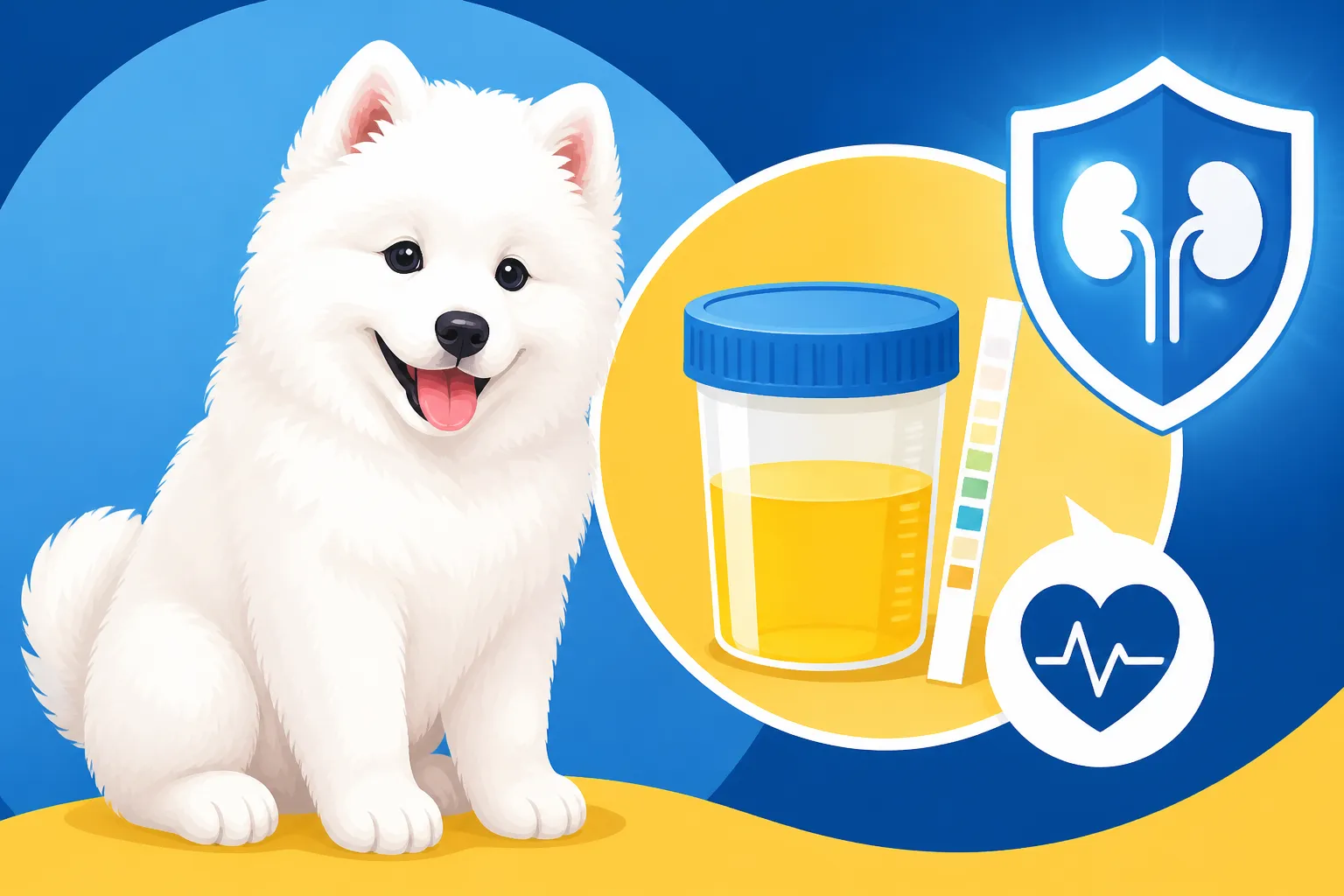
A standard urinalysis is like a quick health snapshot of your dog's urinary system. It involves analyzing a urine sample for several key indicators. Your vet will look at things like specific gravity, which tells them how concentrated the urine is (a sign of kidney function and hydration). They'll also check for pH, which can indicate issues like urinary tract infections or bladder stones. Beyond these, a dipstick analysis will screen for the presence of glucose (sugar), ketones, bilirubin, and, most importantly in the case of Samoyeds, protein.
The microscopic examination of the urine sediment is also vital. This allows the veterinarian to identify red blood cells, white blood cells, crystals, or casts—all of which can be clues to underlying health problems such as infection, inflammation, or damage to the kidney tubules. While a routine urinalysis can hint at issues by showing the presence of protein, it's typically just the first step. For Samoyeds, the amount of protein loss is what really matters, and for that, we need a more specific test. This initial test provides a broad overview, giving your vet a clearer picture of what might be happening internally.
The Crucial Urine Protein/Creatinine UPC Ratio
If a routine urinalysis indicates protein in the urine, the next and most critical step for a Samoyed is to perform a Urine Protein/Creatinine (UPC) ratio test. This test is far more accurate and quantitative than a simple dipstick. Why? Because a dipstick can be influenced by many factors, including the concentration of the urine. A very dilute urine sample might show minimal protein even if a problem exists, and vice versa. The UPC ratio, however, normalizes the protein concentration against creatinine, a waste product excreted at a relatively constant rate.
A UPC ratio tells you precisely how much protein your Samoyed is losing in their urine. A normal UPC ratio is generally below 0.2. Readings above this, especially consistently above 0.5 for dogs, are a strong indicator of proteinuria—excessive protein loss—which is the hallmark of SHG. This test can detect protein leakage long before any bloodwork shows changes in kidney values like creatinine or BUN, because those markers only elevate when about 75% of kidney function has already been lost. For a young male Samoyed, monitoring this ratio consistently, starting early, is absolutely paramount to detecting problems before they escalate. It's the most sensitive indicator of Signs a Samoyed Is Losing Protein in Its Urine.
Timing is Everything: When to Start Testing
Given that Samoyed Hereditary Glomerulopathy can manifest so early, routine urine testing should begin when your Samoyed is still quite young. Most veterinarians recommend starting with UPC ratio checks as early as 3-6 months of age, and then repeating these tests every 3-6 months, especially for male Samoyed puppies, until they are at least two years old. This frequent monitoring is crucial because the disease's progression can be swift in affected males.
Imagine waiting until your Samoyed is a year old to start testing, only to find their kidneys are already significantly damaged. The lost time could mean a dramatically shorter lifespan. Proactive testing allows you to establish a baseline and quickly identify any upward trends in protein levels. If you're acquiring a Samoyed puppy, discussing a clear testing schedule with your veterinarian right away is vital. It’s also important to confirm that the breeder has done their due diligence in testing the parents and provides a health guarantee that addresses conditions like SHG. This preventative approach is exactly why we emphasize Whether a Samoyed Puppy Should Be Tested Before Purchase. Many owners choose to start a pet insurance policy, like one from Healthy Paws, early on, so that if these tests reveal an issue, subsequent diagnostics and treatments are covered.
Interpreting the Results and Next Steps
Finding an elevated UPC ratio can be incredibly alarming, but it's important to remember that it's a diagnostic tool, not an immediate death sentence. Early detection means you have options, and a clear path forward to help manage your Samoyed's health.
Understanding Abnormal Protein Levels
When your Samoyed's UPC ratio comes back consistently elevated (above 0.5, or even 0.2-0.5 if other risk factors are present), it indicates significant protein loss. This isn't always definitive for SHG, as other conditions can cause proteinuria, such as urinary tract infections, certain inflammatory diseases, or even temporary issues like strenuous exercise or fever. Therefore, your veterinarian will likely recommend ruling out these other causes first. This might involve a repeat urinalysis, a urine culture to check for bacterial infections, or blood tests to look for inflammation or other systemic diseases.
However, in a young male Samoyed, especially if the protein levels are significantly high and persist after ruling out other causes, SHG becomes a primary suspicion. The pattern of protein loss in SHG tends to be persistent and progressive. Knowing these abnormal levels early allows your vet to start investigating immediately, rather than waiting for your dog to become visibly ill. Early recognition of What Samoyed Hereditary Glomerulopathy Does to the Kidneys is key to giving your pet the best chance.
The Importance of a Confirmatory Diagnosis
While a persistently high UPC ratio in a young male Samoyed strongly suggests SHG, a definitive diagnosis typically requires a kidney biopsy. This procedure involves taking a small tissue sample from the kidney, which is then examined under a microscope by a veterinary pathologist. The pathologist can identify the characteristic structural changes in the glomeruli consistent with SHG, particularly the abnormal thickening and splitting of the glomerular basement membrane due to the faulty collagen.
A biopsy is an invasive procedure, and your veterinarian will weigh the risks and benefits carefully. However, for a definitive diagnosis of SHG, it's often the gold standard. Knowing for sure that it's SHG, rather than another kidney condition, allows for the most appropriate and targeted treatment plan. For breeders, this definitive diagnosis is also crucial for preventing future affected litters. It can be an expensive process, but having pet insurance like Healthy Paws can significantly ease the financial burden of these advanced diagnostic steps.
Treatment Avenues and Prognosis Considerations
Unfortunately, there is no cure for Samoyed Hereditary Glomerulopathy. The genetic defect means the kidneys are fundamentally flawed. However, early diagnosis allows for supportive care aimed at slowing the progression of the disease and managing its symptoms. The primary goals of treatment are to reduce protein loss from the kidneys and to protect the remaining kidney function. This often involves a multi-faceted approach.
One common treatment involves medications like ACE inhibitors (e.g., benazepril or enalapril), which can help reduce protein leakage and lower blood pressure within the glomeruli, thereby easing the strain on the kidneys. You might be interested in Whether an ACE Inhibitor Slows a Samoyed's Kidney Loss. Dietary management is also a cornerstone of treatment. A prescription renal diet, typically low in protein (but high quality), phosphorus, and sodium, can significantly reduce the workload on the kidneys and help slow the disease's progression. It's not about cutting all protein, but feeding easily digestible protein in moderation to prevent excessive waste product buildup. Read more about Whether a Renal Diet Extends an Affected Samoyed's Life. Additionally, Omega-3 fatty acid supplements are often recommended for their anti-inflammatory effects, which can benefit kidney health. Despite these interventions, the prognosis for affected male Samoyeds remains guarded, but early detection and diligent management can extend their lives and maintain a better quality of life for longer than if the disease were left unchecked. The costs associated with ongoing medication and prescription diets can add up, which is another reason why a good pet insurance plan from Healthy Paws can be a lifesaver.
Beyond SHG: Other Reasons for Early Urine Screening
While Samoyed Hereditary Glomerulopathy is a major concern, it’s not the only reason why early and regular urine testing is a smart move for your Samoyed. A urinalysis is a powerful diagnostic tool that can uncover a range of other health issues, often before they become obvious or severe. Establishing a baseline when your Samoyed is young provides invaluable data for their entire life.
Catching Urinary Tract Infections UTIs Early
Urinary tract infections (UTIs) are surprisingly common in dogs, even puppies. They occur when bacteria make their way into the bladder or other parts of the urinary system, leading to inflammation and discomfort. While a UTI might seem minor, if left untreated, it can ascend to the kidneys, potentially causing more serious infections (pyelonephritis) that can lead to permanent kidney damage. In some cases, a persistent or recurrent UTI might even be a sign of an underlying structural abnormality or a weakened immune system.
Early urine testing can detect the presence of bacteria, white blood cells, or even blood in the urine, all of which are indicators of a UTI. Catching these infections early means they can be treated promptly with antibiotics, preventing more serious complications and sparing your Samoyed unnecessary discomfort. Symptoms of a UTI can sometimes be subtle in a stoic Samoyed, so regular screening is beneficial even if you don't notice overt signs like straining to urinate or frequent squatting. This is especially true for young puppies who might not fully vocalize their discomfort.
Uncovering Other Metabolic Issues
The kidneys play a crucial role in maintaining the body's overall balance, filtering not just waste products but also influencing electrolyte levels, blood pressure, and hormone production. A urinalysis can sometimes provide clues to metabolic issues that aren't directly related to the kidneys but manifest in the urine. For instance, the presence of glucose in the urine (glucosuria), especially in the absence of a high blood sugar level, can sometimes indicate a rare kidney tubular defect. Conversely, if glucose is present alongside elevated blood sugar, it's a strong indicator of diabetes mellitus. You can learn more about Diabetes Mellitus in a Samoyed in our other articles.
Similarly, abnormal levels of certain crystals in the urine can suggest a predisposition to bladder stones (urolithiasis), which can be extremely painful and require medical or surgical intervention. Early detection of these crystals can allow for dietary changes or medications to prevent stone formation altogether. By regularly analyzing your Samoyed's urine, you're not just looking for kidney disease, but also gaining insights into their broader metabolic health, allowing for proactive management of potential issues.
Establishing a Baseline for Lifelong Health
One of the most understated benefits of early urine testing is the ability to establish a comprehensive baseline for your Samoyed's health. What's "normal" for one dog might be slightly different for another, even within the same breed. By performing urinalyses and UPC ratio tests when your Samoyed is young and healthy, you create a detailed record of their individual physiological norms.
This baseline becomes incredibly valuable as your Samoyed ages or if they ever develop health problems later in life. If, for example, your adult Samoyed starts showing signs of illness, your veterinarian can compare current urine test results to those from when they were a puppy. This comparison helps them identify subtle changes, track progression, and make more accurate diagnoses faster. It helps answer questions like Whether a Samoyed Needs Yearly Kidney Bloodwork – it's certainly recommended for monitoring changes over time. Without that baseline, every new test is a shot in the dark, making it harder to distinguish between normal fluctuations and genuine concerns. Investing in early testing is truly an investment in your Samoyed's long-term well-being and a proactive approach to their care. This proactive approach can also ensure that if medical issues arise, pet insurance providers like Healthy Paws have a clear record from the start, making future claims smoother.
Investing in Your Samoyed's Future Health
It’s clear that early and consistent urine testing for your Samoyed isn't merely a suggestion; it's a profound act of care and a vital investment in their future. The silent and devastating nature of Samoyed Hereditary Glomerulopathy, coupled with the breed's specific genetic predispositions, means that waiting for visible symptoms is often waiting too long. By proactively testing, particularly with the critical UPC ratio, you empower your veterinarian to detect issues before they become crises, allowing for early intervention that can truly make a difference in your beloved Samoyed's life. This diligent approach extends beyond just SHG, offering a comprehensive look at their urinary and metabolic health, setting a crucial baseline for years to come. Ultimately, a little bit of proactive testing now can mean many more happy, healthy years with your smiling Samoyed by your side.
Disclaimer
The information provided in this article is for educational purposes only and should not be considered a substitute for professional veterinary advice. Always consult with a qualified veterinarian for any health concerns or before making any decisions related to your pet's medical care.