Whether a Samoyed Is Safe With Cats
Bringing a Samoyed into a home with an existing cat can be a source of real anxiety for many pet parents. You adore both species, but the thought of a fluffy white cloud with a strong prey drive sharing space with your beloved feline friend can keep you up at night. This comprehensive guide will walk you through understanding Samoyed instincts, crucial socialization strategies, and practical steps to foster a safe and harmonious multi-species household.
The Samoyed Temperament: Friend or Foe to Felines?
The image of a Samoyed is often one of a perpetually smiling, gentle giant, and for good reason—they are generally known for their friendly, outgoing nature with people and often other dogs. However, when it comes to smaller, faster-moving creatures like cats, their deeply ingrained instincts can sometimes present a different picture. It’s crucial to understand both the breed's general disposition and the nuances of individual personalities to gauge the potential for a peaceful coexistence.
Understanding Their Ancestral Instincts
Samoyeds hail from the Arctic, bred by the Nenets people for a variety of tasks, including herding reindeer, pulling sleds, and even guarding against predators. While they are not typically aggressive toward humans or even other dogs, their heritage includes a strong prey drive. This isn't about malicious intent; it's a hardwired response to movement and small, scurrying creatures. Imagine a squirrel zipping across the yard or a rabbit darting through the brush – that instinct to chase is potent in many Samoyeds. This historical role also means they often possess a high energy level and a love for "work," which can sometimes translate into a desire to engage with anything that moves. They were bred to work cooperatively with humans, not necessarily to ignore other animals in their environment. This means that a cat's quick movements or playful antics can easily trigger that chase response, even if the Samoyed has no intention of harming the cat, but simply "herding" it or engaging in a game of chase.
This prey drive is a significant factor. It’s not a behavioral flaw, but rather a characteristic of their breed heritage. They’re not looking to harm for sport, but the thrill of the chase can be overwhelming. While some Samoyeds may be entirely indifferent to cats, others might see them as a very tempting, mobile toy. This instinct isn't something you can train out entirely, but it can be managed through careful introductions, consistent training, and ongoing supervision. Acknowledging this innate drive is the first step in creating a safe environment for both pets, especially if you have a particularly skittish or small cat. The Herding Instinct Nobody Expects From a Samoyed is a good read to understand more about their natural drives.
The Spectrum of Individual Samoyed Personalities
While breed characteristics provide a general blueprint, every Samoyed is an individual, with their own unique personality molded by genetics, early experiences, and ongoing training. You might encounter a Samoyed who has grown up with cats from a young age and views them as just another member of the family, perhaps even sharing a nap spot. These are the lucky ones, where the Samoyed’s natural friendliness extends seamlessly to felines. They learn very early on that cats are not prey, and the boundaries are established before any strong prey drive can solidify in that particular context.
On the other hand, you could meet a Samoyed who, despite extensive socialization with people and other dogs, still finds a cat's darting movements irresistible. This isn't a failure on the owner's part; it's simply a stronger manifestation of their prey drive, or perhaps a lack of positive, controlled exposure during their formative weeks. Factors like a Samoyed's age when introduced to a cat, whether they were raised with small animals, and their individual energy levels all play a role. A calm, mature Samoyed might be far less interested in chasing than a rambunctious, adolescent one still learning impulse control. A puppy brought into a cat home has a much higher chance of success than an adult Samoyed with no prior positive cat exposure.
Laying the Foundation: Early Socialization and Puppyhood
If you're considering adding a Samoyed puppy to a cat-filled home, you're already ahead of the game. Puppyhood is a critical window for shaping behavior and fostering positive associations. The earlier you introduce them in a controlled and positive manner, the higher your chances of success.
Why Early Exposure Matters Immensely
The formative weeks and months of a Samoyed puppy's life are absolutely crucial for developing their view of the world and the creatures in it. This period, often called the "socialization window," is when they are most open to new experiences and most adaptable. When a Samoyed puppy is gently and positively exposed to a cat during this time, they are much more likely to view the cat as a normal, non-threatening, and even friendly part of their environment. This isn't about letting them run wild together; it's about supervised, positive interactions that teach the puppy appropriate behavior around the feline. For example, a puppy that learns to ignore a cat resting on a cat tree, or calmly sniff a cat while on leash, is internalizing that cats are not to be chased or played with like other puppies.
Conversely, a lack of early exposure can leave a Samoyed to rely solely on instinct later in life, which often means viewing cats as potential prey items. It's much harder to retrain a strong chase drive in an adult dog than it is to guide a puppy's initial perceptions. The key is to make these early interactions positive, brief, and always controlled. Rewarding calm behavior, using high-value treats, and ensuring the cat always has an escape route helps build those crucial positive associations. Consider investing in a comprehensive online puppy program, like those offered by BAXTER & Bella, which often includes guidance on multi-pet household integration and can be a valuable resource during this critical learning phase. The First Year With a Samoyed Puppy details other essential aspects of this period.
The Role of Responsible Breeders in Early Socialization
A truly responsible Samoyed breeder doesn't just focus on health clearances and conformation; they also prioritize early socialization. A puppy's experiences in its first eight weeks of life with the breeder significantly impact its temperament and future adaptability. Breeders who expose their puppies to a variety of sights, sounds, textures, and even other household pets (like their own cats, if they have them) are giving those puppies a massive head start. Puppies raised in a chaotic or isolated environment might be more prone to fear or an overactive prey drive later on.
When you're looking for a Samoyed puppy, don't be afraid to ask potential breeders about their socialization protocols. Inquire if the puppies have been exposed to cats or other small animals in a supervised manner. A breeder who can confidently describe a puppy curriculum that includes diverse sensory experiences and gentle introductions to different types of creatures is likely producing well-adjusted pups. While a breeder can't guarantee a specific outcome with a cat, a strong foundation in early socialization makes a world of difference. It helps to develop a puppy that is more curious than fearful, and more open to learning appropriate social cues with all members of its new family, furry or otherwise.
Strategic Introductions: Steps to a Peaceful Coexistence
Whether you're bringing a new Samoyed puppy or an adult rescue into a home with a cat, or vice versa, the introduction process is paramount. Rushing it can lead to fear, stress, and even injury. A slow, methodical, and carefully managed approach is the best way to foster respect and, hopefully, even a bond between your Samoyed and your cat.
Setting Up a Safe and Separate Space for Your Cat
Before your Samoyed even sets a paw in your home, it’s absolutely vital to create a sanctuary for your cat. This isn't just about comfort; it's about survival and psychological well-being. Your cat needs areas where it feels completely safe, can eat, sleep, and use its litter box without any threat or intrusion from the dog. This often means vertical space. Cat trees, shelves, or even tall furniture like bookcases can offer elevated perches where your cat can observe the dog from a safe distance or escape entirely. Make sure these spaces are easily accessible to the cat but inaccessible to the Samoyed. Baby gates are your best friend here. They can block off entire rooms, allowing the cat free rein in designated "dog-free zones" while still allowing them to see and hear what's happening on the other side.
Consider installing a cat flap in an interior door leading to a cat-only room, or use a high-mounted baby gate that the cat can easily jump over but the Samoyed cannot. Place food and water bowls, and especially litter boxes, in these safe zones. This prevents the Samoyed from getting into the litter box (a surprisingly common and unsanitary problem!) and ensures the cat always has access to its necessities without feeling cornered. Think like a cat: where would you go if you needed to feel secure and relax? Providing this secure base drastically reduces stress for your feline, making them more likely to tolerate, and eventually accept, the new furry family member.
The Gradual Scent and Sight Introduction Method
Once your cat has its safe spaces, the introduction process begins with controlled exposure, focusing first on scent, then on sight, and finally on supervised interaction. Don't throw them into the same room expecting magic.
- Scent Swapping: Start by allowing them to get used to each other's scent without direct contact. Use a blanket or towel to rub on your Samoyed, then place it near your cat's sleeping area (and vice versa). This allows them to become familiar with the new scent in a non-threatening way. Observe your cat's reaction – is it curious, agitated, or indifferent? This gives you clues about their comfort level.
- Controlled Sight: Next, introduce them visually through a barrier. A sturdy baby gate, especially a taller one or even two stacked, works wonderfully for this. Place the Samoyed on one side and the cat on the other, far enough apart initially that neither feels threatened. Keep these sessions short and positive. Distract the Samoyed with treats or a puzzle toy on its side of the gate, and offer your cat treats or praise for calm behavior. You want them to associate the presence of the other with good things. Slowly, over days or weeks, as both animals remain relaxed, you can gradually reduce the distance between them at the gate. This slow process prevents either animal from feeling overwhelmed or aggressive, building a foundation of acceptance. Products like secure pet gates available on Amazon can be incredibly useful for this step.
This method is about patience. You're aiming for indifference, not immediate friendship. If either animal shows signs of stress (hissing, growling, lunging, flattened ears, tail tucked), increase the distance or end the session and try again later. Never force an interaction.
Supervised Interactions and Reinforcing Calm Behavior
Only after successful scent and sight introductions should you move to supervised, leashed interactions in the same room. This is where patience truly becomes a virtue.
- Leashed Control: Keep your Samoyed on a leash, ideally with a non-corrective harness, during these first free-roaming encounters. This allows you to maintain control and prevent any chasing or overly exuberant behavior. Have a pocket full of high-value treats for your Samoyed.
- Focus on Calm: Reward your Samoyed heavily for any calm behavior in the presence of the cat. If your Samoyed looks at the cat and then looks away, reward! If it lies down calmly, reward! You are reinforcing the idea that ignoring the cat or being calm around it earns good things. If your Samoyed fixates, whines, or attempts to lunge, give a gentle leash correction and redirect its attention. Do not punish the presence of the cat, only the unwanted behavior.
- Cat's Autonomy: Always ensure your cat has an easy escape route to its safe zone. Never corner your cat or force it to interact. Let the cat approach on its own terms, or simply ignore the dog. If the cat chooses to hang out in the room while the Samoyed is present, that's a huge win!
- Gradual Increase: Gradually increase the duration of these supervised sessions as long as both pets remain relaxed. Never leave them unsupervised until you are absolutely certain that they are trustworthy together, which might take months, or even years, or may never happen fully. It's better to be safe than sorry. Remember, this isn't a race; it's about building trust and consistent positive experiences. A Samoyed With Children and Other Animals explores more about their general interactions within a household.
Ongoing Management and Training for Harmony
Integrating a Samoyed and a cat isn't a one-and-done event; it's an ongoing commitment to management, consistent training, and thoughtful environmental design. Even after successful introductions, maintaining harmony requires diligence.
Consistent Training and Obedience Reinforcement
A well-trained Samoyed is generally a safer Samoyed, especially in a multi-pet household. Strong obedience skills, particularly a solid "leave it," "stay," and a reliable recall, are indispensable. If your Samoyed starts to fixate on the cat, a firm "leave it" command can interrupt the behavior and prevent a chase. Regularly practice these commands in various environments, including when the cat is present (at a safe distance, of course). The goal is for your Samoyed to understand that your commands take precedence over their instincts. A Samoyed is notoriously clever and can decide that obedience is optional if there's no clear incentive, so keep training fun and rewarding.
It's also important to manage their energy levels. A bored or under-exercised Samoyed is more likely to create its own entertainment, which could involve chasing the cat. Regular, stimulating exercise – walks, playtime, scent work, or even training sessions – can help burn off excess energy and make your Samoyed calmer indoors. This consistent reinforcement of good behavior and adequate physical and mental stimulation will contribute significantly to a peaceful cohabitation. Training a Samoyed That Finds Obedience Negotiable offers insights into effective training strategies for the breed.
Utilizing Management Tools and Environmental Adjustments
Even with the best training, management tools are your allies in ensuring safety and peace of mind. As mentioned, baby gates are invaluable for creating separate zones. Crates can also be highly effective, providing a safe, comfortable den for your Samoyed when you can't actively supervise or when the cat needs a complete break from the dog's presence. Many Samoyeds learn to love their crate as their personal space. When selecting a crate, make sure it's appropriately sized and sturdy, as Samoyeds are notorious for their escape artist tendencies.
Environmental adjustments extend beyond just safe cat spaces. Consider elevated dog beds for your Samoyed so they don't feel the need to chase the cat off the couch, and always ensure separate feeding areas to prevent food aggression or competition. Using scent diffusers designed to calm pets, like Feliway for cats or Adaptil for dogs, can also help reduce overall stress in the household. These products create a sense of security and can be particularly helpful during initial introductions or periods of stress. Consistency with these tools is key; don't use a crate one day and not the next. Routine helps both animals understand expectations.
Addressing Challenges and When to Seek Professional Help
Even with the most careful planning, challenges can arise. It's important to recognize that not every Samoyed and cat pairing will be a perfect match. If you notice persistent issues, such as the Samoyed relentlessly chasing the cat, the cat showing extreme fear or aggression, or any actual physical altercations, it’s time to intervene.
Here's when to consider professional help:
- Persistent Chasing or Predatory Behavior: If the Samoyed consistently treats the cat as prey, despite your best efforts, this is a serious red flag.
- Cat's Extreme Stress: A cat that is constantly hiding, not eating, or exhibiting stress-related behaviors (like inappropriate urination) is suffering.
- Aggression: Any signs of genuine aggression from either animal (biting, sustained growling/hissing with intent to harm) require immediate professional guidance.
A certified professional dog trainer or a veterinary behaviorist can assess the situation, identify underlying issues, and develop a tailored behavior modification plan. They can also help you understand if the pairing is simply not viable and what humane options exist. Don't feel ashamed to ask for help; ensuring the safety and well-being of all your pets is the top priority. Whether a Samoyed Owner Needs a Professional Trainer delves into the benefits of expert guidance.
When Things Don't Go as Planned: Realistic Expectations
It’s an uncomfortable truth that sometimes, despite your best efforts, a Samoyed and a cat may never truly coexist peacefully. While Samoyeds are often described as friendly, their prey drive, combined with individual personalities, can make for a difficult combination. Having realistic expectations from the outset can save both you and your pets a lot of stress and heartache.
Recognizing Signs of Stress or Danger
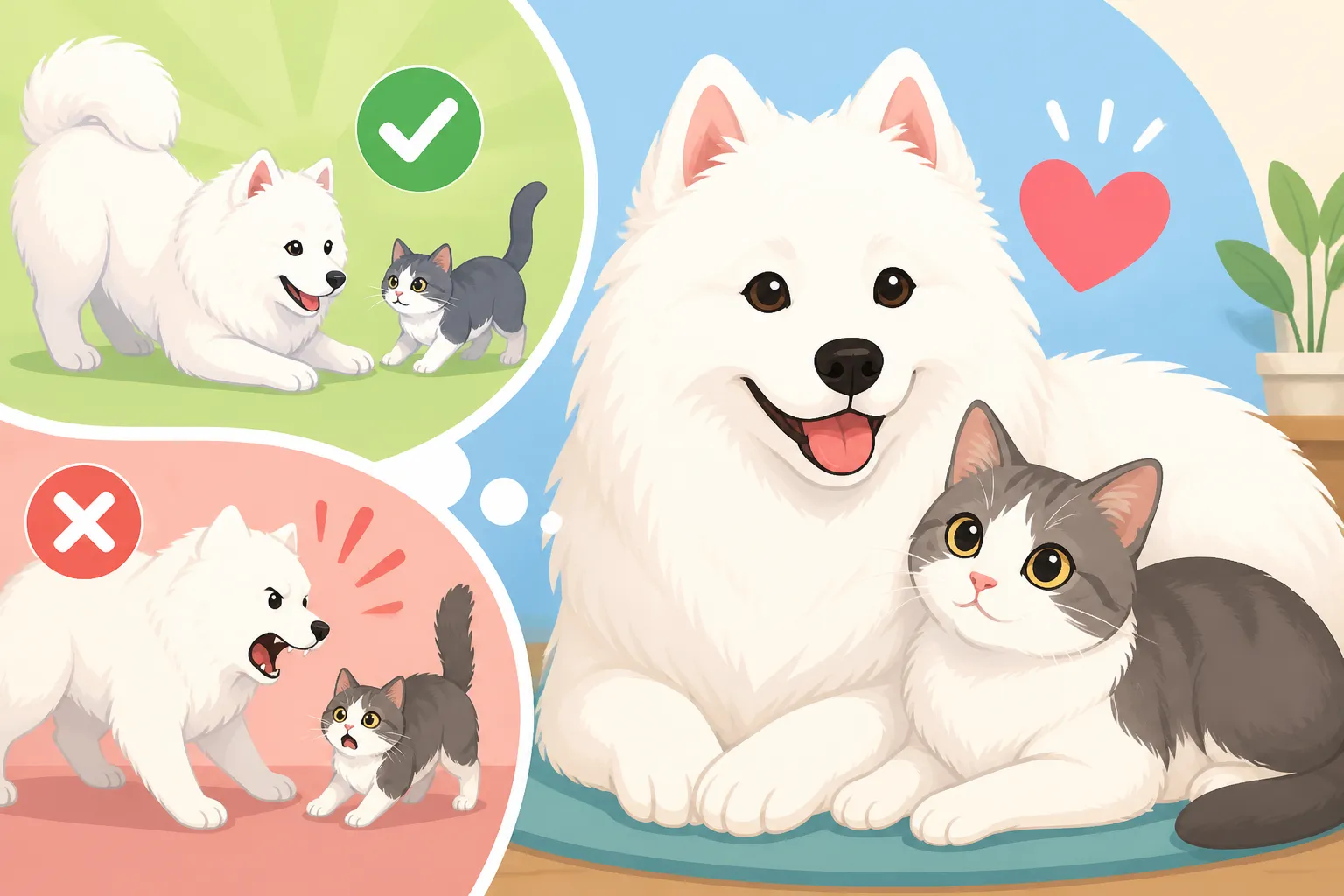
It’s crucial to be fluent in the body language of both your Samoyed and your cat to accurately assess their comfort levels and identify potential danger. A stressed cat might exhibit flattened ears, a puffed-up tail, hissing, swatting, or constant hiding. These are not signs of a cat that is learning to accept a dog; these are signs of fear and deep discomfort. A dog that is too stressed may show excessive panting, drooling, lip licking, or a tense body.
On the other hand, dangerous behaviors in a Samoyed include intense fixation on the cat (wide, unblinking eyes, stiff body, low growl), lunging, or ignoring your commands when the cat is present. Any growling, snapping, or actual attempts to bite by the Samoyed towards the cat are immediate red flags that indicate the situation is beyond simple management and needs urgent intervention. Remember, a Samoyed may not intend to harm, but their size and power mean that even a "playful" chase can result in accidental injury to a smaller, more fragile cat.
Prioritizing the Safety and Well-being of Both Pets
Ultimately, your responsibility as a pet owner is to ensure the safety and well-being of all animals under your care. If, despite consistent training, management, and professional guidance, your Samoyed and cat cannot safely coexist without one or both pets living in constant fear or stress, you may need to make difficult decisions. This might involve maintaining a permanently separated household, where the animals are never together unsupervised, or, in extreme cases, rehoming one of the pets to an environment where they can thrive.
This is never an easy choice, and it can feel heartbreaking. However, forcing animals to live in a state of chronic stress or fear is unfair to them. Sometimes, the most loving decision is to recognize when a pairing simply isn't working and to provide each animal with the best possible life, even if that means in separate homes. It's a testament to your commitment as an owner, not a failure, to put their individual needs above your own desire for a picture-perfect multi-pet family. Whether a Rescue Samoyed Trusts Again can offer some perspective on rehoming.
| Aspect | Samoyed Predisposition (General) | Cat Compatibility Potential (Depends On…) | Management & Training Needs |
|---|---|---|---|
| Prey Drive | Moderate to High | Individual cat's confidence, prior dog experience | High; "Leave It," recall, leash control, constant supervision |
| Energy Level | High | Cat's activity level, desire to play or hide | Adequate exercise for Samoyed to prevent boredom-induced chasing |
| Vocalization | High ("talkers," screams, howls) | Cat's tolerance for noise, potential for stress | Training for "Quiet" cue, desensitization if cat is sensitive |
| Friendliness | High (with people and often dogs) | Cat's socialization to dogs, individual personality | Positive reinforcement for calm interactions, careful introductions |
| Size & Strength | Large, powerful | Cat's ability to escape, risk of accidental injury | Strict supervision, cat-only escape routes, dog impulse control |
| Trainability | Intelligent, but can be stubborn | Cat's ability to learn boundaries, avoid confrontation | Consistent, positive reinforcement; short, engaging sessions |
| Bonding Tendency | Strong desire to be with family | Cat's comfort sharing space, seeking attention | Ensuring both pets get individual attention, managing jealousy (rare) |
Disclaimer
This article is for general informational purposes only and does not constitute professional advice. Laws, prices and regulations vary by location and change over time. Consult a qualified professional for guidance on your specific situation.