Whether a Samoyed Passes a Herding Instinct Test
Many Samoyed owners find themselves completely charmed by their dog's fluffy antics and "Sammy Smile," but sometimes, a flicker of something more ancient surfaces: a sudden interest in chasing a squirrel with intense focus, or perhaps an unexpected "flank" of a child. This can leave us wondering if our beautiful companions, so famed for pulling sleds through icy expanses, might also harbor a hidden aptitude for herding. This guide is here to unravel the truth about the Samoyed's herding instinct and whether they genuinely pass a herding instinct test, offering insights into their ancestral role and how it translates to modern-day canine activities.
The Samoyed's Ancestral Role: More Than Just a Sled Dog
When we think of Samoyeds, our minds often jump to visions of vast, snowy landscapes and powerful teams pulling sleds across the Arctic tundra. And while that image is certainly accurate, it's not the whole story of their incredible history. The Samoyed's heritage is deeply intertwined with the Nenets people of Siberia, who relied on these versatile dogs for survival in one of the harshest environments on Earth. These weren't just sled dogs; they were integral members of the family and the community, performing a myriad of tasks that ensured the prosperity of their human companions.
One of the most crucial, yet often overlooked, roles of the ancestral Samoyed was in reindeer herding. It wasn't herding in the way we might typically envision a Border Collie working sheep, with intense "eye" and precise movements. Instead, the Samoyed's approach to reindeer herding was much looser, more akin to a guardian or a "living fence." Their primary job was to keep the vast herds together, preventing strays from wandering off and protecting them from predators like wolves and bears. They were, in essence, mobile watchdogs and escorts for the reindeer, not precision drivers. This type of work required a keen awareness of their surroundings, a strong bond with their human handlers, and a natural inclination to keep things cohesive, without necessarily applying the forceful direction seen in other herding breeds.
This historical context is vital when we discuss their potential for passing a herding instinct test today. Their instinct was one of gathering and protecting, using their presence, barks, and sometimes nips to guide rather than command. They were integrated into family life, even sleeping in tents with their humans for warmth and protection. This close partnership fostered a dog that was intelligent, independent, and capable of making decisions, yet deeply loyal and desiring to be near its people. You can read more about their origins in The Nenets of the Yamal Peninsula Bred the Samoyed. It's a fascinating look at how deeply these dogs were woven into the fabric of human life.
The Unique Style of Samoyed Reindeer Herding
Unlike many modern herding breeds that were developed to drive livestock with precision and intensity, often displaying a strong "prey drive" channeled into a specific herding pattern, the Samoyed's method was less about aggressive driving and more about gentle containment. Imagine a massive herd of reindeer spread across the open tundra. The Samoyed's job was to circle the periphery, using their voice and physical presence to nudge any adventurous reindeer back towards the main group. They weren't asked to split the herd, bring small groups to specific pens, or respond to intricate whistle commands with military precision. Their work was more about broad strokes, boundary setting, and warning off threats.
This meant their "herding instinct" manifested differently. It wasn't about the intense, low-to-the-ground crouch and "eye" of a Border Collie, nor the forceful push of an Australian Cattle Dog. Instead, it was about vigilance, a robust bark to deter both predators and stray reindeer, and the physical stamina to cover vast distances. They needed to be able to work semi-independently but remain attuned to their human companions. This blend of independence and desire to cooperate meant they weren't necessarily seeking constant direction but were rather collaborators in a shared endeavor. How a Samoyed Herded Reindeer delves deeper into these specific techniques and the cultural significance of this partnership.
Understanding a Herding Instinct Test
A herding instinct test is designed to determine if a dog possesses the inherent traits necessary for herding livestock. It's not a test of training or skill, but rather an evaluation of the dog's natural, unlearned responses when introduced to appropriate livestock, usually sheep or ducks, in a controlled environment. The goal is to see if the dog exhibits interest, balance, and a desire to gather or move the animals.
What Evaluators Look For in a Test
When a dog enters the arena for a herding instinct test, the evaluator is observing a range of behaviors. These typically include:
- Interest: Does the dog show curiosity towards the livestock, or is it indifferent? A dog with herding instinct will usually be drawn to the animals, perhaps even appearing excited or intensely focused.
- Approach: How does the dog approach the livestock? Does it charge in wildly, scatter them, or try to gather them in a more controlled manner? An ideal herding dog will approach with intent, perhaps circling the flock.
- Balance: This is crucial. A dog with good herding instinct will instinctively understand how to position itself in relation to the stock and the handler to keep the animals moving in a desired direction. They might naturally "read" the flock's movement and adjust their position to maintain control.
- Drive/Pressure: Does the dog apply appropriate pressure to move the stock? This can involve barking, nipping at heels, or simply its physical presence. The type of pressure can vary greatly by breed and individual dog.
- Eye: While not all herding breeds use "eye" (a fixed, intense stare) like Border Collies, some level of focused attention is usually present.
- Natural Gather: Does the dog attempt to bring the stock together into a tighter group, or does it chase them aimlessly?
- Responsiveness to Handler: Although it's an instinct test, a dog's general willingness to acknowledge or respond to its handler's presence, even minimally, can be a good sign for future training.
The evaluator watches for these natural tendencies, trying to determine if the raw material for a working herding dog is present. It's a foundational step, indicating potential rather than proven ability. The cost of these tests can vary, so it's wise to check with local facilities; you can learn more about this in What a Herding Instinct Test Costs a Samoyed Owner.
How Samoyeds Typically Respond
Now, here's where it gets interesting for our Samoyed friends. Given their unique ancestral herding style, a Samoyed might not display the classic behaviors expected of a Border Collie or Australian Shepherd during an instinct test. Instead, you might see a more varied, and sometimes surprising, set of responses.
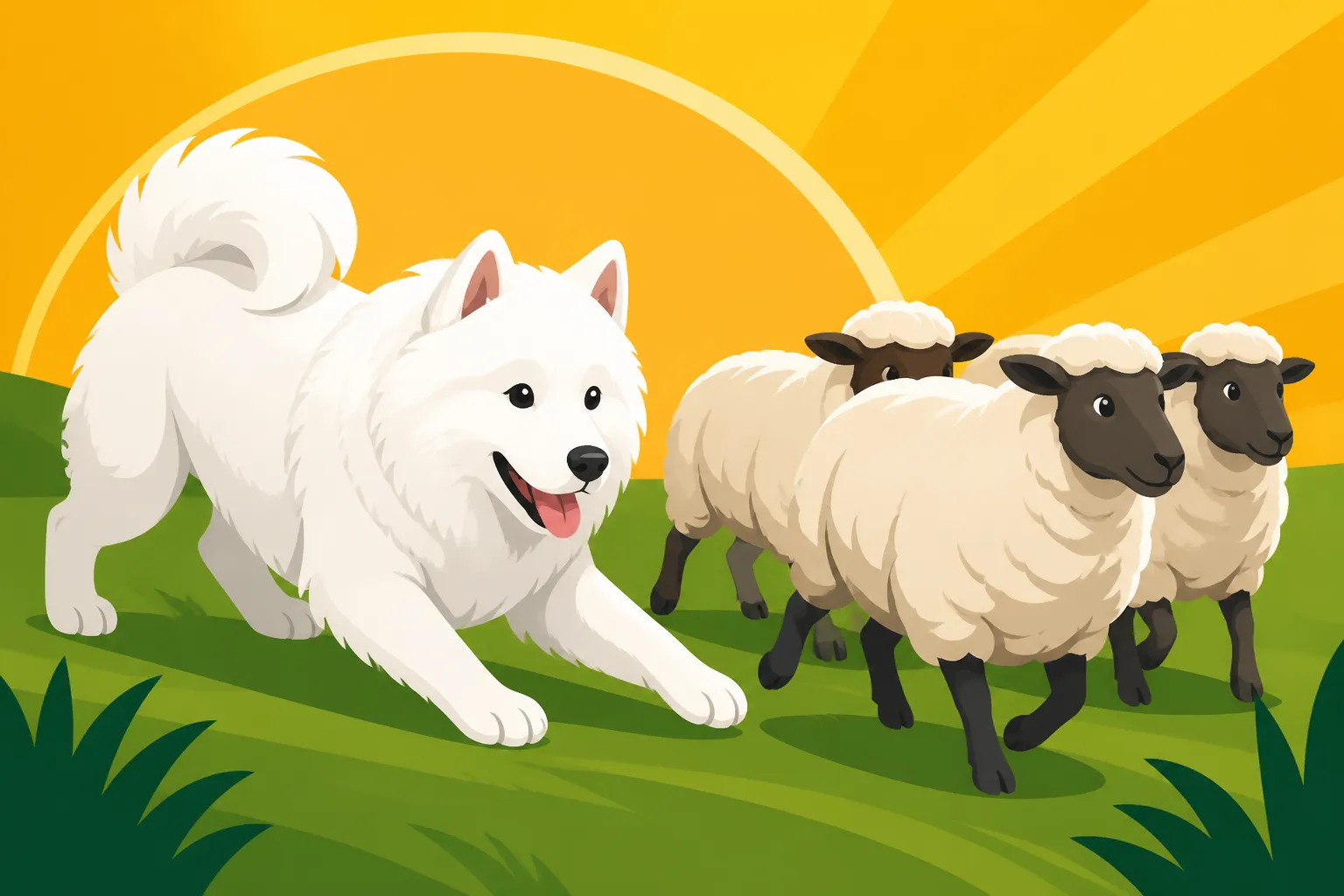
A Samoyed might show significant interest in the sheep or ducks, especially if they are moving. Their natural tendency to "keep things together" for reindeer can translate to an interest in gathering the smaller livestock. You might observe them trying to circle the flock, often with their characteristic vocalizations – the "Samoyed scream" or a series of sharp barks, which would have been useful for startling reindeer or warning off predators. They might also use their body to create a barrier or subtly redirect the sheep.
However, a Samoyed is less likely to exhibit the intense "eye" or the low, crouching stalk that marks many other herding breeds. Their herding was always more upright, more about presence and sound than stealth. Some Samoyeds might be overly enthusiastic, chasing the stock with too much zeal rather than controlled pressure, which an evaluator might interpret as lacking appropriate "balance." Others, true to their independent nature, might decide the sheep aren't worth the effort or that they know best, disregarding the handler's attempts at guidance, even if minimal. This independence can be a double-edged sword in a herding test setting. The key is that the initial spark of interest and an attempt to control the flock's movement, even if unrefined, is what the test aims to uncover.
| Trait | Typical Herding Breed (e.g., Border Collie) | Samoyed (Ancestral Reindeer Herding) | Samoyed (Herding Instinct Test Potential) |
|---|---|---|---|
| Primary Goal | Gather, drive, move with precision | Contain, guard, loosely gather | Interest in gathering/controlling |
| "Eye" (Intense Stare) | Strong, often a defining characteristic | Minimal to none | Minimal to none |
| Approach/Movement | Low crouch, stalk, precise circling | Upright, patrolling, broad circling | Upright, curious circling, vocal |
| Vocalization | Used selectively (e.g., bark for pressure) | Frequent, strong (warning/guidance) | Can be quite vocal, sharp barks |
| Nipping/Biting | Controlled nips at heels (for pressure) | Used for guidance/deterrence | Can be present, may need refinement |
| Independence | Works closely with handler, biddable | More independent, collaborative | Can be independent, may challenge guidance |
| Motivation | Strong desire to work, please handler | Purpose-driven, enjoys working | Enjoys the "game" and task |
The Samoyed Temperament and Herding Aptitude
The Samoyed temperament is a unique blend of traits that makes them wonderfully charming companions, but also presents interesting dynamics when it comes to activities like herding. They are renowned for their intelligence, often displaying a cunning ability to figure things out, which is a great asset in any working dog. However, this intelligence comes with a healthy dose of independence and a strong will. They are not typically dogs that live to please in the way a Golden Retriever might; rather, they are partners who prefer to negotiate.
This independent streak, so valuable when keeping track of a vast reindeer herd on the open tundra, can sometimes be misconstrued as stubbornness in a modern training context. A Samoyed might know exactly what you want but might decide that their idea is better, or that the reward isn't quite high enough for the effort. This is where the old adage, "a Samoyed will work with you, not for you," truly comes to life. Training a Samoyed often requires patience, consistency, and a deep understanding of what genuinely motivates them. Treats, praise, and making the activity fun are usually the keys to unlocking their cooperation.
Moreover, Samoyeds are incredibly social creatures. They thrive on companionship and want to be involved in family activities. This desire to be near their people means that while they can work independently, they ultimately prefer to collaborate. Why a Samoyed Wants to Be in the Room With You highlights this core aspect of their personality. In a herding test, this can mean they are interested in the activity because you are interested, or because it allows them to engage with you in a meaningful way, even if their methods are unconventional.
Interpreting the Results: What a "Pass" Means for a Samoyed
So, if you take your Samoyed to a herding instinct test, what should you expect, and what does a "pass" really signify? For many Samoyeds, a "pass" on a herding instinct test won't look like the effortless, balletic control of a Border Collie. Instead, it will likely indicate that your Samoyed showed a genuine interest in the stock, an attempt to control their movement (even if a bit clumsy or overzealous), and displayed some of the innate behaviors associated with their ancestral role. This might involve strong vocalization, circling, and a general fascination with keeping the flock together.
A passing grade means that your Samoyed has the raw, untamed instinct that could be shaped into more refined herding behavior with consistent training. It doesn't mean they are ready for the competitive herding arena tomorrow, but it confirms that the spark is there. For many Samoyed owners, discovering this hidden talent is a deeply rewarding experience, connecting them to their dog's ancient heritage. It validates those fleeting moments you've observed, like your Samoyed attempting to "herd" the kids into the backyard or intently watching a group of deer from afar.
It's also important to manage expectations. Not every Samoyed will "pass," and that's perfectly okay. Just as not every Border Collie becomes a champion herder, individual personalities and varying degrees of instinct exist within every breed. Some Samoyeds might prefer to sunbathe than chase sheep, and that's just their unique charm. The goal of the test is to explore and understand your individual dog's predispositions, not to force them into a mold that doesn't fit.
Fostering a Samoyed's Herding Instinct (or just their natural drive!)
If your Samoyed shows an aptitude for herding, or even if you just want to tap into their natural drives in a fun and enriching way, there are several avenues you can explore. Remember, Samoyeds thrive on having a "job" and mental stimulation, and channeling their energy positively can prevent less desirable behaviors like excessive digging or barking.
Starting with Basic Training and Engagement
Before you even think about livestock, ensuring your Samoyed has a solid foundation in basic obedience is paramount. Commands like "stay," "come," and "leave it" are crucial for safety and control in any working environment. Samoyeds are smart, but they can be a bit selective listeners! Engaging training sessions that are short, fun, and reward-based work best. Consider using high-value treats and toys as motivators. Many online training platforms, such as BAXTER & Bella, offer comprehensive puppy and adult dog training programs that can help build this foundation, focusing on positive reinforcement techniques that resonate well with a Samoyed's sensitive yet intelligent nature.
Beyond basic obedience, focus on activities that encourage their natural tendencies:
- Boundary Games: Play games that involve keeping you or an object within a certain boundary. This taps into their inherent desire to "contain."
- "Find It" Games: Hide-and-seek with toys or treats encourages their natural scenting abilities and problem-solving.
- "Go Out" Commands: Teaching them to move away from you in a controlled manner, then return, can be a precursor to directional herding cues.
Remember, Samoyeds need consistent mental and physical exercise. A bored Samoyed is often a destructive or vocal one! If you're struggling to motivate them, remember What a Samoyed Will Work For – often, it's food, attention, or a beloved toy.
Finding a Herding Instructor or Clinic
If your Samoyed passed an instinct test and you're keen to pursue herding, the next step is to find an experienced herding instructor or attend a beginner's herding clinic. A good instructor understands different breeds and their unique working styles. They can help you interpret your Samoyed's natural behaviors and guide you on how to channel them effectively without squashing their spirit.
Look for instructors who emphasize positive reinforcement and patient, clear communication. They will help you teach your Samoyed how to:
- Work with a Flank: Guiding the dog to move around the flock in a controlled circle.
- Walk Up/Drive: Moving the flock directly forward.
- Stop/Stay: Halting the dog's movement when necessary.
These are not easy tasks for any dog, let alone a Samoyed whose natural method was less about tight control and more about broad containment. It will require dedication from both you and your dog, but the journey can be incredibly rewarding. It's an opportunity to truly connect with your Samoyed's ancestral heritage and witness them in their element, even if that element has been adapted from vast tundra to a smaller paddock.
The Benefits Beyond the Field
Even if your Samoyed never becomes a competitive herding dog, exploring their instincts has immense benefits. It provides an incredible outlet for their intelligence and energy, reducing the likelihood of boredom-related behaviors at home. It strengthens the bond between you and your dog as you learn to communicate and work as a team. Moreover, it offers a deep dive into the fascinating history of your chosen breed.
Many Samoyeds, even if they don't pursue herding, thrive in other "job-oriented" activities that tap into their natural drives, such as Pulling: What a Samoyed Was Actually Bred to Do through carting or competitive sledding, or even agility and obedience. The key is to find what your individual Samoyed enjoys and excels at, providing them with purpose and enrichment that goes beyond just being a beloved pet. For gear and training aids, online retailers like Amazon offer a vast selection, from durable long lines to puzzle toys, which can be invaluable tools in keeping your intelligent Samoyed mentally stimulated.
Ultimately, whether your Samoyed passes a herding instinct test is less about a definitive "yes" or "no" and more about understanding their unique connection to their ancestors and celebrating the incredible versatility of this ancient breed.
Disclaimer
This article is for general informational purposes only and does not constitute professional advice. Laws, prices and regulations vary by location and change over time. Consult a qualified professional for guidance on your specific situation.