How a Samoyed Herded Reindeer
It's easy to look at a fluffy, smiling Samoyed today and think of them as nothing more than a beautiful companion, perhaps a bit vocal, and certainly a prolific shedder! But beneath that glorious white coat and perpetually happy expression lies a profound history, rooted in a very specific, demanding job: herding reindeer for the nomadic Nenets people of Siberia. If you’ve ever wondered why your Samoyed seems intent on keeping the family all in one room, or perhaps nudges your heels, you’re seeing echoes of an ancient way of life that relied on these incredible dogs for survival. This guide will take you deep into the forgotten art of Samoyed reindeer herding, explaining the nuanced skills they possessed and how those instincts continue to shape the breed we know and love today.
The Ancient Partnership: Samoyeds and the Nenets
For thousands of years, the Samoyed dog wasn't just a pet; it was an indispensable partner in survival for the Nenets people, indigenous nomads who roamed the vast, frozen landscapes of Siberia. Their lives, and the lives of their dogs, were inextricably linked to the reindeer they managed. Understanding this profound relationship is key to appreciating the Samoyed's true nature.
Life on the Yamal Peninsula
Imagine a world where the horizon stretches endlessly, covered in snow and ice for most of the year, with temperatures plummeting far below freezing. This is the Where the Samoyed's Yamal Peninsula Is, a harsh and unforgiving environment where the Nenets carved out a living. Their entire existence revolved around the migration and health of their reindeer herds. These animals provided everything: meat for sustenance, milk, hides for clothing and shelter (their portable homes, known as chooms, were covered in reindeer skins), and even bones and antlers for tools. Without a healthy, well-managed herd, the Nenets would not survive. The Samoyed, with its thick double coat, incredible stamina, and sharp instincts, was perfectly adapted to this brutal landscape and the crucial task of keeping the reindeer safe and productive. They were truly partners in every sense of the word, facing the elements and the challenges of nomadic life side by side.
The Deep Bond Between Dog and Human
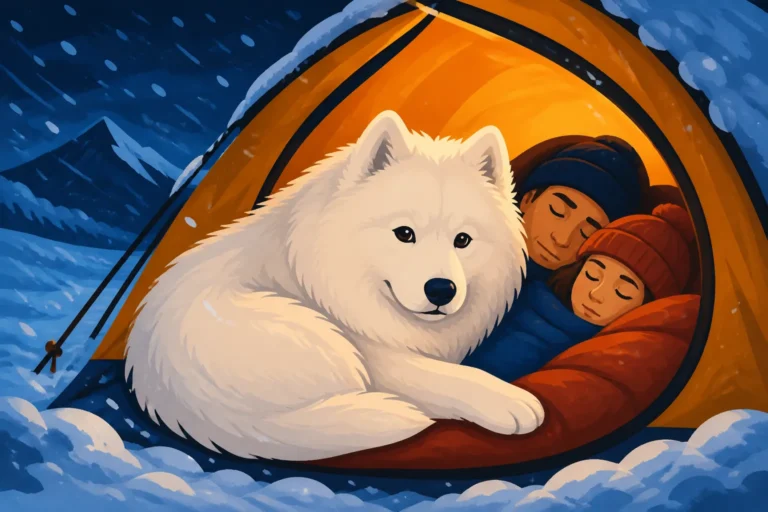
What set the Samoyed apart from many other working breeds was the incredible intimacy of their relationship with the Nenets. These dogs didn't just work alongside their human companions; they lived with them, often sharing the warmth and shelter of the family's choom. This close proximity meant that Samoyeds were not only deeply bonded to their people but also incredibly attuned to human communication. They learned to understand subtle cues, gestures, and vocalizations, making them highly responsive and cooperative workers. This wasn't a master-and-servant dynamic; it was a true partnership built on mutual respect and reliance. This bond also meant they were incredibly gentle and trustworthy with children, a trait that remains a hallmark of the breed today. Why a Samoyed Slept Among the Family wasn't just about warmth; it was about fostering an unbreakable connection essential for effective work and survival.
Understanding Reindeer Herding: More Than Just Chasing
When we think of herding, many of us picture a Border Collie intently staring down a small flock of sheep in a green pasture. Reindeer herding in Siberia was an entirely different beast. It was a monumental task that required a unique set of skills, patience, and a deep understanding of animal behavior, all within a vast and dangerous landscape.
The Scale of Reindeer Herds
The reindeer herds managed by the Nenets were not small, easily contained groups. These were often massive aggregations, sometimes numbering in the thousands, of semi-wild animals ranging across immense expanses of tundra. The goal wasn't to drive them into a pen, but to guide their migration, keep them moving as a cohesive unit, and prevent them from scattering or becoming lost in the seemingly endless landscape. Imagine trying to subtly influence the direction of a living, breathing river of animals across miles of open terrain. This task demanded dogs with exceptional stamina, the ability to work independently when needed, and a keen sense of where the herd needed to be. The Samoyed's role was less about forceful control and more about intelligent, persistent guidance.
The Threats to the Herd
The Arctic was, and remains, a land of predators. Wolves and bears were constant, existential threats to the reindeer herds, always lurking on the periphery, ready to pick off stragglers or launch an attack. The Samoyeds were the first line of defense, their keen senses allowing them to detect danger long before their human counterparts. Beyond predators, the environment itself posed significant risks. Blizzards could disorient and scatter a herd, thin ice over frozen waterways was a perilous trap, and simply wandering too far could lead to individual reindeer getting lost and succumbing to the elements. The Samoyed's vigilance and ability to work in extreme conditions were critical for minimizing these dangers, making them indispensable guardians as well as herders.
The Samoyed's Unique Herding Style
The way a Samoyed herded reindeer was distinct from the methods employed by many other herding breeds. It was a style born of the specific challenges of the environment, the nature of the prey, and the close bond with their human partners.
"Loose Eyed" Herding and Perimeter Control
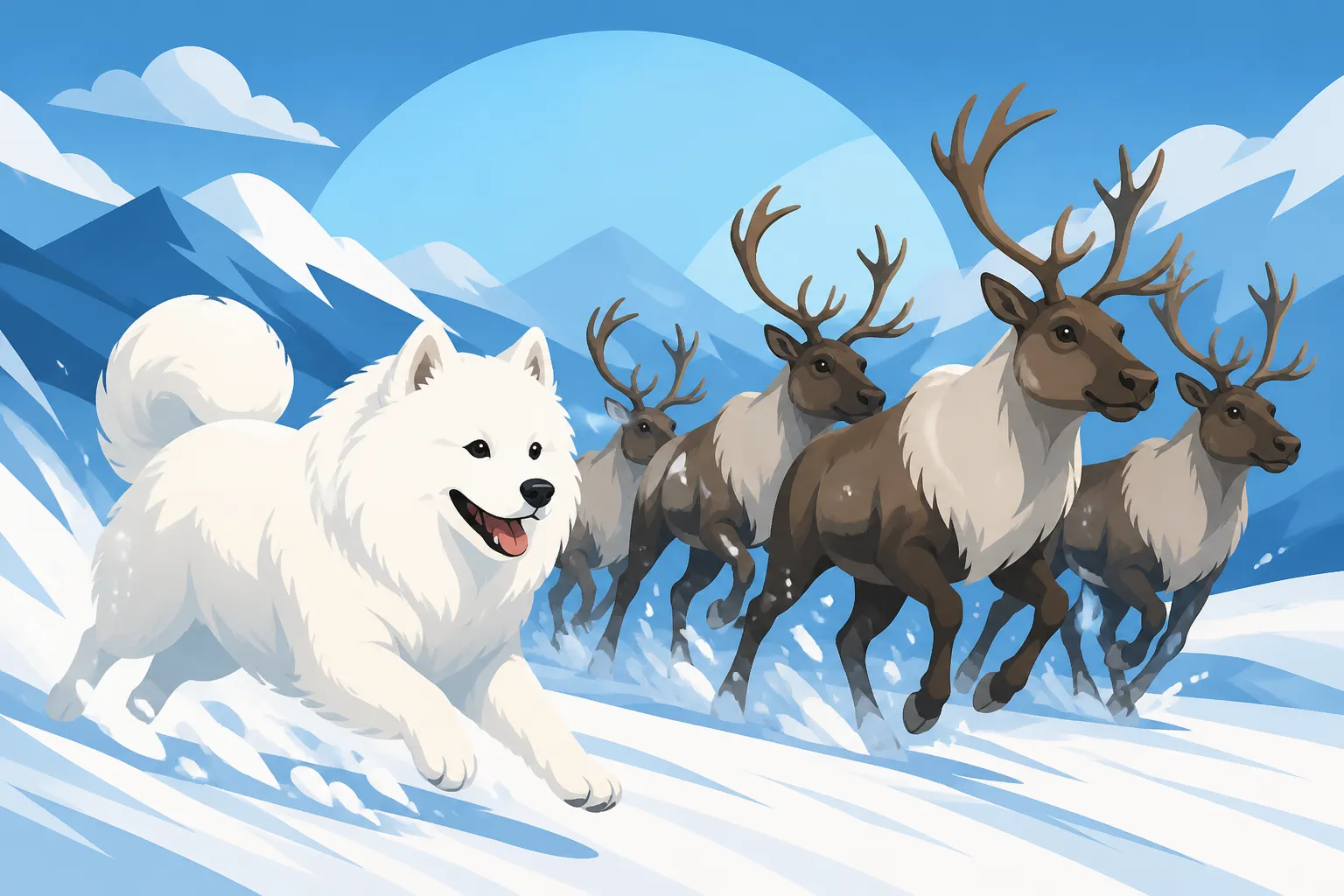
Unlike "strong-eyed" herding breeds like the Border Collie, which use intense stares and low-to-the-ground movements to control livestock, Samoyeds were "loose-eyed" herders. This meant they didn't rely on an intimidating stare. Instead, they worked with a broader, more expansive approach, often running around the perimeter of the vast reindeer herd. Their primary role was to keep the widely dispersed animals together, gently nudging or turning any stragglers back into the main group. They moved with purpose and presence, using their speed and endurance to patrol the edges of the herd. This method was essential for managing thousands of animals across open tundra, where a tight, intense gathering wouldn't have been practical or desirable. They influenced the flow rather than rigidly directed it.
Voice and Presence, Not Aggression
A key aspect of the Samoyed's herding technique was the use of voice and presence, rather than aggressive nips or forceful driving. While they are known for their varied vocalizations today, from the distinctive "Samoyed scream" to their melodic "talking," these sounds were once vital tools for communication and control in the field. The Samoyed Scream and Why It Is Not Barking was likely used to alert other dogs or humans, or to redirect reindeer. Their physical presence, constantly moving and positioning themselves, was often enough to influence the herd's direction. The goal was to guide and contain without causing panic or injury, which would have been detrimental to the herd's health and the Nenets' livelihood. They learned to work in subtle cooperation with their human handlers, responding to signals and anticipating movements. Whether a Samoyed Can Still Herd Livestock today shows they retain this instinct, even if it's no longer reindeer.
Retrieving and Guiding Strays
One of the most delicate but crucial tasks for a Samoyed was retrieving individual reindeer that had wandered too far or become separated from the main herd. In the vastness of the tundra, a single lost reindeer could easily become prey or simply perish. The Samoyed's job was to gently but persistently bring these strays back, guiding them without causing undue stress or injury. This often involved running wide arcs, slowly pushing the animal back towards the group. It was a testament to their intelligence and gentle nature that they could accomplish this without resorting to harsh biting or chasing that might further panic the reindeer. This instinct for keeping the group together, and retrieving its members, is often seen in modern Samoyeds trying to gather their human families.
Beyond Herding: Other Roles in the Arctic Tent
While herding reindeer was a primary duty, the Samoyed's utility to the Nenets people extended far beyond that. Their multifaceted roles were a testament to their adaptability, intelligence, and the deep reliance the nomadic tribes placed upon them for survival in a challenging environment.
Guarding Against Predators
The Arctic tundra was a dangerous place, teeming with predators like wolves and bears, always eager to prey on the vulnerable reindeer herds. While Samoyeds are famously friendly and not known for aggressive guarding in the traditional sense, they served as an exceptional early warning system. Their keen senses of smell and hearing allowed them to detect approaching danger long before humans could. Upon sensing a predator, they would bark and vocalize, alerting the Nenets and the rest of the pack. Often, working in coordinated groups, they would then engage the predators, using their numbers and courage to deter or drive them away from the herd and the nomadic encampment. This vigilance was crucial for protecting the Nenets' most valuable asset. Learn more about How a Samoyed Guarded the Herd From Wolves.
Pulling and Transport
The Samoyed's robust build, incredible strength, and tireless endurance made them natural draft animals. When the Nenets moved their camps, which they did frequently to follow the reindeer migrations, Samoyeds were harnessed to pull sleds laden with belongings, children, and supplies. This ability to pull was not just for short distances; they could cover vast stretches of frozen landscape, often in challenging conditions. Their role as sled dogs was as fundamental to the Nenets' mobility as their herding skills were to their livelihood. This pulling instinct is still strong in modern Samoyeds, which is why activities like skijoring or carting can be such wonderful outlets for them today. It truly embodies Pulling: What a Samoyed Was Actually Bred to Do.
Companionship and Warmth
Perhaps one of the most heartwarming, yet practical, roles of the Samoyed was that of a living, breathing hot water bottle. In the brutal cold of the Arctic night, sharing the cramped quarters of the choom with their human family was not just for comfort—it was a matter of survival. The dogs, with their thick, insulating coats, radiated warmth, helping to keep the entire family, especially children, from succumbing to hypothermia. This constant physical closeness fostered an incredibly deep and trusting bond. They were confidantes, protectors, and companions in the truest sense, providing emotional support in a lonely and harsh world. Their gentle, loyal nature, which makes them such beloved family members today, was forged in the intimate living conditions of the Arctic tent. The Samoyed Slept in the Tent to Keep People Alive truly highlights this essential function.
Why This Herding Instinct Matters Today
Even though very few Samoyeds today will ever encounter a reindeer, the ancient instincts developed on the Siberian tundra are still very much alive in our modern companions. Understanding these deep-seated behaviors can help us be better, more empathetic Samoyed owners.
The Modern "Herding" Behavior
You might notice your Samoyed has a particular knack for trying to keep everyone in the same room, gently nudging you back towards the family huddle if you stray. This is a direct echo of their past, an instinct to maintain the cohesion of their "pack" or "herd." They might circle children during play, or even exhibit a playful, non-aggressive nip at the heels of a running person, a remnant of their reindeer-guiding days. Whether a Samoyed Herds Children is a common concern for families, and it's important to remember it often stems from this innate desire to control movement and keep the group together, rather than malicious intent. Recognizing these behaviors for what they are – inherited instincts – allows us to address them with understanding and appropriate training, rather than frustration. They aren't being naughty; they're just being a Samoyed. You can see this most clearly in Whether a Samoyed Herds by Circling.
Harnessing the Instinct for Activities
Far from being a nuisance, a Samoyed's herding instinct can be a fantastic asset when channeled into appropriate activities. While live reindeer might be out of the question for most, herding trials with sheep or ducks can be incredibly stimulating and rewarding for a Samoyed, allowing them to engage their natural drive in a safe and controlled environment. Beyond formal herding, activities that involve teamwork, direction, and movement, like agility, rally obedience, or even advanced trick training, can tap into their intelligence and desire to work alongside their human. Their vocalizations, which might sometimes seem excessive, can be taught as cues in these activities. Using appropriate gear, like a well-fitting harness from a trusted retailer like Chewy, can also help manage their innate desire to pull during walks, allowing them to feel like they're "working" without overwhelming you.
Responsible Ownership and Training
Living with a Samoyed means acknowledging and respecting their rich history. Their independence, which was vital for making decisions on the vast tundra, can sometimes be misinterpreted as stubbornness in a modern home. However, it's really just a highly intelligent dog evaluating the situation and deciding if your request is worth their effort. This is why Training a Samoyed That Finds Obedience Negotiable is often the reality for Samoyed owners. Consistent, positive reinforcement training, starting from puppyhood, is crucial. They thrive on clear communication and a strong, trust-based bond. Providing plenty of mental and physical stimulation is also key to preventing boredom-driven behaviors that stem from their working heritage. Regular, engaging exercise, puzzle toys, and continued training will keep your Samoyed happy, well-behaved, and feeling like the valued working partner they were always meant to be. This connection to their ancient past is what makes Samoyeds so captivating, and so utterly unique.
| Herding Breed Type | Primary Herding Style | Focus | Intensity | Common Breeds | Samoyed Reindeer Herding Parallel |
|---|---|---|---|---|---|
| Strong-Eyed | Stare, crouch, intense focus | Close control | High | Border Collie, Aussie | Minimal; reindeer don't respond to stare, vast distances. |
| Loose-Eyed/Boundary | Perimeter patrol, broad turns | Containment, flow | Medium | Samoyed, OES, Pyr Shep | Directly aligns with Samoyed's method of keeping a scattered herd. |
| Heelers | Nips at heels to move stock | Drive forward | Medium | Australian Cattle Dog | Present in Samoyed's gentle nudges to keep group together. |
| Vocal Herders | Uses barks/calls to direct | Alerting, directing | Medium | Samoyed, Shetland Sheepdog | Samoyed's varied vocalizations were key for communication and control. |
| Guardians | Protects stock from predators | Deterrence, defense | High | Great Pyrenees, Anatolian Shepherd | Samoyed's role as an alarm and deterrent against wolves and bears. |
Disclaimer
This article is for general informational purposes only and does not constitute professional advice. Laws, prices and regulations vary by location and change over time. Consult a qualified professional for guidance on your specific situation.