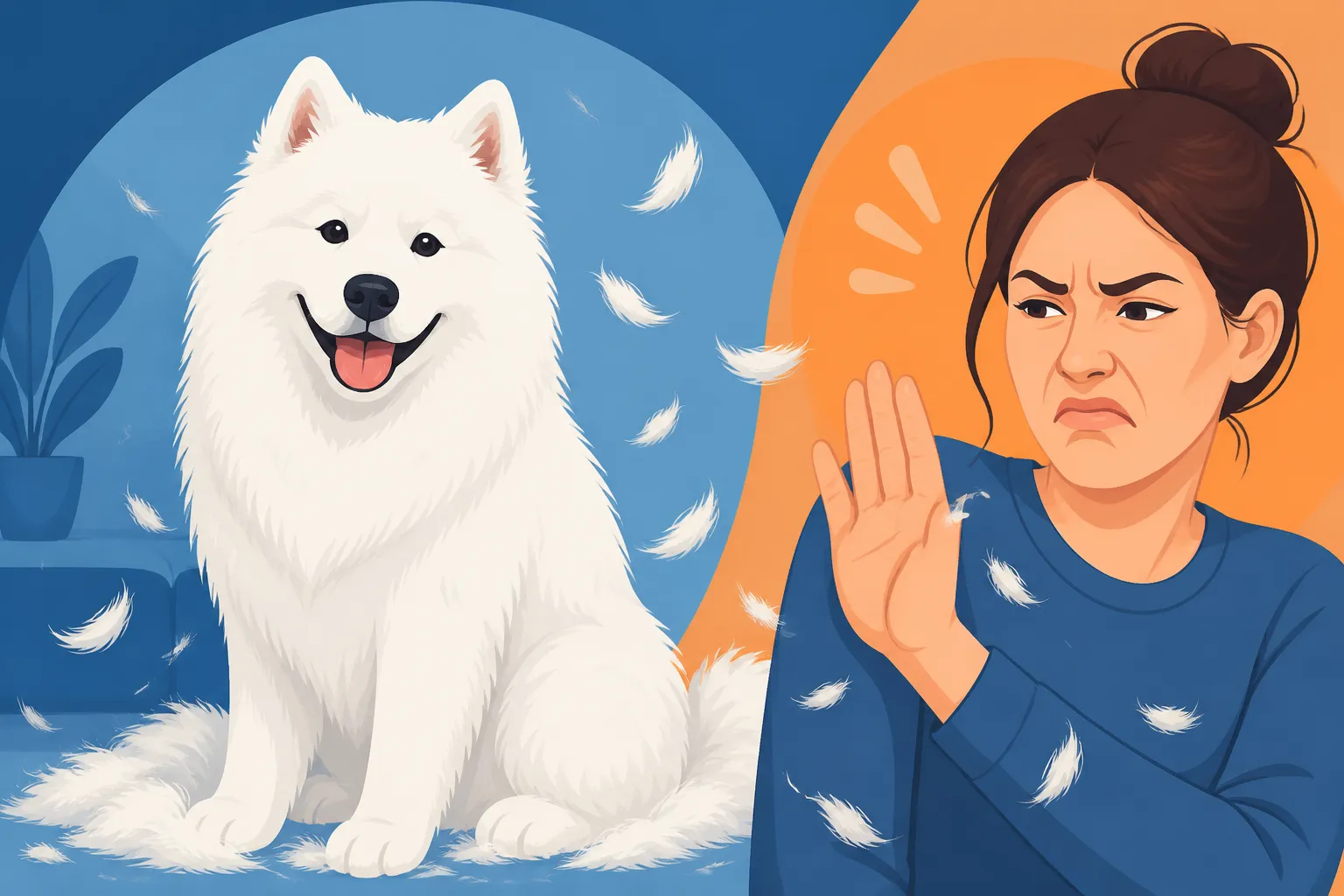
Why Shedding Puts People Off Samoyeds
A Samoyed’s coat can turn a tidy living room into a tumbleweed trail, especially when seasonal shedding ramps up. That reality puts many people off the breed before they bring a puppy home. This guide explains what Samoyed shedding is really like, how to manage the fur without damaging the coat, and how to decide whether the cleanup fits your household.
Why Samoyeds Shed So Much
The double coat is the reason
A Samoyed’s thick coat has two layers: a soft, dense undercoat and longer guard hairs. Together, they help protect the dog from the elements. The undercoat sheds throughout the year, and many Samoyeds shed heavily when they “blow” that layer, often as the seasons change. The timing and intensity vary with the individual dog, its coat, and its environment.
That can mean loose fur on the sofa, in the corners, clinging to dark clothes, and gathering beneath the dining table. It is not necessarily a sign that something is wrong. For a fuller picture of how this cycle works, read When a Samoyed Blows Its Coat and What a Samoyed's Double Coat Is Made Of.
The amount of fur can feel startling if you have only lived with short-coated dogs. You may brush out what looks like a small dog’s worth of fluff and still find more on the floor later. A Samoyed’s coat can shed in clumps during a coat blow, but loose hair between those heavier periods is normal too.
Shedding is not a one-time seasonal event
It is tempting to imagine that the fur problem is limited to a few weeks each year. In practice, many owners deal with some shedding year-round, with more noticeable surges at certain times. A climate-controlled home may also affect how clearly seasonal changes show up, so one dog’s shedding calendar may not match another’s.
That means a prospective owner should picture daily life, not just the dramatic coat-blow stories. If you regularly wear black trousers, keep a pristine white sofa, or dislike cleaning pet hair from the car, the fur may become a recurring irritation. How Often a Samoyed Needs Brushing explains the routine that helps keep loose coat from building up.
| What you may notice | What it usually means | What can help |
|---|---|---|
| A little fur on furniture or clothes | Ordinary shedding | Regular brushing and washable throws |
| Loose undercoat coming out in tufts | A heavier coat-blow period may be underway | More frequent, gentle grooming |
| Mats behind the ears or in the leg furnishings | Coat is tangling faster than it is being brushed out | Carefully work through tangles and check friction areas often |
| A sudden change in shedding with skin irritation or thinning patches | More than routine shedding may be involved | Ask a veterinarian to assess the skin and coat |
What Living With Samoyed Fur Looks Like
Fur finds its way into ordinary routines
Owners often describe the shedding less as one big mess and more as a steady background task. You brush before work, vacuum after dinner, then find a new drift of fur beside the baseboard the next morning. It may collect on blankets, car seats, rugs, and the clothes you planned to wear out.
A practical routine can make that less overwhelming. Keep a brush where you tend to groom, use washable covers on favorite resting spots, and keep a lint roller near the door or in the car. If you are shopping for grooming basics or cleanup supplies, Chewy can be one place to browse options; focus on tools suited to a dense double coat rather than assuming the most aggressive brush is best.
It also helps to set expectations with everyone in the household. A Samoyed may be beautifully groomed and still leave hair behind after a nap. If a visitor is coming over, a quick tidy can help, but there is no realistic way to promise a completely fur-free home.
The cleanup load varies from home to home
Flooring, furniture, ventilation, and the dog’s habits all affect how visible the hair is. Fur is easier to spot on dark floors and clothes, while rugs can hold onto it until you vacuum. A dog that spends a lot of time on one favorite couch creates a different cleanup pattern from one that sleeps in a crate or on a washable bed.
Think about the tasks you already find hard to keep up with. If you resent vacuuming now, regular brushing and extra cleaning may feel like one more job. If you enjoy a simple grooming routine and do not mind fur on your clothes, the same shedding may seem manageable. What Twenty Pounds of Samoyed Undercoat Does to a House gives a sense of why the coat can have such a noticeable effect on household life, while Whether a Samoyed Owner Needs a Better Vacuum is useful if you are weighing your cleaning setup.
When comparing tools, look for equipment that suits your surfaces and your tolerance for maintenance. A vacuum that is easy to empty may matter more to you than a complicated feature list. Chewy may help you compare pet-cleanup supplies, but check the fit and care instructions for any tool before buying. The goal is not to eliminate shedding; it is to make the recurring cleanup easier to live with.
How to Manage Shedding Without Hurting the Coat
Brush consistently and gently
Brushing helps remove loose hair before it spreads around the house and gives you a chance to check for tangles, debris, or irritated skin. The best schedule depends on the dog and the state of its coat. During a heavier coat blow, you may need to groom more often than usual; between those periods, a steady routine can help prevent loose undercoat from accumulating.
Work in small sections and be patient, especially around areas that tangle easily, such as behind the ears, under the collar, and around the furnishings on the legs. Pulling hard at a knot can hurt, and rushing through a dense coat can leave hidden tangles behind. If you are unsure which brush or comb is appropriate, ask a groomer who has experience with double-coated breeds. Chewy’s grooming selection may be useful for browsing, but a professional can help you choose tools for your particular dog and demonstrate safe technique.
Brushing should not become a battle. If your Samoyed is uncomfortable, break the session into shorter stretches and reward calm cooperation. Start with easy areas and build up gradually. A dog that learns to tolerate grooming early is usually easier to care for when a seasonal coat blow makes the sessions more important.
Keep the coat clean and dry it thoroughly
Bathing can help remove dirt and loose coat, but it does not replace regular brushing. A thick double coat takes time to dry all the way through. Dampness trapped close to the skin can create discomfort and make it harder to notice developing skin problems, so drying thoroughly matters. Ask a knowledgeable groomer or your veterinarian for guidance if your dog has sensitive skin or a coat that is difficult to manage.
Do not shave a Samoyed simply to avoid fur around the house or to keep the dog cool. The double coat provides protection, and shaving can interfere with its normal function and regrowth. If the coat is badly matted or you are struggling to groom safely, get help from a qualified groomer rather than trying to solve the problem with clippers at home. A Samoyed's Coat Is Insulation, Not Decoration and Why a Samoyed Must Never Be Shaved explain why the coat needs a more thoughtful approach than a simple trim.
Regular brushing, sensible bathing, and home cleanup work together. For day-to-day advice on how the coat sheds dirt between baths, see How a Samoyed's Coat Sheds Dirt on Its Own. If you are comparing the amount of fur with another northern breed, How a Samoyed's Shedding Compares With a Husky's may help you think through the difference.
Is Samoyed Shedding a Dealbreaker
Match the coat to your real household
The key question is not whether you can keep a Samoyed perfectly clean. You cannot. It is whether you can accept a home where some fur is part of normal life and whether you are willing to build grooming and cleaning into your routine.
Before deciding, picture specific situations. Would you still be comfortable when fur is visible on a guest’s chair? Can you brush the dog regularly even when work is busy? Are household members willing to share vacuuming and grooming? If allergies are a concern, spend time around Samoyeds before committing and speak with a healthcare professional. No breed should be treated as a guaranteed allergy-free choice.
A useful test is to visit Samoyeds in a home environment, not only at a show or an outdoor event. Notice how the coat behaves on furniture and clothing, and ask owners what their normal grooming week looks like outside coat-blow season. Their answers may be more helpful than a dramatic story about one exceptionally heavy shed.
Make the decision with the full breed in mind
Shedding is important, but it is only one part of living with the breed. A Samoyed also needs companionship, activity, training, and regular care. If you are already deciding whether the breed fits your lifestyle, The Household a Samoyed Was Built For can help you think beyond the coat, and What Samoyed Owners Wish They Had Known offers a broader look at day-to-day ownership.
Some people decide the fur is more than they want to manage, and that is a fair conclusion. Others find that a consistent grooming routine and a few practical household habits make it manageable. The right choice depends on your tolerance for cleanup, the time you can devote to coat care, and whether you genuinely enjoy the Samoyed’s company enough to accept the trade-offs.
If you are leaning toward the breed, talk with responsible breeders and Samoyed owners about coat care before making a commitment. Ask what grooming tools they use, how they handle coat-blow periods, and what they do when a dog dislikes brushing. A realistic conversation now can prevent frustration later—and help you decide whether the fur is simply part of the package you are willing to take home.
Disclaimer
This article is for general informational purposes only and does not constitute professional advice. Laws, prices and regulations vary by location and change over time. Consult a qualified professional for guidance on your specific situation.