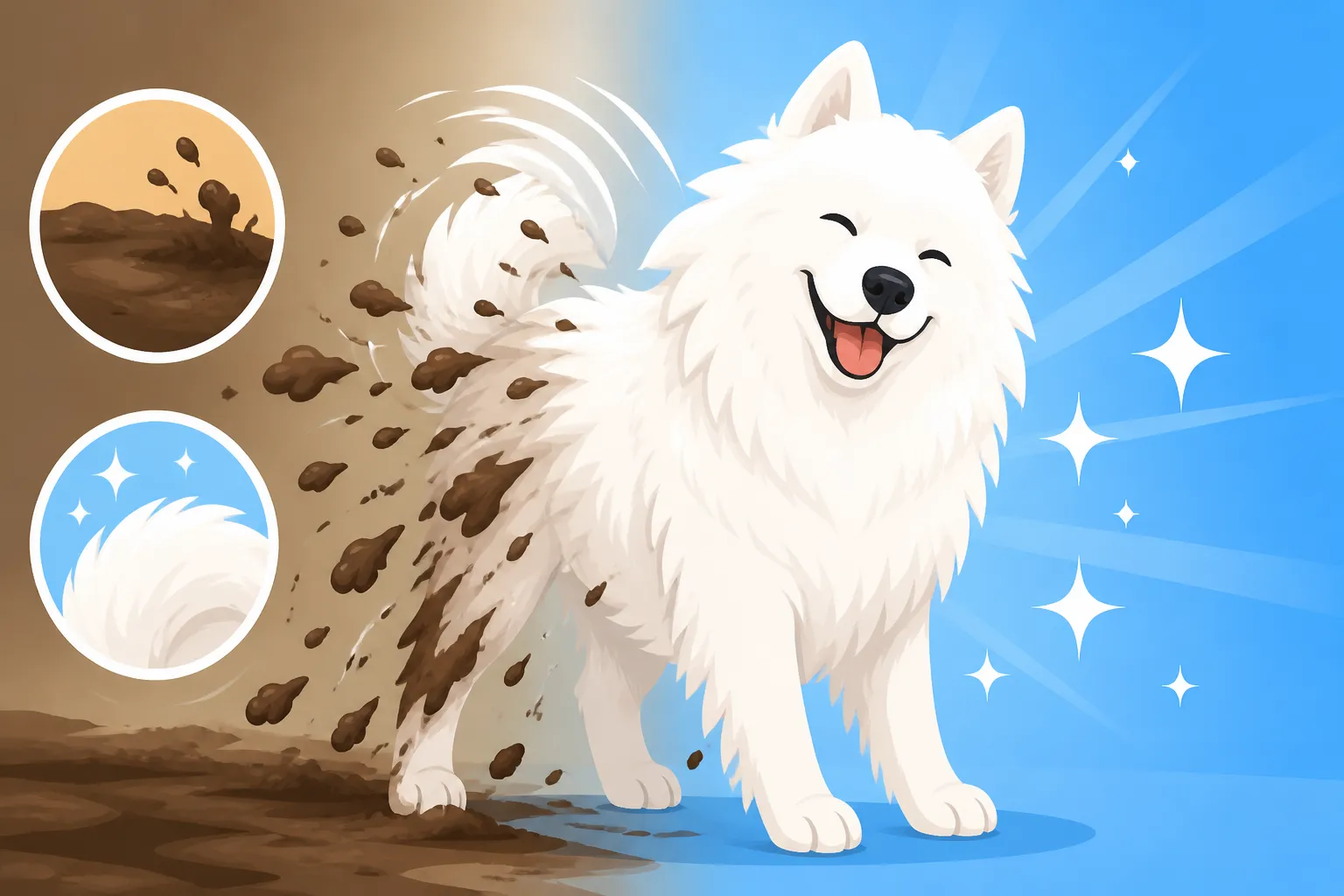
Why Mud Falls Off a Dry Samoyed
Anyone who has ever lived with a Samoyed knows the delightful, often perplexing, reality of their pristine white coat. You watch them roll in the mud, creating a muddy mess that would spell disaster for almost any other breed, only to find that once it dries, most of that grime simply crumbles away, leaving behind a remarkably clean dog. This guide will delve into the fascinating mechanics behind your Samoyed's seemingly magical ability to shed mud, explaining the unique features of their coat that make this possible and offering practical tips to keep them looking their best.
The Science Behind the Samoyed's Self-Cleaning Coat
It truly feels like magic sometimes, doesn't it? You’ve just finished a long walk through a wet, muddy field with your fluffy white cloud, and their usually pristine fur is absolutely caked. Your heart sinks a little, already picturing the wrestling match in the bathtub. But then, a few hours later, once they've had a chance to dry, you notice little clumps of mud littering your floor, and your Samoyed emerges from their nap looking almost as clean as before. This isn't a trick of the light; it's a testament to the incredible design of their arctic coat, refined over centuries to keep them clean and warm in harsh environments.
The Unique Structure of the Samoyed Double Coat
The secret to the Samoyed's uncanny ability to shed dirt lies deep within its coat, specifically its intricate double-layer structure. Unlike many breeds with single coats or less dense fur, a Samoyed boasts a thick, lush outer layer of coarse, straight guard hairs, paired with an incredibly dense, soft, and woolly undercoat. Think of it like a finely engineered insulation system, designed by nature to protect them from extreme cold, but with an unexpected benefit when it comes to keeping clean.
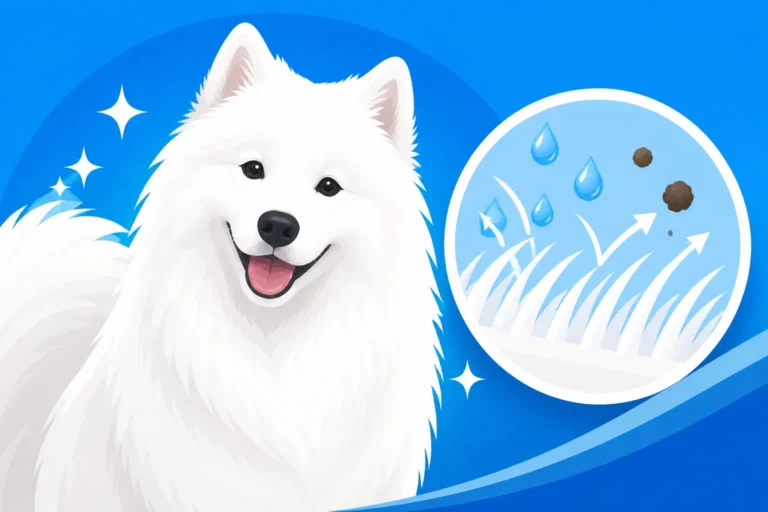
The guard hairs are the first line of defense. These aren't just for show; they're somewhat stiff and tend to stand out from the body, preventing foreign particles like mud from easily penetrating through to the skin. They form a protective barrier, almost like a natural fence. Beneath this, the undercoat acts as a cushion and a trap for air, but it also plays a crucial role in preventing dirt from embedding itself deeply. When mud hits the coat, it largely sits on the surface of these guard hairs, rather than soaking into the fine, fluffy undercoat immediately. This layered approach means that instead of getting into the fur, much of the mud adheres to the outermost tips or tangles lightly within the upper layer of the guard hairs. This unique composition is part of What a Samoyed's Double Coat Is Made Of, and it's truly remarkable how effective it is.
The Role of Natural Oils and Coat Texture
Beyond the sheer density and layering, the Samoyed's coat possesses natural properties that are inherently water and dirt-repellent. Those glorious, snowy guard hairs aren't just coarse; they're also lightly oiled. These natural oils, produced by the dog's skin, create a subtle barrier that helps shed water and resist dirt adherence. Imagine water beading up on a freshly waxed car – it's a similar principle at play. When mud, which is essentially water mixed with fine soil particles, comes into contact with these slightly oily guard hairs, it doesn't soak in and bind as readily as it would with a more absorbent, cotton-like coat.
The texture itself also matters. The guard hairs are not smooth and sleek like those of a Labrador, which might allow mud to slide down and stick. Instead, they have a slightly rougher, more resilient texture. This coarseness provides less surface area for mud to cling to on a microscopic level, and it also prevents the individual hairs from clumping together too tightly when wet with dirt. This allows for air circulation, which is vital for both temperature regulation – Why a Samoyed's Coat Insulates Against Heat as Well as Cold – and, as we'll see, for drying and shedding dirt. When the mud dries, this slight separation of hairs means there isn't a solid, impenetrable layer of mud, but rather a collection of loosely attached particles that can be easily dislodged.
How Airflow and Movement Aid in Shedding Dirt
Once the mud has dried, the magic truly happens, and this is where airflow and the dog's natural movements come into play. Because the mud isn't deeply embedded in the undercoat, and the guard hairs create space, air can circulate through the coat much more easily. As your Samoyed moves, shakes, rolls, or simply walks around, the dried mud, which has lost its adhesive properties, starts to break apart and fall off.
Think of it like tiny, brittle clay particles clinging to a brush. With every shake and shimmy, those brittle pieces crack and drop away. The constant motion of the Samoyed's fluffy, dynamic coat, especially when they do their characteristic full-body shake, creates enough friction and displacement to release the dried clumps. The loose undercoat and the way the guard hairs spring back also help to push the dried dirt outwards and off the dog. It’s a beautifully efficient system that has allowed Samoyeds to thrive for millennia in environments where bathing with soap and water wasn't exactly a convenient option. This inherent design is a huge part of How a Samoyed's Coat Sheds Dirt on Its Own.
How This "Self-Cleaning" Differs from Other Breeds
It's easy to assume all dogs get equally dirty, but anyone who has owned multiple breeds can tell you that couldn't be further from the truth. The Samoyed's "self-cleaning" ability isn't a universal canine trait; it's a specialized adaptation that sets them apart from many of their furry counterparts. Understanding these differences helps appreciate the genius of their natural design.
Comparing Samoyed Coats to Single-Coated Breeds
Imagine a Poodle, a Doberman, or even a short-coated breed like a Greyhound. Their coats, while beautiful in their own right, are designed for entirely different purposes. A Poodle's curly, continuously growing hair, for example, is fantastic for trapping allergens and is often considered "hypoallergenic" because it holds onto shed hair and dander. However, that same texture means mud and debris get deeply enmeshed in the curls, soaking into the hair shaft and clinging with a vengeance. Once a Poodle has rolled in mud, they're typically headed straight for a bath, as the wet, sticky mess will harden into uncomfortable clumps that pull at their skin if left to dry.
Similarly, a Doberman's sleek, single coat offers little resistance to mud. While it might air dry quickly, the mud often forms a thin, crusty layer directly on their skin and fur, requiring a wipe-down or a full bath to remove. There's no fluffy undercoat or resilient guard hairs to act as a buffer. The mud clings directly to the smooth hair and skin, often leaving a muddy residue even after drying. The Samoyed’s unique structure, with its coarse outer layer and dense inner layer, means the mud largely sits on top, allowing it to flake off rather than become an integral part of the dog's fur until bath time.
The Advantages and Limitations of the Samoyed Coat
The primary advantage of the Samoyed's coat is undoubtedly the reduced need for frequent full baths when faced with light, superficial mud. For owners who love exploring nature with their Samoyeds, this is a massive boon. A romp through a slightly muddy park or a wet forest trail often means little more than waiting for your Sammy to dry off, then a quick brush to dispatch the last remnants of dirt. This saves time, water, and the effort of wrangling a large, fluffy dog into a tub. It also means their skin is less exposed to harsh shampoos, which can strip natural oils and potentially lead to dryness or irritation. For an active dog, this natural resilience is incredibly practical.
However, it's absolutely crucial to understand that "self-cleaning" does not mean "maintenance-free." There are significant limitations. This coat is not magic, and it certainly won't handle every type of mess. Sticky, oily mud (like clay-rich mud or mud mixed with sap), deeply embedded debris (think burrs or sticky seeds), or strong odors (like rolling in something truly foul) will absolutely still require a full bath. Moreover, while mud might fall off, other types of staining, such as urine stains around the hindquarters or tear stains on the face, are not automatically shed. The coat still needs regular grooming to prevent mats, especially during a When a Samoyed Blows Its Coat which happens twice a year. Without diligent care, that beautiful, resilient coat can quickly become a tangled, uncomfortable mess.
Practical Tips for Maximizing Your Samoyed's Cleanliness
While your Samoyed's coat is a marvel of natural engineering, it still thrives on a little human help. Understanding how to work with their coat, rather than against it, can make a huge difference in maintaining its legendary cleanliness and health. You don't want to negate their natural advantages with poor grooming habits.
The Importance of Waiting for Mud to Dry
This is perhaps the single most important tip for Samoyed owners. Resist the urge to immediately hose down or wipe a muddy Samoyed when they first come in from their adventure. Wet mud smears, spreads, and can become even more deeply embedded in the coat as you try to rub it off. Instead, usher your muddy Samoyed into a contained, easy-to-clean space – a mudroom, a tiled entryway, or even a large crate lined with old towels. The key is to keep them from spreading the wet mud throughout your home while they air dry.
Give them plenty of time. Depending on how wet and muddy they are, this could take a few hours. A force dryer, like those available from online retailers such as Amazon or Chewy, can significantly speed up this process and also help to blast off loose dirt as the fur dries. Once the mud is completely dry and brittle, you'll find it practically crumbles away. A good shake from your Samoyed will often dislodge much of it, and what remains can usually be easily brushed out. Trying to tackle wet mud is a battle you'll almost always lose, so patience is truly a virtue here.
Essential Grooming Tools and Techniques
Even with its self-cleaning properties, a Samoyed's coat needs regular attention to stay healthy, white, and free of mats. Having the right tools makes all the difference. An undercoat rake is invaluable for getting deep into that dense fur, removing loose undercoat and preventing mats from forming, especially during seasonal shedding. A good slicker brush will help detangle the guard hairs and remove any remaining surface dirt. Many owners find a force dryer (also known as a high-velocity dryer) to be an absolute game-changer. Not only does it dry the coat quickly after a bath, but it's also incredibly effective at blasting loose dirt and undercoat out of a dry coat, even when you haven't given them a full bath. You can often find a wide selection of these grooming essentials on sites like Amazon or Chewy.
Regular, thorough brushing is essential. Aim for at least 2-3 times a week, and daily during a coat blow. This helps to distribute natural oils, remove dead hair, and prevent the undercoat from matting. Mats, if left unchecked, can trap dirt, moisture, and parasites, leading to skin irritation and discomfort for your dog. For more on this, check out How Often a Samoyed Needs Brushing. This proactive approach ensures that your Samoyed's coat can continue its "self-cleaning" job effectively, as a matted coat loses much of its natural protective and dirt-shedding capabilities.
When a Full Bath is Still Necessary
While the Samoyed's coat is fantastic at shedding dry mud, there are definitely times when a full bath is unavoidable and absolutely necessary for your dog's health and hygiene. If your Samoyed has rolled in something truly foul – think mystery sludge, manure, or anything with a strong, unpleasant odor – no amount of drying and brushing will fix it. A bath is the only solution. Similarly, very sticky or greasy mud, like heavy red clay or tar, might not simply fall off when dry. These substances can bond more aggressively to the hair and may require careful washing.
Regular bathing, perhaps every few months or as needed depending on their lifestyle and environment, is also important to maintain overall coat health. Even if they don't look visibly dirty, a bath helps remove accumulated environmental pollutants, dead skin cells, and microscopic debris that brushing alone can't entirely eliminate. When you do bathe your Samoyed, be prepared for a thorough job. Their dense double coat means you need to ensure the shampoo penetrates all the way to the skin and, just as importantly, that the rinse is complete. Following up with a force dryer is critical to dry their coat thoroughly and prevent hot spots or skin issues. You want to make sure you’re Drying a Samoyed to the Skin after every bath. You might also want to look into Which Shampoo Keeps a Samoyed White to maintain their pristine appearance.
Debunking Myths About the Samoyed's "Magical" Coat
The reputation of the Samoyed's self-cleaning coat can sometimes lead to misunderstandings, creating unrealistic expectations about dog ownership. While their coat is indeed remarkable, it's not a magical, effort-free solution to all grooming challenges. It's important to differentiate between impressive natural adaptations and outright fantasy.
It's Not Actual Magic, But Evolution
Let's be clear: there’s no actual magic involved here. The Samoyed's ability to stay relatively clean is a product of millennia of natural selection and selective breeding by the indigenous Nenets people, who developed the breed for specific roles in the harsh Arctic. Their dogs needed to be resilient, capable of pulling sleds, herding reindeer, and sleeping close to their human companions in tents, all while maintaining good hygiene in extreme conditions. A coat that easily matted or became saturated with dirt and moisture would have been detrimental to their survival and effectiveness.
The coarse guard hairs, the dense undercoat, and the natural oils are all adaptations that served a crucial purpose in their ancestral environment. They kept the dogs warm, dry, and clean, preventing ice and snow from clinging too readily. This evolutionary design for functionality, not aesthetics, is why the Samoyed's coat behaves the way it does today. It’s a testament to the incredible wisdom of nature and the practical breeding wisdom of their original caretakers, The Nenets of the Yamal Peninsula Bred the Samoyed.
It Doesn't Mean Zero Grooming
This is a common misconception that can lead to significant problems for new Samoyed owners. Just because mud flakes off easily doesn't mean you can skip grooming altogether. Far from it! A Samoyed’s coat is high-maintenance, regardless of its self-cleaning properties. Without regular and thorough brushing, that dense undercoat will quickly mat. Mats are not just unsightly; they are painful. They pull on the skin, restrict movement, and can harbor bacteria, leading to skin infections. During seasonal coat blows, when a Samoyed sheds massive amounts of undercoat, daily brushing is often necessary to prevent enormous clumps of fur from detaching or matting against the remaining coat.
Neglecting grooming can turn a dog with a "self-cleaning" coat into a miserable, uncomfortable animal, potentially requiring professional dematting or even shaving, which should be avoided at all costs. Shaving a Samoyed can damage their coat's ability to insulate and protect them from the elements. So, while you might not have to bathe them as often for mud, you'll still be spending plenty of quality time with brushes and combs.
"White as Snow" Still Requires Effort
While it's true that the Samoyed's coat repels mud surprisingly well, maintaining that iconic "white as snow" appearance still requires effort. Mud isn't the only thing that can stain a white coat. Everyday elements like grass, urine, tears, and certain foods can leave unsightly marks. A Samoyed that loves to roll in green grass might develop a greenish tint, especially on its legs and belly. Similarly, brown beard stains from food or reddish tear stains around the eyes are common and won't simply flake off.
For these types of stains, spot cleaning becomes your best friend. Instead of a full bath, you can target specific areas with a gentle dog-safe shampoo or a whitening solution. Spot Cleaning a Samoyed Instead of Bathing It is a technique every Samoyed owner should master. So, while your Samoyed might emerge from a mud bath looking surprisingly clean, don't expect them to stay pristine without your ongoing care and attention. Their coat is a gift, but it's one that requires consistent effort to truly shine.
Disclaimer
This article is for general informational purposes only and does not constitute professional advice. Laws, prices and regulations vary by location and change over time. Consult a qualified professional for guidance on your specific situation.