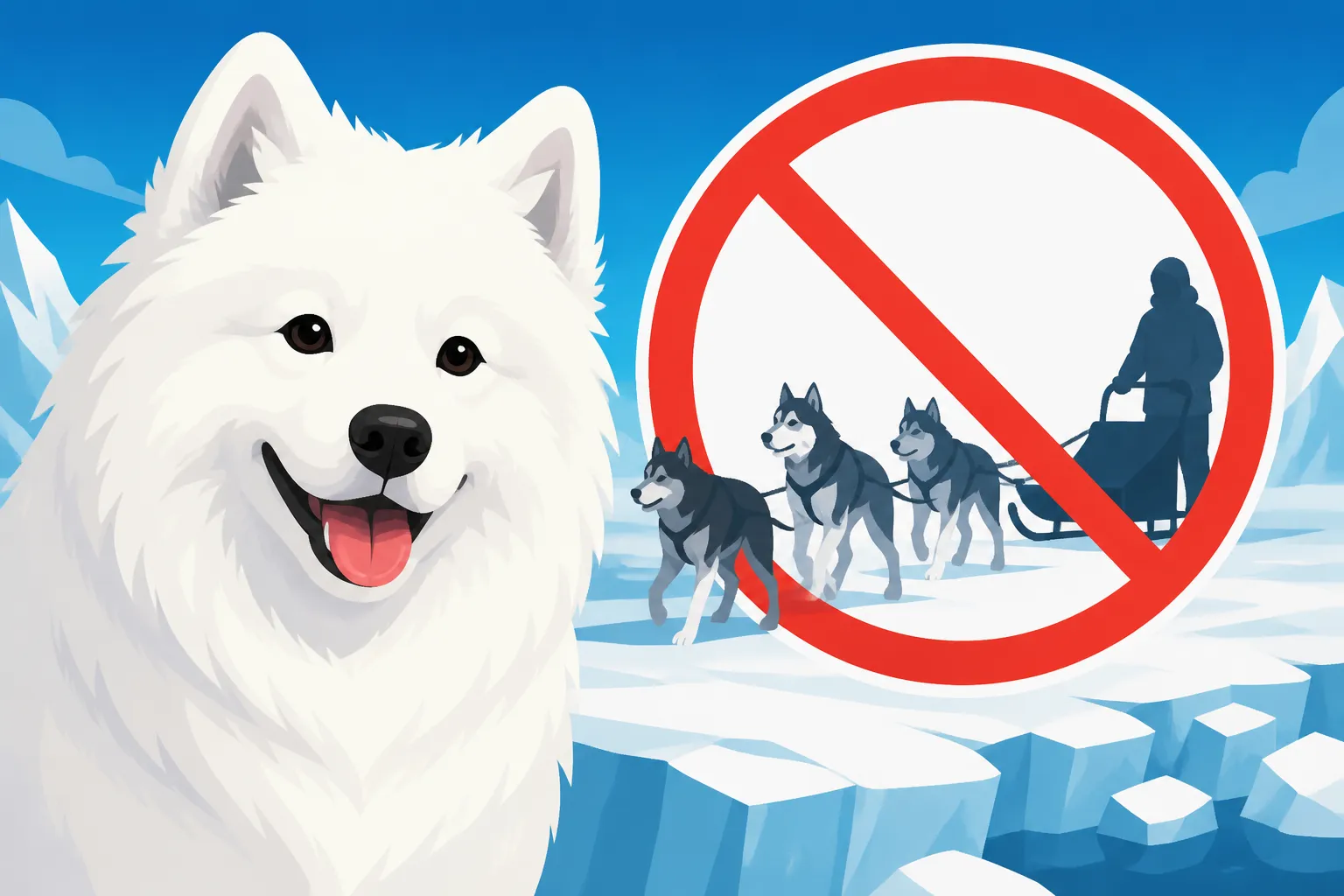
Whether Samoyeds and Other Sled Dogs Were Banned From Antarctica
A familiar question about polar history is whether sled dogs were actually banned from Antarctica—or whether they simply disappeared as machines took over. The short answer is yes: dogs had to be removed from the continent, and introducing them was prohibited under Antarctic environmental rules. Here’s what the ban covered, why it happened, and what it meant for the Samoyeds and other dogs that once worked there.
Why dogs were used in Antarctica
Sled dogs were essential to early expeditions
Before reliable motor vehicles and modern support systems, sled dogs helped expedition teams travel across snow and ice while carrying food, equipment, and scientific supplies. A dog team could work over terrain that was difficult for wheeled transport, and dogs could provide a practical way to move loads over long distances.
Samoyeds were among the northern breeds associated with early polar exploration, alongside other sled dogs. Their history is part of the wider story of how explorers brought dogs from northern regions to Antarctica, as described in How Polar Explorers Took Samoyeds Out of Siberia. The dogs’ contribution was not merely symbolic: they were working animals whose strength and endurance helped make exploration possible.
Conditions were punishing for both people and dogs. Teams faced severe cold, difficult snow, and long stretches far from a base. Dogs also depended on human handlers for food, shelter, veterinary attention, and decisions about when to travel or rest. The success of an expedition could hinge on the health of its animals as much as on its equipment.
Several famous expeditions relied on dogs
Dogs took part in multiple Antarctic expeditions, though not every team used them in the same way. Their roles varied with the expedition’s plans, the conditions, the equipment available, and the choices made by its leaders. The history of Which Polar Expeditions Used Samoyeds helps place the breed within that broader tradition.
Sled dogs are also closely associated with expeditions led by Ernest Shackleton and Robert Falcon Scott. Their stories are distinct, and the outcome for dogs differed from one journey to another. Shackleton's Samoyeds and The Samoyeds on Scott's Expedition offer more detail about those particular histories.
Roald Amundsen’s successful journey to the South Pole is another part of this story. Dogs helped his party travel across the polar landscape, and their use reflected the central role animal-powered transport could play in an era before motorized support was dependable. For more background, see Amundsen's Samoyeds and Whether Samoyeds Reached the South Pole.
The working relationship was complex
It is easy to look back at expedition dogs as if they were simply brave companions in a grand adventure. They were companions, but they were also working animals in extreme conditions. The demands placed on them could be severe, and not every dog survived or returned from an expedition.
That difficult reality matters when considering the later ban. The decision to remove dogs was not a judgment that their historic contribution had been unimportant. Rather, it reflected a change in how Antarctica was managed: as human activity on the continent grew, the priority shifted toward reducing environmental risks and protecting wildlife.
Were sled dogs banned from Antarctica
Yes, dogs had to be removed
The Antarctic environmental rules did require dogs to be removed from the continent. The relevant measure was part of the environmental protection framework established by the Protocol on Environmental Protection to the Antarctic Treaty. It prohibited introducing dogs onto Antarctic land and ice shelves and set a deadline for removing dogs that were already there.
The deadline was 1 April 1994. The environmental protocol itself entered into force later, in 1998, but the requirement to remove dogs was put into effect ahead of that date. That distinction can make summaries of the ban sound confusing: the removal deadline came before the protocol formally entered into force.
In practical terms, the answer is straightforward. Dogs could no longer remain at Antarctic stations or be brought in to work there. The era of station-based sled dog teams ended, even though dogs had played an important role in earlier exploration.
The restriction was specific to Antarctica
The ban was not a worldwide prohibition on sled dogs, nor did it make dog sledding illegal everywhere. It concerns the Antarctic environment and the introduction or presence of dogs there under the applicable rules. Sled dogs continue to be part of working and recreational traditions in other places, subject to local laws and animal-welfare requirements.
The distinction is useful because “banned from Antarctica” can sound broader than it is. It does not mean that dogs cannot live in cold climates, pull sleds elsewhere, or appear near the continent on a ship. It means dogs cannot be introduced onto Antarctic land or ice shelves under the environmental rules.
Antarctica is also governed differently from an ordinary country. The Antarctic Treaty System involves international agreements and regulations for activities on the continent. The dog restriction is one part of a larger effort to manage human presence and limit environmental harm.
Dogs were removed before the protocol took effect
The 1994 removal deadline is often the most memorable detail, but it should be understood in context. The requirement was part of a wider move toward stronger environmental safeguards. Parties acted on the dog-removal measure before the protocol’s formal entry into force, rather than waiting until the entire framework became legally active.
That timing is why an account may say both that dogs were removed by 1994 and that the protocol entered into force in 1998. Those statements are not contradictory: one refers to the deadline for removing dogs, and the other to when the protocol as a whole formally took effect.
| Question | Short answer | What it means |
|---|---|---|
| Were dogs banned from Antarctica? | Yes | Dogs were required to leave, and introducing them was prohibited |
| When was the removal deadline? | 1 April 1994 | Dogs already present had to be removed by then |
| When did the environmental protocol enter into force? | 1998 | The removal deadline preceded the protocol’s formal entry into force |
| Does the rule ban sled dogs everywhere? | No | It applies to Antarctica, not dog sledding in other regions |
| Can dogs be brought onto Antarctic land or ice shelves? | No | The rules prohibit introducing dogs there |
Why dogs were removed
Protecting native wildlife was a central concern
Antarctica’s wildlife evolved in a remote environment with relatively little direct contact with people and domestic animals. Bringing dogs into that environment created concerns about disturbance and the possibility of disease transmission. Even a healthy dog could present risks that were difficult to predict or control in a place where wildlife populations are vulnerable.
The concern was not limited to one species or one station. A dog might come into contact with wildlife, waste, food, or other materials that could affect the local environment. Preventing those risks at the source was a more reliable approach than hoping every interaction could be managed safely.
This kind of precaution is easier to understand when the setting is considered. Antarctica is not a place where a domestic animal can simply be taken to a local veterinarian if something goes wrong. The distance, weather, and limited infrastructure make prevention especially important.
The rule fit a broader environmental shift
The dog ban was part of a wider effort to protect Antarctica from the effects of human activity. Environmental management includes concerns such as pollution, disturbance of wildlife, and the introduction of non-native organisms. Dogs became one clear example of a broader principle: human activity should not casually bring new biological risks into a fragile environment.
That principle also explains why the ban was not a statement that dogs were inherently harmful or unwelcome everywhere. The same animal can be a valued working partner in one region and an unacceptable ecological risk in another. The location, local wildlife, and consequences of introduction all matter.
The change also reflected the evolving nature of Antarctic work. As stations and transport systems developed, teams had alternatives to relying on dog sleds for routine movement. The loss of dogs from the continent was therefore connected both to environmental protection and to changes in how people could carry out their work.
Removing dogs ended a chapter, not their place in polar history
The removal requirement brought an end to a long period in which dogs were used at Antarctic stations and on expeditions. It did not erase what those teams had done. Sled dogs remain part of the history of exploration, transport, and human survival in polar regions.
Their legacy is also a reminder that the rules around exploration can change. A practice that was once considered useful may later be restricted when new environmental concerns become better understood or when alternatives become available. For a closer look at what happened to individual expedition animals, read What Happened to Expedition Samoyeds on the Ice and Which Expedition Samoyeds Came Home.
What the ban means for Samoyeds and dog owners today
The rule does not make Samoyeds unsuitable for cold-weather work
The Antarctic restriction is about protecting a particular environment; it is not a verdict on the Samoyed’s ability to work in cold conditions. Samoyeds remain a northern breed with a history linked to sledding and other demanding tasks. Whether an individual dog should pull a sled today depends on its health, age, training, conditioning, equipment, and the weather.
A dog’s thick coat does not make it immune to injury or exposure. Even in cold conditions, owners need to watch for fatigue, sore paws, dehydration, and signs that the workload is too demanding. A responsible handler adjusts the activity to the dog rather than expecting the dog to meet a fixed distance or pace.
For families interested in modern sledding or pulling sports, the main practical questions are about safe training and suitable conditions—not whether the dog has the right historical connection. The Antarctic ban does not prevent people from learning about those activities or participating in them elsewhere where they are permitted.
Keep the history separate from modern supply decisions
The old expedition stories can inspire people to picture a Samoyed in harness, but everyday care is much less dramatic and much more routine. Owners may be thinking about food, grooming tools, paw care, travel supplies, or equipment for a local activity. Chewy is one familiar place some households use to browse ordinary pet supplies, but the right choices depend on the dog and its needs.
For example, a Samoyed that joins a winter hiking group may need different paw-protection planning from a dog that spends most of its time on neighborhood walks. A working dog’s food and conditioning should also be discussed with a veterinarian, especially when the activity level changes. A retailer such as Chewy may help an owner locate routine supplies, but it cannot replace advice tailored to a specific dog’s health and workload.
It helps to make a simple checklist before buying equipment: the activity the dog will do, the temperature and terrain, how long the dog will be outside, and what supplies are needed for recovery afterward. If using Chewy or another retailer for everyday items, check that products suit the dog’s size and purpose rather than choosing something based only on a polar-exploration image.
The central lesson is environmental responsibility
The story of sled dogs in Antarctica holds two ideas at once. Dogs helped people explore and work in an extraordinarily difficult place, and their presence eventually became incompatible with the environmental protections adopted for that place. Recognizing both facts gives a more accurate account than treating the ban as either a rejection of dogs or a minor historical footnote.
The rule’s practical message is clear: Antarctica is not an ordinary destination for bringing a pet or working animal. Its environmental protections are designed to limit risks before they reach wildlife and ecosystems. That is why the dogs who once crossed its snowfields remain in the history books rather than at modern Antarctic stations.
Disclaimer
This article is for general informational purposes only and does not constitute professional advice. Laws, prices and regulations vary by location and change over time. Consult a qualified professional for guidance on your specific situation.