Whether Samoyeds Worked at Antarctic Research Stations
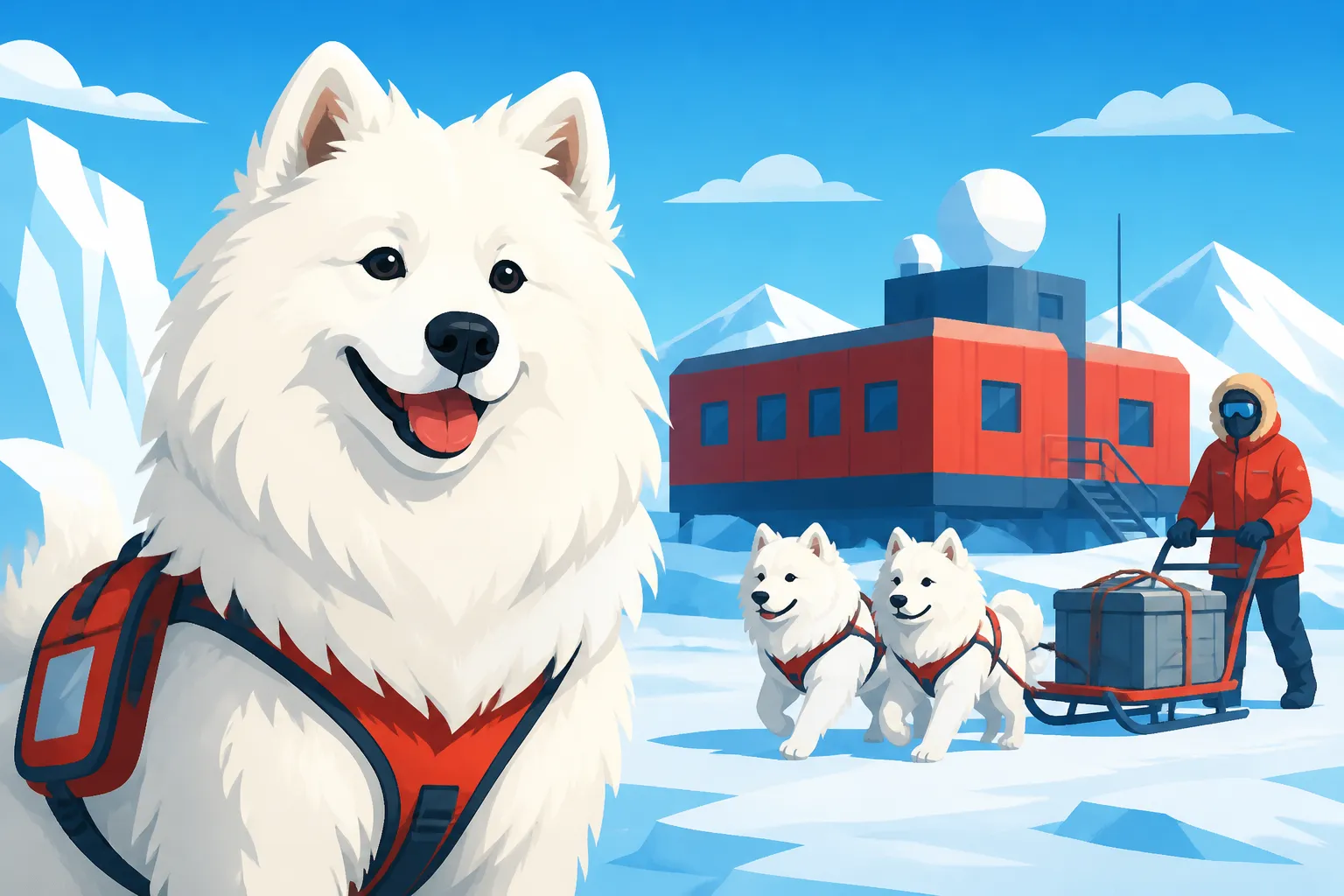
Samoyeds did work in Antarctica, but the story needs a little unpacking: they were part of early polar expeditions and the sled-dog teams that supported exploration and scientific work, rather than a standard feature at every research station. This guide explains where Samoyeds fit, what dogs did there, and why working dogs no longer live on the continent.
How Samoyeds reached Antarctica
Polar explorers brought sled dogs south
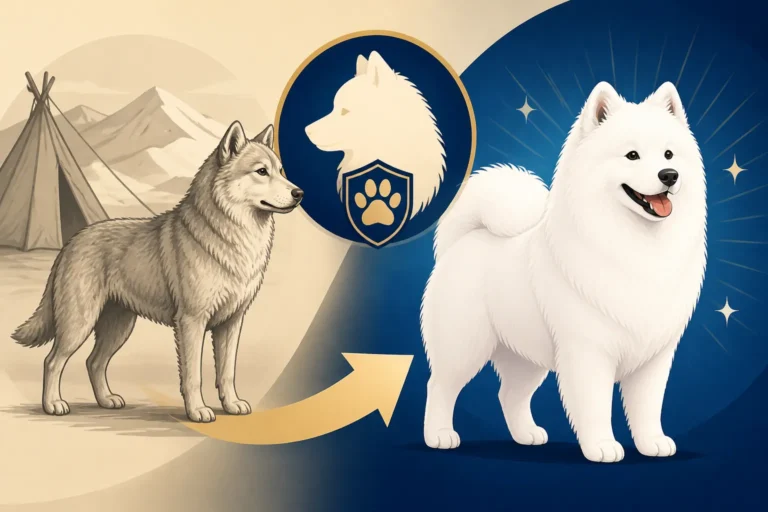
Samoyeds became associated with Antarctic travel during the era when explorers relied on dogs to haul supplies across snow and ice. The breed had a reputation for strength, endurance, and close cooperation with people, qualities that made northern dogs attractive to polar expeditions. The route from Siberia to Antarctica was not direct, however: dogs were acquired, transported, and selected for expeditions by people organizing journeys in Europe and elsewhere.
For an overview of that journey north to south, see How Polar Explorers Took Samoyeds Out of Siberia. The dogs involved were not always identical in appearance or breeding, and historical descriptions can use “Samoyed” broadly for dogs from the northern regions associated with the breed. That makes it difficult to identify every dog by modern breed standards.
The wider story includes several famous Antarctic journeys. Which Polar Expeditions Used Samoyeds looks at the expeditions and dogs connected with this history. A Samoyed’s presence on an expedition does not automatically mean that the dog later lived at a permanent research base; expedition travel and station life were different parts of Antarctic history.
Expedition dogs were not the same as station dogs
A polar expedition was a planned journey, often involving a small team of people and dogs carrying equipment, food, and other supplies over difficult terrain. Dogs could help move loads and support travel far from a ship or camp. A research station, by contrast, is a fixed or seasonal base where scientists and support staff live and work.
The distinction matters because “worked at Antarctic research stations” can make it sound as though Samoyeds were routinely housed at bases in the same way that dogs might live with a family or farm. The historical record is better understood as a combination of expedition work, transport between camps, and support for early Antarctic operations. Dogs might be based at a camp or station during a period of work, but not every dog was a station resident, and not every station used dogs.
It is also worth separating Samoyeds from the broader category of polar sled dogs. Teams could include dogs of different origins and types, and familiar breed labels do not always map neatly onto the dogs described in expedition accounts. So the careful answer is yes, Samoyeds were part of Antarctic working-dog history, but they were not the only dogs, nor were they necessarily the dominant breed at every base.
What Antarctic working dogs did
Dogs hauled loads and supported travel
Before motorized transport became widely practical for Antarctic field work, sled dogs provided a way to move people and equipment across snow. A team could pull a sled loaded with supplies, helping an expedition travel farther than individuals carrying everything themselves. In the cold, wind, and uneven surface conditions, this was demanding work for both dogs and people.
Dogs also contributed in less visible ways. They were companions in remote camps, and their presence could help morale during long periods of isolation. That does not make the work easy or gentle: sledding required conditioning, careful feeding, suitable equipment, and handlers who understood the dogs’ needs. A dog’s ability to work in cold weather did not mean it was immune to fatigue, injury, or illness.
There were real limits to what dogs could do. Ice conditions changed, weather could turn dangerous quickly, and a dog team required food and care that also had to be transported. The animals were part of a larger logistics system, not a simple or effortless solution to Antarctic travel.
Samoyeds were part of a larger canine story
The Samoyed is one of several northern breeds associated with polar exploration. The best-known stories often focus on individual dogs and dramatic journeys, but the work depended on whole teams. Different dogs might have different roles, temperaments, strengths, and levels of experience; the success of a journey could not rest on a breed name alone.
The account of Etah, the Samoyed That Reached the South Pole First is one example of how an individual dog became part of the public story of exploration. It is useful to read such accounts alongside the broader question of Whether Samoyeds Reached the South Pole. Historical claims can hinge on how an expedition defined its route, what records survived, and how later writers described the dogs.
For a fuller sense of the dogs’ conditions during polar travel, What Happened to Expedition Samoyeds on the Ice adds important context. Stories of courage and endurance should not obscure the practical reality: these were working animals in an exceptionally demanding environment, dependent on handlers for food, shelter, rest, and veterinary attention.
| Antarctic context | What it means for Samoyeds |
|---|---|
| Polar expedition | Samoyeds and Samoyed-type dogs were connected with journeys that used sled dogs for transport and support. |
| Field camp or early base | Dogs could be present during operational work, but practices varied by expedition and location. |
| Permanent research station | It is misleading to assume that every station kept Samoyeds or maintained a regular dog team. |
| Modern Antarctic station | Dogs are no longer used on the continent, following environmental protections and restrictions. |
Why dogs no longer live at Antarctic stations
Environmental protection changed the rules
Antarctica’s environment is unusually vulnerable to introduced species and disease. Dogs living or working there could potentially disturb wildlife, affect local ecosystems, or carry pathogens. As scientific understanding and environmental protections developed, the presence of dogs became incompatible with the continent’s conservation approach.
The result was a gradual end to the use of dogs in Antarctic operations. Dogs were removed from the continent under international environmental rules, and modern research stations do not use sled dogs as station transport. This means that a present-day visitor will not find Samoyeds working at a base in Antarctica, even though dogs played a meaningful role in earlier exploration and field logistics.
This change does not erase the contribution of the dogs. It reflects a shift in how people approach the continent: machinery and other transport methods replaced dog teams, while protection of wildlife and ecosystems became a central concern. The historical role of sled dogs belongs to an earlier phase of Antarctic work.
The history is broader than one breed
It is tempting to reduce the story to a single breed, especially when a famous Samoyed appears in an expedition narrative. In practice, Antarctic dog teams were made up of animals chosen for working ability, and the historical labels used for them may not always tell us their precise ancestry. Samoyeds were part of the story, but so were other northern dogs and mixed teams.
That nuance helps answer the question fairly. Samoyeds did work in Antarctica as expedition and sled dogs, and dogs supported early travel and scientific operations. But the phrase “Samoyeds worked at Antarctic research stations” should not be taken to mean that every station relied on them, or that the breed was the only kind of dog used.
If you want to follow the dogs’ journeys after the expeditions, Which Expedition Samoyeds Came Home explores what happened to some of the animals. Those individual stories help put the working history in human terms, while also reminding us that the dogs were living beings—not just equipment or symbols of exploration.
What modern Samoyed owners can take from the history
Cold-weather heritage still calls for sensible care
A Samoyed’s thick double coat and northern background can make cold weather a comfortable setting for many dogs, but Antarctic conditions are not a guide to what a pet should be expected to tolerate. A family dog’s health, age, fitness, coat condition, and experience all matter. Wind, wet fur, ice, and long exposure can create risks even for a cold-adapted breed.
For ordinary winter walks or recreational pulling, keep the activity gradual and watch the individual dog rather than relying on breed reputation. Check paws for packed snow or irritation, provide access to fresh water, and allow breaks. A harness should fit properly and should be introduced before asking a dog to pull. If you are assembling basic outdoor supplies, retailers such as Chewy may carry general pet-care items, but fit and suitability matter more than the store.
Working-dog stories are not a training plan
Historic sled teams were handled by experienced people who trained and conditioned dogs for demanding work. A pet Samoyed should not be asked to pull heavy loads simply because its ancestors were used for sledding. Start with low-impact activity, build skills over time, and ask a veterinarian whether a particular dog is ready for strenuous exercise—especially if the dog is young, older, recovering from an injury, or has a health concern.
A well-fitted harness, a suitable lead, and a way to carry water can make recreational outings safer. Chewy is one place owners may look for everyday walking and travel supplies, but equipment should be checked for fit, construction, and the dog’s specific needs. For grooming tools or paw-care basics, Chewy may also be one of several places to compare options; professional guidance is useful if your dog has recurring skin or paw problems.
The most useful lesson from Antarctic dogs is not that modern Samoyeds should work in extreme conditions. It is that successful work depended on preparation, teamwork, and close attention to the animals. Those principles still apply to a short winter hike, a neighborhood walk, or any activity a dog and owner choose to share.
Disclaimer
This article is for general informational purposes only and does not constitute professional advice. Laws, prices and regulations vary by location and change over time. Consult a qualified professional for guidance on your specific situation.