Which Polar Expeditions Used Samoyeds
When we think of the incredible spirit and resilience of our beloved Samoyeds, it's easy to picture them romping in the snow or happily greeting us with their signature smile. But did you know that this breed played a truly monumental role in some of the most daring and dangerous human endeavors in history? Many Samoyed owners wonder just how deep the connection to icy wilderness runs in their dog's veins, and the truth is, the breed's very essence was forged in the crucible of polar exploration. This guide will take you on a journey to explore the incredible stories of the Samoyeds who braved the ends of the Earth, pulling sleds and standing shoulder-to-shoulder (or paw-to-boot) with the legendary explorers who sought to conquer the Arctic and Antarctic.
The Lure of the Poles: Why Samoyeds Became Expeditions' Best Bet
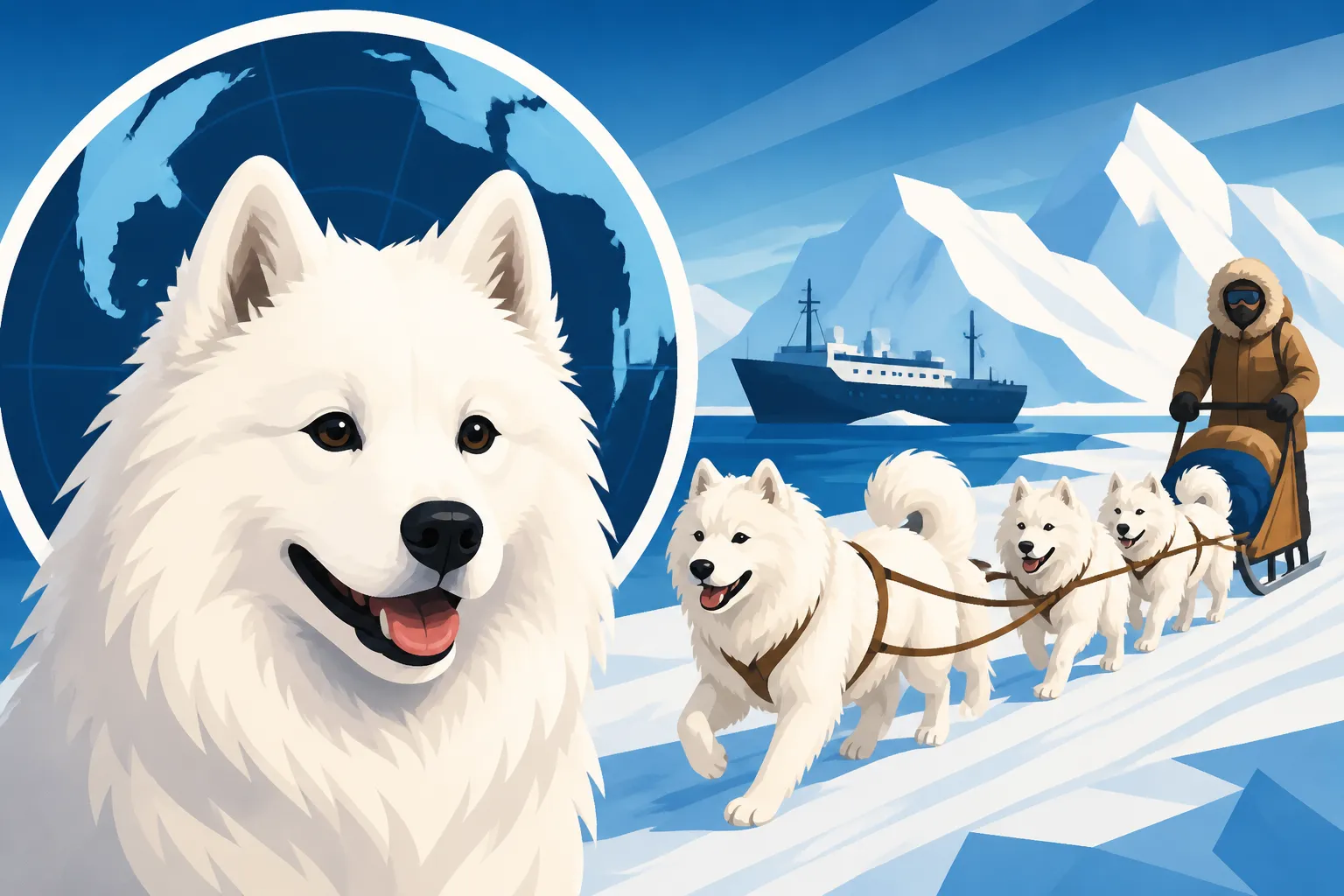
The late 19th and early 20th centuries were an era of intense exploration, with the North and South Poles representing the ultimate unconquered frontiers. For these ambitious expeditions, reliable transportation was paramount. While ponies and even mechanical tractors were tried, nothing proved as consistently effective and adaptable in the brutal polar conditions as sled dogs. And among the various Nordic breeds, the Samoyed quickly rose to prominence, a testament to their inherent strengths perfectly suited for such extreme environments.
Built for the Brutality: Samoyed Physiology in Extreme Cold
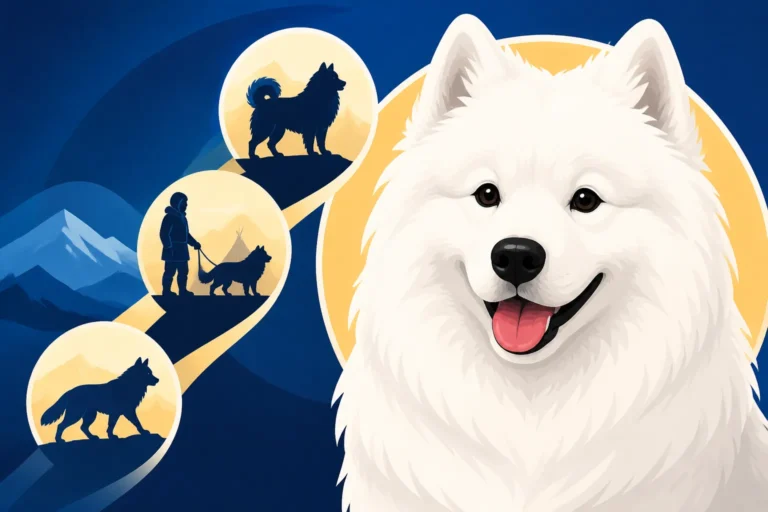
Imagine temperatures plummeting to sixty degrees below zero, relentless winds, and endless stretches of snow and ice. These were the daily realities for polar explorers, and only a creature built from the ground up for such conditions could possibly survive, let alone thrive. The Samoyed's physiology made them uniquely adapted. Their iconic double coat, for instance, isn't just for show; it's a marvel of natural engineering. The soft, dense undercoat provides an incredibly insulating layer, trapping warm air close to the body, while the longer, coarser guard hairs repel snow and ice, keeping the underlying fur dry. This ingenious design allowed them to sleep comfortably in the open, even in blizzards, much like their ancestors did with the Nenets people. How a Samoyed Survives Sixty Below
Beyond their magnificent coats, their physical structure was perfectly suited for pulling heavy loads over difficult terrain. Samoyeds possess powerful, compact bodies with strong bones and well-muscled legs, designed for endurance rather than pure speed. Their broad, fur-covered paws acted like natural snowshoes, providing traction and preventing them from sinking too deeply into soft snow, while also protecting their delicate footpads from frostbite. This combination of insulation, strength, and specialized foot structure meant they could cover vast distances day after day, performing grueling work that would fell lesser animals. The sheer stamina and robustness of these dogs were indispensable for expeditions where every ounce of energy and every mile covered meant the difference between success and catastrophic failure.
More Than Just Muscle: Their Temperament and Teamwork
While physical prowess was non-negotiable, the psychological makeup of the Samoyed proved just as vital. Unlike some other working dogs, Samoyeds possess an inherently gentle, friendly, and cooperative nature. This temperament, honed over centuries of living and working closely with humans – even sharing their tents – made them exceptional companions and team members on long, isolating journeys. The Samoyed Slept in the Tent to Keep People Alive Explorers quickly realized that a dog willing to work with you, rather than constantly testing boundaries, was invaluable for maintaining morale and efficiency.
Their strong pack drive, typically seen within a canine group, extended naturally to their human handlers. This meant they were eager to please and highly motivated by praise and affection, even in the bleakest circumstances. They formed deep bonds with their human companions, offering comfort and companionship in the isolating vastness of the polar regions. This wasn't just about emotional support; it translated directly into better performance. A dog that trusts and loves its handler is a dog that will pull harder, push further, and endure more. The Samoyed’s famous "smile" isn't just a charming facial characteristic; it's a reflection of their generally joyful and optimistic disposition, a trait that surely brought much-needed light to the darkest, coldest days of polar exploration. This willingness to cooperate and their inherent cheerfulness made them not just beasts of burden, but cherished, vital members of the expedition family.
Early Forays: Pioneers and the Arctic Front
Before the dramatic race to the South Pole captured global attention, Samoyeds were already making their mark in the unforgiving stretches of the Arctic. These initial expeditions, often driven by scientific curiosity or the quest for the North Pole, relied heavily on these "smiling dogs" to navigate treacherous landscapes and survive unimaginable conditions. The lessons learned from these early ventures with Samoyeds paved the way for future successes and refined dog-handling techniques.
Nansen's Farthest North: The Fram Expedition
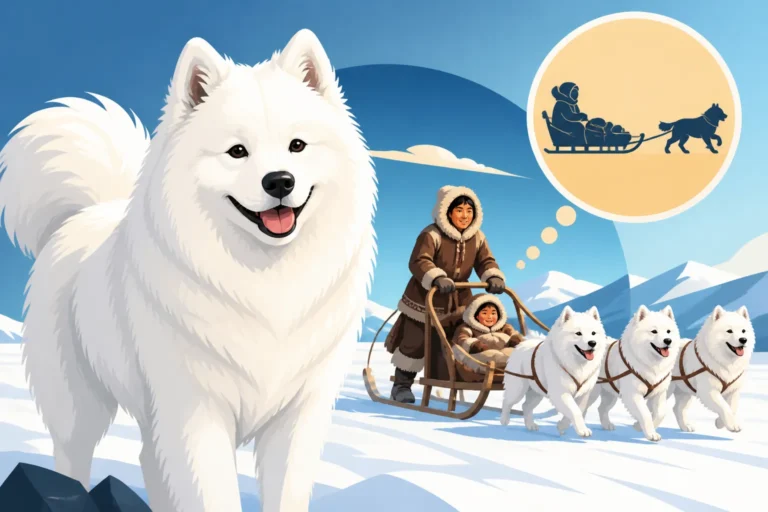
One of the most famous early uses of Samoyeds was during Fridtjof Nansen's groundbreaking "Farthest North" expedition from 1893 to 1896. Nansen, a Norwegian explorer, aimed to drift with the ice across the Arctic Ocean, hoping to reach the North Pole. For this audacious plan, he commissioned the specially built ship, the Fram, and, crucially, he brought a large team of sled dogs, predominantly Samoyeds, which he had acquired from indigenous people in Siberia. He understood that these dogs, descended from those bred by the Nenets of the Yamal Peninsula, were the best equipped for the journey. The Nenets of the Yamal Peninsula Bred the Samoyed
Nansen's strategy for using the dogs was innovative and, at times, controversial. He planned to use them to pull supplies during the early stages of the drift, and then, as food supplies dwindled, he controversially intended to feed weaker dogs to the stronger ones, a harsh reality of survival in the Arctic. When Nansen and his companion Hjalmar Johansen eventually left the Fram to attempt a dash for the Pole on foot and ski, they took a team of 28 dogs. These Samoyeds pulled their sledges laden with provisions over broken ice and through deep snow, often struggling against unimaginable odds. Though they did not reach the North Pole itself, their journey set a new "farthest north" record, and the Samoyeds were instrumental in their survival and arduous return journey across Franz Josef Land. The immense physical demands meant many dogs perished, but the surviving animals were crucial in bringing Nansen and Johansen back to safety, highlighting the extreme sacrifices made by both humans and their canine companions.
Jackson-Harmsworth and the Franz Josef Land Venture
Another significant Arctic expedition that relied on Samoyeds was Frederick George Jackson's Jackson-Harmsworth Arctic Expedition to Franz Josef Land, which spanned from 1894 to 1897. Jackson, a British explorer, aimed to map the uncharted archipelago of Franz Josef Land and conduct scientific research. For his transport needs, he acquired a team of pure white Samoyed dogs, which were relatively new to Western eyes at the time. These particular dogs were purchased from the Russian trader Alexander Trontheim. This expedition is notable for being one of the first times Samoyeds were extensively used by British explorers, laying groundwork for their later fame in Antarctic missions.
The Samoyeds proved invaluable for hauling gear, supplies, and scientific equipment across the rugged, glaciated terrain of Franz Josef Land. The dogs navigated narrow fjords, steep slopes, and vast ice fields, demonstrating their incredible strength and adaptability. Jackson's meticulous records detail the challenges of dog sledding in a region less known for its dog-friendly conditions than the vast, open plains of the Arctic ice cap. Despite harsh weather and difficult travel, the dogs played a crucial role in the successful mapping of the islands and the establishment of a base camp that would later be pivotal. It was during this expedition that Nansen and Johansen, returning from their trek, unexpectedly encountered Jackson's base, a chance meeting made possible, in part, by the network of supply and exploration facilitated by dog teams. The Jackson-Harmsworth expedition truly showcased the Samoyed’s capacity for sustained work in truly remote and hostile environments, and how vital a part they played in getting How Polar Explorers Took Samoyeds Out of Siberia.
The Race to the South Pole: Samoyeds in the Spotlight
The early 20th century saw the focus of polar exploration shift dramatically to the South Pole, culminating in a fierce, globally watched race between two legendary figures: Roald Amundsen and Robert Falcon Scott. In this ultimate test of endurance and strategy, Samoyeds once again found themselves at the very heart of the endeavor, their performance often dictating the success or failure of the entire mission.
Amundsen's Triumph: The Roald Amundsen Expedition
Roald Amundsen, a master strategist and experienced polar explorer from Norway, understood the immense value of sled dogs. He had carefully studied the methods of indigenous peoples and prior expeditions, concluding that dogs were the only reliable means of transport for his audacious plan to reach the South Pole. For his expedition, which departed in 1910, Amundsen amassed a substantial team of dogs, including many hardy Samoyeds, known for their resilience and amiable disposition. Amundsen's Samoyeds He knew their history, tracing back to working reindeer dogs, and their physiological advantages.
Amundsen's approach to dog sledding was systematic and ruthless in its efficiency. He brought 52 dogs, using them to haul immense quantities of supplies to strategically placed depots along his route across the Ross Ice Shelf and up the Axel Heiberg Glacier. He understood that dogs were living, breathing machines that required proper care, but also that they were a consumable resource in the harshest sense. He fed them well when possible and was prepared to cull the weaker animals to feed the stronger ones, a stark but necessary survival tactic in a zero-sum environment. Amundsen himself, along with his companions, personally handled the dog teams, fostering a deep connection and understanding of their capabilities. The Samoyeds, with their incredible stamina and willingness to work, performed flawlessly, pulling the sledges over treacherous sastrugi (sharp, irregular ridges of snow formed by wind) and through blinding blizzards. Their unwavering effort was a cornerstone of Amundsen’s success, allowing his team to reach the South Pole on December 14, 1911, a full month before his British rival. This unparalleled achievement cemented the Samoyed's reputation as the ultimate polar dog.
Scott's Tragic Endeavor: Robert Falcon Scott's Terra Nova Expedition
In stark contrast to Amundsen's dog-centric approach, Robert Falcon Scott, leading the British Terra Nova Expedition (1910-1913), harbored a more complex and, ultimately, less successful view of sled dogs. Scott initially intended to rely on a combination of motorized sledges, ponies, and dogs. While he did acquire a number of dogs, including Samoyeds, his expedition was marked by a lack of experience in dog handling and a philosophical preference for human "man-hauling" over animal power, which he considered more noble. The Samoyeds on Scott's Expedition This decision would have tragic consequences.
Scott brought 33 dogs, many of which were Samoyeds, but his expedition's handlers lacked the deep knowledge and brutal efficiency that characterized Amundsen's team. The dogs were often overworked, underfed, and their dietary needs were not always met appropriately for the extreme caloric demands of polar travel. While the dogs did play a role in laying depots, particularly with their lead dog, Etah, reaching the highest southern latitude with the "Southern Journey" party, their overall contribution was hampered by mismanagement. Tragically, many dogs perished due to exhaustion, starvation, or were shot to feed other dogs and humans when supplies ran critically low. Etah, the Samoyed That Reached the South Pole First The most heart-wrenching aspect was Scott's decision to rely primarily on man-hauling for the final dash to the Pole, a choice that proved fatal. After discovering Amundsen's flag, Scott's demoralized and exhausted party perished on the return journey, a stark reminder of the critical importance of effective animal power in such an environment. The stories of endurance of the dogs, even amidst the mismanagement, are a poignant part of this tragic chapter, highlighting their inherent will to survive and serve, even when their human counterparts made fatal errors.
Beyond the Fabled Races: Other Notable Polar Journeys
While the Amundsen-Scott race remains the most dramatic chapter in polar exploration, the Samoyed's contributions didn't end there. Their unwavering loyalty and unmatched endurance continued to make them indispensable in other significant expeditions, shaping our understanding of the Earth's most remote regions and solidifying their place in history. These later ventures often pivoted from pure conquest to more scientific and exploratory endeavors, but the dogs remained central to success.
Shackleton's Endurance: The Imperial Trans-Antarctic Expedition
Sir Ernest Shackleton’s Imperial Trans-Antarctic Expedition (1914-1917) is a legendary tale of survival against impossible odds, and while not directly about reaching a pole, it prominently featured Samoyed dogs in its early stages. Shackleton aimed to be the first to cross the entire Antarctic continent, and for this monumental task, he understood the necessity of a robust dog team. He assembled a group of 69 sled dogs, a significant number of which were Samoyeds, alongside Greenland huskies and other mixed breeds, purchased with great care. Shackleton's Samoyeds These dogs were considered vital for hauling supplies across the vast ice sheets once his ship, the Endurance, had dropped the shore party.
However, fate had other plans. The Endurance became trapped in the pack ice of the Weddell Sea and was eventually crushed. As the crew and dogs were forced to abandon ship and undertake a desperate journey across the shifting ice, the brutal decisions necessary for survival began. Due to dwindling food supplies and the desperate need to lighten the load on the lifeboats, Shackleton was forced to order the culling of many dogs. The expedition’s dogs, including many Samoyeds, faced an incredibly grim fate, a testament to the harsh realities of survival. While their primary mission was thwarted, the few remaining dogs were crucial in the initial stages of hauling supplies across the ice floes before their tragic sacrifice. The emotional toll of these decisions on the men, who had bonded deeply with their canine companions, speaks volumes about the intrinsic value and companionship these Samoyeds offered in the face of utter desolation. The stories from this expedition often emphasize the human connection, showing how even in such dire circumstances, the loyalty and presence of these dogs offered some measure of comfort.
Byrd's Antarctic Explorations: Dogs in Scientific Endeavors
As the focus of polar expeditions shifted from raw conquest to sustained scientific research and mapping, sled dogs, particularly the steadfast Samoyeds, continued to play a crucial role. Rear Admiral Richard E. Byrd, an American naval officer and explorer, led several significant expeditions to the Antarctic in the mid-20th century, notably during the 1920s, 30s, and 40s. His expeditions established scientific bases and conducted extensive aerial mapping and geological surveys, requiring reliable ground transport.
Byrd’s expeditions utilized large teams of dogs, often a mix of various husky breeds, but Samoyeds were consistently present and highly valued for their endurance, strength, and remarkable ability to withstand the cold. Unlike the "races" of earlier decades, Byrd's missions were about systematic exploration and the establishment of long-term outposts like Little America. The dogs were essential for hauling tons of supplies, fuel, and scientific equipment from ships to inland bases, and for supporting mapping parties traversing vast, unexplored territories. Their incredible resilience meant they could work reliably day after day, sometimes pulling for weeks at a time over hundreds of miles. This era saw a more scientific approach to dog care, with better nutrition and veterinary support, though the conditions remained incredibly challenging. The Samoyeds of Byrd's expeditions continued the legacy of their forebears, proving that even with advancements in technology, the dependable, fur-clad power of a dog team was often the most practical and steadfast solution in the relentless Antarctic environment. Indeed, to this day, the image of a team of dogs pulling a sled remains synonymous with Antarctic exploration, a testament to their enduring service.
The Legacy: What We Learned from Samoyeds in the Poles
The stories of Samoyeds in polar exploration are not just footnotes in history; they are integral narratives that shaped our understanding of human-animal cooperation, extreme survival, and the indomitable spirit of a breed. These expeditions forever etched the Samoyed into the global consciousness as a symbol of resilience, loyalty, and the sheer power of nature's finest engineers.
The Human-Canine Bond Under Duress
Perhaps one of the most profound legacies of the Samoyeds' involvement in polar expeditions is the deep, often unspoken, bond that formed between these dogs and their human companions. In the desolate, brutal isolation of the Arctic and Antarctic, where danger lurked around every sastrugi and morale could plummet with the temperature, the dogs were more than just transport. They were colleagues, confidantes, and often, the only source of warmth and companionship for months on end. Explorers’ journals are filled with references to their dogs’ individual personalities, their courage, and the heartbreaking decisions that sometimes had to be made regarding their welfare. This relationship was not one-sided; the dogs relied entirely on their handlers for food, shelter, and direction.
The incredible loyalty displayed by Samoyeds, even when facing extreme hardship, created an unbreakable trust. They worked tirelessly, often without complaint, pushing their limits in service to their human pack. This profound mutual reliance, born of shared struggle and survival, showed the true depth of the human-canine connection. It taught explorers the importance of empathetic leadership, consistent care, and acknowledging the dogs not just as tools, but as sentient beings with their own limits and needs. These powerful bonds forged in the crucible of ice remain a testament to the special place dogs hold in our hearts, reminding us that even in the most perilous situations, the simple presence of a devoted animal can be a lifeline. Many modern Samoyed owners can relate to this deep connection, perhaps finding high-quality dog gear and food (even from retailers like Chewy) to honor this legacy of care and companionship.
A Breed Forged in Ice: How Expeditions Shaped the Samoyed's Reputation
The relentless visibility of Samoyeds in the most daring polar expeditions of the early 20th century catapulted the breed from relative obscurity in Siberia to global renown. Before these expeditions, few outside of northern Russia and Scandinavia had truly encountered these majestic white dogs. Suddenly, photographs and accounts of their incredible feats appeared in newspapers and books worldwide. How a Samoyed Hides Illness Behind a Smile The image of the Samoyed, pulling sleds through blizzards with their characteristic "smile," became synonymous with Arctic heroism and Antarctic perseverance. This exposure was instrumental in their establishment as a distinct and admired breed in Western cultures.
This public perception, forged in the crucible of ice and courage, shaped the Samoyed’s reputation as hardy, intelligent, and supremely adaptable animals. It highlighted their endurance and amiable disposition, proving them capable of both the toughest work and the gentlest companionship. Expeditions like those of Amundsen and Scott brought the breed to the forefront, leading to increased interest in them as companion animals. What Happened to the Samoyed Etah After the Expedition Today, when we admire a Samoyed's thick coat or marvel at their boundless energy, we are seeing the direct descendants of those brave dogs who journeyed to the ends of the Earth. Their history as polar explorers is not just a fascinating historical anecdote; it is the very foundation of their identity, contributing to their enduring appeal and the deep respect they command from dog lovers around the globe. This legacy means that today's Samoyed owners often seek out the best for their dogs, from nutritious food to engaging toys, perhaps even ordering their supplies from a convenient source like Chewy, ensuring these magnificent animals continue to thrive, even if their "expeditions" are now just to the local park.
| Expedition (Years) | Primary Explorer | Region Explored | Samoyed Role | Outcome for Dogs (General) |
|---|---|---|---|---|
| Nansen's Fram (1893-1896) | Fridtjof Nansen | Arctic | Pulling sledges for record "farthest north" attempt | Many culled for food or perished from hardship; crucial for Nansen's survival. |
| Jackson-Harmsworth (1894-1897) | Frederick G. Jackson | Arctic | Hauling supplies for mapping Franz Josef Land | Worked reliably; conditions difficult but vital for scientific and mapping success. |
| Amundsen's South Pole (1910-1912) | Roald Amundsen | Antarctic | Primary transport for successful South Pole dash | Used efficiently, with some culled for food; key to Amundsen's triumph. |
| Scott's Terra Nova (1910-1913) | Robert Falcon Scott | Antarctic | Depot laying, but overall mismanaged | Many perished due to mismanagement, starvation, and overwork; critical despite issues. |
| Shackleton's Endurance (1914-1917) | Ernest Shackleton | Antarctic | Initial transport for continental crossing attempt | Many culled when ship lost to ice; tragic but necessary for human survival. |
| Byrd's Expeditions (1928-1950s) | Richard E. Byrd | Antarctic | Hauling supplies for scientific bases and surveys | Integral to establishing bases and conducting research; sustained use over decades. |
Disclaimer
This article is for general informational purposes only and does not constitute professional advice. Laws, prices and regulations vary by location and change over time. Consult a qualified professional for guidance on your specific situation.