How a Samoyed Gets Out of Anything You Build
Ah, the Samoyed. That beautiful, fluffy cloud of a dog with the perpetual smile that melts your heart… and distracts you while they plot their next great escape. If you've ever found yourself wondering how your seemingly sweet Sammy managed to get out of a yard you swore was Fort Knox, you're not alone. This guide is for every Samoyed parent who's felt that gut-wrenching panic when their fluffy white shadow suddenly isn't where they're supposed to be, and it's here to help you understand why they do it and how to build defenses that actually stand a chance.
Understanding the Samoyed Escape Artist Mindset
Let's be real, a Samoyed isn't just looking for a walk around the block; they're often on a grand adventure. Their desire to roam isn't a sign of disloyalty or that they don't love you; it's deeply ingrained in their very being. Understanding this fundamental drive is the first step in figuring out how to keep them safe and sound.
The Call of the Wild and the Wanderlust Instinct
Samoyeds come from a long line of working dogs, bred for vast, open tundras where they herded reindeer and pulled sleds over incredible distances. Their ancestors weren't confined to a suburban backyard or a meticulously fenced acreage. They were free to roam, explore, and follow interesting scents for miles. This inherent wanderlust is still very much alive in your modern Samoyed. It's not just a casual stroll they're seeking; it's an exploration, a quest, a journey to see what's beyond the horizon. When a captivating smell wafts by, perhaps a rabbit or another dog, that ancestral urge to track and investigate kicks in with surprising force.
Think about it from their perspective: the world is a giant, exciting playground, and every new smell tells a story. Why would they stay put when there's an epic tale unfolding just beyond the fence? This is why a Samoyed's recall often "goes deaf" when they're truly captivated by something. Their brains are wired for independence and pursuit, making them notoriously challenging to keep contained if they set their mind to it. This isn't naughtiness; it's their heritage.
Intelligence, Independence, and Problem-Solving
You know how clever your Samoyed is. They're not just beautiful; they're incredibly intelligent and, crucially, independent thinkers. Unlike some breeds that live to please their human, Samoyeds are often more interested in pleasing themselves. This combination makes them formidable escape artists. If a fence or a gate presents a challenge, their minds immediately start working on a solution. They observe, they experiment, and they learn quickly.
A Samoyed will notice that loose board in the fence, the gate that doesn't quite latch right, or the spot where the dirt is softest for digging. They'll try pushing, nudging, scratching, and testing boundaries. And once they find a weakness, they exploit it repeatedly. It's like having a fluffy Houdini in your backyard, constantly assessing the structural integrity of your containment efforts. They truly believe they are capable of anything, and often, they're right. The Samoyed That Wakes the Neighbors might also be the Samoyed that figured out how to open the back door.
Boredom and the Search for Stimulation
A bored Samoyed is a destructive Samoyed, and more often than not, an escaping Samoyed. These dogs are intelligent and need mental and physical stimulation to thrive. If they're left alone in a backyard with nothing to do for hours on end, their creative minds will inevitably turn to finding entertainment – and that often means finding a way out. They might not even be trying to run away from home; they're simply trying to find something more interesting to do than stare at the same four walls (or fence panels).
Imagine being cooped up all day with nothing but your thoughts. You'd probably start looking for a project, wouldn't you? For a Samoyed, that project might be digging to China, scaling the fence, or methodically dismantling their crate. A lack of regular exercise, engaging toys, interactive play with their family, or even just consistent attention can fuel their escape drive. They aren't trying to spite you; they're simply responding to an unmet need for engagement.
Fences: More Like Suggestions Than Barriers
So, you think you've got a secure fence? That's what many Samoyed owners thought, right up until their fluffy escape artist waved goodbye over the top. When it comes to Samoyeds, a standard fence is often just the first step in a very determined game of canine chess.
The Vertical Challenge: Jumping and Climbing
It's astonishing what a Samoyed can accomplish when motivated. Many owners are shocked to learn that their seemingly grounded dog can clear a fence with surprising agility. For some, it's a sheer vertical leap; for others, it's a more strategic climb. They'll find purchase with their paws on chain-link, use their strength to pull themselves up, or even leverage objects placed too close to the fence line, like firewood stacks, trash cans, or dog houses, as launchpads. How High a Samoyed Can Jump a Fence is often higher than you'd ever expect.
A six-foot fence, which is considered standard for many larger breeds, might still be penetrable by a truly determined or athletic Samoyed. Some have been known to scale even taller barriers, especially if they have a rough texture or horizontal supports they can use for grip. If your Samoyed is known for their athletic prowess or has shown an interest in scaling obstacles, you might need to consider modifications beyond just height, such as angled fence extensions that lean inwards, making it impossible for them to get a foothold over the top.
The Horizontal Threat: Digging Underneath
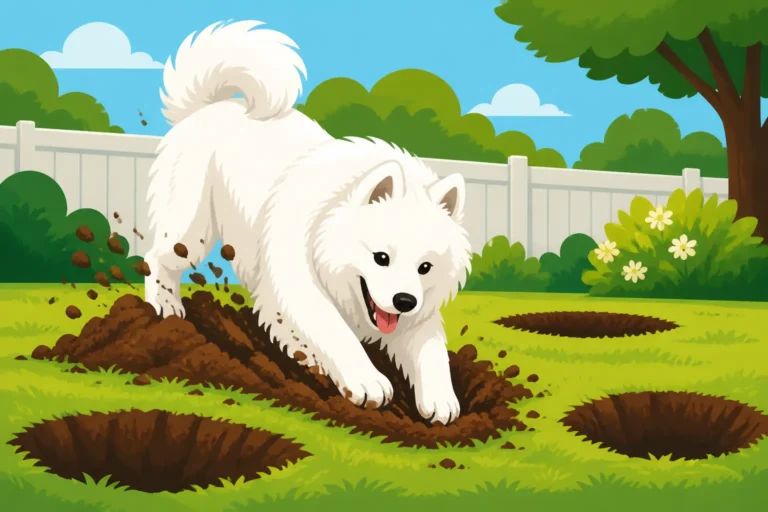
If they can't go over, they'll go under. This is a Samoyed's mantra, especially when the weather heats up and they're looking for a cool spot. Digging is an instinctive behavior for Samoyeds, deeply tied to their heritage. They dug dens for shelter, dug through snow to find food, and still dig today to create cool hollows in the summer heat. Why a Samoyed Digs to Stay Cool is a powerful motivator. A perfectly sound fence from a vertical perspective can be completely useless if the ground beneath it isn't secured.
A Samoyed will start by testing the perimeter, finding the softest soil, or the spot where a previous hole was filled. They are incredibly persistent, and a small start can quickly become a tunnel. To combat this, burying wire mesh or concrete along the fence line, extending inwards into the yard, can create a "dig guard." Even large rocks or heavy pavers can be used, though a truly dedicated digger might just move them. It's not enough to simply fill in holes; you have to make it physically impossible for them to start digging in the first place, creating a barrier that goes deep into the earth.
The Clever Latch: Outsmarting Security
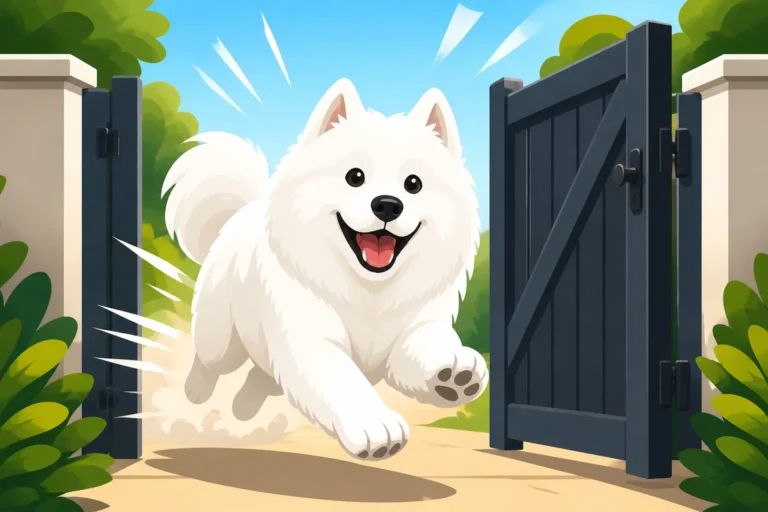
This is where their intelligence truly shines (or frustrates, depending on your perspective!). Many Samoyeds have figured out how to open gate latches with surprising ease. A simple slide bolt or a spring-loaded latch can be no match for a determined Samoyed paw or nose. They watch you, they learn, and they experiment. Before you know it, your perfectly installed gate is no longer a barrier.
I've heard countless stories of Samoyeds standing on their hind legs, batting at a latch until it gives way, or even nudging a gate open with their nose after observing how it swings. Some can even manipulate lever handles. You need hardware that requires a complex motion or significant dexterity that a dog simply doesn't possess. Double-sided latches, padlocks, or heavy-duty, upward-opening gate latches are much more effective. Make sure there's no way they can "accidentally" lean on it or push it open. Remember, a Samoyed is always watching and learning, so what seems secure to you might just be a puzzle waiting to be solved for them.
Beyond the Yard: Indoor Escapes and Management
It's not just the backyard that needs to be escape-proof. Many Samoyeds are just as adept at finding their way out of the house or even out of their crates. Their desire for companionship and exploration doesn't stop at the backdoor.
Door Dashers and Gate Crashers
Few things are as heart-stopping as opening your front door just a crack to grab the mail, only to find your Samoyed has already squeezed past you and is halfway down the street. Samoyeds are notorious door dashers. Their desire to be with you, or to simply explore the exciting world beyond the threshold, means they often have little regard for polite exits. They learn quickly that an open door equals freedom and a potential adventure. The Samoyed That Bolts Through an Open Door can become a recurring nightmare if not addressed.
Management here is key. Training a "wait" or "stay" command at the door is crucial, but it needs to be practiced relentlessly and proofed in various situations. Baby gates or tall safety gates can be lifesavers, creating a secondary barrier between your Samoyed and the outside world. Consider a double-entry system if your home allows, where you have a small enclosed porch or entryway that functions as a safety zone. Even then, you need to be vigilant. Never assume your Samoyed won't try to make a break for it; always operate as if they are poised to bolt the moment the opportunity arises.
Crate Conundrums: When the Crate Isn't Enough
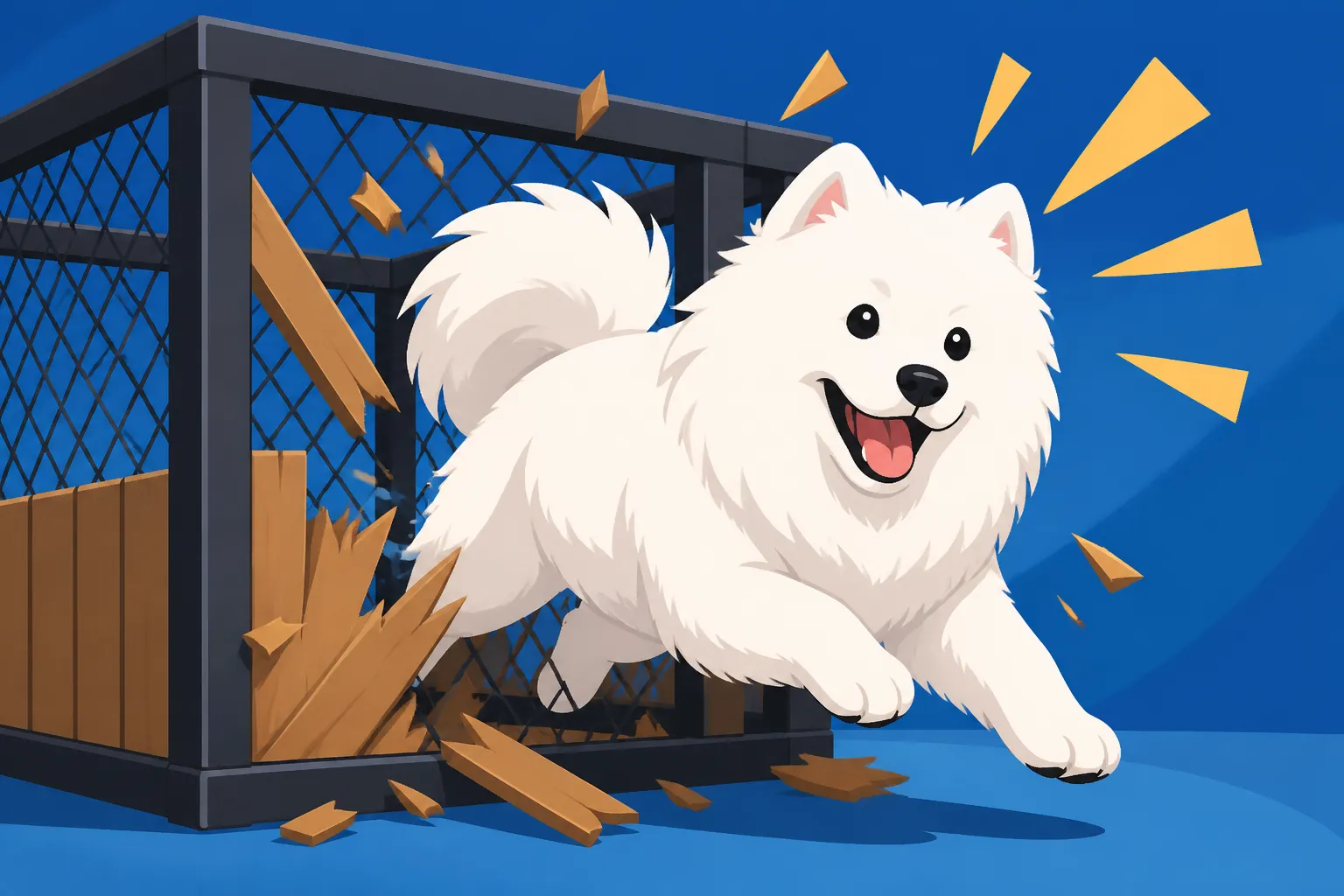
Crates can be invaluable tools for house training and providing a safe den, but for an intelligent and determined Samoyed, a standard wire crate can sometimes be less of a secure space and more of a temporary challenge. Some Samoyeds, especially if suffering from separation anxiety or severe boredom, will go to extreme lengths to get out. They can bend wire, force open latches, or even injure themselves in their attempts to escape.
If your Samoyed views their crate as a prison rather than a sanctuary, you've got a problem. This isn't a behavior to punish, but rather to understand and address. Heavy-duty, reinforced crates designed for powerful breeds or anxious dogs might be necessary. Some owners even resort to custom-built crates or using a large, secure room as a "crate." Look for models with multiple, strong latches and thick wire or solid panels. Plastic crates can be chewed through, and flimsy wire crates easily compromised. The key is to make the crate a positive space, filled with comfortable bedding and puzzle toys, and never to use it as a punishment. If your Samoyed is showing true distress in the crate, consult a professional trainer or veterinary behaviorist.
Proactive Prevention: Building a Samoyed-Proof Environment
Knowing why they escape is one thing; actually preventing it is another. It takes consistent effort, a keen eye for potential weaknesses, and sometimes, a significant investment. But the peace of mind knowing your beloved Sammy is safe is priceless.
Reinforcing Your Outdoor Perimeter
Creating a truly Samoyed-proof yard requires thinking like a Samoyed. They'll find any weakness, so you need to be one step ahead. Start with a visual inspection of your entire fence line from your dog's perspective. Are there any spots where they could dig under? Is the fence tall enough? Are there any objects near the fence they could use to climb?
For digging, consider a "L" footer or "skirt" around the base of your fence. This involves burying wire mesh (like hardware cloth, which you can find on Amazon) or chicken wire horizontally, extending about 12-18 inches inward from the fence line, and burying it 6-12 inches deep. This way, if they start to dig, they hit the wire and are deterred. Alternatively, you can lay concrete pavers or large flat rocks directly at the base of the fence, extending outwards. For climbing, ensure your fence is at least six feet tall, and ideally smooth, without horizontal rails on the inside that provide footholds. You might consider "coyote rollers" (spinning rods placed on top of the fence) or angled extensions that point inward. For gates, ditch the simple hooks or slide bolts. Invest in heavy-duty, locking latches that require two separate actions to open or can be secured with a padlock. Remember What a Six Foot Fence Costs a Samoyed Owner and factor these reinforcements into your budget from the start.
| Escape Route | Common Weakness for Samoyeds | Effective Reinforcement Strategy |
|---|---|---|
| Jumping/Climbing | Standard 4-5ft height, horizontal rails, nearby objects | 6ft+ height, smooth fence material, angled extensions, remove climbable objects |
| Digging Under | Soft soil at fence base, gaps under fence | Buried wire mesh (L-footer), concrete pavers, rock barrier at base |
| Gate Latches | Simple slide bolts, spring-loaded latches | Double-sided locking latches, padlocks, complex gate hardware |
| Door Dashing | Unsecured doors, lack of "stay" training | Baby gates, robust "wait" training, double-entry systems, tethering |
| Crate Escape | Flimsy wire, weak latches, plastic construction | Heavy-duty reinforced crates, multiple strong latches, crate training |
Securing Your Home's Interior
Even indoors, a Samoyed's ingenuity can surprise you. Beyond the front door, consider other vulnerabilities. Many Samoyeds have figured out how to open interior doors with lever handles, leading to mischief in forbidden rooms or even an accidental escape through a poorly secured back door. Childproof door handle covers can often deter them, as can simple barrel bolts or hook-and-eye latches placed out of their reach.
Windows can also pose a risk. If your Samoyed is strong enough to push open an unsecured window, or if screens are flimsy, they might make a break for it. Ensure windows are securely latched or use window locks. Beyond physical barriers, consider the environment inside. Is your Samoyed getting enough mental stimulation indoors? Puzzle toys, treat-dispensing toys, and short training sessions throughout the day can help prevent boredom-driven escape attempts. Leaving on a radio or dog-friendly TV channel can also help with separation anxiety, which often contributes to escape behavior. Think about their comfort: do they have a Cooling Mat Helps a Samoyed if they're too warm and trying to dig for coolness?
Training as Your Strongest Line of Defense
While physical barriers are essential, the most reliable "fence" you can build around your Samoyed is a strong bond and consistent training. This doesn't mean breaking their spirit; it means teaching them boundaries and giving them reasons to choose to stay with you.
The Indispensable Reliable Recall
A bulletproof recall is arguably the single most important command for a Samoyed, especially given their wanderlust. This isn't just about calling them back in the yard; it's about having them respond reliably even in distracting environments. For a Samoyed, this takes dedication, high-value treats, and endless repetition. Their independent nature means they'll weigh their options: "Is what Mom has better than that squirrel?" You need to make sure the answer is always unequivocally "yes!" Why a Samoyed's Recall Cannot Be Trusted if not consistently reinforced with irresistible rewards.
Start recall training in a low-distraction environment, like your living room or a securely fenced yard. Use a happy, excited tone and reward immediately and generously when they come. Gradually increase distractions, using a long line for safety in open spaces. Always make coming to you the most rewarding thing they can do, whether it's for a delicious piece of chicken, a favorite squeaky toy, or enthusiastic praise. Companies like BAXTER & Bella offer online puppy and dog training programs that emphasize positive reinforcement and building a strong foundation for commands like recall, providing structured lessons you can follow at home. Remember, a Samoyed doesn't see recall as an imperative; they see it as an invitation. Make it an invitation they can't refuse.
Mental and Physical Enrichment to Reduce Escape Drive
A tired Samoyed is a well-behaved Samoyed, and a mentally stimulated Samoyed is less likely to be looking for trouble. These dogs require significant physical exercise to burn off their energy. Daily long walks, runs, hikes, or even opportunities for controlled off-leash play in a truly secure area are vital. But it's not just about physical exertion; their intelligent brains need a workout too.
Puzzle toys, snuffle mats, and obedience training sessions can provide much-needed mental stimulation. Consider activities like scent work, agility, or even trick training. These activities engage their problem-solving skills and give them a "job" to do, fulfilling that innate drive to work that their ancestors had. A Samoyed who feels fulfilled and adequately exercised is much less likely to seek out their own (often destructive) entertainment by escaping. Remember, consistent enrichment isn't just a luxury; it's a necessity for their well-being and your peace of mind.
The Lifeline: Backup Measures and Emergency Preparedness
Even with the best fences and most diligent training, accidents happen. Gates get left ajar, a sudden loud noise might spook them, or they might find that one weak spot you missed. Having backup measures in place can make all the difference in quickly and safely reuniting with your Samoyed.
Microchipping and GPS Tracking Devices
Every Samoyed should be microchipped. It's a tiny, permanent form of identification that can be a lifesaver if they're found and taken to a shelter or vet clinic. Ensure your microchip registration information is always up-to-date with your current address and phone number. This simple step vastly increases the chances of a happy reunion.
Beyond microchipping, consider a GPS tracking collar. These devices, often small and lightweight, attach to your dog's regular collar and allow you to track their location in real-time via a smartphone app. Many brands are available on Amazon. This can be invaluable if your Samoyed is a known escape artist or if you live in an area with a lot of open space where they could easily wander out of sight. While they come with a subscription fee and require charging, the peace of mind they offer is immeasurable. Whether a GPS Collar Is Worth It for a Samoyed is a question many owners answer with a resounding yes, especially after a close call. It's an active layer of protection that goes beyond passive identification.
Community Alert Systems and What to Do If Your Samoyed Gets Out
Prepare for the worst-case scenario. If your Samoyed does get out, having a plan can save critical time. Start by alerting your immediate neighbors, especially those with children or other pets who might see your dog. Many communities have local lost pet Facebook groups or Nextdoor forums that can spread the word rapidly. Have a clear, recent photo of your Samoyed readily available to share.
When searching, start with a wide perimeter around your home, checking common routes or areas of interest like parks, schoolyards, or even construction sites. Samoyeds can travel surprisingly far, surprisingly fast. Leave out a familiar blanket, their favorite toy, or even your unwashed clothes near the point of escape; your scent might help guide them home. If your Samoyed is friendly, ask people to call them over rather than chase them, as chasing can frighten them further away. If your Samoyed is shy, instruct people to sit down quietly and let the dog approach on its own terms. Most importantly, don't give up hope. Their beautiful, fluffy coats and friendly demeanor often mean they are quickly noticed by kind strangers looking to help.
The Psychological Aspect: What Drives the Escape Artist
Understanding the deeper psychological underpinnings of your Samoyed's escape behaviors can help you address the root causes, not just the symptoms. It’s not just about building a taller fence; it's about building a better relationship and a more fulfilling life for your dog.
Addressing Anxiety and Over-Excitement
Sometimes, an escape isn't driven by boredom or wanderlust, but by anxiety or over-excitement. A Samoyed with separation anxiety might try to escape their containment not to explore, but to find you. This can manifest as frantic digging, chewing through crates, or incessant barking and howling. Similarly, extreme over-excitement at the sight of another dog, a person, or a squirrel can override all training and propel them to leap a fence or dart out an open door. These dogs aren't being "bad"; they're reacting to powerful emotional states.
If you suspect anxiety, observe when the escape attempts occur. Are they only when you leave? Are there other signs of distress like destructive chewing, inappropriate urination, or excessive vocalization? Addressing anxiety often requires a multi-pronged approach, including counter-conditioning, desensitization, and sometimes even professional guidance from a veterinary behaviorist. For over-excitement, management is key – controlling exposure to triggers, teaching impulse control, and providing alternative outlets for their energy. A calm, confident Samoyed is less likely to be a frantic escape artist.
The Bond of Trust: Why Your Samoyed Needs You
Ultimately, keeping your Samoyed safe and contained comes down to the bond of trust and respect you build with them. A Samoyed who feels loved, understood, and has their needs met (for exercise, mental stimulation, and companionship) is less likely to feel the overwhelming urge to seek fulfillment elsewhere. When they trust that you are their source of joy and adventure, they are more inclined to stay by your side.
This means spending quality time with them, engaging in activities they love, and being their consistent leader and protector. It's about more than just providing food and shelter; it's about building a partnership. When your Samoyed looks to you for guidance and reassurance, they are less likely to make impulsive decisions that could put them in danger. This powerful connection is the strongest barrier you can ever hope to build against their natural escape artist tendencies.
Disclaimer
This article is for general informational purposes only and does not constitute professional advice. Laws, prices and regulations vary by location and change over time. Consult a qualified professional for guidance on your specific situation.