Why a Samoyed Howls
That distinctive, haunting sound – the Samoyed howl – can be incredibly charming when it’s a playful greeting, but it quickly loses its appeal when it's waking the neighbors at 3 AM or signaling deep distress. If you’ve found yourself wondering why your beautiful, fluffy companion has suddenly decided to channel their inner wolf, you're not alone. This guide will delve into the deep-rooted reasons behind Samoyed howling and offer practical, empathetic strategies to understand and manage this unique vocalization.
Ancestral Roots and the Samoyed's Voice
Samoyeds are ancient dogs, bred for millennia by the Nenets people in Siberia to herd reindeer, pull sleds, and even sleep in their owners' tents for warmth. This deep history has gifted them with incredible resilience, intelligence, and a rather unique vocal repertoire that often includes howling. It's not just a cute quirk; it's a fundamental part of who they are, woven into their very DNA.
Echoes of the Pack: Wolf Ancestry
When your Samoyed throws back its head and lets out a long, mournful howl, you're hearing echoes of its distant wolf ancestors. Howling is a primal form of communication, a way for canids to signal their presence, call to their pack members, or announce territory across vast distances. Unlike barking, which tends to be more localized and immediate, a howl is designed to carry far and wide. For a breed like the Samoyed, who thrived in open, expansive landscapes, this ability to broadcast their voice was invaluable. It allowed them to stay connected with their nomadic human families or other dogs in their working team, even when out of sight.
It’s easy to forget that underneath all that fluffy white coat and smiling face, there's a highly intelligent, independent animal with deeply ingrained instincts. Modern Samoyeds might live in suburban homes or city apartments, far removed from the icy tundras of their origins, but those ancient communication patterns persist. They haven't had them bred out, nor should they be, as they are part of the breed's unique charm and heritage. Understanding this genetic predisposition is the first step in approaching their howling with patience and a clear strategy. For more on their vocalizations, see What a Samoyed Sounds Like When It Talks.
A Call Across the Tundra: Their Original "Job"
The Samoyed's original purpose was multifaceted, requiring strong bonds with their human companions and effective communication within their working group. Imagine working in vast, snowy plains, where visibility might be low, and the wind carries sounds far. A bark might be lost, but a sustained howl cuts through the elements. It was a way to alert others to their location, signal danger, or even express excitement at a successful herding maneuver.
This "call across the tundra" wasn't just about warning; it was about connection. When a Samoyed howls, it’s often an attempt to re-establish that connection, whether it's with you, another dog, or even in response to a sound they perceive as a "call" from afar. This inherent need to communicate is why simply punishing howling rarely works long-term; you're stifling a natural impulse without addressing the underlying reason or providing an alternative. Think of it less as a nuisance and more as a very old, very effective form of long-distance communication that they're still trying to use in a world that no longer requires it.
Communication Central: What Your Samoyed is Trying to Tell You
While howling is a natural Samoyed trait, it's never just random noise. Your dog is always trying to communicate something. The key to managing it is becoming a detective, listening not just to the sound, but also observing when it happens and what else is going on around your dog. Their reasons can range from the mundane to the genuinely concerning.
Seeking Attention: "Look at Me!"
This is perhaps one of the most common reasons for howling in a pampered Samoyed. If they've learned that a long, mournful sound brings you running, even if it's just to tell them to be quiet, they've successfully achieved their goal: attention. This can manifest if they want to play, need to go outside, are hungry, or simply feel like they haven't been the center of your universe for the last five minutes.
For example, your Samoyed might be lying quietly, you walk into another room, and suddenly, the howls begin. You rush back, worried, and they greet you with a happy tail wag and that classic "Samoyed smile." Mission accomplished. They’ve trained you! This behavior is particularly common if they're not getting enough mental stimulation or focused interaction throughout the day. A quick review of What Actually Motivates a Samoyed might offer insights into redirecting this attention-seeking behavior.
Expressing Loneliness or Anxiety: "Where Are You?"
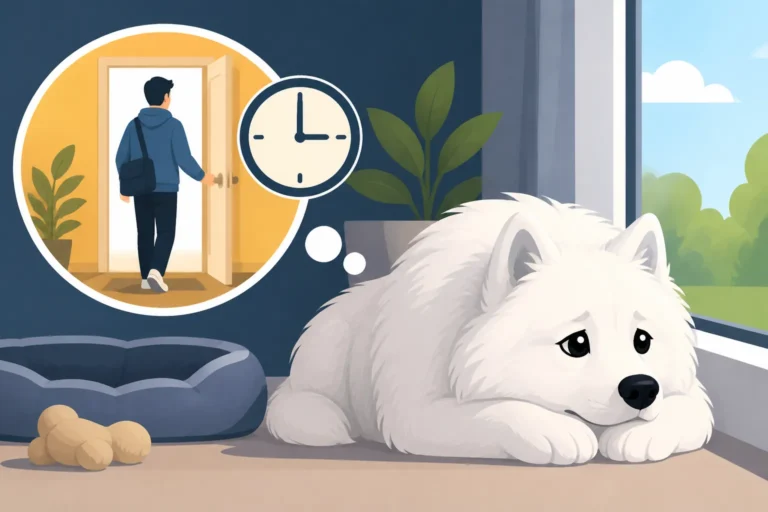
Samoyeds are incredibly social creatures who thrive on companionship. They were bred to live and work closely with their human families. Being left alone for extended periods can trigger feelings of loneliness, boredom, or even full-blown separation anxiety. In these cases, howling becomes a plea, a desperate attempt to call their "pack" home. This kind of howling is often accompanied by other signs of distress, such as pacing, destructive chewing, or inappropriate urination.
This can be incredibly heartbreaking to witness, especially if you have to leave them for work. A dog who seems perfectly fine when you're home might become a completely different animal when left alone. Remote pet cameras, easily found on Amazon, can be invaluable here to observe their behavior when you're away and confirm if loneliness is the root cause. This information is crucial for formulating a plan to help them cope. For more on this, consider reading Separation Anxiety in a Samoyed.
Responding to Environmental Cues: "Hear That?"
Samoyeds have excellent hearing, and certain sounds act like a siren call to their ancient instincts. Sirens from emergency vehicles, the howl of another dog in the neighborhood, a distant train whistle, or even certain musical notes can trigger an empathetic or responsive howl. They aren't necessarily distressed; they're simply joining in, responding to what they perceive as another "pack member" making noise.
Think of it like a ripple effect. One dog starts, and then another, and soon your Samoyed feels compelled to contribute their own voice to the chorus. This isn't usually problematic unless it becomes excessive or occurs at inappropriate times, like late at night. Often, these are short-lived responses that fade once the offending sound passes.
Joy and Excitement: "Happy to See You!"
Not all howling is a cry for help or attention. Sometimes, it's pure, unadulterated joy! Many Samoyeds will let out happy, excited howls when their favorite human comes home, when they see their leash, or when they anticipate something wonderful, like mealtime or a car ride. These howls are usually accompanied by a wagging tail, a bouncing body, and that characteristic Samoyed smile.
This is often a delightful sound, a clear expression of their immense happiness. While it can sometimes be a bit loud, especially if you live in close quarters, it’s generally not a behavior that needs to be "fixed," as it’s a positive emotional outlet. The key is to differentiate this joyful vocalization from howls born of distress or frustration.
Pain or Discomfort: "Something's Wrong"
While less common, howling can sometimes be a sign of physical pain, discomfort, or illness. If your Samoyed suddenly starts howling more than usual, or if their howling seems more mournful and less responsive to typical cues, it's crucial to consider their health. This might be accompanied by other subtle changes in behavior, such as lethargy, loss of appetite, changes in gait, or reluctance to be touched.
Any sudden, unexplained change in vocalization warrants a trip to the vet. Samoyeds are incredibly stoic animals and often hide illness until it's quite advanced, but a change in their typical communication patterns can be an early indicator that something is amiss. Always rule out medical issues first when dealing with new or escalating behaviors. For insights into their stoicism, read How a Samoyed Hides Illness Behind a Smile.
Managing the Melody: Practical Approaches to Samoyed Howling
Now that we've explored why your Samoyed might be howling, let's talk about what you can actually do about it. Remember, consistency and patience are your best friends. These are intelligent dogs, but they need clear guidance and understanding.
Understanding the "Why": Observation is Key
Before you can tackle the howling, you have to understand its trigger. This goes back to our detective work. Keep a journal for a few days:
- When does the howling occur? (Morning, evening, when you leave, when a specific sound happens?)
- What are you doing or not doing immediately before? (Ignoring them, preparing food, leaving the house?)
- What is happening in the environment? (Siren, other dogs, postal carrier?)
- What is your Samoyed's body language? (Excited, anxious, calm, attention-seeking?)
- How long does it last?
This data will be invaluable. If you notice a pattern – for instance, howling starts exactly five minutes after you leave for work – you can pinpoint separation anxiety as a likely culprit. If it's only when the ice cream truck comes by, it's an environmental response. This understanding directly informs your chosen strategy.
Training for Quiet: Positive Reinforcement
Once you know the trigger, you can start to train. For attention-seeking or purely responsive howling, positive reinforcement is incredibly effective. The goal is to teach your Samoyed an alternative behavior or to associate quiet with rewards.
- "Quiet" Cue: When your Samoyed starts to howl, let them howl for a brief moment (just enough to identify the sound), then say "Quiet" firmly. As soon as they stop, even for a second, immediately reward them with a high-value treat and enthusiastic praise. Gradually increase the duration of silence required before the reward. This teaches them that silence, not howling, earns good things. Websites like BAXTER & Bella offer excellent online training resources that can guide you through these steps with positive reinforcement methods.
- Redirecting Attention: If howling is for attention, ignore the howl completely. Turn your back, walk out of the room, or stop what you're doing. The moment they are quiet, then give them attention. This breaks the link between howling and getting what they want.
- Desensitization: For environmental triggers, slowly expose them to the sound at a very low volume and reward them for staying quiet. Gradually increase the volume over time. This takes time and patience but can be very effective.
Remember, consistency is paramount. Everyone in the household needs to be on the same page. If one person gives attention for howling, it undermines all your efforts. See How a Samoyed Responds to Praise for more tips on effective reward systems.
Enrichment and Exercise: Tiring Them Out
A bored or under-exercised Samoyed is a vocal Samoyed. These dogs are intelligent and energetic; they need both physical and mental stimulation to be content. If they're howling from sheer boredom, they're telling you they need a job.
- Physical Exercise: Ensure they get ample exercise every day. For an adult Samoyed, this means more than just a quick walk around the block. Think long walks, jogs, off-leash play (in a secure area), or even activities like Whether a Samoyed Enjoys Skijoring or Whether a Samoyed Suits Bikejoring. A tired Samoyed is generally a quieter Samoyed.
- Mental Stimulation: Puzzle toys, Kongs stuffed with frozen treats, scent work, or short training sessions can engage their minds. Even simply rotating their toys can keep them more interested. You can find a huge variety of these toys on Amazon.
- Chew Toys: Provide durable chew toys to redirect their energy and give them something appropriate to do with their mouths.
- Training Classes: Enrollment in obedience or even fun agility classes can provide both mental and physical outlets, as well as strengthening your bond. Whether a Samoyed Can Compete in Obedience explores their suitability for such activities.
For a deeper dive into their daily needs, consider How Much Exercise a Samoyed Needs and The Job a Samoyed Actually Needs.
Addressing Separation Anxiety: Building Independence
If your Samoyed's howling is indeed rooted in separation anxiety, this requires a more structured approach. Simply ignoring it won't work, as the dog is genuinely distressed.
- Gradual Departures: Start with very short absences. Leave the room for a few seconds, return before they start howling, and reward them. Gradually increase the time you're out of sight. The goal is for them to learn that you always come back.
- Pre-Departure Cues: Avoid making a big fuss when you leave or return. This can heighten their anxiety. Keep departures and arrivals calm and low-key.
- Safe Space: Create a comfortable, secure "den" for them – a crate or a specific room – where they feel safe. Provide a stuffed Kong or a favorite chew toy to distract them during your absence.
- Desensitization to Departure Cues: If your dog starts to panic when you pick up your keys or put on your coat, practice these actions without actually leaving. Do it repeatedly until they no longer associate it with your departure.
- Professional Help: If separation anxiety is severe, consult a certified professional dog trainer or veterinary behaviorist. They can provide tailored plans and, in some cases, recommend medication in conjunction with behavior modification. This is not a quick fix, and it takes immense dedication. For strategies on leaving them, refer to How Many Hours a Samoyed Can Be Left.
| Howling Trigger | Samoyed's Message | Initial Action | Long-Term Strategy |
|---|---|---|---|
| Attention-Seeking | "Look at me!" / "Play with me!" | Ignore the howl; reward quiet. | Consistent positive reinforcement for desired behaviors; increase focused interaction/play. |
| Loneliness/Boredom | "Where is my pack?" / "I'm bored!" | Provide puzzle toys, chews before leaving. | Increase physical and mental exercise; gradual desensitization to absences; consider a dog walker. |
| Environmental Cue | "I hear that too!" | Observe specific triggers; redirect attention. | Desensitization to common triggers (e.g., sirens); engage them with a game or treat when sound occurs. |
| Excitement/Joy | "You're home!" / "Yay!" | Acknowledge (if desired); keep greetings calm. | Manage intensity through calm greetings; teach an alternative "welcome" behavior like sitting quietly. |
| Pain/Discomfort | "Something hurts!" | Immediate veterinary check-up. | Address underlying medical issue; comfort and care. |
| Separation Anxiety | "I can't cope without you!" | Do not punish; provide comfort items. | Structured desensitization; professional behaviorist; potentially medication. |
When Howling Becomes a Concern: Red Flags and Professional Help
While we've discussed that some howling is natural, there are times when it signals a deeper problem that you shouldn't ignore. Knowing when to escalate your concerns is crucial for your Samoyed's well-being and your household's peace.
Sudden Onset Howling: A Health Check
If your usually quiet Samoyed suddenly starts howling frequently and without an obvious trigger, or if their howling seems different – more plaintive, constant, or accompanied by other behavioral changes – it’s time to call your veterinarian. As mentioned before, Samoyeds are incredibly adept at hiding discomfort, and a change in vocalization can be one of the few outward signs of an underlying medical issue.
Things like dental pain, arthritis, internal organ discomfort, or even a sudden loss of hearing (which can cause them to howl more out of confusion or loneliness) could be the culprit. A thorough check-up can rule out or identify any health problems, allowing you to address them promptly. Never assume a sudden behavioral change is "just being naughty"; always consult your vet first.
Excessive or Destructive Howling: Seeking Expert Guidance
You've tried consistent training, increased exercise, and enrichment, but the howling persists, perhaps even escalating to destructive behaviors like chewing furniture, scratching at doors, or incessant pacing. This is when it's time to bring in the big guns: a certified professional dog trainer specializing in behavior modification or a veterinary behaviorist. These experts have the knowledge and experience to assess complex cases, particularly those involving severe separation anxiety or other behavioral disorders.
They can help you devise a comprehensive, tailored plan that might include counter-conditioning, desensitization, management techniques, and sometimes, medication to help reduce anxiety to a level where training can be effective. Ignoring persistent, excessive howling can lead to neighbor complaints, damage to your home, and, most importantly, a profoundly unhappy and stressed Samoyed. Investing in professional help is an investment in your dog's quality of life and your own peace of mind. If your Samoyed is creating a real disturbance, The Samoyed That Wakes the Neighbors offers further context.
Disclaimer
This article is for general informational purposes only and does not constitute professional advice. Laws, prices and regulations vary by location and change over time. Consult a qualified professional for guidance on your specific situation.